HTML SitemapExplore

Kazhugumalai Vettuvan Koyil — Attraction in Tamil Nadu

Name
Kazhugumalai Vettuvan Koyil
Description
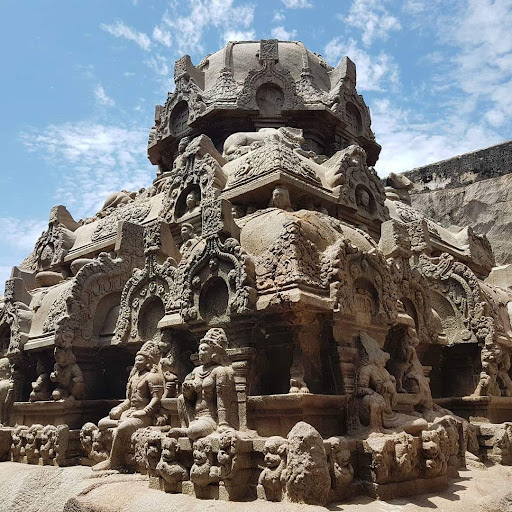
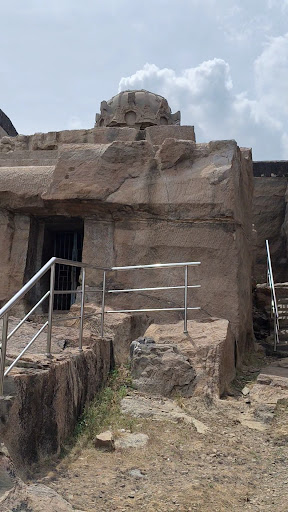
Vettuvan Koil in Kalugumalai, a panchayat town in Thoothukudi district in the South Indian state of Tamil Nadu, is a temple dedicated to the Hindu god Shiva. Constructed in the Pandyan Architecture and rock cut architecture, the unfinished temple was built during the 8th century CE by the early Pandyas.
Nearby attractions
Nearby restaurants
Nearby local services
Nearby hotels
Related posts
Keywords
Kazhugumalai Vettuvan Koyil tourism.Kazhugumalai Vettuvan Koyil hotels.Kazhugumalai Vettuvan Koyil bed and breakfast. flights to Kazhugumalai Vettuvan Koyil.Kazhugumalai Vettuvan Koyil attractions.Kazhugumalai Vettuvan Koyil restaurants.Kazhugumalai Vettuvan Koyil local services.Kazhugumalai Vettuvan Koyil travel.Kazhugumalai Vettuvan Koyil travel guide.Kazhugumalai Vettuvan Koyil travel blog.Kazhugumalai Vettuvan Koyil pictures.Kazhugumalai Vettuvan Koyil photos.Kazhugumalai Vettuvan Koyil travel tips.Kazhugumalai Vettuvan Koyil maps.Kazhugumalai Vettuvan Koyil things to do.
Kazhugumalai Vettuvan Koyil things to do, attractions, restaurants, events info and trip planning
Kazhugumalai Vettuvan Koyil
IndiaTamil NaduKazhugumalai Vettuvan Koyil

Basic Info

Kazhugumalai Vettuvan Koyil

5P33+5PF, Sankaran koil, Kalugumalai, Tamil Nadu 628552, India
4.7(423)
Open until 12:00 AM
Save
spot

Ratings & Description

Info

Vettuvan Koil in Kalugumalai, a panchayat town in Thoothukudi district in the South Indian state of Tamil Nadu, is a temple dedicated to the Hindu god Shiva. Constructed in the Pandyan Architecture and rock cut architecture, the unfinished temple was built during the 8th century CE by the early Pandyas.

Cultural
Scenic
Family friendly
Off the beaten path
attractions: , restaurants: , local businesses:
logoLearn more insights from Wanderboat AI.
Open hoursSee all hours
MonOpen 24 hoursOpen

Plan your stay

hotel
Pet-friendly Hotels in Tamil Nadu
Find a cozy hotel nearby and make it a full experience.
hotel
Affordable Hotels in Tamil Nadu
Find a cozy hotel nearby and make it a full experience.
hotel
The Coolest Hotels You Haven't Heard Of (Yet)
Find a cozy hotel nearby and make it a full experience.
hotel
Trending Stays Worth the Hype in Tamil Nadu
Find a cozy hotel nearby and make it a full experience.

Reviews

Get the Appoverlay
Get the AppOne tap to find yournext favorite spots!
Wanderboat LogoWanderboat

Your everyday Al companion for getaway ideas

CompanyAbout Us
InformationAI Trip PlannerSitemap
SocialXInstagramTiktokLinkedin
LegalTerms of ServicePrivacy Policy

Get the app

© 2025 Wanderboat. All rights reserved.

Reviews of Kazhugumalai Vettuvan Koyil

4.7
(423)
avatar
4.0
7y

Vettuvan Koil in Kalugumalai, a panchayat town in Thoothukudi district in the South Indian state of Tamil Nadu, is dedicated to the Hindu god Shiva. Constructed in the Pandyan Architecture and rock cut architecture, the unfinished temple is believed to have been built during the 8th century by Pandyas. The rock-cut architecture exemplary of early Pandyan Art. The other portions of Kalugumalai houses the 8th century Kalugumalai Jain Beds and Kalugasalamoorthy Temple, a Murugantemple.1]

The temple is believed to have been built during 8th century around 800 AD.[3] The hill was under the control of Ettaiyapuram Zamindar until 1954. The Raja gifted the village to the Kalugasalamoorthy Temple and formed five streets around the temple to enable the temple car to pass easily. He also allocated a middle street for the temple priests. During the Panguni Uthiram festival procession, the elongated conflict between two castes in the region, namely, Nadars and Maravars resulted in a riots, popularly called Kalugumalai riots of 1895. A total of ten people were killed, many injured and the temple car and other property in the region were destroyed. The sculptures in Vettuvan Koil and the Kalugumalai Jain Beds were not affected during the riots.[4]

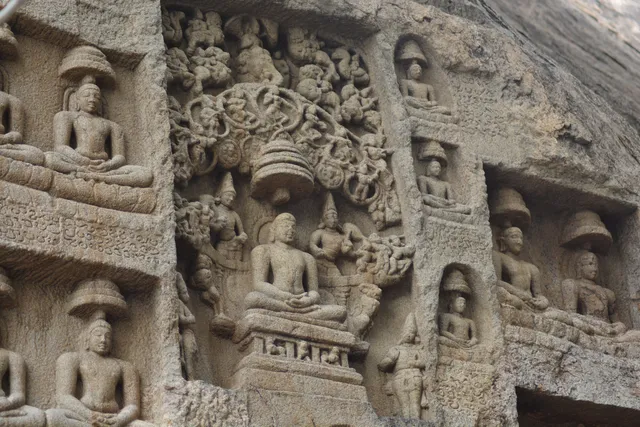
The temple is located in Kalugumalai, a rockyhill in Thoothukudi district in southern Tamil Nadu. The temple is carved out from a single rock in a rectangular portion measuring 7.5 m (25 ft) in depth. The carvings in the temple show the top portion of the temple, with an unfinished bottom. The sculptures and the carvings are indicative of Pandyan art during the period.[3] The granite rock looks like a blooming lotus, with hills surrounding it on three sides. The vimana (ceiling over the sanctum) has niches of Parsavadevatas, the attendant deities of Shiva, like ganas, Dakshinamurthy depicted playing a mridanga, Siva with his consort Uma, dancers, various niches of Nandi (the sacred bull of Shiva) and animals like monkeys and lions. Historian Sivaramamurti believes that this is the only place where Dakshinamurthy is depicted playing the Mridanga (a percussion instrument), while in all other places, he is depicted playing Veena. Epigrapher like V. Vedachalam believes that there is a spontaneity in the sculptures indicating of natural human movements like in the Shiva and Uma sculpture where they seem to be talking like common folks.[2] The other portions of Kalugumalai houses the 8th century Jaina Abode and Kalugasalamoorthy Temple, an unfinished Shiva temple.[5 Historians have equated the temple with similar temples across India based on the monolithic classification. Historian K.V. Soundara Rajan believes that the temple is similar in architecture to that of Virupaksha Temple at Karnataka by Vikramaditya II during 734–44, Kanchi Kailasanathar Temple built by Narasimhavarman II during 685–705 AD and Kailasa temple, Ellora by Krishna I during 756–77.[7] Some historians believe that the similarities in the architecture are indicative of the political relations between the Pallavas, Rashtrakutas and Chalukyas, which is highly...

   Read more
avatar
5.0
2y

Ancient historical Temple. Very near in THOOTHUKKUDI. Vettuvan Koil in Kalugumalai, a panchayat town in Thoothukudi district in the South Indian state of Tamil Nadu, is a temple dedicated to the Hindu god Shiva. Constructed in the Pandyan Architecture and rock cut architecture, the unfinished temple was built during the 8th century CE by the early Pandyas. The temple was constructed during the 8th century AD, during the reign of the Pandya dynasty (also known as the Pandyas of Madurai) in dedication to the Hindu god Shiva, one of the principal deities of Hinduism.

The Pandyas ruled extensive territories, at times including the large portions of present-day south India and Sri Lanka, with the capital of the kingdom centred on Madurai. The complex was built in the Dravidian style, an architectural idiom adopted in various Hindu monuments such as the Virupaksha Temple at Karnataka by Vikramaditya II, Kanchi Kailasanathar Temple built by Narasimhavarman II, and the Ellora Temple by Krishna I – but has characteristics that present a distinct Pandyan art form.

Several contemporary sites in Kalugumalai share the same distinct Pandyan art type, including the rock-cut Kalugumalai Jain Beds, the Kalugasalamoorthy Temple, the Murugan shrine, and various 8th-century houses. Vettuvan Koil was carved from a single granite rock, with the upper section depicting various carvings of “Parsavadevatas” (the attendant deities of Shiva) such as Uma (goddess of fertility, love, beauty, marriage, and children), Nandi (the gate-guardian deity of Kailasa, the abode of Lord Shiva), and various animals such as monkeys and lions.

According to legend, the temple was the result of a father and son rivalry over who was the greater sculpture. The father constructed the Vettuvan Koil, whilst the son built the Murugan shrine. The son mocked the father that the Vettuvan Koil would never be finished, who retaliated in anger by murdering the son. In his grief, the father abandoned his temple which to this day remains unfinished. Another variant of the legend states that the father had tried to teach his son the skills of his trade. Foregoing the orders of the father, the son started chiseling in the inner chamber. Hearing the sound and raged by the disobedience, the father killed the son.

As a result of the legends, two literal translations of Vettuvan Koil mean in Tamil, “heaven of sculptors”, whilst the other means the “temple of...

   Read more
avatar
5.0
7y

Architecture of India

Pandyas Architecture

Vettuvan Koil

Vettuvan Koil in Kalugumalai, a panchayat town in Thoothukudi district in the South Indian state of Tamil Nadu, is dedicated to the Hindu god Shiva. Constructed in the Pandyan Architecture and rock cut architecture, the unfinished temple is believed to have been built during the 8th century by Pandyas. The rock-cut architecture exemplary of early Pandyan Art.

The temple is located in Kalugumalai, a rockyhill in Thoothukudi district in southern Tamil Nadu. The temple is carved out from a single rock in a rectangular portion measuring 7.5 m (25 ft) in depth. The carvings in the temple show the top portion of the temple, with an unfinished bottom. The sculptures and the carvings are indicative of Pandyan art during the period. The granite rock looks like a blooming lotus, with hills surrounding it on three sides. The vimana (ceiling over the sanctum) has niches of Parsavadevatas, the attendant deities of Shiva, like ganas, Dakshinamurthy depicted playing a mridanga, Siva with his consort Uma, dancers, various niches of Nandi (the sacred bull of Shiva) and animals like monkeys and lions. Historian Sivaramamurti believes that this is the only place where Dakshinamurthy is depicted playing the Mridanga (a percussion instrument), while in all other places, he is depicted playing Veena. Epigrapher like V. Vedachalam believes that there is a spontaneity in the sculptures indicating of natural human movements like in the Shiva and Uma sculpture where they seem to be talking like common folks.The other portions of Kalugumalai houses the 8th century Jaina Abode and Kalugasalamoorthy Temple, an unfinished...

   Read more
Page 1 of 7
Previous
Next

Posts

நெல்லை செல்வம்நெல்லை செல்வம்
Vettuvan Koil in Kalugumalai, a panchayat town in Thoothukudi district in the South Indian state of Tamil Nadu, is dedicated to the Hindu god Shiva. Constructed in the Pandyan Architecture and rock cut architecture, the unfinished temple is believed to have been built during the 8th century by Pandyas. The rock-cut architecture exemplary of early Pandyan Art. The other portions of Kalugumalai houses the 8th century Kalugumalai Jain Beds and Kalugasalamoorthy Temple, a Murugantemple.[1] The temple is believed to have been built during 8th century around 800 AD.[3] The hill was under the control of Ettaiyapuram Zamindar until 1954. The Raja gifted the village to the Kalugasalamoorthy Temple and formed five streets around the temple to enable the temple car to pass easily. He also allocated a middle street for the temple priests. During the Panguni Uthiram festival procession, the elongated conflict between two castes in the region, namely, Nadars and Maravars resulted in a riots, popularly called Kalugumalai riots of 1895. A total of ten people were killed, many injured and the temple car and other property in the region were destroyed. The sculptures in Vettuvan Koil and the Kalugumalai Jain Beds were not affected during the riots.[4] The temple is located in Kalugumalai, a rockyhill in Thoothukudi district in southern Tamil Nadu. The temple is carved out from a single rock in a rectangular portion measuring 7.5 m (25 ft) in depth. The carvings in the temple show the top portion of the temple, with an unfinished bottom. The sculptures and the carvings are indicative of Pandyan art during the period.[3] The granite rock looks like a blooming lotus, with hills surrounding it on three sides. The vimana (ceiling over the sanctum) has niches of Parsavadevatas, the attendant deities of Shiva, like ganas, Dakshinamurthy depicted playing a mridanga, Siva with his consort Uma, dancers, various niches of Nandi (the sacred bull of Shiva) and animals like monkeys and lions. Historian Sivaramamurti believes that this is the only place where Dakshinamurthy is depicted playing the Mridanga (a percussion instrument), while in all other places, he is depicted playing Veena. Epigrapher like V. Vedachalam believes that there is a spontaneity in the sculptures indicating of natural human movements like in the Shiva and Uma sculpture where they seem to be talking like common folks.[2] The other portions of Kalugumalai houses the 8th century Jaina Abode and Kalugasalamoorthy Temple, an unfinished Shiva temple.[5][6] Historians have equated the temple with similar temples across India based on the monolithic classification. Historian K.V. Soundara Rajan believes that the temple is similar in architecture to that of Virupaksha Temple at Karnataka by Vikramaditya II during 734–44, Kanchi Kailasanathar Temple built by Narasimhavarman II during 685–705 AD and Kailasa temple, Ellora by Krishna I during 756–77.[7] Some historians believe that the similarities in the architecture are indicative of the political relations between the Pallavas, Rashtrakutas and Chalukyas, which is highly debatable.[8]
Kalyan SundarKalyan Sundar
ஆங்கிலத்தில் எழுதுவதற்கு மன்னிக்கவும். dt 12 - 09 - 23. After having a wonderful darshan in Kalugumalai murugan kovil, we asked people for the directions to this wonderful architectural master piece. We wanted to visit this place for a very long time. It is very close to the murugan temple. Need to walk, climb steps to reach this temple. Sad to note that the place was locked and there was no access to go and see it, but then a local told us to go around and use the small opening to get inside the fenced area so that we could see this master piece up close. Definitely not the way a tourist place should be maintained but then ..... Struggled a lot to go near and upfront of this kovil. seeing it, going around it, having a top view of this temple was something beyond words. Simply WOW WOW WOW. Called the ELLORA of the south, and done in the 8th century, historians believe that it must have been constructed using the top down approach same like in ELLORA. A treasure trove, worth seeing. Wish these places are highlighted by the tourism department.
SAGAR PATILSAGAR PATIL
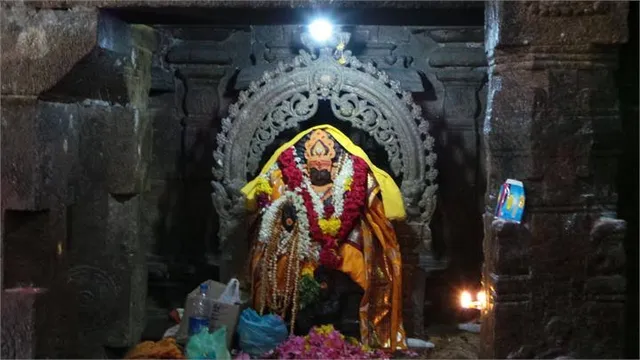
Vettuvan Kovil is an architectural masterpiece that left me awestruck. This ancient Tamil temple, located in Southern India, exudes a unique aura of grandeur and spirituality. The intricate stone carvings on the outer walls depict scenes from Hindu mythology, showcasing the incredible craftsmanship of the artisans from centuries past. The towering Gopuram (entrance tower) adorned with vibrant sculptures is simply breathtaking. As I stepped inside, the sense of tranquility washed over me, amplified by the soothing chants and the smell of incense. The sanctum sanctorum houses a captivating idol of the presiding deity, radiating divinity. The temple's preservation is commendable, offering visitors an authentic glimpse into our rich cultural heritage. A must-visit for history buffs, architecture enthusiasts, and anyone seeking a spiritual connection with the past.
See more posts
See more posts
hotel
Find your stay

Pet-friendly Hotels in Tamil Nadu

Find a cozy hotel nearby and make it a full experience.

Vettuvan Koil in Kalugumalai, a panchayat town in Thoothukudi district in the South Indian state of Tamil Nadu, is dedicated to the Hindu god Shiva. Constructed in the Pandyan Architecture and rock cut architecture, the unfinished temple is believed to have been built during the 8th century by Pandyas. The rock-cut architecture exemplary of early Pandyan Art. The other portions of Kalugumalai houses the 8th century Kalugumalai Jain Beds and Kalugasalamoorthy Temple, a Murugantemple.[1] The temple is believed to have been built during 8th century around 800 AD.[3] The hill was under the control of Ettaiyapuram Zamindar until 1954. The Raja gifted the village to the Kalugasalamoorthy Temple and formed five streets around the temple to enable the temple car to pass easily. He also allocated a middle street for the temple priests. During the Panguni Uthiram festival procession, the elongated conflict between two castes in the region, namely, Nadars and Maravars resulted in a riots, popularly called Kalugumalai riots of 1895. A total of ten people were killed, many injured and the temple car and other property in the region were destroyed. The sculptures in Vettuvan Koil and the Kalugumalai Jain Beds were not affected during the riots.[4] The temple is located in Kalugumalai, a rockyhill in Thoothukudi district in southern Tamil Nadu. The temple is carved out from a single rock in a rectangular portion measuring 7.5 m (25 ft) in depth. The carvings in the temple show the top portion of the temple, with an unfinished bottom. The sculptures and the carvings are indicative of Pandyan art during the period.[3] The granite rock looks like a blooming lotus, with hills surrounding it on three sides. The vimana (ceiling over the sanctum) has niches of Parsavadevatas, the attendant deities of Shiva, like ganas, Dakshinamurthy depicted playing a mridanga, Siva with his consort Uma, dancers, various niches of Nandi (the sacred bull of Shiva) and animals like monkeys and lions. Historian Sivaramamurti believes that this is the only place where Dakshinamurthy is depicted playing the Mridanga (a percussion instrument), while in all other places, he is depicted playing Veena. Epigrapher like V. Vedachalam believes that there is a spontaneity in the sculptures indicating of natural human movements like in the Shiva and Uma sculpture where they seem to be talking like common folks.[2] The other portions of Kalugumalai houses the 8th century Jaina Abode and Kalugasalamoorthy Temple, an unfinished Shiva temple.[5][6] Historians have equated the temple with similar temples across India based on the monolithic classification. Historian K.V. Soundara Rajan believes that the temple is similar in architecture to that of Virupaksha Temple at Karnataka by Vikramaditya II during 734–44, Kanchi Kailasanathar Temple built by Narasimhavarman II during 685–705 AD and Kailasa temple, Ellora by Krishna I during 756–77.[7] Some historians believe that the similarities in the architecture are indicative of the political relations between the Pallavas, Rashtrakutas and Chalukyas, which is highly debatable.[8]
நெல்லை செல்வம்

நெல்லை செல்வம்

hotel
Find your stay

Affordable Hotels in Tamil Nadu

Find a cozy hotel nearby and make it a full experience.

Get the Appoverlay
Get the AppOne tap to find yournext favorite spots!
ஆங்கிலத்தில் எழுதுவதற்கு மன்னிக்கவும். dt 12 - 09 - 23. After having a wonderful darshan in Kalugumalai murugan kovil, we asked people for the directions to this wonderful architectural master piece. We wanted to visit this place for a very long time. It is very close to the murugan temple. Need to walk, climb steps to reach this temple. Sad to note that the place was locked and there was no access to go and see it, but then a local told us to go around and use the small opening to get inside the fenced area so that we could see this master piece up close. Definitely not the way a tourist place should be maintained but then ..... Struggled a lot to go near and upfront of this kovil. seeing it, going around it, having a top view of this temple was something beyond words. Simply WOW WOW WOW. Called the ELLORA of the south, and done in the 8th century, historians believe that it must have been constructed using the top down approach same like in ELLORA. A treasure trove, worth seeing. Wish these places are highlighted by the tourism department.
Kalyan Sundar

Kalyan Sundar

hotel
Find your stay

The Coolest Hotels You Haven't Heard Of (Yet)

Find a cozy hotel nearby and make it a full experience.

hotel
Find your stay

Trending Stays Worth the Hype in Tamil Nadu

Find a cozy hotel nearby and make it a full experience.

Vettuvan Kovil is an architectural masterpiece that left me awestruck. This ancient Tamil temple, located in Southern India, exudes a unique aura of grandeur and spirituality. The intricate stone carvings on the outer walls depict scenes from Hindu mythology, showcasing the incredible craftsmanship of the artisans from centuries past. The towering Gopuram (entrance tower) adorned with vibrant sculptures is simply breathtaking. As I stepped inside, the sense of tranquility washed over me, amplified by the soothing chants and the smell of incense. The sanctum sanctorum houses a captivating idol of the presiding deity, radiating divinity. The temple's preservation is commendable, offering visitors an authentic glimpse into our rich cultural heritage. A must-visit for history buffs, architecture enthusiasts, and anyone seeking a spiritual connection with the past.
SAGAR PATIL

SAGAR PATIL

See more posts
See more posts