HTML SitemapExplore
logo
Find Things to DoFind The Best Restaurants

Nagore Dargah Shariff — Attraction in Tamil Nadu

Name
Nagore Dargah Shariff
Description
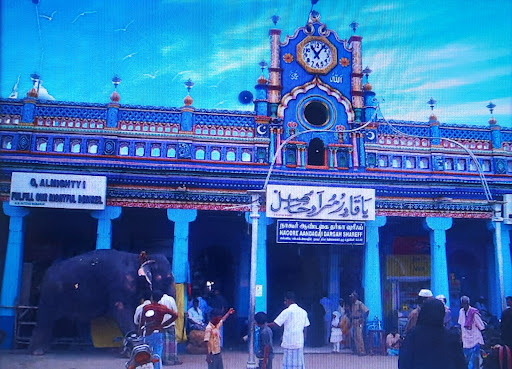
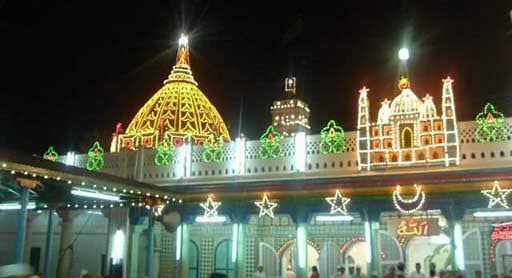
Nagore Dargah is a dargah built over the tomb of the Sufi saint Shahul Hameed. It is located in Nagore, a coastal town in the South Indian state of Tamil Nadu. The outer doors of the dargah are kept open always, while the internal doors are open from 4:00 am to 06:00 am and from 6:00 pm to 10:00 pm.
Nearby attractions
Nearby restaurants
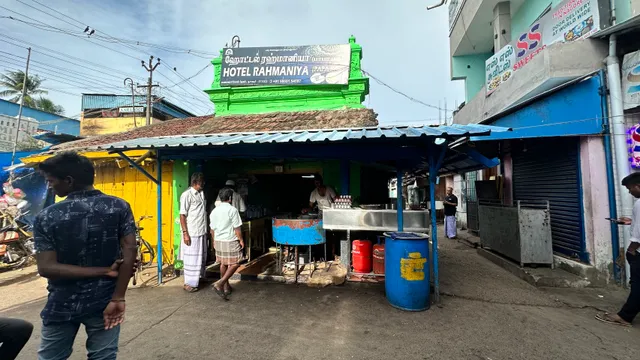
Baba Bai Hotel RAHMANIA
RR9R+987, Meen Kadai Line, Nagore, Nagapattinam, Tamil Nadu 611002, India
Relax Point
No 8, Nellu Kadai Street, Nagore, Nagapattinam, Tamil Nadu 611002, India
Sethappa Hotel
RR9R+GGW, Thalimattu St, Nagore, Nagapattinam, Tamil Nadu 611002, India
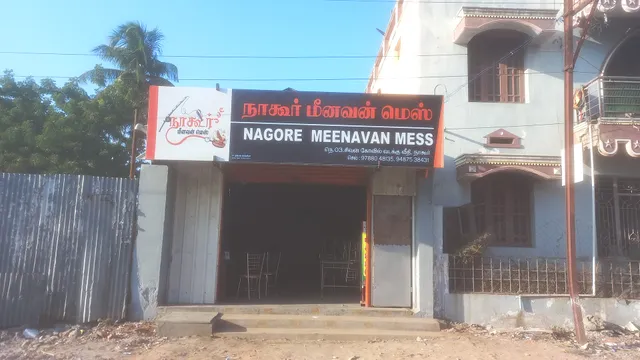
NAGORE MEENAVAN MESS
No 3, Sivan North Street, Nagore, Nagapattinam, Tamil Nadu 611002, India
OM SARAVANA BAVAN
RR9Q+8P8, Nagore, Nagapattinam, Tamil Nadu 611002, India
Chickday fried chicken nagore
Nellu Kadai Street, theruv, Nagore, Nagapattinam, Tamil Nadu 611002, India
Nagore Arab Al mandi. நாகூர் அரப் அல் மந்தி Hashim catering
896, East coast road, nagore to, East Coast Rd, Nagore, Nagapattinam, Nagaipattinam, Tamil Nadu 611002, India
Nagore Hashim catering
Chennai - Nagapattinam Highway, Main road, Nagore, Nagapattinam, Tamil Nadu 611002, India
AR-Raheem Hotel
RR6Q+PJW, Main Road, Oppsite Petrol Bunk, Nagore, Nagapattinam, Tamil Nadu 611002, India
Nearby hotels
SK RESIDENCE NAGORE
16/1 Manavara, North Street, Nagore, Nagapattinam, Tamil Nadu 611002, India
Related posts
Keywords
Nagore Dargah Shariff tourism.Nagore Dargah Shariff hotels.Nagore Dargah Shariff bed and breakfast. flights to Nagore Dargah Shariff.Nagore Dargah Shariff attractions.Nagore Dargah Shariff restaurants.Nagore Dargah Shariff travel.Nagore Dargah Shariff travel guide.Nagore Dargah Shariff travel blog.Nagore Dargah Shariff pictures.Nagore Dargah Shariff photos.Nagore Dargah Shariff travel tips.Nagore Dargah Shariff maps.Nagore Dargah Shariff things to do.
Nagore Dargah Shariff things to do, attractions, restaurants, events info and trip planning
Nagore Dargah Shariff
IndiaTamil NaduNagore Dargah Shariff

Basic Info

Nagore Dargah Shariff

Nagore, Nagapattinam, Tamil Nadu 611002, India
4.4(2.5K)
Open 24 hours
Save
spot

Ratings & Description

Info

Nagore Dargah is a dargah built over the tomb of the Sufi saint Shahul Hameed. It is located in Nagore, a coastal town in the South Indian state of Tamil Nadu. The outer doors of the dargah are kept open always, while the internal doors are open from 4:00 am to 06:00 am and from 6:00 pm to 10:00 pm.

Cultural
Family friendly
attractions: , restaurants: Baba Bai Hotel RAHMANIA, Relax Point, Sethappa Hotel, NAGORE MEENAVAN MESS, OM SARAVANA BAVAN, Chickday fried chicken nagore, Nagore Arab Al mandi. நாகூர் அரப் அல் மந்தி Hashim catering, Nagore Hashim catering, AR-Raheem Hotel
logoLearn more insights from Wanderboat AI.
Phone
+91 4365 250 194
Website
nagoredargahshariff.com

Plan your stay

hotel
Pet-friendly Hotels in Tamil Nadu
Find a cozy hotel nearby and make it a full experience.
hotel
Affordable Hotels in Tamil Nadu
Find a cozy hotel nearby and make it a full experience.
hotel
The Coolest Hotels You Haven't Heard Of (Yet)
Find a cozy hotel nearby and make it a full experience.
hotel
Trending Stays Worth the Hype in Tamil Nadu
Find a cozy hotel nearby and make it a full experience.

Reviews

Nearby restaurants of Nagore Dargah Shariff

Baba Bai Hotel RAHMANIA

Relax Point

Sethappa Hotel

NAGORE MEENAVAN MESS

OM SARAVANA BAVAN

Chickday fried chicken nagore

Nagore Arab Al mandi. நாகூர் அரப் அல் மந்தி Hashim catering

Nagore Hashim catering

AR-Raheem Hotel

Baba Bai Hotel RAHMANIA

Baba Bai Hotel RAHMANIA

3.7

(59)

Click for details
Relax Point

Relax Point

4.1

(61)

Click for details
Sethappa Hotel

Sethappa Hotel

5.0

(2)

Click for details
NAGORE MEENAVAN MESS

NAGORE MEENAVAN MESS

4.8

(270)

Click for details
Get the Appoverlay
Get the AppOne tap to find yournext favorite spots!
Wanderboat LogoWanderboat

Your everyday Al companion for getaway ideas

CompanyAbout Us
InformationAI Trip PlannerSitemap
SocialXInstagramTiktokLinkedin
LegalTerms of ServicePrivacy Policy

Get the app

© 2025 Wanderboat. All rights reserved.
logo

Posts

A J BashhaA J Bashha
Hazrath Shahul Hameed, popularly known as Nagore Nayagam, was born on 10th November 1504 that is 3rd Jamadiyul Aakhir 910 Hijri in a town called Manikapur located 96 Kilometers away from Allahabad in UP, North India. He was born to Janab Hasan Quddos and Bibi Fatima. He began learning Arabic at the age of 8 and demonstrated exceptional in Arabic language. He went to Gwalior to gain spiritual education, from Hazrat Syed Mohammad Ghouz Sahib, where he studied for 7 years. On gaining successful spiritual education, he departed with 440 fellow students and travelled to Makkah. During his journey, Nagore Nayagam prayed fervently for those in need. While traveling towards Makkah, he stopped in Lahore and met Hazrat Nooruddin Sahib, a wealthy man who expressed his concerns about his lack of a son. Nagore Nayagam prayed to Allah for him, and as a result, Hazrat Nooruddin Sahib was blessed with a son, Muhammad Yusuf Sahib. Later, Nagore Nayagam, along with his fellow students, traveled to Sri Lanka, Kayalpattinam, Keezakarai, and Tenkasi, continuing his spiritual mission. Eventually, he arrived in Thanjavur, where he became renowned for his spiritual abilities. During his time in Thanjavur, King Achuthappa Nayak was suffering from an incurable disease. The king's ministers sought the help of Nagore Nayagam, who prayed for the king's recovery. The king's illness was miraculously cured, and, through his prayers, the king was also blessed with a son. Grateful for his assistance, the king granted him 30 acres of coastal land, which became persent day Nagore. Nagore Nayagam later observed two significant 40-day fasts. The first was at Vanjoor, 2 kilometers from Nagore, where he sat in a pit covered with wooden planks. The second fast was at the Chilladi mosque on the coast of Nagore. These places are now significant places of visit in this region. Nagore Nayagam passed away on 10th November 1570 that is 12th Jamadiyul Aakhir 978 Hijri at the age of 68 in Nagore, where he is attaining everlasting rest. The death anniversary is commemorated with the Kanduri Festival, celebrated annually in Nagore. This festival exemplifies religious harmony, attracting people of all faiths, including Muslims, Hindus and Christians.
Mohamed AimanMohamed Aiman
Nagore Dargah (also called Nagoor Dargah or Hazrat Syed Shahul Hameed Dargah) is a dargah built over the tomb of the Sufi  saint Nagore Shahul Hamid (1490–1579 CE).It is located in Nagore, a coastal town in the South Indian state of Tamil Nadu. Outer doors kept open always. Internal doors opening time is from 4:30 am to 07:00 am and 6:25 pm to 9:30 pm. Friday alone additionally kept open from 12 noon to 2:30 pm also. Shahul Hamid is believed to have performed many miracles in Nagore, and cured the physical affliction of king Achutappa Nayak, a 16th-century Hindu ruler of Thanjavur. He is locally referred to as Nagore Andavar, meaning the "god of Nagore". Nagore dargah as it stands now, is believed to have been built by ardent devotees of Shahul Hamid, with major contribution from Hindus. There are five minarets in the dargah, with the Hindu Maratha ruler of Thanjavur Pratap Singh (1739–1763 CE), building the tallest minaret. The dargah is a major pilgrimage centre that attracts pilgrims from both Islamand Hinduism, symbolizing peaceful coexistence between the two religions. The most prominent event celebrated at Nagore dargah is the Kanduri festival, a fourteen-day commemoration of the death anniversary of Shahul Hamid. Common worship practices at Nagore dargah include the presentation of offerings, accompanied by the playing of musical instruments like nadaswaram, atypical of Hindu religious tradition. The Shifa Gunta, a pool within the precincts of the dargah, is considered sacred; pilgrims take a holy dip in it. The hereditary Khalifa (Sufi saint),selected from among the descendants of saint Yusuf, performs all the official and religious duties of the dargah. The administration and maintenance of the dargah is governed by a committee which operates under a scheme decreed by the Madras High Court. Source : wikipedia
Muhammed IrumbuzhiMuhammed Irumbuzhi
🌹🌹🌹 The most prominent event celebrated at Nagore Dargah is the Kanduri festival (Urus Mubarak), a fourteen-day commemoration of the death anniversary of Shahul Hamid. Common worship practices at Nagore dargah include the presentation of offerings, accompanied by the playing of musical instruments like nadaswaram, typical of Hindu religious tradition. The Shifa Gunta, a pool within the precincts of the dargah, is considered sacred; pilgrims take a holy dip in it. The hereditary board of trustees performs all the official and religious duties of the dargah. The governance and upkeep of the dargah are overseen by an 11-member board of trustees, which operates under a court-decreed scheme established by the Madras High Court. Kanduri festival is a 14-day annual event celebrated during the urs (death anniversary) of the saint. The festival is celebrated in commemoration of the anniversary of the saint's death, and pilgrims participate in the rituals and rites. The word kanduri is derived from the Persian word for table cloth. The festival is also called Qadir Wali Ke Fande festival. A saffron flag-carrying ceremony is also observed, during which a flag is carried from a devotee's house to the dargah, accompanied by a procession in streets. The flag is hoisted on a tree known as Fande ka Fahad by a Sirang (hereditary trustee) who is assisted by twenty assistants.
See more posts
See more posts
hotel
Find your stay

Pet-friendly Hotels in Tamil Nadu

Find a cozy hotel nearby and make it a full experience.

Hazrath Shahul Hameed, popularly known as Nagore Nayagam, was born on 10th November 1504 that is 3rd Jamadiyul Aakhir 910 Hijri in a town called Manikapur located 96 Kilometers away from Allahabad in UP, North India. He was born to Janab Hasan Quddos and Bibi Fatima. He began learning Arabic at the age of 8 and demonstrated exceptional in Arabic language. He went to Gwalior to gain spiritual education, from Hazrat Syed Mohammad Ghouz Sahib, where he studied for 7 years. On gaining successful spiritual education, he departed with 440 fellow students and travelled to Makkah. During his journey, Nagore Nayagam prayed fervently for those in need. While traveling towards Makkah, he stopped in Lahore and met Hazrat Nooruddin Sahib, a wealthy man who expressed his concerns about his lack of a son. Nagore Nayagam prayed to Allah for him, and as a result, Hazrat Nooruddin Sahib was blessed with a son, Muhammad Yusuf Sahib. Later, Nagore Nayagam, along with his fellow students, traveled to Sri Lanka, Kayalpattinam, Keezakarai, and Tenkasi, continuing his spiritual mission. Eventually, he arrived in Thanjavur, where he became renowned for his spiritual abilities. During his time in Thanjavur, King Achuthappa Nayak was suffering from an incurable disease. The king's ministers sought the help of Nagore Nayagam, who prayed for the king's recovery. The king's illness was miraculously cured, and, through his prayers, the king was also blessed with a son. Grateful for his assistance, the king granted him 30 acres of coastal land, which became persent day Nagore. Nagore Nayagam later observed two significant 40-day fasts. The first was at Vanjoor, 2 kilometers from Nagore, where he sat in a pit covered with wooden planks. The second fast was at the Chilladi mosque on the coast of Nagore. These places are now significant places of visit in this region. Nagore Nayagam passed away on 10th November 1570 that is 12th Jamadiyul Aakhir 978 Hijri at the age of 68 in Nagore, where he is attaining everlasting rest. The death anniversary is commemorated with the Kanduri Festival, celebrated annually in Nagore. This festival exemplifies religious harmony, attracting people of all faiths, including Muslims, Hindus and Christians.
A J Bashha

A J Bashha

hotel
Find your stay

Affordable Hotels in Tamil Nadu

Find a cozy hotel nearby and make it a full experience.

Get the Appoverlay
Get the AppOne tap to find yournext favorite spots!
Nagore Dargah (also called Nagoor Dargah or Hazrat Syed Shahul Hameed Dargah) is a dargah built over the tomb of the Sufi  saint Nagore Shahul Hamid (1490–1579 CE).It is located in Nagore, a coastal town in the South Indian state of Tamil Nadu. Outer doors kept open always. Internal doors opening time is from 4:30 am to 07:00 am and 6:25 pm to 9:30 pm. Friday alone additionally kept open from 12 noon to 2:30 pm also. Shahul Hamid is believed to have performed many miracles in Nagore, and cured the physical affliction of king Achutappa Nayak, a 16th-century Hindu ruler of Thanjavur. He is locally referred to as Nagore Andavar, meaning the "god of Nagore". Nagore dargah as it stands now, is believed to have been built by ardent devotees of Shahul Hamid, with major contribution from Hindus. There are five minarets in the dargah, with the Hindu Maratha ruler of Thanjavur Pratap Singh (1739–1763 CE), building the tallest minaret. The dargah is a major pilgrimage centre that attracts pilgrims from both Islamand Hinduism, symbolizing peaceful coexistence between the two religions. The most prominent event celebrated at Nagore dargah is the Kanduri festival, a fourteen-day commemoration of the death anniversary of Shahul Hamid. Common worship practices at Nagore dargah include the presentation of offerings, accompanied by the playing of musical instruments like nadaswaram, atypical of Hindu religious tradition. The Shifa Gunta, a pool within the precincts of the dargah, is considered sacred; pilgrims take a holy dip in it. The hereditary Khalifa (Sufi saint),selected from among the descendants of saint Yusuf, performs all the official and religious duties of the dargah. The administration and maintenance of the dargah is governed by a committee which operates under a scheme decreed by the Madras High Court. Source : wikipedia
Mohamed Aiman

Mohamed Aiman

hotel
Find your stay

The Coolest Hotels You Haven't Heard Of (Yet)

Find a cozy hotel nearby and make it a full experience.

hotel
Find your stay

Trending Stays Worth the Hype in Tamil Nadu

Find a cozy hotel nearby and make it a full experience.

🌹🌹🌹 The most prominent event celebrated at Nagore Dargah is the Kanduri festival (Urus Mubarak), a fourteen-day commemoration of the death anniversary of Shahul Hamid. Common worship practices at Nagore dargah include the presentation of offerings, accompanied by the playing of musical instruments like nadaswaram, typical of Hindu religious tradition. The Shifa Gunta, a pool within the precincts of the dargah, is considered sacred; pilgrims take a holy dip in it. The hereditary board of trustees performs all the official and religious duties of the dargah. The governance and upkeep of the dargah are overseen by an 11-member board of trustees, which operates under a court-decreed scheme established by the Madras High Court. Kanduri festival is a 14-day annual event celebrated during the urs (death anniversary) of the saint. The festival is celebrated in commemoration of the anniversary of the saint's death, and pilgrims participate in the rituals and rites. The word kanduri is derived from the Persian word for table cloth. The festival is also called Qadir Wali Ke Fande festival. A saffron flag-carrying ceremony is also observed, during which a flag is carried from a devotee's house to the dargah, accompanied by a procession in streets. The flag is hoisted on a tree known as Fande ka Fahad by a Sirang (hereditary trustee) who is assisted by twenty assistants.
Muhammed Irumbuzhi

Muhammed Irumbuzhi

See more posts
See more posts

Reviews of Nagore Dargah Shariff

4.4
(2,500)
avatar
5.0
1y

Nagore Dargah (also called Nagoor Dargah or Syed Shahul Hameed Dargah or Nagore Andavar dargah) is a dargah built over the tomb of the Sufi saint Shahul Hameed (1490–1579 CE).[1] It is located in Nagore, a coastal town in the South Indian state of Tamil Nadu. The outer doors of the dargah are kept open always, while the internal doors are open from 4:00 am to 06:00 am and from 6:00 pm to 10:00 pm. On Fridays, the doors are additionally kept open between 12:00 pm and 2:30 pm. Shahul Hamid is believed to have performed many miracles in Nagore, and cured the physical affliction of king Achuthappa Nayak, a 16th-century Hindu ruler of Thanjavur. He is locally referred to as Nagore Andavar, meaning the "Ruler of Nagore" and Qadir wali baba. Nagore dargah as it stands now, is believed to have been built by ardent devotees of Shahul Hamid, with major contribution from Hindus. There are five minarets in the dargah, with the Hindu Maratha ruler of Thanjavur Pratap Singh (1739–1763 CE), building the tallest minaret. The dargah is a major pilgrimage centre that attracts pilgrims from both sufi Islam and Hinduism, symbolizing peaceful coexistence

The central part of the dargah is the tomb of the saint Shahul Hamid, which is approached through seven thresholds. Four of these doorways are made of silver and the remaining three of gold. The other tombs in the shrines are the ones for Shahul’s grandson Hassan Alaihis Salam and Abdel Khader Gilani, each located in different chambers. The adjoining portion of the complex is called Peer Mandap, the Trusty’s place of fasting during the annual festival. A mosque is located next to the Peer Mandap, where daily prayers are offered.

Shifa Gunta is a holy tank with stepped sides, located within the precincts of the dargah. As per a local legend, Shahul Hamid is believed to have brought an iron chain with him to Nagore to bind himself during severe austerities. The distinctive chain is identified as the one hanging from the ceiling above the tomb of Yusuf. Vanjur shrine and Silladi shrine, located outside the main complex, are associated with the Nagore Dargah. The Vanjur shrine is an underground cave located 2 km (1.2 mi) north of the main complex at Nagore. It is the place where Shahul is believed to have meditated for 40 days. Silladi shrine is located 1 km (0.62 mi) towards the east of main complex, facing the Bay of Bengal, where Shahul is believed to have offered daily prayers.

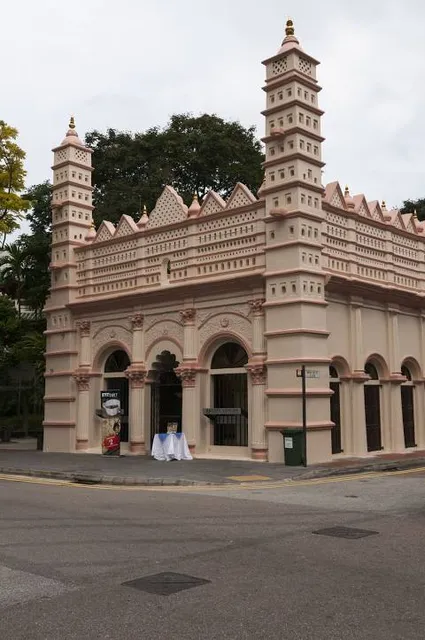
There are similar shrines built in Shahul Hamid’s honour in Penang (Malaysia) and Singapore. The Singapore dargah, built during 1827, has been declared a national monument. These two shrines along with the Masjid Jamae at Chulia in Singapore and the Keramat Data Koya in Penang are influenced by the architectural style of...

   Read more
avatar
5.0
51w

Hazrath Shahul Hameed, popularly known as Nagore Nayagam, was born on 10th November 1504 that is 3rd Jamadiyul Aakhir 910 Hijri in a town called Manikapur located 96 Kilometers away from Allahabad in UP, North India.

He was born to Janab Hasan Quddos and Bibi Fatima. He began learning Arabic at the age of 8 and demonstrated exceptional in Arabic language.

He went to Gwalior to gain spiritual education, from Hazrat Syed Mohammad Ghouz Sahib, where he studied for 7 years. On gaining successful spiritual education, he departed with 440 fellow students and travelled to Makkah.

During his journey, Nagore Nayagam prayed fervently for those in need. While traveling towards Makkah, he stopped in Lahore and met Hazrat Nooruddin Sahib, a wealthy man who expressed his concerns about his lack of a son. Nagore Nayagam prayed to Allah for him, and as a result, Hazrat Nooruddin Sahib was blessed with a son, Muhammad Yusuf Sahib.

Later, Nagore Nayagam, along with his fellow students, traveled to Sri Lanka, Kayalpattinam, Keezakarai, and Tenkasi, continuing his spiritual mission. Eventually, he arrived in Thanjavur, where he became renowned for his spiritual abilities.

During his time in Thanjavur, King Achuthappa Nayak was suffering from an incurable disease. The king's ministers sought the help of Nagore Nayagam, who prayed for the king's recovery. The king's illness was miraculously cured, and, through his prayers, the king was also blessed with a son. Grateful for his assistance, the king granted him 30 acres of coastal land, which became persent day Nagore.

Nagore Nayagam later observed two significant 40-day fasts. The first was at Vanjoor, 2 kilometers from Nagore, where he sat in a pit covered with wooden planks. The second fast was at the Chilladi mosque on the coast of Nagore. These places are now significant places of visit in this region.

Nagore Nayagam passed away on 10th November 1570 that is 12th Jamadiyul Aakhir 978 Hijri at the age of 68 in Nagore, where he is attaining everlasting rest. The death anniversary is commemorated with the Kanduri Festival, celebrated annually in Nagore. This festival exemplifies religious harmony, attracting people of all faiths, including Muslims, Hindus...

   Read more
avatar
5.0
49w

Nagore Dargah Shariff, also known as Nagore Dargah, is a revered Sufi shrine located in Nagore, a small town in the Nagapattinam district of Tamil Nadu, India. The Dargah is dedicated to the 16th-century Sufi saint Hazrath Nagore Shahul Hameed, also known as Shahul Hameed Nagoori.

Key Features Minaret: The Dargah features a striking minaret, which is a prominent landmark in the town. Architecture: The shrine complex showcases a blend of Islamic and Indian architectural styles, with intricate carvings, arches, and domes. Religious Significance: Nagore Dargah Shariff is an important pilgrimage site for Muslims, attracting devotees from all over the world. Festivals: The Dargah celebrates various festivals, including the annual Kandoori Urs, which commemorates the saint's death anniversary.

History The Nagore Dargah was built in the 16th century, and over time, it has undergone several renovations and expansions. The shrine is believed to contain the tomb of Hazrath Nagore Shahul Hameed, who was a renowned Sufi saint and mystic.

Visitor Information Timings: The Dargah is open for visitors from dawn to dusk. Dress Code: Visitors are expected to dress modestly, covering their heads and shoulders as a mark of respect. Photography: Photography is allowed, but permission may be required for certain areas or events.

Nagore Dargah Shariff is a significant cultural and religious landmark, attracting visitors from diverse backgrounds. Its stunning architecture, rich history, and spiritual significance make it a must-visit destination for those interested in exploring the region's heritage.

Tips Best Time to Visit: The best time to visit the Dargah is during the morning or evening prayers, when the atmosphere is serene and peaceful. Respect Local Customs: Visitors are expected to respect local customs and traditions, including removing their shoes before entering the shrine. Guided Tours: Guided tours are available, which can provide valuable insights into the history and significance...

   Read more
Page 1 of 7
Previous
Next