HTML SitemapExplore
logo
Find Things to DoFind The Best Restaurants

Sadras Dutch Fort — Attraction in Tamil Nadu

Name
Sadras Dutch Fort
Description
Nearby attractions
Nearby restaurants
Nearby hotels
Related posts
Keywords
Sadras Dutch Fort tourism.Sadras Dutch Fort hotels.Sadras Dutch Fort bed and breakfast. flights to Sadras Dutch Fort.Sadras Dutch Fort attractions.Sadras Dutch Fort restaurants.Sadras Dutch Fort travel.Sadras Dutch Fort travel guide.Sadras Dutch Fort travel blog.Sadras Dutch Fort pictures.Sadras Dutch Fort photos.Sadras Dutch Fort travel tips.Sadras Dutch Fort maps.Sadras Dutch Fort things to do.
Sadras Dutch Fort things to do, attractions, restaurants, events info and trip planning
Sadras Dutch Fort
IndiaTamil NaduSadras Dutch Fort

Basic Info

Sadras Dutch Fort

Mapp, East Coast Rd, Kalpakkam, Tamil Nadu 603102, India
4.0(1.1K)
Open 24 hours
Save
spot

Ratings & Description

Info

Cultural
Family friendly
attractions: , restaurants:
logoLearn more insights from Wanderboat AI.
Phone
+91 44 2744 2226
Website
asichennai.gov.in

Plan your stay

hotel
Pet-friendly Hotels in Tamil Nadu
Find a cozy hotel nearby and make it a full experience.
hotel
Affordable Hotels in Tamil Nadu
Find a cozy hotel nearby and make it a full experience.
hotel
The Coolest Hotels You Haven't Heard Of (Yet)
Find a cozy hotel nearby and make it a full experience.
hotel
Trending Stays Worth the Hype in Tamil Nadu
Find a cozy hotel nearby and make it a full experience.

Reviews

Things to do nearby

Immerse yourself in the legacy of the Pallavas
Fri, Dec 12 • 3:00 PM
Mahabalipuram, Tamil Nadu, 603104, India
View details
Get the Appoverlay
Get the AppOne tap to find yournext favorite spots!
Wanderboat LogoWanderboat

Your everyday Al companion for getaway ideas

CompanyAbout Us
InformationAI Trip PlannerSitemap
SocialXInstagramTiktokLinkedin
LegalTerms of ServicePrivacy Policy

Get the app

© 2025 Wanderboat. All rights reserved.
logo

Reviews of Sadras Dutch Fort

4.0
(1,070)
avatar
4.0
6y

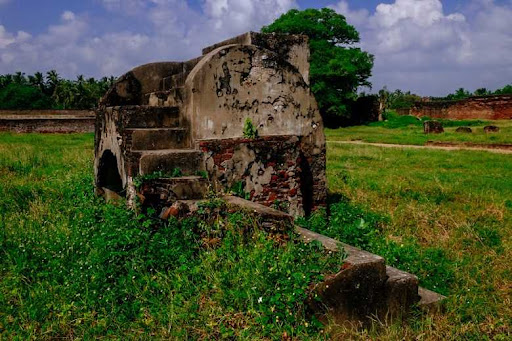
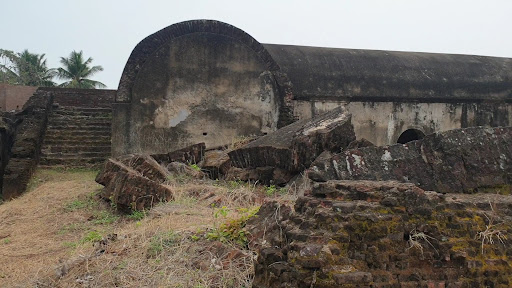
In recent times, Sadras has found mention due to its proximity to the atomic power plant (Madras Atomic Power Station) and the atomic research centre (Indira Gandhi Centre for Atomic Research - IGCAR) both located at nearby Kalpakkam. The village of Sadras is sandwiched between the power plant and its township. There are two bridges connecting Kalpakkam and Sadras.The fortress was raided by the British in 1818 and came under the control of the British East India Company. It is now maintained by the Archaeological Survey of India in efforts to contain further dilapidation of this great monument. From 2003 major restoration of the damaged fort was carried out leading to may archeological findings.The first battle between British East India Company and the Dutch started here as Battle of Sadras. The fort includes a cemetery with many beautifully decorated graves that date to between 1620 and 1769.it is situated at sadras near police station.a wounderful place to be visited.An inscription found in Sadras dated to 1359 mention this place as Rajanarayanan Pattinam after a Sambuvaraya chieftain. There is a temple to Vishnu here, and because of it later the city was known as Sadiravasagan Pattinam. This later changed into Sadurangapattinam, shortly known as Sadirai. Later the Dutch called it Sadras.Remains of this Dutch fort ,earlier known as Sadras fort ( Sathurangapattinam in Tamil ) is about 4 kms from East cost road towards the beach . Those who are interested in visiting historical places , this is a good place for a short visit . Maintained by Archaeological survey of India , one can find ruins of an ancient fort destroyed by wars and nature .Storage rooms built by dutch and cemeteries are still intact. While travelling from chennai towards pondichery via mamallapuram take left turn from Vengambakkam junction on ECR to reach Sadras fort ( about 4.5 km) . After visiting sadras fort Journey can be continued by re entering East coast Road through Pudupakkam junction . No bathroom facilities or food facilities available close to the area . There are few shops in Pudupakkam and inside Kalpakkam township and a petrol filing station is also available inside the township.Best time to visit ill be during onset of rainy season .The best time to visit the fort is when the sun is peeping from behind the monsoon clouds hanging low over the Bay. In that surreal light, the green grass that fills up its vast innards is more vivid, and an unusual radiance graces its ageing walls.

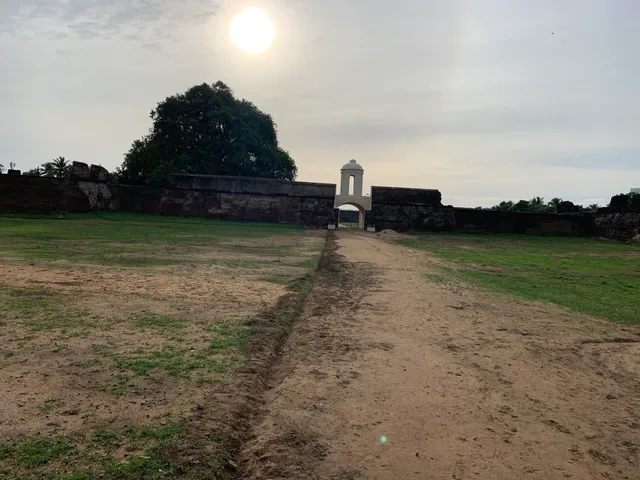
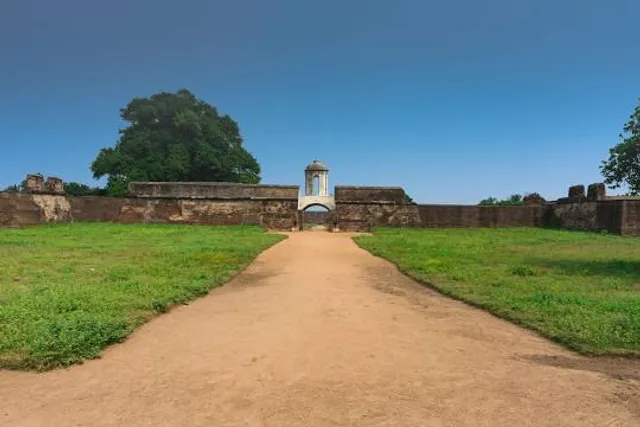
Enter through the gates, surmounted by a bell tower and guarded by cannon, and simply follow the lone goat that seems to know its way around. Inside the vast open space, a mud pathway divides the fort into two. On the right, accessed through a small archway, lies a well-kept cemetery. The beautifully-carved tombstones, dating from 1620 to 1769, are replete with the names of Dutch sailors, skulls and crossbones, ships with billowing sails and man-of-war. A five-foot-high table-like double tombstone head bears names from the same family. Beyond it lies a warren of tunnels, some still being repaired by the ASI. To the left of the gateway, is a lone tree bending low over a well with a grate. Further ahead are mounting blocks — most likely for the elephants — spacious and clean granaries with well-laid-out pipelines that indicate an advanced drainage system, and dining and dancing halls that are on the long road to some sort of...

   Read more
avatar
5.0
5y

A northerner they could only fathom knew not a bit of their history and a Sikh at that arguing with them that he wants to go to Sadras while being already in Madras ( Chennai’s old Nearly 250 years ago the French and the British fought a Battle here in 1782 for the control of this strategic port by both the British Fleet and the French Fleet off the east coast of India during the Anglo-French War .

Modern Sadras was established as part of Dutch Coromandel in the seventeenth century, which was even before centre for weaving superfine muslin cloth for export besides Pearl and edible oil. The magnificent Sadras Fort, built for commercial purposes by the Dutch, is a vast compound enclosing a huge granary, stable and structures used to mount elephants; unfortunately only one of these structures survives.

However by 1612, they had laid the foundations for a fort in Sadras to its South, then a well-known centre for muslin weaving and brick making. The Dutch fortified its early outposts in Ceylon (Fort Hammenhiel, Jaffna; Kalpitiya Fort) and Batavia (modern-day Jakarta) with bricks made in kilns here and similarities can still be found from the walls of the Dutch Forts of the bricks made in Sadras .

Entering the Fort through a bell-tower that stands to date with two iron rusted canons guarding the entrance .As one enters one sees how well planned the fort was with its own well on left of the entrance with drainage system well laid out .

The fort has inside still huge halls that were used for storage of products before they were shipped by the Dutch by their trading ships in the hundred years or so that they were here before the British took over and the town fell in to obscurity .Some of these halls in their hey days were used for dancing and partying .

The Britishers had captured the fort in 1796 from the Dutch only to loose again the control to the Dutch in 1818 before the Dutch were forever bundled out in 1854 so that the fort remained with the British till 1947 .It is notable that the fortifications of this fort are not warlike but commercial as it was largely a trading port fort .There are still visible the bombed out structures that the British aimed when they conquered the place .

Inside the attendant couple took me to see the underground tunnel that they said the Dutch had built to take them underground to the port of Sadras .He also showed me elephant mounts for riding elephants that the Dutch had used during the time in the fort .

Most striking is the well kept cemetery laid inside a walled enclosure on the right side when one enters the fort .There are several carved stones inscribed with in Dutch language with those who lived and died here being buried within the ramparts of the fort .In all about 19...

   Read more

avatar
3.0
6y

Not an active tourist spot now as it is not maintained properly..... However the same is having historical background.

The village of Sadras is sandwiched between the power plant and its township. There are two bridges connecting Kalpakkam and Sadras.

An inscription found in Sadras dated to 1359 mention this place as Rajanarayanan Pattinam after a Sambuvaraya chieftain. There is a temple to Vishnu here, and because of it later the city was known as Sadiravasagan Pattinam. This later changed into Sadurangapattinam, shortly known as Sadirai. Later the Dutch called it Sadras.

Modern Sadras was established as part of Dutch Coromandel in the seventeenth century, which was even before center for weaving superfine muslin cloth for export besides Pearl and edible oil. The magnificent Sadras Fort, built for commercial purposes by the Dutch, is a vast compound enclosing a huge granary, stable and structures used to mount elephants; unfortunately only one of these...

   Read more
Page 1 of 7
Previous
Next

Posts

PrazyPrazy
In recent times, Sadras has found mention due to its proximity to the atomic power plant (Madras Atomic Power Station) and the atomic research centre (Indira Gandhi Centre for Atomic Research - IGCAR) both located at nearby Kalpakkam. The village of Sadras is sandwiched between the power plant and its township. There are two bridges connecting Kalpakkam and Sadras.The fortress was raided by the British in 1818 and came under the control of the British East India Company. It is now maintained by the Archaeological Survey of India in efforts to contain further dilapidation of this great monument. From 2003 major restoration of the damaged fort was carried out leading to may archeological findings.The first battle between British East India Company and the Dutch started here as Battle of Sadras. The fort includes a cemetery with many beautifully decorated graves that date to between 1620 and 1769.it is situated at sadras near police station.a wounderful place to be visited.An inscription found in Sadras dated to 1359 mention this place as Rajanarayanan Pattinam after a Sambuvaraya chieftain. There is a temple to Vishnu here, and because of it later the city was known as Sadiravasagan Pattinam. This later changed into Sadurangapattinam, shortly known as Sadirai. Later the Dutch called it Sadras.Remains of this Dutch fort ,earlier known as Sadras fort ( Sathurangapattinam in Tamil ) is about 4 kms from East cost road towards the beach . Those who are interested in visiting historical places , this is a good place for a short visit . Maintained by Archaeological survey of India , one can find ruins of an ancient fort destroyed by wars and nature .Storage rooms built by dutch and cemeteries are still intact. While travelling from chennai towards pondichery via mamallapuram take left turn from Vengambakkam junction on ECR to reach Sadras fort ( about 4.5 km) . After visiting sadras fort Journey can be continued by re entering East coast Road through Pudupakkam junction . No bathroom facilities or food facilities available close to the area . There are few shops in Pudupakkam and inside Kalpakkam township and a petrol filing station is also available inside the township.Best time to visit ill be during onset of rainy season .The best time to visit the fort is when the sun is peeping from behind the monsoon clouds hanging low over the Bay. In that surreal light, the green grass that fills up its vast innards is more vivid, and an unusual radiance graces its ageing walls. Enter through the gates, surmounted by a bell tower and guarded by cannon, and simply follow the lone goat that seems to know its way around. Inside the vast open space, a mud pathway divides the fort into two. On the right, accessed through a small archway, lies a well-kept cemetery. The beautifully-carved tombstones, dating from 1620 to 1769, are replete with the names of Dutch sailors, skulls and crossbones, ships with billowing sails and man-of-war. A five-foot-high table-like double tombstone head bears names from the same family. Beyond it lies a warren of tunnels, some still being repaired by the ASI. To the left of the gateway, is a lone tree bending low over a well with a grate. Further ahead are mounting blocks — most likely for the elephants — spacious and clean granaries with well-laid-out pipelines that indicate an advanced drainage system, and dining and dancing halls that are on the long road to some sort of restoration.
MickpreetMickpreet
A northerner they could only fathom knew not a bit of their history and a Sikh at that arguing with them that he wants to go to Sadras while being already in Madras ( Chennai’s old Nearly 250 years ago the French and the British fought a Battle here in 1782 for the control of this strategic port by both the British Fleet and the French Fleet off the east coast of India during the Anglo-French War . Modern Sadras was established as part of Dutch Coromandel in the seventeenth century, which was even before centre for weaving superfine muslin cloth for export besides Pearl and edible oil. The magnificent Sadras Fort, built for commercial purposes by the Dutch, is a vast compound enclosing a huge granary, stable and structures used to mount elephants; unfortunately only one of these structures survives. However by 1612, they had laid the foundations for a fort in Sadras to its South, then a well-known centre for muslin weaving and brick making. The Dutch fortified its early outposts in Ceylon (Fort Hammenhiel, Jaffna; Kalpitiya Fort) and Batavia (modern-day Jakarta) with bricks made in kilns here and similarities can still be found from the walls of the Dutch Forts of the bricks made in Sadras . Entering the Fort through a bell-tower that stands to date with two iron rusted canons guarding the entrance .As one enters one sees how well planned the fort was with its own well on left of the entrance with drainage system well laid out . The fort has inside still huge halls that were used for storage of products before they were shipped by the Dutch by their trading ships in the hundred years or so that they were here before the British took over and the town fell in to obscurity .Some of these halls in their hey days were used for dancing and partying . The Britishers had captured the fort in 1796 from the Dutch only to loose again the control to the Dutch in 1818 before the Dutch were forever bundled out in 1854 so that the fort remained with the British till 1947 .It is notable that the fortifications of this fort are not warlike but commercial as it was largely a trading port fort .There are still visible the bombed out structures that the British aimed when they conquered the place . Inside the attendant couple took me to see the underground tunnel that they said the Dutch had built to take them underground to the port of Sadras .He also showed me elephant mounts for riding elephants that the Dutch had used during the time in the fort . Most striking is the well kept cemetery laid inside a walled enclosure on the right side when one enters the fort .There are several carved stones inscribed with in Dutch language with those who lived and died here being buried within the ramparts of the fort .In all about 19 graves are here .
Shyam KodavarthiShyam Kodavarthi
Sadras Fort. Built by the Dutch in 1612. The watch tower has two cannons on either side. But the Dutch VOC emblem is missing. The fort is in a ruined state. There are two warehouses on either side of the walkway. They were used for storing spices and opium. They are empty now. There are steps that lead up to a ledge to sit on an elephant. Dutch soldiers imbibed Tamil culture and used to play 'aadu - puli' game on stone tiles. An ancient folk game of goat and tiger. There is a cemetery from the 1600's. There is a ground stone and table stone of a mother and son. Excellent engravings on almost each grave. Engraving of a sailing ship. But they are all fading away. The British captured the Fort in 1781 and imprisoned Dutch soldiers in Fort St George, some of whom died. There is a Memorial Stone transported from Fort St George.
See more posts
See more posts
hotel
Find your stay

Pet-friendly Hotels in Tamil Nadu

Find a cozy hotel nearby and make it a full experience.

In recent times, Sadras has found mention due to its proximity to the atomic power plant (Madras Atomic Power Station) and the atomic research centre (Indira Gandhi Centre for Atomic Research - IGCAR) both located at nearby Kalpakkam. The village of Sadras is sandwiched between the power plant and its township. There are two bridges connecting Kalpakkam and Sadras.The fortress was raided by the British in 1818 and came under the control of the British East India Company. It is now maintained by the Archaeological Survey of India in efforts to contain further dilapidation of this great monument. From 2003 major restoration of the damaged fort was carried out leading to may archeological findings.The first battle between British East India Company and the Dutch started here as Battle of Sadras. The fort includes a cemetery with many beautifully decorated graves that date to between 1620 and 1769.it is situated at sadras near police station.a wounderful place to be visited.An inscription found in Sadras dated to 1359 mention this place as Rajanarayanan Pattinam after a Sambuvaraya chieftain. There is a temple to Vishnu here, and because of it later the city was known as Sadiravasagan Pattinam. This later changed into Sadurangapattinam, shortly known as Sadirai. Later the Dutch called it Sadras.Remains of this Dutch fort ,earlier known as Sadras fort ( Sathurangapattinam in Tamil ) is about 4 kms from East cost road towards the beach . Those who are interested in visiting historical places , this is a good place for a short visit . Maintained by Archaeological survey of India , one can find ruins of an ancient fort destroyed by wars and nature .Storage rooms built by dutch and cemeteries are still intact. While travelling from chennai towards pondichery via mamallapuram take left turn from Vengambakkam junction on ECR to reach Sadras fort ( about 4.5 km) . After visiting sadras fort Journey can be continued by re entering East coast Road through Pudupakkam junction . No bathroom facilities or food facilities available close to the area . There are few shops in Pudupakkam and inside Kalpakkam township and a petrol filing station is also available inside the township.Best time to visit ill be during onset of rainy season .The best time to visit the fort is when the sun is peeping from behind the monsoon clouds hanging low over the Bay. In that surreal light, the green grass that fills up its vast innards is more vivid, and an unusual radiance graces its ageing walls. Enter through the gates, surmounted by a bell tower and guarded by cannon, and simply follow the lone goat that seems to know its way around. Inside the vast open space, a mud pathway divides the fort into two. On the right, accessed through a small archway, lies a well-kept cemetery. The beautifully-carved tombstones, dating from 1620 to 1769, are replete with the names of Dutch sailors, skulls and crossbones, ships with billowing sails and man-of-war. A five-foot-high table-like double tombstone head bears names from the same family. Beyond it lies a warren of tunnels, some still being repaired by the ASI. To the left of the gateway, is a lone tree bending low over a well with a grate. Further ahead are mounting blocks — most likely for the elephants — spacious and clean granaries with well-laid-out pipelines that indicate an advanced drainage system, and dining and dancing halls that are on the long road to some sort of restoration.
Prazy

Prazy

hotel
Find your stay

Affordable Hotels in Tamil Nadu

Find a cozy hotel nearby and make it a full experience.

Get the Appoverlay
Get the AppOne tap to find yournext favorite spots!
A northerner they could only fathom knew not a bit of their history and a Sikh at that arguing with them that he wants to go to Sadras while being already in Madras ( Chennai’s old Nearly 250 years ago the French and the British fought a Battle here in 1782 for the control of this strategic port by both the British Fleet and the French Fleet off the east coast of India during the Anglo-French War . Modern Sadras was established as part of Dutch Coromandel in the seventeenth century, which was even before centre for weaving superfine muslin cloth for export besides Pearl and edible oil. The magnificent Sadras Fort, built for commercial purposes by the Dutch, is a vast compound enclosing a huge granary, stable and structures used to mount elephants; unfortunately only one of these structures survives. However by 1612, they had laid the foundations for a fort in Sadras to its South, then a well-known centre for muslin weaving and brick making. The Dutch fortified its early outposts in Ceylon (Fort Hammenhiel, Jaffna; Kalpitiya Fort) and Batavia (modern-day Jakarta) with bricks made in kilns here and similarities can still be found from the walls of the Dutch Forts of the bricks made in Sadras . Entering the Fort through a bell-tower that stands to date with two iron rusted canons guarding the entrance .As one enters one sees how well planned the fort was with its own well on left of the entrance with drainage system well laid out . The fort has inside still huge halls that were used for storage of products before they were shipped by the Dutch by their trading ships in the hundred years or so that they were here before the British took over and the town fell in to obscurity .Some of these halls in their hey days were used for dancing and partying . The Britishers had captured the fort in 1796 from the Dutch only to loose again the control to the Dutch in 1818 before the Dutch were forever bundled out in 1854 so that the fort remained with the British till 1947 .It is notable that the fortifications of this fort are not warlike but commercial as it was largely a trading port fort .There are still visible the bombed out structures that the British aimed when they conquered the place . Inside the attendant couple took me to see the underground tunnel that they said the Dutch had built to take them underground to the port of Sadras .He also showed me elephant mounts for riding elephants that the Dutch had used during the time in the fort . Most striking is the well kept cemetery laid inside a walled enclosure on the right side when one enters the fort .There are several carved stones inscribed with in Dutch language with those who lived and died here being buried within the ramparts of the fort .In all about 19 graves are here .
Mickpreet

Mickpreet

hotel
Find your stay

The Coolest Hotels You Haven't Heard Of (Yet)

Find a cozy hotel nearby and make it a full experience.

hotel
Find your stay

Trending Stays Worth the Hype in Tamil Nadu

Find a cozy hotel nearby and make it a full experience.

Sadras Fort. Built by the Dutch in 1612. The watch tower has two cannons on either side. But the Dutch VOC emblem is missing. The fort is in a ruined state. There are two warehouses on either side of the walkway. They were used for storing spices and opium. They are empty now. There are steps that lead up to a ledge to sit on an elephant. Dutch soldiers imbibed Tamil culture and used to play 'aadu - puli' game on stone tiles. An ancient folk game of goat and tiger. There is a cemetery from the 1600's. There is a ground stone and table stone of a mother and son. Excellent engravings on almost each grave. Engraving of a sailing ship. But they are all fading away. The British captured the Fort in 1781 and imprisoned Dutch soldiers in Fort St George, some of whom died. There is a Memorial Stone transported from Fort St George.
Shyam Kodavarthi

Shyam Kodavarthi

See more posts
See more posts