As instructed by the revered Sage Agasthiyar, Uromasa Maharishi floats the flowers on the waters of Thamirabarani. The place is on the banks of the River, where the second flower docked is Cheranmahadevi (சேரன்மகாதேவி). It is believed that Uromasa Maharishi (உரோமச மகிரிஷி) discovered the Shiva Lingam of this temple under a Banyan Tree (ஆலமரம்). Hence the Banyan is considered as the sacred tree (ஸ்தல விருட்சம்) of this place.. This temple is located near the bridge where the train from Tirunelveli to Tenkasi crosses the river. This temple built by Uromasa Maharishi was further expanded by the selfless efforts of two sisters. They took up the job of pounding rice grains manually. Today the task is carried by machines in rice mills, however in olden days it was a labour intensive process that required Herculean efforts. Yet the sisters took up this tiring job to earn money for the temple. In spite of their best efforts, they were not able to save the funds to build a temple and so they prayed to the Lord seeking His help. Lord Shiva on hearing the sisters’ pleas, took the form of a poor starving Brahmin and came to their dwelling, begging for food. They then shared their food with the Brahmin and appeased his hunger. The content Brahmin thanked them and asked them to make any wish. The sisters asked him to contribute to the building of the temple. The Lord was pleased by the selflessness of the sisters and granted them their wish. As days went by, the sisters acquired huge treasures of gold and wealth which they used to build a majestic temple for the Lord.
The image of the sisters instrumental in building this temple can be found on pillars even today. Stone inscriptions from the period of Rajaraja Chozhan, Rajendra Chozhan, Kochadaiyavarmar Sundara Chozhan are also found at this temple. The River Thamirabarani is considered very special at this place. It is believed that the three holy rivers of India - Ganga, Yamuna and Saraswati confluence here. Hence, this place is known as “Vyasartheertha Kattam” and the festival of the three rivers joining together is known as “Maha Viyathi Paatham” (மஹா வியாதி பாதம்).
This event occurs in the early mornings of Sapthami (சப்தமி) that occurs in the waning phase of the moon in the Tamil Month of Marghazhi (மார்கழி). It is said that one can gain the blessings of all the holy rivers by taking a dip in the waters of Thamirabarani during this auspicious event.
Scriptures say that divine celestial beings grace this river at 3.00 a.m daily. It is believed that if one takes a dip in the river at this time and meditates with concentration, then one can attain salvation. There is a significant rock along the banks of the river known as “Rana Vimosana Paarai” (ரன விமோசன பாறை). This rock lies between the temple and the bathing Ghat (வியாசர் தீர்த்தம்). It is believed that if one takes a dip in the waters of the river near this rock for Forty-one consecutive days while holding a fast, one is granted all wishes. Doing so also rids one of chronic diseases and pains. However, scriptures warn that if one does so with negative thoughts or impure habits, one gets further cursed in life. Lord Shiva at this temple is also known as “Kailaayathu Azhwar”, “Kailayaa Mudaiyar”(Lord of Kailash). The auspicious days of Thirukalyanam in the tamil month of Aippasi (ஐப்பசி), Thiruvathirai, Shiva Rathri are celebrated here. Lord Shiva takes the form of the moon God at this temple and his blessings are essential for a peaceful and happy life. It is considered special for the people of the sun sign Cancer (கடக ராசி). Devotees of other sun signs also visit this temple to seek the blessings of the Moon God. Farmers are blessed with a bountiful crop when they worship the Lord at Cheranmahadevi. The Lord blesses his devotees with a healthy and alluring body which in turn leads to a prosperous and happy life. Hence everyone should visit this temple at least once in...
Read moreThis Sri Ammainathar Temple alias Sri Kailasanathar Temple at Cheranmahadevi, on the banks of Holy river Thamirabarani is the 2nd of the Navakailaya Shiva temples and also one of the Navagraha sthalams ie Chandran ( Moon ) Temple.
Moolavar : Sri Ammai Nathar / Kailasanathar Consort : Sri Avudainayagi / Oppillia Nayagi
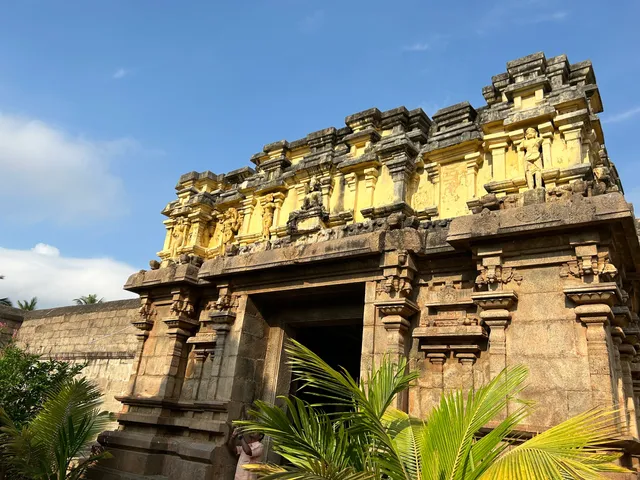
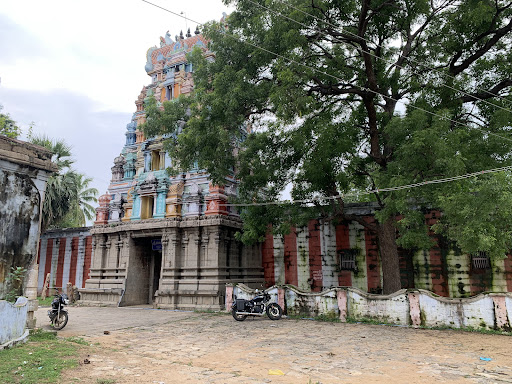
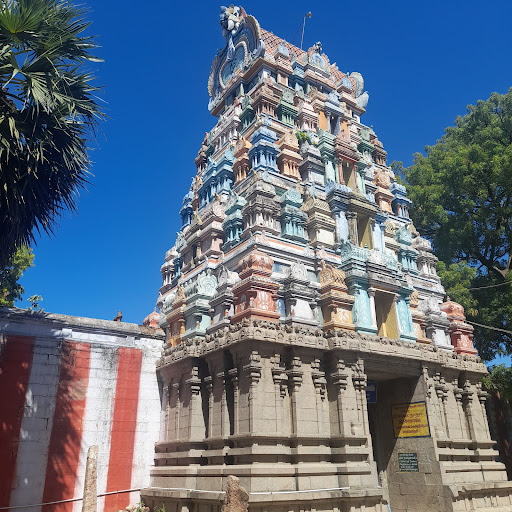
Some of the salient features of this temple are…. The temple is facing east with a 5 tier rajagopuram. No stucco images are found on the Balipeedam, Dwajasthambam and Rishabam are after Rajagopuram. Rishabam is not in straight line to sanctum Sanctorum and moved to side for the darshan of Nandhanar. Paintings of Dwarapalakas, Vinayagar with Shiva and Parvati, Sri Valli Devasena Subramaniyar are on both sides of mukha mandapam entrance. Dwarapalakas with anikai Vinayagar, are at the entrance of sanctum sanctorum. Moolavar is of swayambhu on a square avudayar in the sanctum sanctorum. In koshtam, Vinayagar, Dakshinamurthy, Maha Vishnu, Brahma and Durgai. In praharam, Adhikara Nandi, Vinayagar, Sri Valli Devasena Subramaniyar, Chandikeswarar, Saptamatrikas, jurathevar, Nagar, Maha Vishnu, Sri Kasi Viswanathar with Visalakshi, Natarajar with Sivakami ( two sets of which one set is installed and the other set is kapt as a loose sculpture ), Nalvar, Karaikal Ammaiyar, Nava kanniyar, Uroma Maharishi, Nandhanar on the Dwajasthambam base, Chandran, Suriyan, Bairavar and Navagrahas. Ambal is in a separate sannidhi facing South in standing posture. Ambal is in abhaya varada hastam.
ARCHITECTURE The sanctum sanctorum is on a pada bandha adhistanam with jagathy, three patta kumudam and pattikai. The Bhitti starts with vedikai. The pilasters are of Vishnukantha pilasters with square base, kalasam, kudam, plain mandi, palakai and tharanga pothyal. The prastaram consists of valapi, kapotam with nasikudus and viyyalavari. Mahara thundam are shown on the corners. The Vimanam above the prastaram is of 2 tala brick Vesara Vimanam. The mukha mandapa pillar has the sthala purana sculptures of two sisters separating rice from paddy. A kunthani / Ural with ulakkai are kept near that pillar to remind the sthala purana. Amman temple consists of sanctum sanctorum, ardha mandapam and mukha mandapam. The other features are similar to main sanctum sanctorum. An eka tala salakara vimanam is on the sanctum sanctorum. Ambal entrance mandapam is supported with two squatting lion pillars.
HISTORY AND INSCRIPTIONS As per the Nellai Mavattam book this temple might have been constructed during Rajaraja-I. Latter received contributions from Vijayanagaras, Nayakas and Venadu Kings. As per Rajaraja-I’s 28th reign year inscription records the name of this place as “Mulli Nattu Brahmadeyam Nigarilisola Chaturvedi mangalam – முள்ளிநாட்டு பிரமதேயம் நிகரிலிச்சோழ சதுப்பேதி மங்கலத்து சோழேந்திரசிங்க ஈஸ்வரத்து…… “, and Shiva as Kailayamudaiya Mahadevar – கைலாயமுடைய மகாதேவர்”. The other inscriptions also called as Cholendrasimha Isvaram and Sri Kayilayamudaiyar Srikoyil and Shiva was called as Kailayathu Alwar and Kayilayamudaiyar. Jatavarman Sundara Chola Pandya’s, 10th reign year incomplete inscription ( SII – XIV- No. 137, A. R. No. 615 of 1916.) on the North wall of the central shrine, records a gift made by the Sivabrahmanas of the temple of Cholendrasimha-Isvaramudaiyar at Nigarilisola chaturvedimangalam in regard to something which was done in the temple of Sri Kayilayamudaiyar in the same village. Jatavarman Sundara Chola pandya’s two disjointed fragment inscriptions ( SII- XIV- No. 138, A. R. No. 618-A of 1916.) on the North wall of the central Shrine, refer to separate gifts of money and land made by a few persons for burning a lamp in the temple of Kayilasamudaiyar (?). The year 10 is mentioned is fragment 1 while fragment 2 refers to year 8 (?), Nambirattiyar and to the...
Read moreShiva is worshipped as Ammainathar and his consort Parvathi as Aavudaiamman.
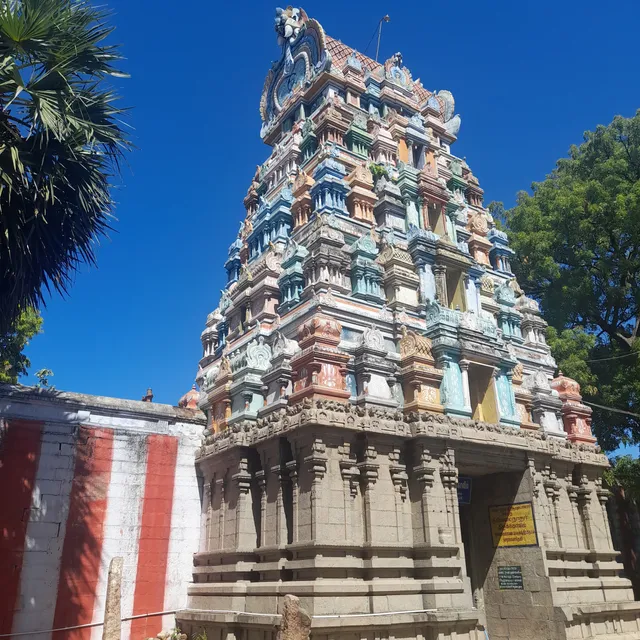
Sage Uromasar floated several flowers in Tamiraparani River. One among the flowers reached this place. He then installed a Lingam at this place and offered prayer to get mukti.
A pillar at this temple is having carving of Uromasa Maharishi doing Puja for Lord Shiva.
Offering prayer at this Shiva temple is equivalent to offering prayer to celestial body Chandra(Moon).
Another pillar is having carving of two sisters stamping into a mortar. These women, ardent devotees of shiva, offered Naivedya to Shiva using the hulled rice. Shiva, blown away by their devotion, made these women rich. These women built this temple using their wealth.
Bottom area of flag post at this temple is having carving of Nandanar facing Garbhagriha, who is one among the 63 Nayanars. Nandanar enjoys unobstructed view of presiding deity(Shiva) from here as Nandi in front of presiding deity is kept slightly on the right side. Nandanar generally would stand outside of Shiva temples and sing praises of Shiva and dance. It is believed that Shiva ordered Nandi to move aside allowing Nandanar to get clear view of...
Read more