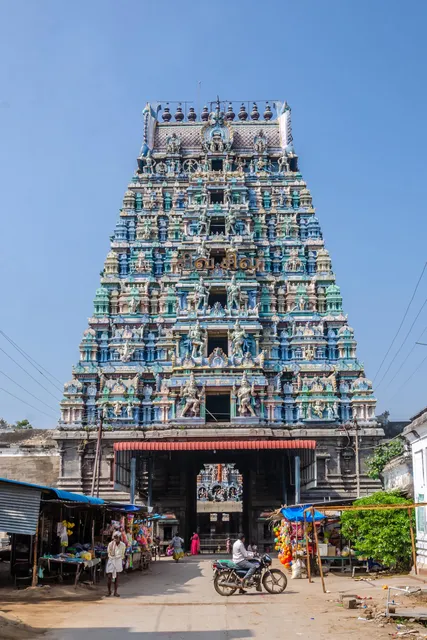
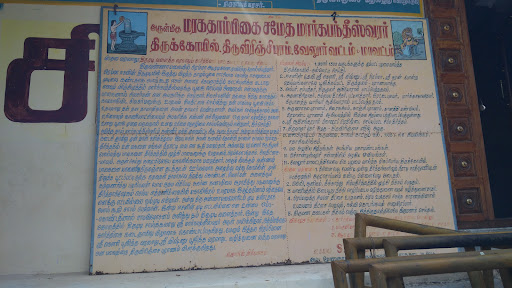
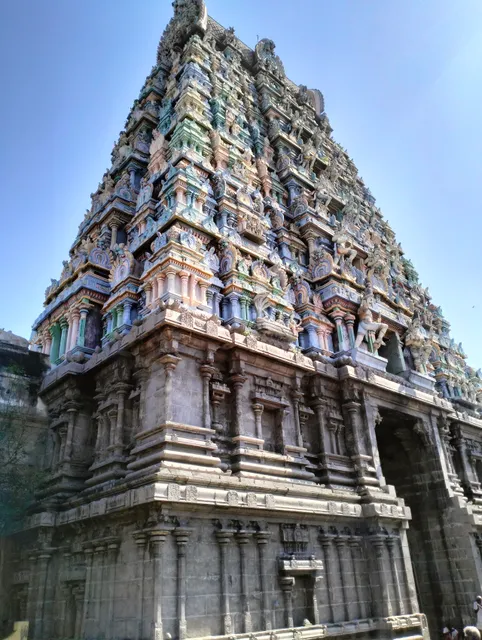
Margabandeeswarar temple, Virinjipuram.
Moolavar:Margabandeeswarar Urchavar:- Amman / Thayar:Maragadhambikai Thala Virutcham:Palm tree Theertham:Simha theertham Agamam / Pooja:- Old year:500-1000 years old Historical Name:Tiruvirinjipuram City:Virinjipuram District:Vellore State:Tamil Nadu Singers: -  Festival: 10 day Brahmmotsavam with flag hoisting and Theerthavari in Panguni (March-April) when the presiding deity is taken on a procession in different vahans, last Sunday in the month of Karthikai (November-December) when over 2000 devotees will have a dip in Simha tank, Adipooram in July-August. Shivrathri in February-March, Navarathri in September-October, are the festivals grandly celebrated in the temple when devotee crowd would be huge. Other festival days include full moon days, monthly Pradoshams (13th day either from new moon or full moon days), Amavasya the new moon day, Kruthika star days each month, Sashti in October-November, Visakam in May-June, Thaipoosam in January-February, Sankatahara Chaturthi each month (4th day either from new moon or full moon days), Karthikai deepam in November-December. Special pujas are performed on Tamil and English new year days, Deepavali and Pongal days.
Temple's Speciality: The presiding deity is a swayambumurthi in a leaning form. The rays of Sun fall on the Lord in the month of Panguni (March-April). Palm tree is the sthala Vruksha of the temple which is in the inner corridor – prakara of the temple. This has a peculiar character of giving the fruits in black in a year and white the following year. The importance of the temple lies in the Rudraksha roof above the Sanctum sanctorum. Virinjipuram has also the reputation of being the birth place of renowned Vedic scholar and Shiva devotee, Sri Appayya Dikshithar.
The temple is noted for child boon prayer. It is the staunch faith of the devotees that taking the first bath in Palaru river followed by dips in Brahmma and Simha theerthas (tanks) and going round the deity ensures child boon. People also pray for timely marriages. Devotees also throng the temple for relief from the effects of witchcrafts occupying the family or the individual.
Thanks giving: Devotees perform abishek to Lord with gingely oil, turmeric, corn flours, milk, curd, fruits, sugarcane juice, honey. Panchamirtham – a mixture of items -, sandal, rose water and sacred ashes. They also perform aishek to Mother Maragamdhika with turmeric powder and offer Saris and dhoti to the Lord. They also arrange feeding the devotees and abishek with conches in the month of Karthikai covering November-December. The wealthy donate liberally for the maintenance and renovation of the temple.
Greatness Of Temple:
The presiding deity is slightly leaning on the Eesanya – Northeast direction symbolizing His grace to Lord Brahmma to see the head of the Lord. Earlier, Brahmma lied saying that he saw the head of the Lord in Tiruvannamalai. To make amends for the wrong, He worshipped the Lord in this temple. Brahmma came to the place as a boy and was initiated to Upanayanam (sacred thread ceremony) with Brahmmopadesa (teaching of the Gayatri Mahamantra) and Shiva Deeksha. The word Virinjan denotes Brahmma. As Brahmma worshipped here, the place is named Virinjipuram.
Rays of Sun fall on the presiding deity during the Panguni month (March-April).
The Lord accompanied a trader Danabalan by name as a companion to him. He is, hence, known as Vazhi (Marga or path) Thunai (companion or Bandhu in Sanskrit), Nathar (God).
The roof above the sanctum sanctorum is of Rudraksha – Rudraksha Pandal. The temple is an outstanding example of Tamil architectural skill. This is the birth place of renowned Vedic scholar and Shiva devotee Sri Appaya Dikshithar.
Temple History:
Brahmma the Creator had once to bear the effect of speaking a lie. Though he did not really see the head of Lord Shiva in Tiruvannamalai, unwilling to admit the failure, he used a flower (Thazhamboo) that fell from the head of Shiva and...
Read moreAncient Temple of Lord Margabandeeswarar, Virinjipuram
The Margabandeeswarar Temple (also known as Vazhithunai Nathar Temple) at Virinjipuram, near Vellore, is a 1300+ year-old marvel dedicated to Lord Shiva. It stands as one of the oldest and most powerful temples in the Vellore district, rich in history, architecture, and divine legends.
Spiritual Significance: This temple is believed to be the place where Lord Brahma’s curse was absolved. According to legend, after Brahma lied to Lord Shiva during the Lingodhbhava episode, he was cursed to be born as a human child named Shivasarma. When young Shivasarma was unable to perform temple duties, Lord Shiva Himself appeared as an old man and taught him the rituals. The Lingam here is slightly tilted, symbolizing how the Lord bent forward to bless the boy — a rare and sacred feature.
This temple is also called Bhaskara Kshetram, where the Sun God worshipped Lord Shiva during the Tamil month of Panguni. The holy water (Theertham) here was created by Goddess Gowri Devi, so the place is also known as Gowripuram. It’s said that Lord Vishnu, Brahma, and Gowri Devi have all worshipped here.
Temple Highlights:
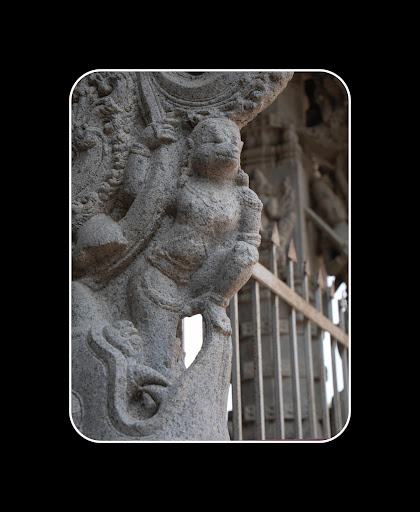
Majestic Rajagopurams (temple towers) and exquisite stone carvings from the Chola and Vijayanagara periods. Ancient inscriptions from Raja Raja Chola, Rajendra Chola, Pallava, and Vijayanagara kings. Lord Murugan of this temple has been praised in the hymns of Saint Arunagirinathar. Mentioned in Arunachala Puranam, Kanchipuranam, and Brahmanda Puranam. Birthplace of Sri Appayya Dikshithar, who composed the famous Margabandhu Stotram here for protection during travel.
🌞 Special Worship & Festivals: The temple is one among the Bhaskara Kshetrams, where the Sun God’s rays fall on the Lingam. The Karthigai Sundays (Tamil month of Karthigai) are celebrated in a grand manner here, similar to Raghu Sthalam, Tirunageswaram, and Srivanchiyam. The Theerthavari festival held on the last Sunday of Karthigai (Kadai Gnayiru) is especially famous.
Deities and Features:
Lord Shiva: Sri Margabandeeswarar / Vazhithunai Nathar Goddess Parvati: Sri Maragathambikai Sthala Vriksham: Palm Tree Theerthams: Simha Theertham, Sooli Theertham & Brahma Theertham
🕰️ Temple Timings: ⏰ Morning – 6:00 AM to 11:00 AM ⏰ Evening – 4:00 PM to 8:00 PM
📍 Location & Access: Situated about 18 km from Vellore Bus Stand. On the Chennai–Bangalore Highway, after the Vellore bypass, travel another 15 km till Sedhuvalai, then take a right towards Virinjipuram (just 1 km from the junction).
✨ Verdict: A serene and spiritually powerful temple, rich with divine legends, ancient architecture, and timeless energy. Perfect for devotees, history lovers, and travelers seeking divine grace and inner peace. A true spiritual gem of Tamil Nadu and a must-visit...
Read moreVirinjipuram temple is situated near Bengaluru Chennai National Highway after crossing Pallikonda Toll & nine Kms before reaching Vellore new Busstand. This is a magnanimous temple with prakarams constructed of Chalukya style with a very tall Gopuram. There is a belief that through underground tunnels Kings, Queens & Royal personnel reach Vellore Fort & vice versa in times of war, emergency, enemy attacks etc., so that future Royal generations can survive the enemy assault. There is a legend that during Utsavam periods when Utsav murthy leaves the temple,there are no darshans in the main temple till Utsava Murthy completes the cycle to other noted places & returns. The temple is vast, spacious, clean, well maintained, poojas are conducted regularly as per Agama Vidhana, regular annual celebrations conducted when thousands of devotees congregate. Such a nice temple in a village the green serenity, calm, no pollution, no rush, no hurry, divinity, orthodox gives peace of mind for worshippers. The temple can be reached from Katpadi station, turning left after the bridge towards KV Kuppam, Gudiyatham road. After Virinjipuram Railway station walking through shade, amidst green fields, no traffic, cool, leisure, pleasure added for about three or four kms to reach Virinjipuram. Near Railway station, TNEB substation & concrete poles production exists with quarters for essential service personnel ,& electricity bill payment counter. Good place to visit, enjoy, worship, divinity experience etc. Well maintained temple....
Read more