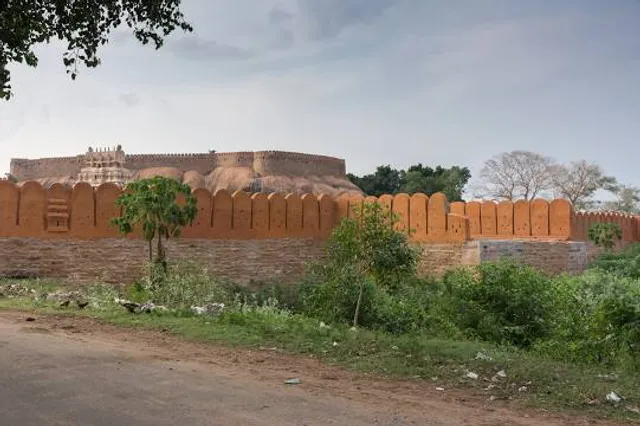
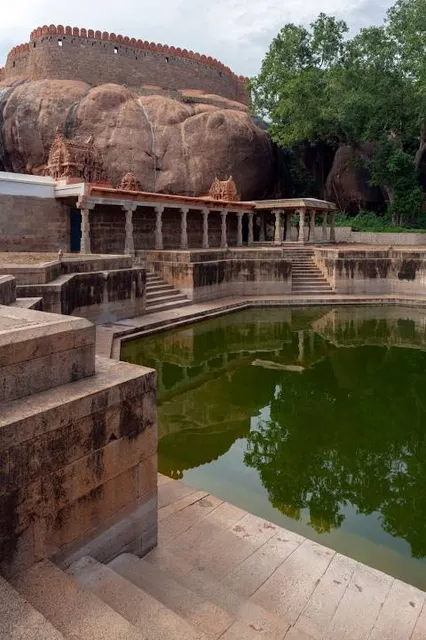
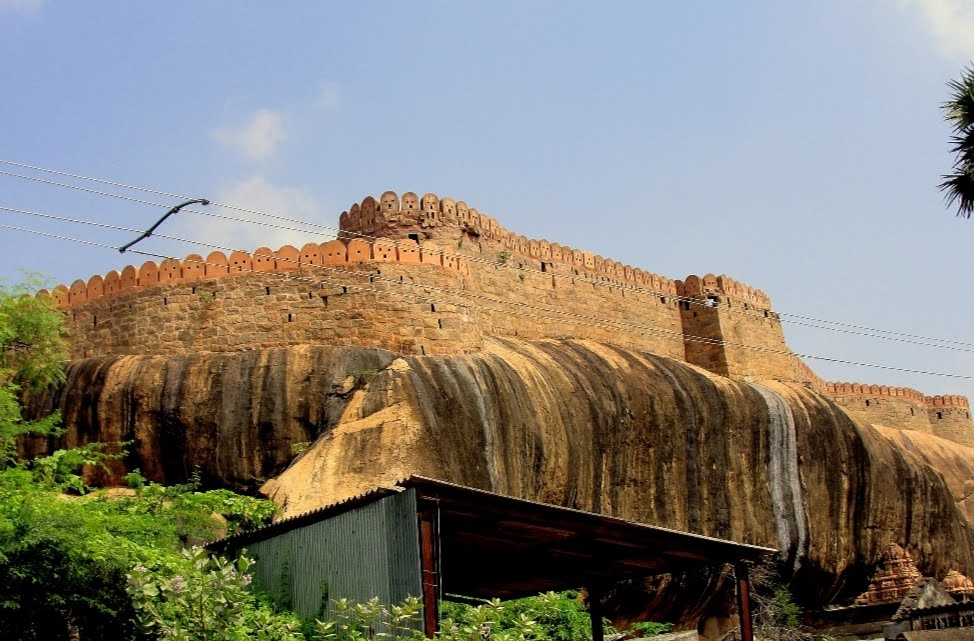
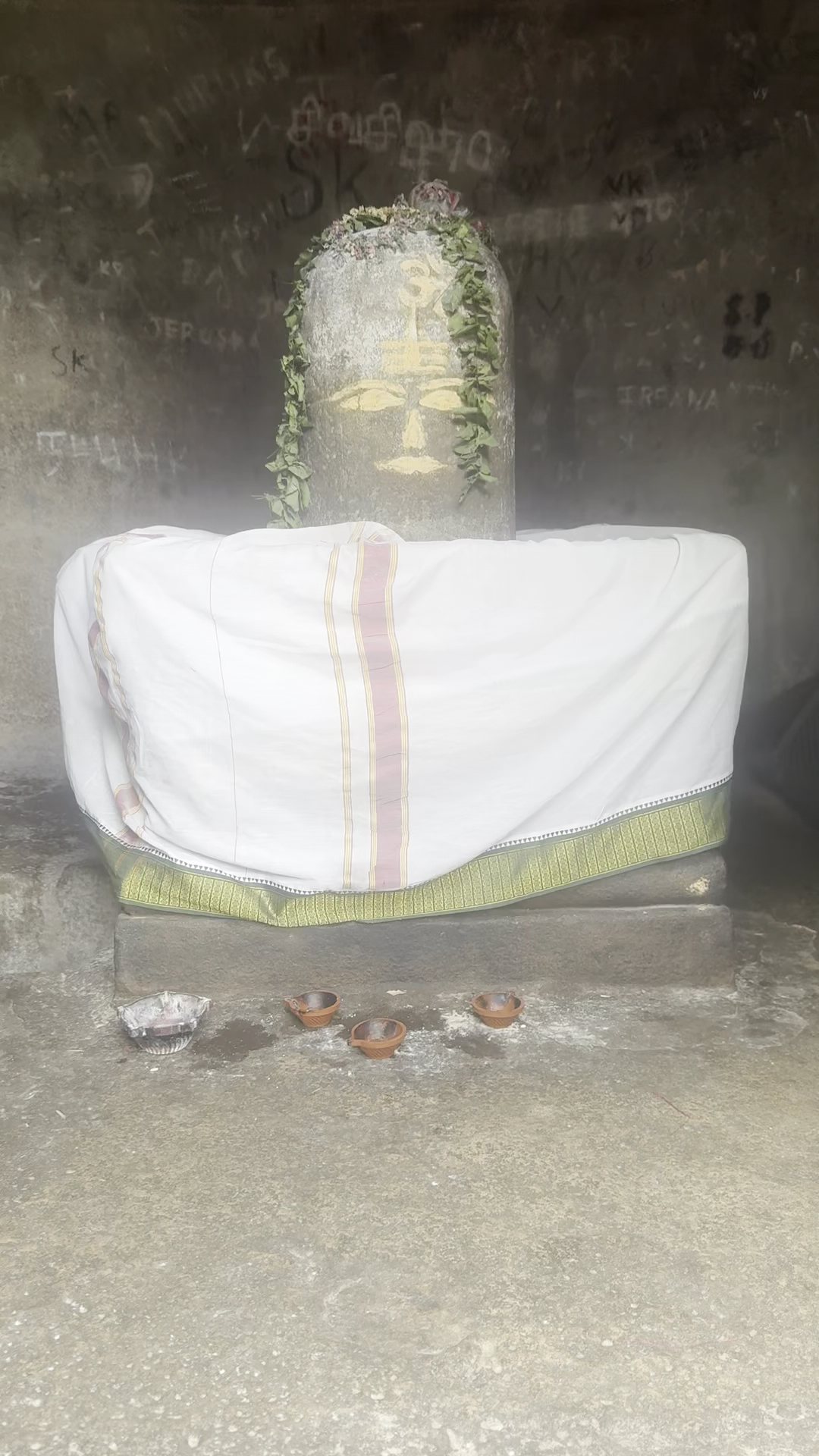
Thirumayam Fort is an ancient fortress located in the town of Thirumayam. Th,e fort is situated on top of a small hill and is surrounded by scenic landscapes, making it a popular tourist destination for visitors from all over the world. The Thirumayam Fort is a fascinating testament to the rich history and heritage of the region. The Thirumayam Fort was constructed during the 17th century by Sethupathi Vijaya Raghunathar , the ruler of the Pudukkottai kingdom, the fort is a fine example of the architecture and engineering skills of that era. The fort was built as a strategic defense structure to protect the kingdom from enemy attacks. The fort was a powerful construction in its time since it was constructed with granite stones and had walls that were over 40 feet high.The fort is known for its distinctive architectural style, a fusion of Dravidian and Islamic influences. The fort has two distinct sections, one which is the main fort and the other, a smaller fort located at the base of the hill. The smaller fort was used as a residehe by the royal family. One of the key attractions of the Thirumayam Fort is its well-preserved structure, which includes several watchtowers, bastions, and an underground tunnel that connects the fort to the palace.The Thirumayam Fort is also home to several other smaller temples, each with its own unique architecture and history. One of these temples is dedicated to Lord Vishnu and is believed to have been built during the 9th century. The temple’s architecture is a fine example of the Pallava style, and its intricate carvings and sculptures are a testament to the skill and craftsmanship of the artisans...
Read moreA very old rock cut temple in Pudukkottai district.
Thirumayam Fort, an ancient monument situated in Thirumayam town on the Pudukkottai-Karaikudi Highway in Pudukkottai District of Tamil Nadu is an ancient monument and history.
Fort was Built. in the year1687 by Raghunatha Raya Tondaiman, the Raja of Ramnad Vijaya Raghunatha Sethupathi became his successor.
The fort was renovated by Archaeological Survey of India in 2012 to maintain its heritage value.
It was here Oomathurai (alias Duraisingam), the younger brother of Panchalamkurichi chieftain Kattabomman was imprisoned inside the fort.
There are shrines dedicated to Hanuman, Sakthi, Ganapathi, Karuppar (guardian deities of the fort) on the south side and to Bhairava on the north side.
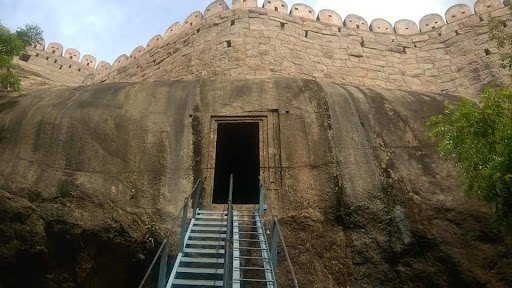
On the western side atop the rock there is a rock-cut cave that houses a lingam on yonipitha.
The south side has two rock cut temples dedicated to Sri Sathyamurthy and Sri Uyyavanda Nachiar while the other one is dedicated to Sri Sathyagireeswarar and Sri Venuvaneeswari. The former is Vaishnavite place of worship and the latter is that of Easwaran (Shiva).
This fairly preserved fort is less known than other forts in South India and the monuments often gets overlooked by the tourists for a better location. This fort and rock cut temples have yet another treasure: old rock paintings and they seem to be older...
Read moreThirumayam Fort is a 17th-century fort located in the town of Thirumayam, Pudukkottai district, Tamil Nadu, India. Here are some interesting facts about Thirumayam Fort:
Built by Vijaya Raghunatha Raya Tondaiman: The fort was constructed by Vijaya Raghunatha Raya Tondaiman, the ruler of Pudukkottai, in 1687. Strategic location: Thirumayam Fort is situated on a rocky outcrop, providing a strategic advantage for defense. Unique architecture: The fort features a unique blend of Hindu and Islamic architectural styles. Three layers of fortification: Thirumayam Fort has three layers of fortification, making it a formidable structure. Temples and shrines: The fort complex houses several temples and shrines, including the famous Thirumayam Perumal Temple. Museum: The fort now serves as a museum, showcasing artifacts and exhibits related to the region's history and culture. AS1 monument: Thirumayam Fort is recognized as an ASI (Archaeological Survey of India) monument, highlighting its historical significance.
Thirumayam Fort is a testament to the region's rich history and architectural heritage, attracting tourists and history...
Read more