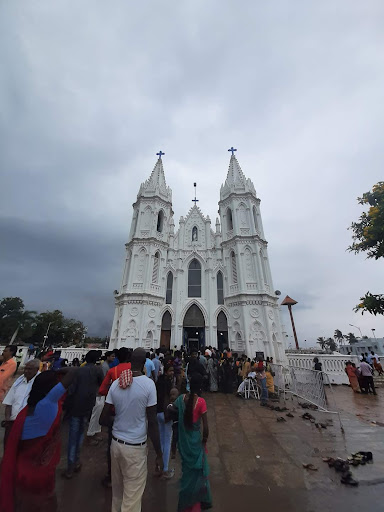
Lord Jesus Vailankanni was a part of the parish of Nagapattinam, but as pilgrims began to pour into Vailankanni, it was raised to the status of an independent parish in 1771, and Fr. Antonio de Rozario the last parish priest of the Church of the Immaculate Conception, Nagapattinam, was appointed the first Parish priest of Vailankanni. Nagapattinam had always been under the ecclesiastical jurisdiction of the Bishop of the Diocese of Mylapore. During that period the Diocese of Mylapore was administered under the Portuguese 'Padroado' (patronage). Under the Padroado system, the king of Portugal in Europe met all the expenses incurred by the Diocese of Mylapore, which remained under the ecclesiastical jurisdiction of the Roman Pontiffs.
Until 1847 the priests of St. Franciscan Missionaries who had looked after the province of Goa and Mylapore also looked after Nagapattinam and Vailankanni. The Franciscan origin and ownership of the Shrine was also perpetuated, by giving the place of honor to two Franciscan saints, St. Anthony of Lisbon and St. Francis of Assisi, on either side of the miraculous image of 'Our Lady', on the High Altar until 1961. Besides the last parish priest, Miguel Francisco Fernandez, who was of the Franciscan order, controlled the parish of Vailankanni till 1889. In 1890 the parish was handed over to diocesan priests.
Thereafter, the diocesan priests of the Diocese of Mylapore were in charge of Vailankanni. In 1952, when the new Diocese of Thanjavur came into being, and Vailankanni became a part of the new diocese, the priests of Thanjavur Diocese became the custodians of the Shrine. The administration of the new Diocese was imagesorarily placed under the apostolic administration of the Rt. Rev. Dr. Louis Mathias, S.D.B., who was then the Archbishop of the new Archdiocese of Madras-Mylapore.
On March 19, 1953, His Excellency the Rev. Dr. R. Arokiasamy Sundaram, DD., L. C. L., M. A., a priest of Mylapore Archdiocese was appointed as the first Bishop of the new Diocese of Thanjavur. He assumed charge of his Diocese on March 24, 1953.
Vailankanni being situated in the Thanjavur District came under the jurisdiction of the Diocese of Thanjavur. The Rev. Dr. R. Arokiasamy Sundaram showed keen interest in the development of Vailankanni Shrine and granted special spiritual privileges. 'Our Lady of Health Vailankanni' became the second patroness of our newly erected Diocese.
Elevation of the Shrine to the status of a Basilica
The greatest houour that can be conferred to a Church is to elevate it to the status of a Basilica. The word ‘Basilica’ is derived from the Greek word ‘Basilike’ and it originally signified a Royal Hall. In course of time this word has come to mean a large and beautiful hall. In ancient times kings from all over the world in general, and from Rome in particular, constructed large hall for administrative purposes. The first hall bearing the name of Basilica existed in Athens.
Jesus Christ being the King of Kings, and His Churches being His audience halls, the larger Christian Churches in Rome came to be called Basilicas.
Today, a Basilica is a consecrated Church usually built with the front facing the East, and generally constructed in one of the classical styles of architecture. It is oblong in shape with a broad nave ending in an apse. It is now stipulated that a church, in order to be called a Basilica, should contain some work of art, or it should contain some work of art, or it should house the body of a saint or a celebrated image much venerated in the land, or be a pre-eminent place of pilgrimage.
His Excellency, Dr. R.A. Sundaram D.D., L.C.L., M.A., the first Bishop of the diocese of Thanjavur, earnestly petitioned Pope John XXIII to raise the Shrine of Vailankanni to the Status of a Basilica and also requested His Holiness to enrich it with all the privileges attached to a Basilica for the spiritual benefit of the pilgrims. In 1962, when Bishop Sundaram went to Rome to attend the second session of the Second Vatican Council, he reiterated his request to the Holy...
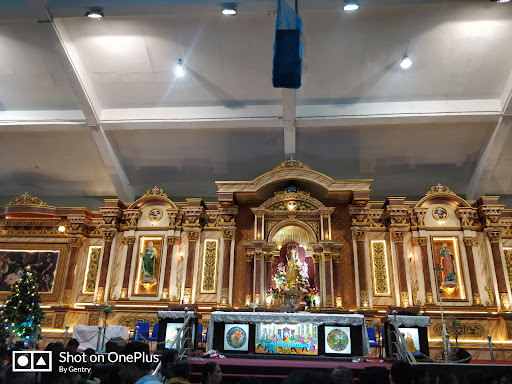
Read moreVery religious place, peace of mind. There is beach just in front of the church, Madha has shown blessing to the Pilgrims. Velankanni has one of the country's biggest Catholic pilgrimage centres, the Basilica of Our Lady of Good Health. Devoted to Our Lady of Good Health, it is popularly known as the "Lourdes of the East".[3] Its origins can be traced back to the 16th century. The church's founding is attributed to three miracles: the apparition of Mary and Jesus to a slumbering shepherd boy, the curing of a lame buttermilk vendor, and the survival of Portuguese sailors assaulted by a violent sea storm. It is built in the Gothic style, was modified by Portuguese and then further expanded later on due to the influx of pilgrims. The church building was raised to the status of basilica in 1962 by Pope John XXIII.
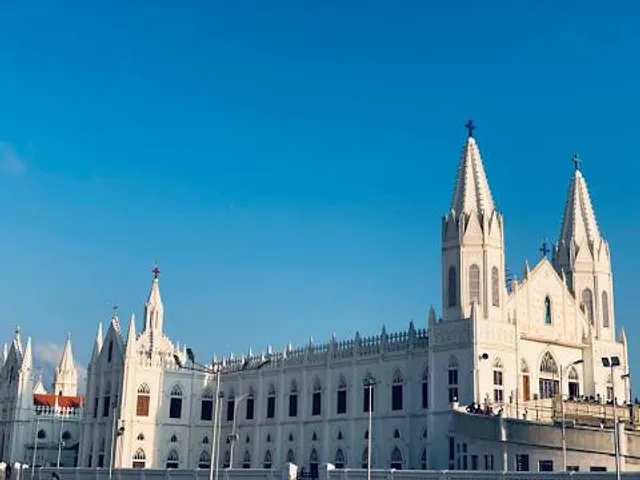
Annually, 20 million pilgrims flock to the shrine from all over India and abroad,[4] out which an estimated 3 million people visit the shrine during its annual festival from 29 August to 8 September.[3] The 11-day annual festival concludes with the celebration of the Feast of the Nativity of Mary on 8 September
Vailankanni is well connected by road and rail to the rest of the country. The East Coast Road (ECR) that runs from Chennai to Kanyakumari, connects the town to the rest of the country. The nearest operational airports are Tiruchirappalli International Airport, 165 kilometres (103 mi) away and Chennai International Airport, 300 kilometres (190 mi) away.
Road Due to the large number of pilgrims that visit this town, the Tamil Nadu State Transport Corporation (TNSTC), State Express Transport Corporation (Tamil Nadu) (SETC) and several private bus operators ply to cities like Bengaluru, Chennai, Coimbatore, Ernakulam, Muvattupuzha, Madurai, Nagercoil, Salem, Thoothukudi, Tirunelveli and Trivandrum. The Kerala State Road Transport Corporation runs a daily bus service to Changanassery and Cherthala.
The TNSTC– Kumbakonam division operates intercity buses to Tiruchirappalli, Thanjavur, Pudukkottai, Karaikudi, Tiruvarur, Kumbakonam, Thiruthuraipoondi, Pattukkottai, Pondicherry, Karaikal and Nagappattinam from Velankanni.[8]
Rail Velankanni railway station is a terminal station on the 10 kilometre long Nagapattinam - Velankanni broad gauge line. The foundation stone of the line was laid in 1999 and it was completed in 2010 at a cost of Rs. 48 crores.[9] The line is part of the Tiruchirappalli railway division of Southern Railway zone of the Indian Railways.
The Vailankanni –Chennai Egmore Link Express runs daily with only four coaches from Velankanni, which then is coupled with Kamban Express at Nagappattinam Junction for its journey towards Chennai . The weekly Velankanni Express between Vasco da Gama, Goa and Velankanni is operated by South Western Railway zone.[10] Apart from the express trains, two passenger trains are also operated daily, one each to Karaikal and Nagappattinam. Special trains are operated from places like Chennai, Mumbai, Secunderabad, Bangalore, Vasco da Gama, Kollam, Ernakulam, Tirunelveli and Nagercoil during the months of August and September for the annual...
Read moreVelankanni (Vēḷāṅkaṇṇi), is a Special Grade Panchayat Town in Nagapattinam district in the Indian state of Tamil Nadu. It lies on the Coromandel Coast of the Bay of Bengal, 350 km south of Chennai(Madras) and 12 km south of Nagapattinam. Once a port that traded with Rome and Greece,[1] the tiny commercial center gradually lost its importance to the larger city of Nagapattinam. The canal built to link this town with Vedaranyam still lies to the west. The Vellayar, a minor branch of the Cauvery River, runs south of the town and discharges into the sea. The town was among the worst hit by the tsunami caused by the 2004 Indian Ocean earthquake.
The town is home to one of the most visited Roman Catholic Latin Rite shrines called the Basilica of Our Lady of Good Health.
Velankanni has been chosen as one of the heritage cities for HRIDAY - Heritage City Development and Augmentation Yojana scheme of the Government of India. Vailankanni is well connected by road and rail to the rest of the country. The East Coast Road (ECR) that runs from Chennai to Cuddalore, connects the town to the rest of the country. The nearest operational airports are Tiruchirappalli International Airport, 165 kilometres (103 mi) away and Chennai International Airport, 300 kilometres (190 mi) away.
RoadEdit
Due to the large number of pilgrims that visit this town, the Tamil Nadu State Transport Corporation(TNSTC), State Express Transport Corporation (Tamil Nadu) (SETC) and several private bus operators ply to cities like Bengaluru, Chennai, Coimbatore, Ernakulam, Madurai, Nagercoil, Salem, Thoothukudi, Tirunelveli and Trivandrum. The Kerala State Road Transport Corporation run a daily bus service to Changanassery.
The TNSTC– Kumbakonam division operates intercity buses to Tiruchirappalli, Thanjavur, Pudukkottai, Karaikudi, Tiruvarur, Kumbakonam, Pondicherry, Karaikal and Nagappattinam from Velankanni.[9]
RailEdit
Velankanni railway station is a terminal station on the 10 kilometre long Nagapattinam - Velankanni broad gauge line. The foundation stone of the line was laid in 1999 and it was completed in 2010 at a cost of Rs. 48 crores.[10] The line is part of the Tiruchirappalli railway division of Southern Railway zone of the Indian Railways.
The Vailankanni –Chennai Egmore Link Express runs daily with only four coaches from Velankanni, which then is coupled with Kamban Express at Nagappattinam Junction for its journey towards Chennai . The weekly Velankanni Express between Vasco da Gama, Goa and Velankanni is operated by South Western Railway zone.[11] Apart from the express trains, two passenger trains are also operated daily, one each to Karaikal and Nagappattinam. Special trains are operated from places like Chennai, Mumbai, Secunderabad, Bangalore, Vasco da Gama, Kollam, Ernakulam,Tirunelveli and Nagercoil during the months of August and September for the annual...
Read more