
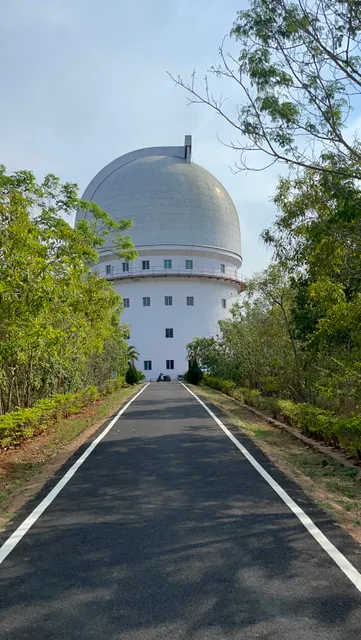
The Vainu Bappu Observatory is an astronomical observatory owned and operated by the Indian Institute of Astrophysics. It is located at Kavalur in the Javadi Hills, near Vaniyambadi in Tirupathur district in the Indian state of Tamil Nadu. It is 200 km south-west of Chennai and 175 km south-east of Bangalore.
 Learn more insights from Wanderboat AI.



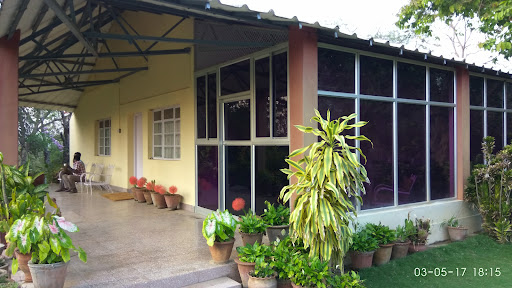
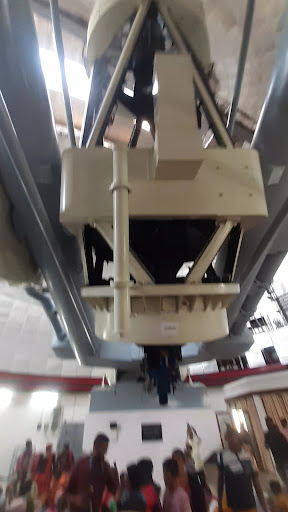


Vainu Bappu Observatory
The Vainu Bappu Observatory (VBO) is a significant astronomical research facility located in Kavalur, Tamil Nadu, India. Operated by the Indian Institute of Astrophysics, it plays a crucial role in advancing astronomical research and education.Location and Environment
Situated in the Javadi Hills, approximately 200 km southwest of Chennai and 175 km southeast of Bangalore, the observatory is positioned at an altitude of 725 meters above sea level.
The site is chosen for its favorable conditions for astronomical observations, being relatively free from light pollution and industrial disturbances. The surrounding area is rich in tropical greenery and wildlife, providing an ideal environment for both research and conservation.
Historical Background
The origins of the observatory trace back to 1786, when William Petrie established the Madras Observatory in Egmore, which later moved to Kodaikanal.
In the 1960s, M.K. Vainu Bappu, then the director of the Kodaikanal Observatory, identified Kavalur as a suitable location for a new observatory due to its excellent sky conditions. The observatory officially began operations in 1968 with a 38 cm telescope.
In 1986, the observatory was renamed in honor of Vainu Bappu after his death in 1982, and the 2.3-meter telescope was inaugurated, which remains one of the largest telescopes in Asia.
Telescopes and Research Facilities
The observatory is home to several significant telescopes, including:
2.3-meter Vainu Bappu Telescope: This telescope, inaugurated in 1986, is designed for deep-sky observations and has been instrumental in numerous astronomical discoveries, such as the detection of rings around Uranus and the discovery of new celestial bodies.
40-inch Telescope: Installed in 1972, this telescope has contributed to significant discoveries in astronomy and has trained many generations of astronomers.
J.C. Bhattacharya Telescope: A newer addition, this 1.3-meter telescope was installed in 2014 and is equipped for various observational tasks.
The observatory has continually upgraded its instruments, incorporating modern technology to maintain its competitive edge in astronomical research.
Significant DiscoveriesThe Vainu Bappu Observatory has been pivotal in several groundbreaking astronomical discoveries, including:
The presence of rings around Uranus.
The identification of a new satellite of Uranus.
The detection of an atmosphere around Ganymede, a moon of Jupiter.
Studies on various stellar phenomena, including the dynamics of supernova SN 1987A and lithium depletion in giant stars.
These contributions have solidified the observatory's reputation as a leading center for astronomical research in India and beyond.In summary, the Vainu Bappu Observatory stands as a testament to India's commitment to advancing astronomical science, offering a unique blend of historical significance and cutting-edge research...
Read more
This observatory, located at Kavalur in the Javadi Hills, near Vaniyambadi in Vellore district, belongs to Indian Institute of Astrophysics (IIA, headquartered in Bangalore) which is a premier research institute in Astronomy and Astrophysics under the Indian Department of Science and Technology. This site was chosen by Dr. Vainu Bappu (hence the name) in the 60s and the early observation started in as early as 1968. IIA commemorated 50 years of service of VBO in 2018 August. There are currently majorly 3 telescopes operating to make scientific observations of the night sky objects. One is with a diameter of 2.34m (also known as Vainu Bappu Telescope), one is with a diameter of 1.3m (also known as Jagadish Chandra Bhattacharyya Telescope) and the other one is with a diameter of 1.02m. The 2.34m Vainu Bappu Telescope is one of the significant telescopes of India and till date the LARGEST TELESCOPE OF INDIA IN OPERATION. The scientific data quality obtained from these telescopes, especially the 1.3m JCBT is really good. Also there is one 30 inch telescope that's currently under testing and a few other small telescopes are there for the visitors. Every Saturday visitors from different places visit this observatory. The observatory spans over an area of about 100 acres. Besides the telescopes, the other facilities of VBO include accommodation for the observers or the special visitors, quarters for the employees, Laboratories, Liquid Nitrogen plant, Aluminizing (for the telescope mirrors) chambers, mess etc. There are permanent and temporary employees (Engineers, telescope operators, helpers) who maintain the area and scientists and PhD students (in Astronomy) come here regularly from IIA or other astronomical institutes to make scientific observations. The nearby important places are Bangalore (173 km), Chennai (211 km), Pondicherry...
Read more
People who loves to explore space, stars, sun, moon, etc., This place is for you.
I visited this place on Saturday (14-09-2024)
The ticket rate for a person is ₹50/- One need to do Registration.
This place is open for public only on Saturday's and not on weekdays. Plan accordingly.
Entry Time at 2pm as first batch, 3pm as second batch.
Don't expect to experience the telescope personally. You can view the telescope how it looks, how it is operated. You can experience this.
It comes under Asia's 3rd largest telescope.
The place is very good to explore and good for people who are interested to learn astrophysics. They said we get to experience their telescope personally after 7pm.
If anyone from chennai - Bangalore planning for a trip here. You can spend your here time for like 3hours. You can visit jamunamarathur which near to this place. You can visit beeman falls, There's a lake and park at next stop to beeman falls where you can enjoy boat ride.
There's a canteen inside where you can buy snacks at reasonable price. Ex: biscuits, cool drinks, water bottle, tea and coffee.
Separate washroom for both men and women.
It may be difficult for Senior citizen people who cannot walk a long distance, you need to walk atleast 500m to go inside to explore this vainu bappu observatory. Plan before and try to come along with wheelchair if you are a person or someone with difficulty in walking.
The telescope is placed on the top of building for which you need to go through stairs. There's a lift inside for people who cannot go upstairs or senior citizens. It is well maintained and the place is very good...
Read more


