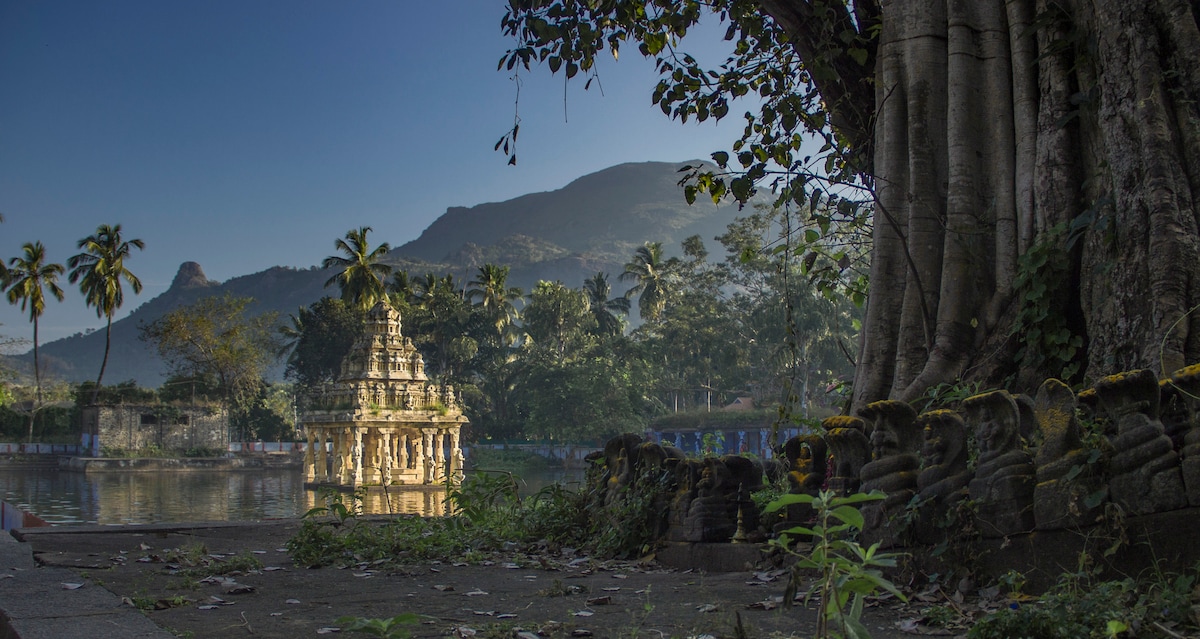
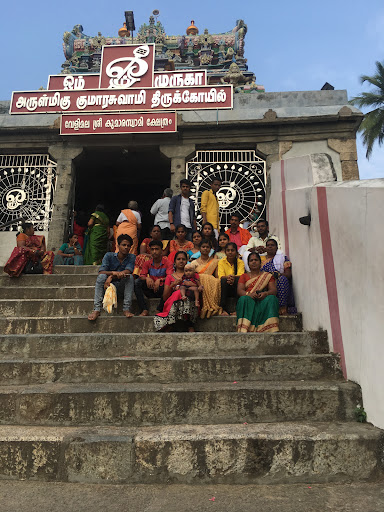
குமாரகோவில் (കുമാരകോവില്) is a small village in Kanyakumari district. Here is the famous Subrahmanya (Muruga) Temple by the name of "Velimalai Kumaraswamy Temple'. The temple was built on a hill named 'Velimalai'. The name "Veli" was named from the malayalam word "veli" means marriage.It is the place where marriage of Murugan and Valli was done. Koravans used to come to the temple for marriage of valli ,since valli devi belongs to koravan community.Lord Muruga and his consort Goddess Valli are the main deities. It is believed that they married here. It is built on a rocky terrain about 200 feet in height.
The rock cut temple with stone carvings is a splendid structure. A large water body is seen in the surrounding. Majority of the devotees are from Kerala state. A police party and band from Kerala state is present on certain celebrations of this grand temple. Many children get their first feed (choor\Oonu kodupu) in this temple. There is a shed for holy animals- cow, bull, peacock in the temple courtyard. Kuramakoil is one of the holiest places for Hindus. It is about 34 kilometers from Kanyakumari and around 50 km from Trivandrum airport. Around 5 kilometers from Thakkallay (thucalay) town bus stand, many buses are available to Kumarakovil.
Kumarakovil, the Murugan Temple Kumarakoil is one of the important and renowned among the Murugan temples in the district of Kanyakumari Tamil Nadu. It is located near Thuckalay, 15 km from Nagercoil. Kumara Koil, also called "Kumara Shethram" and "Subramania Sthala" in Malayalam language, and "Thiruveragam" in ancient Tamil scripts is at the foot hills of the Velimalai Hills also known as "Velvi Malai", and Merkada malai means the southern end of the western ghats. Prior to 1950, Kanyakumari District was first with Chera Kingdom (Chera Nadu) and later with Trivancore samasthanam (province) and then with present-day Kerala State. During Tamil Sangam period, Kumara Koil was known as Thiruveragam as evidenced from Thirumurugattupadai, the sangam literature written by poet Nakkeerar. The name of the temple has changed since Tamil Sangam period, under the successive rulers of the area. Thus, Kumara koil is also known as Thiruveragam (Thiru Earagam), Malai Nattu Oru Thiruppathi, Subramania Sthala, Kumara Shethra etc.
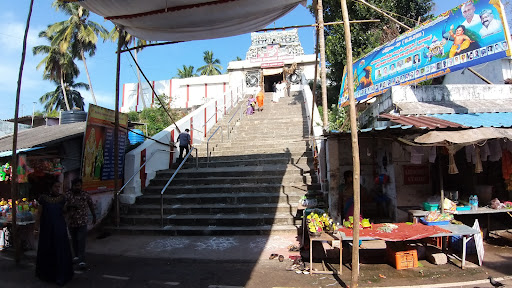
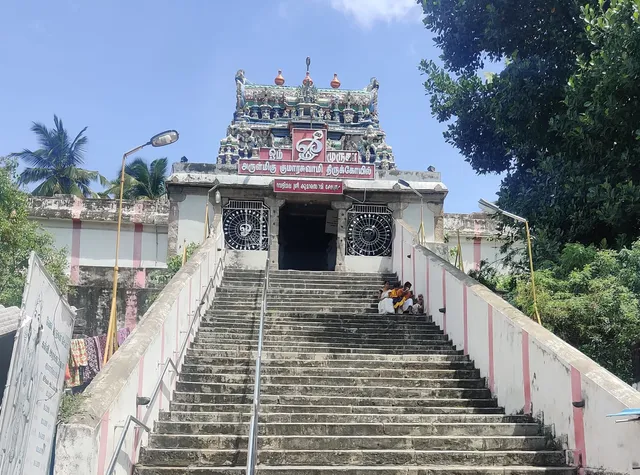
The temple is built on the foot hills of Veli Malai where, according to legends, Lord Muruga enacted a drama to win the heart of Valli the divine child found in the hillock by Nambi Arasan, a chieftain ruled over the place with Thirukurangudi (Valliyoor) as his capital. The temple faces east and can be reached by a flight of thirty eight steps. Beyond the comparatively small but beautiful rajagopuram, Veerabagu and Veeramagendra stand guard of the Lord. The statue of Muruga in the Moolasthanam is in standing posture. It is eight feet eight inches height in varadha hastham. The height of the statue of Valli amman is to the left side of the Lord in standing porture and is six feet two inches height. Apart from Valli sametha Murugan sannithanam (temple), sannithanams are dedicated to Lord Shiva (Mahadevar), Parvathy (Shivakami Ammai), Kalyana Vinayagar, Shree Dharma Sastha, Ilaya Naynar (Child Murugan), and Arumuga Nayinar (Brahmachari Murugan). A Sannithanam has been dedicated to Dhakshan. This is considered to be a unique feature. This may be perhaps Dhaksha Prajapathi, one of the first creations of Lord Brahma and father in law of Lord Shiva might have attended the divine marriage of Lord Muruga in his capacity as maternal grandfather. The sacred tree (sthala virusham) is Vengai Tree. The tree has died long ago and the trunk could be found now in a separate enclosure. The Theppakulam (sacred lake) where the devotees take bath before darshan (oblation) of the Lord, bears fresh stream water sourced from the hill top, all the time. There are separate enclosures for the sacred cows, bulls, pecock etc., in the temple enclosure. Devotees feed them and also the fish in the...
Read moreArulmigu Velimalai Kumaracoil Shri Murugan Temple is located in Velimalai, Tamilnadu at a distance of 90 kms from Tirunelveli and 30 Kms from Kanyakumari. It is believed that this temple was built before 3000 years back. Set in scenic surroundings, the temple is renowned among all the Murugan temples in Kanyakumari Dist.
The statue of Lord Muruga found here is around 8feet 6 inches. The idol of Goddess Valliamman is of 6 feet 8 inches is found on the left side of Lord Muruga. As Lord Murugan stayed here as VENGAI Tree to marry Valli, this tree became the holy tree of this temple.
As per the Legend, Valli Kalyanam, Lord Muruga’s wedding with Valli, took place here. Many believe that Nambi Rajan the adopted father of Valli was the ruler of the place. It is also believed that this was the place where Valli played with her friends while taking care of the Thinai – a crop – fields. People also believe the place was the one where Lord Muruga stood as the Vengai tree for Valli.
The natural springs on the hill are said to be associated with Valli.This rock cut hill temple is built on top of a small hill accessed through a flight of 300 steps. Much of the temple is within a cave. The cave temple is in three levels successively increasing in elevation.There are also shrines to Vinayakar and Kasi Viswanathar here. The construction in this temple is attributed to the Pallava rulers and to the Madurai Nayak rulers.Festivals: The annual Bhramotsavam is celebrated in the month of Maasi. Padi Utsavam is celebrated on Tamil new years day in the month of April, and the asterism of Kartikai in the month of Aadi is also celebrated here.
Vel was the surname for the Ay rulers. he Ay kingdom was a medieval Hindu feudal kingdom on the Malabar coast of South India. The hill that belonged to the Ay rulers came to be called as Velimalai. It is also known as Velvi Malai since Lord Murugan performed a yagna of sublime love, for the purpose of union of jivatma with Paramatma. Kumarakovil is also known as Kumara Kshetram and Subrahmanya Sthala in Malayalam. The early Tamil epic Cilappatikkaram refers to the temple as Chera Nattu Aeragam.
The temple is accessed through a flight of forty steep steps. Lord Murugan faces the east and said to be facing Sthanumalayan (Lord Siva) of Suchindram. The idol of Lord Murugan is a monolithic sculpture measuring eight feet and eight inches in height. Its long ears indicate that it belongs to the Buddhist period. Goddess Valli who adorns the sanctum is six and a half feet tall. Nandipadam and Murugan Padam on the top of the hill are believed to be the imprints of Nandi and Murugan.
This is said to be the birth place of Valli. Valli Guhai is on the top of the hill which is two kilometers offthe main temple, Valli Sunai, a pond where Valli took bath, Valli Solai, the millet field that Valli guarded,and Kizhavan Solai is where Murugan came in the disguise of an old man to woo Valli. The Theppakulam(sacred lake) where the devotees take bath before darshan of the Lord bears fresh stream water all the time.
There are separate enclosures for the sacred cows, bulls, peacock etc., in the temple enclosure.Devotees feed them and the fish in the Theppakulam (sacred tank). The protocol of worship offeredhere is Kerala Tantram. Majority of the devotees are from Kerala state. A police party and band fromKerala state is present on certain celebrations of this grand temple. Many children get their first feed(choor\Oonu kodupu) in this temple.
Temple timings : 5 am – 12 noon and 6.30...
Read moreKumarakoil is also known as Kumara Kshetram and Subrahmanya Sthala in Malayalam. The early Tamil epic Silapathikaram refers to the temple as Chera Nattu Earagam. Kumarakoil is a very ancient temple, as attested by the massive sculpture of Lord Murugan in a style dating from the Buddhist period. Buddhism probably flourished from 650-850 CE in Kerala. However, the available inscriptions about the temple dates from the 18th century CE only. The ancient poetry Thirumurugattru Padai written by poet Nakkeerar refers to the place unique in the sense that the devotees there wear only wet clothes only in the lower part of their body and enter the temple with flowers to have a darshan. This unique feature of worship is being followed there at Kumarakoil till date.
The Tamil epic Silapathikaram written by Illangovadigal refers four Kshetras (temples) as Padai veedu of Lord Muruga. They are Thiruchendur, Kongu Nattu Shengodu, Chola Nattu Venguntu and Chera Nattu Eragam (Thiru Eragam). Nachinarkiniyar who had written meaning (arumpathavurai) for the poetry Thirumurugattupadai asserted that Earagam is ‘Malai Nattu Oru Thirupathi’. Malai Nadu means Cheralam now known as Kerala. Veli Malai was part of Travancore Samasthanam in olden days. The place was part of Cherala Nadu when Silapathikaram was written. After Independence too this place was part of the present Kerala State. After a prolonged agitation under the leadership of great leaders like Nesamani Nadar, Ponnappa Nadar etc., the taluks of Thovalai, Agastheeswaram, Kalkulam, Vilavancode, and half of Neyyatinkarai were ceded to Tamil Nadu. In the intermittent period, when Earagam was with Cheralam, the scholars like Arunagirinathar (15th century) a staunch devotee of Lord Muruga was probably interested in creating one of the Padai veedu near Kumbakonam, one of the temple cities in Tamil Nadu. In the belief that the people of Tamil Nadu had lost track of Tiruveragam, one of the Padai Veedu referred to in ancient scriptures, he had written that Earagam is Swami Malai, without considering the fact, that Illangovadigal, lived thousands of years before him had written that Earagam is in Chera Nadu. Swami malai is in erstwhile Chola Nadu. The temple dedicated to Lord Muruga there is in the top of a man-made hillock and the existing landmarks and practice referred to about Earagam in Thirumurugattupadai is lacking there.
In the history of the temple written by Shri Annalar Adigal, it is stated that, the present-day Kerala was known as Malai Nadu. The present day Veli malai was known as Velvi malai. Before that it was known as Merkadamalai, means last part of the western Ghats. As an evidence, he refers to a stone carving found in Thirunanthikarai, about ten miles from Kumarakoil wherein it reads ‘Rajaathitha Thevan Perumpadai Nayagar Malai Nattu Nanthikarai Pudhur’ and another stone carving found at Thiruvidhangodu, reads “Malaimandalathu Ravivarmaraya Kulasekaraperuman peruntheruvil chetti Velayuthaperuman” These evidences conform to the assertion of Nachinarkiniyar that Earagam is Malai Nattu...
Read more