Aiyarappar temple
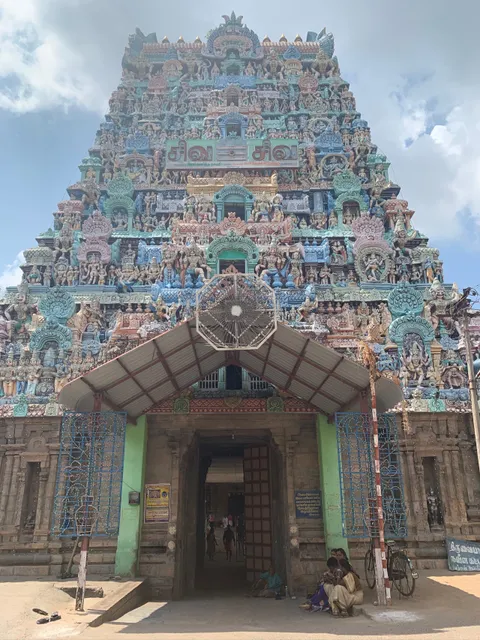
Aiyarappar temple (also called Panchanadeeswarar temple) is a Hindutemple dedicated to Shiva located in the village of Tiruvaiyaru, Tamil Nadu, India.[1] The Five Rivers are Vadavaru, Vennaaru, Vettaaru, Kudamuruttiyaaru and Kaaviriyaaru. Shiva is worshiped as Aiyarappar, and is represented by the lingam and his consort Parvati is depicted as Dharmasamvardhini. The presiding deity is revered in the 7th century Tamil Saiva canonical work, the Tevaram, written by Tamil poet saints known as the nayanars and classified as Paadal Petra Sthalam.
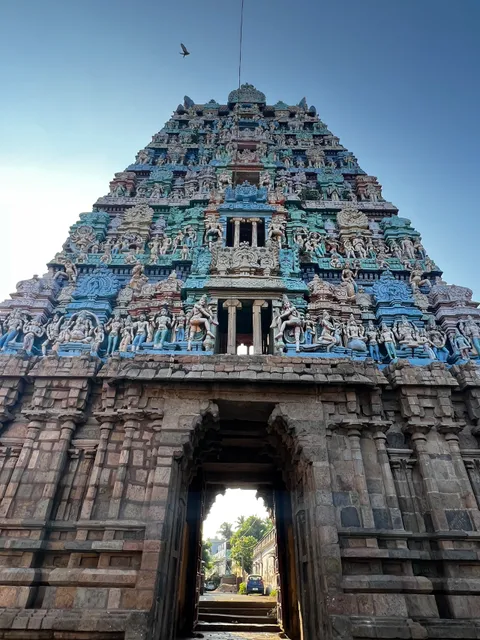
There are many inscriptions associated with the temple indicating contributions from Cholas, Thanjavur Nayaks and Thanjavur Maratha kingdom. The oldest parts of the present masonry structure were built during the Chola dynasty in the 9th century, while later expansions, including the towering gopuram gatehouses, are attributed to later periods, up to the Thanjavur Nayaks during the 16th century.
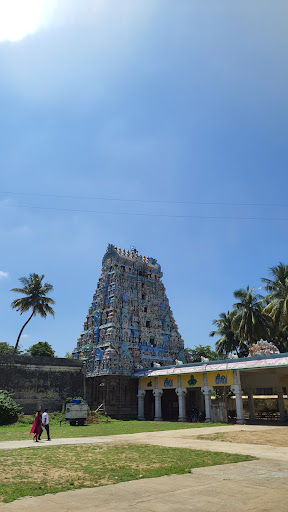
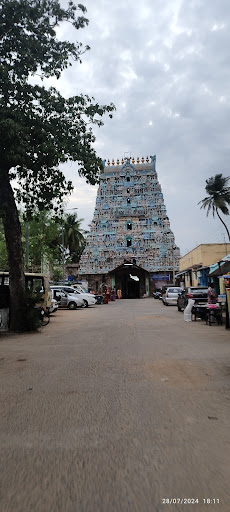
The temple complex is one of the largest in the state and it houses four gateway towers known as gopurams. The temple has numerous shrines, with those of Aiyarappar and Dharmasamvardhini being the most prominent. The temple complex houses many halls and three precincts; the most notable is the second precinct built during the Vijayanagar period that has many sculptures. The temple has six daily rituals at various times from 5:30 a.m. to 10 p.m., and twelve yearly festivals on its calendar. The temple is now maintained and administered by Hindu Religious and Charitable Endowments Department of the Government of Tamil Nadu, Before 1984 it was maintained by philonthropic personalities like.
Several inscriptions in the temple affiliates the temple to the Cholas, Pandyas, and other rulers. Karikala Chola, Rajaraja, Jatavarman Sundara Pandyan, and Krishna Devarayar are associated with Thiruvaiyaru. The temple has two distinct divisions called Uttarakailasam and Dakshinakailasam. Uttarakailasam was built by Rajaraja Cholan's queen in the late 10th century who also made several endowments . Dakshinakailasam was renovated by Rajendra Cholan's queen. Appar, one of the important Nayanmar, was closely associated with this shrine and dedicated one of the songs in Thevaram to this temple.[6]There is an inscription (ARE 219 of 1894) dated to the 21st regnal year of Rajaraja I on the South wall of the temple indicating sale of land. Another inscription recorded during the 22nd year indicating a gift of 96 sheep for the perpetual lighting of the temple. An inscription during the 24th year of the king indicate various types of jewelry gifted to the presiding and processional deities. An inscription (ARE 215 of 1894) on the east wall of the mandapaindicated gift of eight pots of silver by Vimaladitta, the son-in-law of Rajaraja. A record of gift of land during fourth regnal year of Rajendra I is found in ARE 216 of 1894. The other major inscription during the thirty second year of Rajadhiraja I indicates the victories of the ruler against three Pandya rulers namely Manabharan, Vira Pandya and...
Read moreAiyarappar temple is a Hindu temple dedicated to Lord Shiva located in the village of Tiruvaiyaru, Tamil Nadu, India. The temple is incarnated by the hymns of Thevaram and is classified as Paadal Petra Sthalam. Thiruvaiyaru means Five Rivers around the city. The Five Rivers are Arisilaaru, Vennaaru, Vettaaru, Kudamuruttiyaaru and Kaaviriyaaru. The presiding deity of the Siva temple here, Panchanatheesvarar (in Tamil, Ayyarappan ' both mean the same thing, `the Lord of the Five Rivers') also gets his name from them. Thiruvaiyaru is considered as holy as Varanasi and bathing in the Cauvery here is as guaranteed to rid devotees of sins as bathing in the Ganges.This Shivasthalam is one of the 6 most sacred places on the banks of river Cauvery which is considered as equivalent to the temple at Varanasi. The other 5 Shivasthalams are Thiruvenkadu, Tiruchaaikkadu (Chaayaavanam), Mayiladuthurai, Tiruvidaimarudur and Tiruvanchiam. Tiruvaiyaru is one of the big and famous temples for God Shiva and is known as Dakshina Kailasam. Tiruvaiyaru is considered to be the 51st in the series of Tevara Stalams in the Chola kingdom located north of the river Kaveri. The temple is located in Tiruvaiyaru (also spelt as Tiruvaiyaru) a panchayat town in Thanjavur district in the Indian state of Tamil Nadu. It is situated on the banks of the river Kaveri, 13 km from Thanjavur, Thiruvaiyaru has an old Shiva temple dedicated to Panchanatheeswar. Though pilgrims flock to this temple throughout the year,The Thiruvaiyaru temple is one among a group of seven, collectively known as the Saptha Sthaanam temples. These temples are unique, for they are related to the marriage of Shiva’s foremost attendant, Nandi, and the part that Shiva played in this marriage.Lord Shiva in the temple is a swayambumurthy. If one calls the name Aiyarappa loudly from a particular spot in the temple, it echoes seven times. Circumambulating the temple prakarams is a usual tradition but this is prohibited in this temple.Thiruvaiyaru is more renowned for its association with Saint Thyagaraja, who, along with Muthuswami Dikshitar and Shyama Sastri, comprises the Trinity of Carnatic music. Near the Shiva temple is the one-roomed house where Thyagaraja composed some of his greatest works. On the banks of the river is the Samadhi of the saint composer and it is here that the greatest music festival in the country takes place annually. Nearby are the Samadhis of some of the other saints like Siva Prakasha Swamigal and Bangalore Nagarathanamma, who actually identified and rebuilt the Samadhi of...
Read moreMother Goddess in the temple is praised as Aram Valartha Nayaki in Tamil and Dhrma Samvardhini in Sanskrit meaning Mother who upholds Dharama. It is the strong belief of Hindus that women are better guardians of Dharma than men. As Mother of all beings in the world – Jagan Matha – She is pursuing Her devotees to follow the path of Dharma. To emphasize the fact that every day is a Good Day, the wedding festival for mother is conducted on Ashtami nights. There is generally a belief that Ashtami – eighth day of new moon or full moon fortnights is not an auspicious day. But with the gracious look of Mother, what we call inauspicious becomes auspicious.
A priest of the temple could not be present for his puja duty in time. It was reported to the king. He rushed to the temple to check but was astonished to see the priest on duty doing abishek to Lord. The priest returned to the place only next day from his Kasi pilgrimage. The king and people were more surprised to know the truth and understood that it was Lord Aiyarappar, in the form of the priest, was conducting pujas for Himself. Lord Aiyarappar is always with those who keep Him in their heart and soul.
It is note worthy that devout Saivite Saint Appar – Tirunavukkarasar worshipped here and had the Mount Kailash darshan from here. He had his holy bath in the Manasa Sarovar at Kailash and returned from the Tiruvaiyaru tank. This Surya Pushkarini Theertha is all sacred.
Mother Dharma Samvardhini is praised as Lord Mahavishnu in this place. Hence, there are no Vishnu temples around this place.
Prohibition to circumambulate the shrine:
Lord Shiva in the temple is a swayambumurthy. It is believed that His long and thick turf is spread throughout the place behind the shrine. As a devotee cannot afford to tread on the Jatamudi of Lord, circumambulation is prohibited. Lord Dakshinamurthi in the prakara has a special significance. Lord Vishnu had worshipped Him. He is only Guru in Tamilnadu worshipped by Perumal-Vishnu. He is praised a as Soouru Hari Shivayoga Dakshinamurthy. In the place of Muyalagan – symbol of ignorance – we usually see under His feet, there is a tortoise. The architectural skill of the temple is such that multiple echoes could be heard if one loudly calls Aiyarappa standing at a particular place. Foreign engineers had tried to find out this miracle but could not till this day.
Of the Navagraha importance, the place belongs to Sun. He is facing west. The temple has five corridors-prakaras. Devotees choose the prayer hall (Mukthi Mandap) for...
Read more