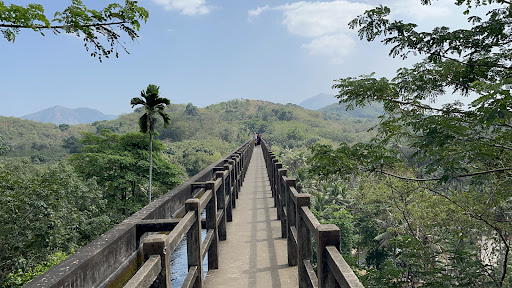
The Mathur Aqueduct, a testament to human ingenuity nestled amidst the rolling hills of Tamil Nadu, presents a story of contrasts. On one hand, it stands as a majestic feat of engineering, a 1.3 km long marvel carrying life-giving water across the Pahrali River. On the other, it whispers tales of neglect and the relentless march of time, urging us to reconsider its future. Built in 1965, the aqueduct's simple yet sturdy design has stood the test of time. Its 31 piers, each 30 feet high, showcase the builders' understanding of the terrain and the need for a stable structure. Walking across the aqueduct is an experience in itself. The panoramic views of the green valley below and the meandering Pahrali River are breathtaking, especially during the monsoon season. The aqueduct has become a popular tourist destination, attracting visitors with its unique blend of engineering marvel and natural beauty. It has also become a symbol of hope and progress for the local communities. Time and neglect have taken their toll on the aqueduct. Cracks on the pillars, leaking joints, and eroded pathways raise concerns about its structural integrity. The lack of proper railings and safety measures makes crossing the aqueduct risky, especially for children and the elderly.The surrounding area shows signs of neglect, with litter and debris accumulating along the banks of the river. This not only mars the beauty of the place but also poses a threat to the water quality. The Mathur Aqueduct stands at a crossroads. It can continue to be a symbol of human ingenuity and a source of life for the surrounding communities, or it can crumble under the weight of neglect. To ensure its future, immediate action is needed:
The government and local authorities must prioritize the aqueduct's restoration, addressing the structural concerns and ensuring its safety for future generations. Proper waste management and environmental awareness campaigns are crucial to protect the Pahrali River and the surrounding ecosystem. Local communities can play a vital role in the aqueduct's upkeep and preservation. Organizing clean-up drives and raising awareness about its importance can go a long way. The Mathur Aqueduct is more than just a bridge; it's a symbol of human potential and a lifeline for many. By acknowledging its challenges and taking concrete steps towards its restoration, we can ensure that this engineering marvel continues to grace the landscape for...
Read moreThe Mathoor Aqueduct is an architectural marvel and a true gem of engineering. Being the highest and longest aqueduct in Asia in its category, it is a testament to human ingenuity and skill. I had the opportunity to visit this magnificent structure recently, and I must say that it left me in awe of its beauty and functionality.
The first thing that struck me about the Mathoor Aqueduct was its impressive height. Stretching across lush green valleys and offering breathtaking views of the surrounding landscape, it stood tall and proud. Walking across the aqueduct, I couldn't help but marvel at the sheer engineering brilliance that went into constructing such a structure.
The aqueduct's length is equally impressive, spanning a significant distance. As I walked along its pathway, I couldn't help but appreciate the efforts and expertise that must have gone into building a structure of such magnitude. The scale of the aqueduct is truly remarkable and speaks volumes about the dedication and vision of its creators.
Beyond its engineering marvel, the Mathoor Aqueduct also offers a visual treat. The serene beauty of the surrounding area enhances the overall experience. With the aqueduct acting as a bridge, it provides an excellent vantage point to enjoy the panoramic views of the sprawling landscapes. The combination of the aqueduct's grandeur and the natural beauty of the surroundings creates a truly captivating scene.
In addition to its aesthetic appeal, the Mathoor Aqueduct serves an essential purpose. It is a crucial water source, channeling water from one area to another. The fact that such a functional structure can also be visually appealing is a testament to the thoughtful design and execution. It is a perfect example of how infrastructure can be both utilitarian and beautiful.
Visiting the Mathoor Aqueduct was a memorable experience for me. Its towering height, impressive length, and scenic surroundings left a lasting impression. Whether you are an engineering enthusiast, a nature lover, or simply someone who appreciates architectural marvels, the Mathoor Aqueduct is definitely worth a visit. It stands as a testament to human creativity, engineering prowess, and the harmonious blending of man-made structures with their natural...
Read moreMathoor Aqueduct was constructed in 1966 as a drought relief measure over the river Pahrali to carry water for irrigation from an elevated level of one hill to another. The irrigation water feeds the taluks of Vilavancode and Kalkulam.
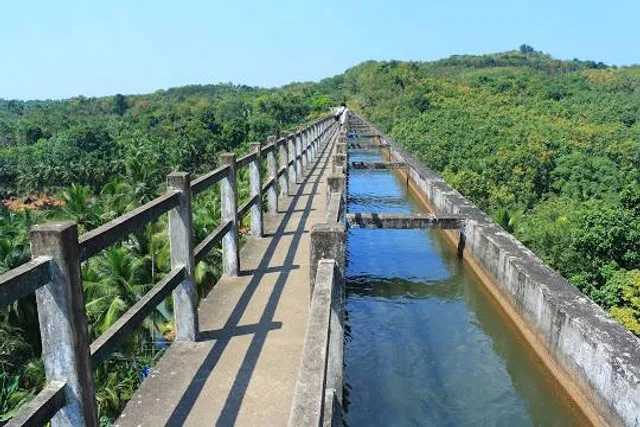
The aqueduct is built across the Parali river, a small river that originates in the Mahendragiri, Tamil Nadu hills of the Western Ghats. Mathoor Aqueduct itself carries water of the Pattanamkal canal for irrigation over the Parali, from one hill to another, for a distance of close to 1 km. This aqueduct is needed because of the undulating land terrain of the area, which is also adjacent to the hills of the Western Ghats. Mathoor Aqueduct is a concrete structure supported by 28 huge pillars, the maximum height of the pillars reaching 115 ft. The trough structure is 7 ft in height, with a width of 7.5 ft. The trough is partly covered with concrete slabs, allowing people to walk on the bridge and to see the water going through the trough. Some of the pillars are set in rocks of the Pahrali river, though some of the pillars are set in hills on either side.The bridge has been constructed at Mathoor across the river Parazhiyar at a cost of Rs. 12.90/- lakhs There is road access to one end of the aqueduct and to the foot of the aqueduct (the level where the Pahrali flows) on the opposite side. There is a huge flight of stairs, made more recently, that allows one to climb from the level of the Pahrali river to the trough. Irrigation water flows through the trough for a large part of the year, except in the summer (from February to May).
In recent times, Mathoor Aqueduct has become a popular tourist attraction in Kanyakumari district. The tourism department and the local Panchyat office have improved facilities for visiting tourists. From the centre of the aqueduct, one can see a vast expanse of greenery, with rolling hills of the Western Ghats in the background, and the meandering Pahrali river...
Read more