Sree Adikesava Perumal Temple: 2500 Years of Glorious Heritage
Sree Adikesava Perumal Temple, situated in Thiruvattar in Tamil Nadu (formerly a part of southern Kerala), has been in existence for circa two and half thousand years. It is one of the 108 Vaishnava temples, Divya Desam, in India. However, during recent past its significance has become understated. The Deity is an incarnation of Lord Vishnu, Ananthasayanam, as Lord Adikesava he is in recumbent pose (Yoganidra), with eyes closed dreaming of manifesting the universe whilst reclining on the coiled body of the Serpent King, Adiseshan, who is a symbol for the beginning of time.
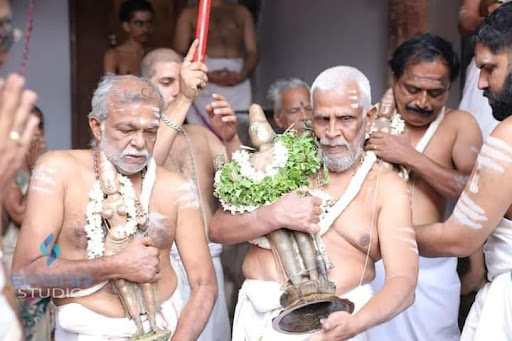
According to the Puranas, Lord Brahma performed a Yaga without Saraswathi Devi, as a result of Saraswathi’s anger two asuras, Kesan and Kesi emerged out of the sacrificial fire, these asuras troubled the Three Worlds. The Devas approached Vishnu for a solution. Following an almighty battle Lord Mahavishnu in the form of Kesava, Perumal defeated Kesan, and then to secure him Adiseshan coiled around him. This is how Lord Kesava Perumal became known as ‘Adi Kesavan’. The second asura Kesi, who had seen her brother Kesan defeated, wanted revenge and with her friend, Kothai they both took the form of rivers and surrounded the temple with the intention of submerging it. Bhoomi Devi (the earth Goddess) raised the temple away from the waters, and today the temple is surrounded by the rivers Parali and Kotha and stands at a height of 55 feet from ground level. The Puranas say ‘the rivers’ repented and were forgiven, then Perumal had a dip in Moovaatru Mukham, the place where the rivers joined with the Arabian sea and even today, during Painguni Utsavam, Perumal comes on a golden Garuda for a dip in the river, re-enacting the Shapa Vimochana incident. Thiruvattar Temple is orbited by a protective necklace of Shivalingams, and in March, during Mahasivarathri, pilgrims visit these shrines chanting ‘Govinda’, Lord Vishnu’s name. The famous Shivalaya Ottam is said to be only complete when the devotees end their trip in the Perumal temple. There are too many sacred associations and agamas to mention here but scholars and devotees may approach the temple for further discovery.
Sree Adikesava Perumal Temple 2500 Years of Glorious Heritage
Typically a temple is built around a gigantic single block Mandapam stone on which the Vigraham/ idol is placed. The earthly representation of Adikesava is constructed as the human body, a Karungali wood framework forms his skeleton, a concoction of coconut husks adheres to the skeleton representing the nervous systems and 16,008 strategic Shaligrama stones from Nepal replicate his organs and his human form. His skin has seven applications of Kadusharkara Kalkam polished to perfection. His visions of evolution from fish to horseman are manifested in stone on the southern wall of the Ottakkal Mandapam; the last two avatars, Buddha and Kalki are being repaired and will soon return to the northern wall. The daily poojas are performed in the Archana Vigrahas and the daily Abhishekas (bathing) of the Lord takes place at the Ottakal Mandapam. Inside the Sanctum Santorum are the symbols of the Sun, Moon and manifestations of the Discus and Mace, Vishnu’s weapons. These ancient carvings according to Purana wisdom demonstrate the cosmic science of Hindus. Artistic wooden carvings are all around the temple and there are infinite geographical, architectural, astrological, historical and literal references to the divinity of the idol.
The temple architecture is Dravidian style architecture with wooden pillars, doors and roofs. The lord is lying on his snake couch and has to be viewed through three doors. We could see Lord Shiva near Lord Adikesava Perumal inside the sannidhi. Deepalakshmis are many but none resembles the other. The Otraikkal Mandapam (single stone hall) made of a single stone 3 feet thick, is a marvel. Oorthuva Thandavam, Venugopala, Rathi, Manmatha, Lakshmana and Indrajit are excellently carved. The temple is also renowned...
Read moreThis sthala perumal, Aadhikesavapperumal is found in the same thirukkolam (Sayana thirukkolam) as found in Thiruvananthapura sthala perumal. Anantha padmanabhaswamy. He is also found along 3 Entry points known asVaasals which represent the evolution (birth), leading of life and final stage, the death. But, the only difference in Thiruvananthapura perumal is found in Bhujanga Sayana kolam facing East direction, but this sthala perumal is found in the same Bhujanga sayana thirukkolam but facing west.
Thiruvananthapura Padmanabhaperumal gave his prathyaksham for Chandiran, the moon god, like the same way, this sthala perumal, Aadhikesavaperumal gave his prathyaksham for Chandiran, the moon god.
The east direction, which is said to be the moon setting direction is the direction faced by Padmanabha perumal (Thiruvanandhapuram), but this sthala perumal, Aadhikesava perumal (Thiruvaattaaru) is facing along the western direction, which is said to be the rising direction of moon, is said to be special side.
In Thiruvananthapuram, the perumal has a big structured body, but in Thiruvaattaary, the perumal is found in Siriya thirumeni (Small in structure) in Kidantha kolam. As a result, the vimaanam Ashtaakshara vimaanam is also small in size.
The specialty about this sthalam is, the thaayar is Maragadhavalli Naachiyaar. The colour that is related to periya piratti is yellow mixed with Red colour. But, Maragadham (Green clour) is related to Vaishnavi Devi. Because of this, this sthala thaayar is said to have the power of Vaishnavi Devi.
Another specialty of this sthalam is the way in which the perumal is positioned. He is found in such a way that everyday he gives his seva to Chandiran, the moon god. During the setting of sun, the rays of the sun is falling on the Moolavar's face as though it says that it will leave today and come tomorrow. After the sun sets, the moon appears (or) rises from the same direction where the sun sets and first sees the Moolavar and get his dharshan. This is one of the specialty of this sthalam (i.e.) the perumal's position.
The unity of Saivam and Sri Vaishnavam is best explained by Thiruvananthapura Padmanabhaperumal. Likewise this Thiruvaattaaru Aadhikesava perumal also explains how people should follow the God and explains the unity of Saivam and Vaishnavam.
Sriman Narayanan has a special amsam, the Kesavaartham which explains that Narayanan did a strong tapas and merged into the body of Sivaperumaan and this amsam explains the union of Vaishnavam and Saivam. So, Kesava means Narayana along with Shiva.
Once, there lived an Demon (asuran) by named "Kesi", who gave lots of problem to humanity. This sthala perumal fought with Kesi and finally he defeated him and slept on his body. Aasoori, wife of Kesi worshipped Ganga devi and asked her to save his husband from the perumal. Hearing this request, Ganga along with Tamirabharani river merged together and ran fast towards the perumal who is found on Kesi. On seeing the rivers, the perumal ordered Bhooma devi to make the place to some height. Being raised, both the rivers could not flood the place, but they flow around the perumal as if they worshipped him. But at the same time, when both the rivers touched the body of Kesi, he got purified and got Mukthi. Because of this, the perumal is called as "Aadhi Kesava Perumal". In spite of being an asuran, Kesi was able to hug the body of perumal while fighting and it itself inplies that he will be given Mukthi done the perumal.
Theerthavaari, is one of the grand utsavam done in this sthalam.
Pushpanjali is yet another important utsavam done in this temple where lots of flowers are offered to...
Read moreThe Adikesava Perumal Temple is one of the 108 Divya desams, the holy sites of Hindu Vaishnavism according to existing Tamil hymns from the seventh and eighth centuries C.E. The temple is one of the historic thirteen Divya Deshams of Malai Nadu. The temple is a picturesque setting surrounded on three sides by rivers namely, (River Kothai, River Pahrali and River Thamirabarani) It was the Rajya Temple and Bharadevatha shrine of Erstwhile Travancore. After state reorganisation, the temple handed over to Tamilnadu H&RCE Dept. The presiding Vishnu in the form of Ananthapadmabhan/Adikeshavaperumal is believed to be older than Padmanabhaswamy Temple in Thiruvananthapuram. Since Vishnu resides here in a reclining position, and is surrounded by rivers, the temple is called as "The Srirangam of Chera Kingdom". The temple was consecrated by Parasurama and is admired by Veda vyasa in the sections which deal with temples in Padma Purana. As per the stone inscriptions which dates back to 779 KE the temple is established in the Treta yuga. The Adikeshava temple is also where Chaitanya Mahaprabhu, founder of the Gaudiya Vaishnava movement, discovered the lost manuscript of the Brahma Samhita.
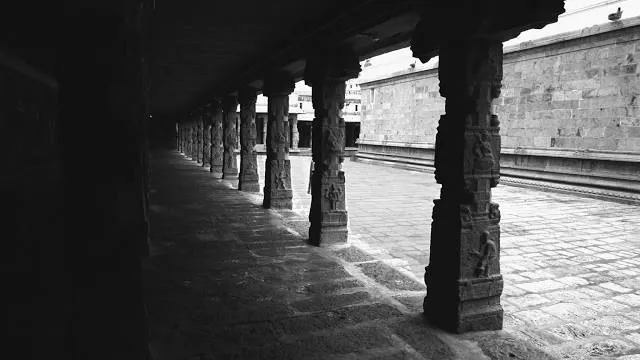
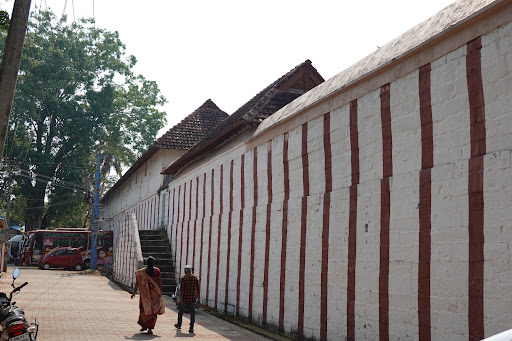
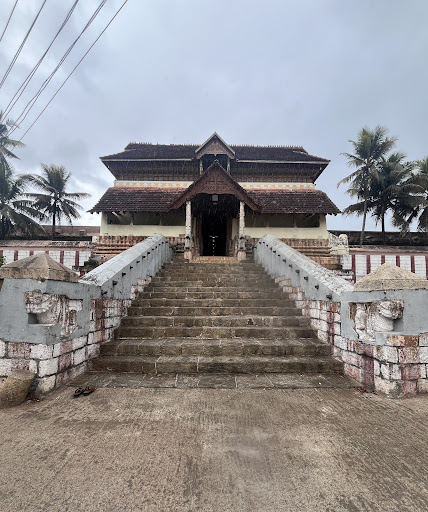
The temple architecture is Dravidian style architecture with wooden pillars, doors and roofs. The Temple is surrounded by a thirty-feet-high fort wall. The outer corridor stand on 224 stone pillars. The adjacent forward facing mandapams includes sculptures and art works which depicts events from Ramayana. It also portrays Gods and goddesses from Hindu mythology including Shiva, Parvati and Sri Krishna etc. The lord is lying on his snake couch and has to be viewed through three doors. We could see Lord Shiva near Lord Adikesava Perumal inside the sannidhi. Deepalakshmis are many but none resembles the other. The Otraikkal Mandapam (single stone hall) made of a single stone 3 feet thick, is a marvel. Oorthuva Thandavam, Venugopala, Rathi, Manmatha, Lakshmana and Indrajit are excellently carved. The temple is also renowned for its murals. The composite columns of Virabhadra holding sword and horn are found be additions of the Vijayanagara kings during the early 1500s. The temple complex includes a Ayyappan temple behind which stands the Ksetra bala Balikkal. It also includes Sree Bali Prakaram and the Yanaikottil. Other deities being located in the south-western corner, the flagmast is located at the west at the Sree Balippura. As per the stone inscriptions in the pedestal of the flag mast it was renovated by Sree Moolam Thirunal Rama Varma VI in 1071 KE. The granite entrance of the Chitra Sabha includes sculptures of the Dwara Palakas, Jaya and Vijaya. Sculptures of Lakshmana and Pathanjali Tandava carved to the left of Sabha Mandapam while that of Indrajith, Muralidhara and Kalabairava are carved to the right. The image of the chief deity in his sayana posture, is sculpted on the wooden entrance door. Vatteluttu incriptions of Shilpa Shastra are found in adjacent walls. It also includes details about the 11th century Chola King...
Read more