HTML SitemapExplore
logo
Find Things to DoFind The Best Restaurants

Unakoti Rock Carvings — Attraction in Tripura

Name
Unakoti Rock Carvings
Description
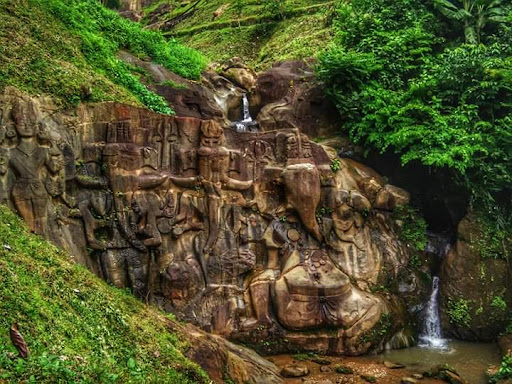
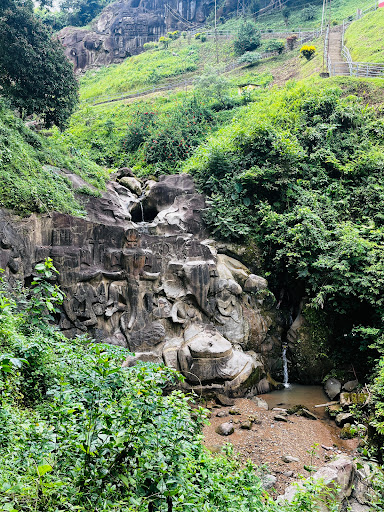
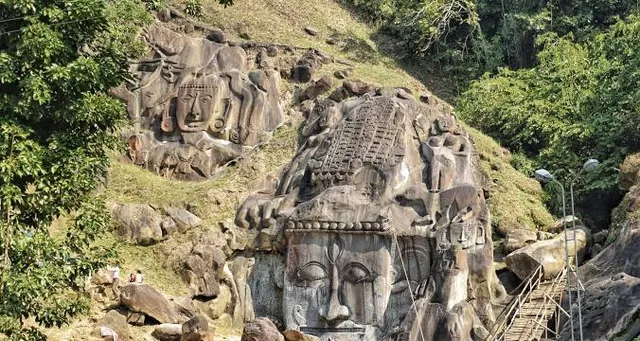
Unakoti, famously known as Angkor Wat of the North-East, is a sculptural emblem and ancient Shaivite place that hosts rock carvings figures and images of gods and goddesses. It is a place of worship with huge rock reliefs celebrating Shiva. Unakoti literally means "one less one crore" or "koti" in Hindi and Bengali.
Nearby attractions
Nearby restaurants
Nearby hotels
Related posts
Keywords
Unakoti Rock Carvings tourism.Unakoti Rock Carvings hotels.Unakoti Rock Carvings bed and breakfast. flights to Unakoti Rock Carvings.Unakoti Rock Carvings attractions.Unakoti Rock Carvings restaurants.Unakoti Rock Carvings travel.Unakoti Rock Carvings travel guide.Unakoti Rock Carvings travel blog.Unakoti Rock Carvings pictures.Unakoti Rock Carvings photos.Unakoti Rock Carvings travel tips.Unakoti Rock Carvings maps.Unakoti Rock Carvings things to do.
Unakoti Rock Carvings things to do, attractions, restaurants, events info and trip planning
Unakoti Rock Carvings
IndiaTripuraUnakoti Rock Carvings

Basic Info

Unakoti Rock Carvings

Gakulnagar, Uttar Unakuti R.F., Tripura 799290, India
4.5(1.5K)
Open 24 hours
Save
spot

Ratings & Description

Info

Unakoti, famously known as Angkor Wat of the North-East, is a sculptural emblem and ancient Shaivite place that hosts rock carvings figures and images of gods and goddesses. It is a place of worship with huge rock reliefs celebrating Shiva. Unakoti literally means "one less one crore" or "koti" in Hindi and Bengali.

Cultural
Outdoor
Family friendly
attractions: , restaurants:
logoLearn more insights from Wanderboat AI.
Phone
+91 92335 33929

Plan your stay

hotel
Pet-friendly Hotels in Tripura
Find a cozy hotel nearby and make it a full experience.
hotel
Affordable Hotels in Tripura
Find a cozy hotel nearby and make it a full experience.
hotel
The Coolest Hotels You Haven't Heard Of (Yet)
Find a cozy hotel nearby and make it a full experience.
hotel
Trending Stays Worth the Hype in Tripura
Find a cozy hotel nearby and make it a full experience.

Reviews

Get the Appoverlay
Get the AppOne tap to find yournext favorite spots!
Wanderboat LogoWanderboat

Your everyday Al companion for getaway ideas

CompanyAbout Us
InformationAI Trip PlannerSitemap
SocialXInstagramTiktokLinkedin
LegalTerms of ServicePrivacy Policy

Get the app

© 2025 Wanderboat. All rights reserved.
logo

Posts

Ultimate TravellersUltimate Travellers
Unakoti is Subrai Khung in Kokborok as claimed by Jamatia Hoda, Unakoti hill literally means one less a koti in Bengali, hosts an ancient Shaivite place of worship with huge rock reliefs celebrating Shiva.It is the prime tourist spot of Unakoti District Tripura in the Kailashahar Subdivision in the North-eastern Indian state of Tripura.It is Shiva pilgrimage and dates back to 7th – 9th centuries if not earlier.Subrai Khung is also known as Unokoti. This is one of the wonderful archaeological sites in Tripura. It is more than the 1500-year-old sculpture creation by Tripuri people. There are one less one-tenth million statues, which is why is Unokoti or Unocrore. There are many mythological stories as stated in different ways about the statues formed in this high land of Tripura. One of the most prevalent among Tripuri people is as follows:- The first king who came to build his kingdom in the present location of Tripura was King Jujaru-Fa or also known as Hamtorfa, meaning best man or Purushottam. He was so called as he had all the qualities of humanity, spiritualist, and religious. He first defeated the Lika king ruling over the Rangamati area (now Udaipur), and drove him away and snatched the land ruled by that dynasty. After that, he established his kingdom and capital at present-day Udaipur. Tripuri people were worshippers of Lord Siva, who lives in the abode of Himalaya. Subrai or Siva is the dynastic god of the creator of this universe. So the king wanted to bring him in his present kingdom of Tripura. The Tripura kingdom was earlier located in the Himalaya region of Kumaun, so the Mount Kailash, abode of Siva was just near to the kingdom and Lord would shower all the blessing unto the people of Tripura, but after it was shifted to the present location of Tripura the king noticed that Siva has become far from Tripura kingdom, the blessing would not reach to its subjects. So king Hamtorfa wanted to bring Siva to his kingdom. Then he went to Himalaya, sat in yoga and prayed to Lord Siva, as he is soft-hearted and easily pleased in time Siva appeared before him, and asked, 'My son, Hamatorfa, what do you want? What are you prying for?' Hamtorfa knelt down, bowed his head unto HIS feet and asked him, 'My lord, I have moved my kingdom to far away place, I want to carry you there in my new kingdom, please do come.' At this, the Lord said, 'Whom so ever you would pray he will go but you have to construct their statues there at your new kingdom.' The king said he would like to take there one crore god and goddess along with Siva. Lord Siva said 'Be it be there, your desire will be fulfilled.' After coming back to his kingdom, the king sat in meditation and prayed for years together. Then gradually one by one god appeared before him, by this time the king ordered his artist to construct statues of those gods and goddess. The gods appeared as prayed, this way he directed to construct statues one by one and gradually its number raised to one less ten million statues. When the king prayed to goddess Ganga, she said to the king, 'My son, king Hamtorfa, how I can come to your kingdom, leaving my abode, otherwise the whole of rivers of India would dry up. So I cannot come, but I will come in another name in disguise.' So the goddess Ganga bestowed him with Gomti in Tripura. That is why king Hamtorfa could not construct ten millionth statue of Ganga, so it became to be known as statues of one less ten million or Unokoti.As the Lord Siva is head of all the gods, so also he was in these statues. Siva's statue is the biggest and most prominent of all and that is why is it known as Subrai Khung or abode of Siva by the Tripuri people. As they could not bring Kailash, the abode of Siva herein presents Tripura so they built an abode of Siva or Subrai Khung here.There are numerous statues of known and unknown gods and goddess in this Subrai Khung. As the legends go there are ten million statues scattered all over the hills in Subrai Khung near Kailasahar town. Many of the statues are dilapidated conditions because of once life.
BISHAL BHOWMIKBISHAL BHOWMIK
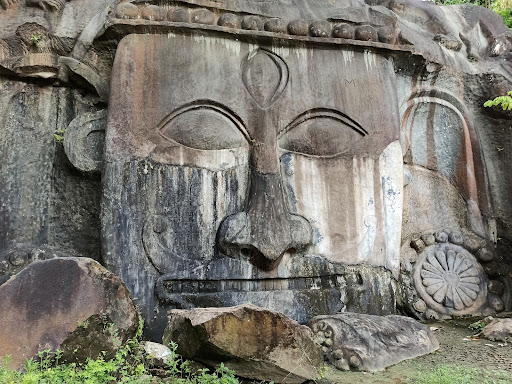
Nestled in the lush hills of northern Tripura, near the town of Kailashahar, lies one of India’s most mystifying and awe-inspiring archaeological wonders—Unakoti, which means "one less than a crore" in Bengali. This ancient Shaivite pilgrimage site is home to an extraordinary collection of rock-cut sculptures and stone carvings, many of which are massive in scale and shrouded in legend, history, and mysticism. It is often referred to as the "Angkor Wat of the East", and yet it remains one of India’s least explored heritage treasures. The Unakoti complex spans a forested hillside, covering approximately 150 acres. The site dates back to between the 7th and 9th centuries CE, though some estimates suggest the sculptures could be even older. What makes Unakoti truly unique is the sheer scale and artistic complexity of its carvings. The most iconic figure is the towering Unakotiswara Kal Bhairava—a 30-foot-high bas-relief of Lord Shiva with a 10-foot elaborate head-dress, flanked by two goddesses believed to be Durga and Ganga. Nearby, there are intricate sculptures of Lord Ganesha, Nandi bulls, Hanuman, and other deities. Many carvings show influences from both Shaivism and possibly Buddhist and tribal traditions, making Unakoti a site of rich cultural synthesis. Despite its historical and artistic importance, Unakoti remains relatively underdeveloped and off the typical tourist circuit. Efforts are now underway to improve infrastructure, promote tourism, and preserve the delicate rock structures from natural erosion and human damage. The site has garnered national attention in recent years. In 2022, Unakoti was added to UNESCO’s tentative list of World Heritage Sites. 📍 Location & Geography Located near Kailashahar in Unakoti district, Tripura. Spread across a hillside forest, approx. 150 acres in area. Around 178 km from Agartala, 8 km from Kailashahar. --- 🗿 Historical & Artistic Significance Rock-cut sculptures date back to the 7th–9th century CE (some estimate earlier). Site dedicated mainly to Shaivite deities—especially Lord Shiva. Unique blend of bas-relief carvings and freestanding stone images. Rich combination of Shaivism, tribal art, and possible Buddhist influences. --- 🎭 Main Sculptures Unakotiswara Kal Bhairava: A 30-ft tall image of Lord Shiva, carved into a rock face. Features a 10-ft high ornate headdress. Flanked by figures believed to be Goddess Durga and Ganga. Ganesha Sculptures: Several large carvings of Ganesha. One shows two tusks and four arms. A seated version and two standing ones are most notable. Other deities include: Nandi bulls (partially buried), Vishnu, Surya, Hanuman, and Parvati in Kirata form. --- 📖 Legends & Myths Myth 1: Shiva and the Sleeping Gods Shiva stopped here with 99,99,999 gods en route to Kashi. He asked them to wake before dawn. They didn’t. He cursed them into stone. Result: Unakoti = “one less than a crore.” Myth 2: The Sculptor Kallu Kumhar Kallu tried carving 1 crore gods in one night. He succeeded in making only 99,99,999. Hence, the name Unakoti. --- 🌿 Natural Beauty & Spiritual Vibe Carvings are nestled in thick greenery with waterfalls and springs. Nicknamed "Lost Hill of Faces" for its mysterious atmosphere. Sacred water kunds and forest paths enhance its spiritual ambiance. --- 🛕 Religious Importance Major pilgrimage site for Shaivites in Northeast India. Hosts Ashokastami Mela every April, attracting thousands. Seen as a powerful symbol of divine presence in Tripura. --- 🌍 Conservation & UNESCO Status Managed by the Archaeological Survey of India (ASI). Added to UNESCO Tentative World Heritage list in 2022. Government investing in conservation and eco-tourism infrastructure. About ₹12 crore sanctioned for restoration and accessibility. --- ✨ Why You Should Visit One of India’s largest rock-cut archaeological sites in the East. A unique blend of art, legend, nature, and devotion. Still less crowded than other historical sites—ideal for peaceful exploration. Offers insights into ancient tribal and Hindu spirituality.
Jayanta DasJayanta Das
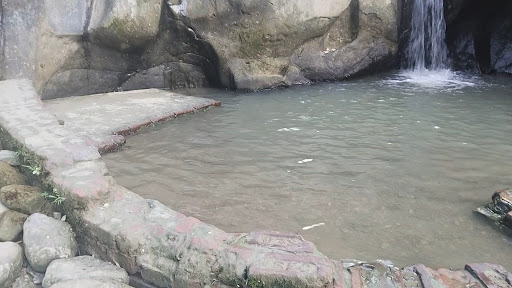
Unakoti rock carvings is an ancient place that hosts several mesmerizing rock sculptures situated in the Unakoti district of Tripura. It is located about 8 km from the nearest town Kailashar.The sculptures at Unakoti belong to the Hindu deities and are dedicated especially to the worship of Lord Shiva. The name ‘Unakoti’ means ‘one less than a crore’ in the Bengali language.These rock-cut structures are found mostly in the vertical walls of Unakoti hills (Raghunandan hills) and the fallen boulders. Apart from that, a few small and medium-sized loose sculptures are also scattered around the hill. In December 2022, Unakoti was added to the tentative list of UNESCO’s World Heritage Sites. Though the existence of Unakoti dates back around the 7th – 9th centuries. One of the stories of Unakoti, according to Hindu mythology is when Lord Shiva was on his way to Kashi he halted for a night at this location accompanied by 99,99,999 Gods and Goddesses. He had asked them to wake up before sunrise and make their way towards Kashi.Unfortunately, when the sun rose none awoke, except Lord Shiva. Before he set out for Kashi alone, he put a curse on the others, turning them to stone and that is how the site got its name UNAKOTI which means ONE LESS ONE CRORE.Apart from this mythology, Unakoti holds several interesting legends and folklore which you can read in the article by Tale of 2 Backpackers. On the third day of my stay in Churaibari, three of us – my aunt, Esther and I set out to visit the famous site of Unakoti. We headed towards Dharmanagar town and hired a cab to the archaeological site. Shiv Bari which is 5 km from ISBT Dharmanagar At the beginning of our journey, it started raining cats and dogs. We sure were disappointed but very adamant about visiting Unakoti. It was a pleasant journey as we passed through tea gardens and beautiful landscapes.Best vacation packages Tea Gardens Tripura - Unakoti Road - Tripura Tourism Tea Gardens on the way to Unakoti Northeast adventure tourism The rain continued even after we reached the Unakoti archaeological site. With no choice, we waited in the cab for about 30 minutes for the rain to stop. Unakoti Photos in Tripura - Sammy standing infront of Unakoti Rock Carvings In the land of Nature & Devotion. The first one had us amazed as we had not seen anything like this before. A few steps down below, there was another face, which was quite similar to the previous one and just beside that was a cascade waterfall running down from between the cracks of the rocks. The trail bifurcated and we took the steps uphill which seemed to be never-ending from down below besides several scattered boulders that have their images. Further up, right where the steps end, there are images of two female figures on the stone.
See more posts
See more posts
hotel
Find your stay

Pet-friendly Hotels in Tripura

Find a cozy hotel nearby and make it a full experience.

Unakoti is Subrai Khung in Kokborok as claimed by Jamatia Hoda, Unakoti hill literally means one less a koti in Bengali, hosts an ancient Shaivite place of worship with huge rock reliefs celebrating Shiva.It is the prime tourist spot of Unakoti District Tripura in the Kailashahar Subdivision in the North-eastern Indian state of Tripura.It is Shiva pilgrimage and dates back to 7th – 9th centuries if not earlier.Subrai Khung is also known as Unokoti. This is one of the wonderful archaeological sites in Tripura. It is more than the 1500-year-old sculpture creation by Tripuri people. There are one less one-tenth million statues, which is why is Unokoti or Unocrore. There are many mythological stories as stated in different ways about the statues formed in this high land of Tripura. One of the most prevalent among Tripuri people is as follows:- The first king who came to build his kingdom in the present location of Tripura was King Jujaru-Fa or also known as Hamtorfa, meaning best man or Purushottam. He was so called as he had all the qualities of humanity, spiritualist, and religious. He first defeated the Lika king ruling over the Rangamati area (now Udaipur), and drove him away and snatched the land ruled by that dynasty. After that, he established his kingdom and capital at present-day Udaipur. Tripuri people were worshippers of Lord Siva, who lives in the abode of Himalaya. Subrai or Siva is the dynastic god of the creator of this universe. So the king wanted to bring him in his present kingdom of Tripura. The Tripura kingdom was earlier located in the Himalaya region of Kumaun, so the Mount Kailash, abode of Siva was just near to the kingdom and Lord would shower all the blessing unto the people of Tripura, but after it was shifted to the present location of Tripura the king noticed that Siva has become far from Tripura kingdom, the blessing would not reach to its subjects. So king Hamtorfa wanted to bring Siva to his kingdom. Then he went to Himalaya, sat in yoga and prayed to Lord Siva, as he is soft-hearted and easily pleased in time Siva appeared before him, and asked, 'My son, Hamatorfa, what do you want? What are you prying for?' Hamtorfa knelt down, bowed his head unto HIS feet and asked him, 'My lord, I have moved my kingdom to far away place, I want to carry you there in my new kingdom, please do come.' At this, the Lord said, 'Whom so ever you would pray he will go but you have to construct their statues there at your new kingdom.' The king said he would like to take there one crore god and goddess along with Siva. Lord Siva said 'Be it be there, your desire will be fulfilled.' After coming back to his kingdom, the king sat in meditation and prayed for years together. Then gradually one by one god appeared before him, by this time the king ordered his artist to construct statues of those gods and goddess. The gods appeared as prayed, this way he directed to construct statues one by one and gradually its number raised to one less ten million statues. When the king prayed to goddess Ganga, she said to the king, 'My son, king Hamtorfa, how I can come to your kingdom, leaving my abode, otherwise the whole of rivers of India would dry up. So I cannot come, but I will come in another name in disguise.' So the goddess Ganga bestowed him with Gomti in Tripura. That is why king Hamtorfa could not construct ten millionth statue of Ganga, so it became to be known as statues of one less ten million or Unokoti.As the Lord Siva is head of all the gods, so also he was in these statues. Siva's statue is the biggest and most prominent of all and that is why is it known as Subrai Khung or abode of Siva by the Tripuri people. As they could not bring Kailash, the abode of Siva herein presents Tripura so they built an abode of Siva or Subrai Khung here.There are numerous statues of known and unknown gods and goddess in this Subrai Khung. As the legends go there are ten million statues scattered all over the hills in Subrai Khung near Kailasahar town. Many of the statues are dilapidated conditions because of once life.
Ultimate Travellers

Ultimate Travellers

hotel
Find your stay

Affordable Hotels in Tripura

Find a cozy hotel nearby and make it a full experience.

Get the Appoverlay
Get the AppOne tap to find yournext favorite spots!
Nestled in the lush hills of northern Tripura, near the town of Kailashahar, lies one of India’s most mystifying and awe-inspiring archaeological wonders—Unakoti, which means "one less than a crore" in Bengali. This ancient Shaivite pilgrimage site is home to an extraordinary collection of rock-cut sculptures and stone carvings, many of which are massive in scale and shrouded in legend, history, and mysticism. It is often referred to as the "Angkor Wat of the East", and yet it remains one of India’s least explored heritage treasures. The Unakoti complex spans a forested hillside, covering approximately 150 acres. The site dates back to between the 7th and 9th centuries CE, though some estimates suggest the sculptures could be even older. What makes Unakoti truly unique is the sheer scale and artistic complexity of its carvings. The most iconic figure is the towering Unakotiswara Kal Bhairava—a 30-foot-high bas-relief of Lord Shiva with a 10-foot elaborate head-dress, flanked by two goddesses believed to be Durga and Ganga. Nearby, there are intricate sculptures of Lord Ganesha, Nandi bulls, Hanuman, and other deities. Many carvings show influences from both Shaivism and possibly Buddhist and tribal traditions, making Unakoti a site of rich cultural synthesis. Despite its historical and artistic importance, Unakoti remains relatively underdeveloped and off the typical tourist circuit. Efforts are now underway to improve infrastructure, promote tourism, and preserve the delicate rock structures from natural erosion and human damage. The site has garnered national attention in recent years. In 2022, Unakoti was added to UNESCO’s tentative list of World Heritage Sites. 📍 Location & Geography Located near Kailashahar in Unakoti district, Tripura. Spread across a hillside forest, approx. 150 acres in area. Around 178 km from Agartala, 8 km from Kailashahar. --- 🗿 Historical & Artistic Significance Rock-cut sculptures date back to the 7th–9th century CE (some estimate earlier). Site dedicated mainly to Shaivite deities—especially Lord Shiva. Unique blend of bas-relief carvings and freestanding stone images. Rich combination of Shaivism, tribal art, and possible Buddhist influences. --- 🎭 Main Sculptures Unakotiswara Kal Bhairava: A 30-ft tall image of Lord Shiva, carved into a rock face. Features a 10-ft high ornate headdress. Flanked by figures believed to be Goddess Durga and Ganga. Ganesha Sculptures: Several large carvings of Ganesha. One shows two tusks and four arms. A seated version and two standing ones are most notable. Other deities include: Nandi bulls (partially buried), Vishnu, Surya, Hanuman, and Parvati in Kirata form. --- 📖 Legends & Myths Myth 1: Shiva and the Sleeping Gods Shiva stopped here with 99,99,999 gods en route to Kashi. He asked them to wake before dawn. They didn’t. He cursed them into stone. Result: Unakoti = “one less than a crore.” Myth 2: The Sculptor Kallu Kumhar Kallu tried carving 1 crore gods in one night. He succeeded in making only 99,99,999. Hence, the name Unakoti. --- 🌿 Natural Beauty & Spiritual Vibe Carvings are nestled in thick greenery with waterfalls and springs. Nicknamed "Lost Hill of Faces" for its mysterious atmosphere. Sacred water kunds and forest paths enhance its spiritual ambiance. --- 🛕 Religious Importance Major pilgrimage site for Shaivites in Northeast India. Hosts Ashokastami Mela every April, attracting thousands. Seen as a powerful symbol of divine presence in Tripura. --- 🌍 Conservation & UNESCO Status Managed by the Archaeological Survey of India (ASI). Added to UNESCO Tentative World Heritage list in 2022. Government investing in conservation and eco-tourism infrastructure. About ₹12 crore sanctioned for restoration and accessibility. --- ✨ Why You Should Visit One of India’s largest rock-cut archaeological sites in the East. A unique blend of art, legend, nature, and devotion. Still less crowded than other historical sites—ideal for peaceful exploration. Offers insights into ancient tribal and Hindu spirituality.
BISHAL BHOWMIK

BISHAL BHOWMIK

hotel
Find your stay

The Coolest Hotels You Haven't Heard Of (Yet)

Find a cozy hotel nearby and make it a full experience.

hotel
Find your stay

Trending Stays Worth the Hype in Tripura

Find a cozy hotel nearby and make it a full experience.

Unakoti rock carvings is an ancient place that hosts several mesmerizing rock sculptures situated in the Unakoti district of Tripura. It is located about 8 km from the nearest town Kailashar.The sculptures at Unakoti belong to the Hindu deities and are dedicated especially to the worship of Lord Shiva. The name ‘Unakoti’ means ‘one less than a crore’ in the Bengali language.These rock-cut structures are found mostly in the vertical walls of Unakoti hills (Raghunandan hills) and the fallen boulders. Apart from that, a few small and medium-sized loose sculptures are also scattered around the hill. In December 2022, Unakoti was added to the tentative list of UNESCO’s World Heritage Sites. Though the existence of Unakoti dates back around the 7th – 9th centuries. One of the stories of Unakoti, according to Hindu mythology is when Lord Shiva was on his way to Kashi he halted for a night at this location accompanied by 99,99,999 Gods and Goddesses. He had asked them to wake up before sunrise and make their way towards Kashi.Unfortunately, when the sun rose none awoke, except Lord Shiva. Before he set out for Kashi alone, he put a curse on the others, turning them to stone and that is how the site got its name UNAKOTI which means ONE LESS ONE CRORE.Apart from this mythology, Unakoti holds several interesting legends and folklore which you can read in the article by Tale of 2 Backpackers. On the third day of my stay in Churaibari, three of us – my aunt, Esther and I set out to visit the famous site of Unakoti. We headed towards Dharmanagar town and hired a cab to the archaeological site. Shiv Bari which is 5 km from ISBT Dharmanagar At the beginning of our journey, it started raining cats and dogs. We sure were disappointed but very adamant about visiting Unakoti. It was a pleasant journey as we passed through tea gardens and beautiful landscapes.Best vacation packages Tea Gardens Tripura - Unakoti Road - Tripura Tourism Tea Gardens on the way to Unakoti Northeast adventure tourism The rain continued even after we reached the Unakoti archaeological site. With no choice, we waited in the cab for about 30 minutes for the rain to stop. Unakoti Photos in Tripura - Sammy standing infront of Unakoti Rock Carvings In the land of Nature & Devotion. The first one had us amazed as we had not seen anything like this before. A few steps down below, there was another face, which was quite similar to the previous one and just beside that was a cascade waterfall running down from between the cracks of the rocks. The trail bifurcated and we took the steps uphill which seemed to be never-ending from down below besides several scattered boulders that have their images. Further up, right where the steps end, there are images of two female figures on the stone.
Jayanta Das

Jayanta Das

See more posts
See more posts

Reviews of Unakoti Rock Carvings

4.5
(1,458)
avatar
4.0
6y

Unakoti is Subrai Khung in Kokborok as claimed by Jamatia Hoda, Unakoti hill literally means one less a koti in Bengali, hosts an ancient Shaivite place of worship with huge rock reliefs celebrating Shiva.It is the prime tourist spot of Unakoti District Tripura in the Kailashahar Subdivision in the North-eastern Indian state of Tripura.It is Shiva pilgrimage and dates back to 7th – 9th centuries if not earlier.Subrai Khung is also known as Unokoti. This is one of the wonderful archaeological sites in Tripura. It is more than the 1500-year-old sculpture creation by Tripuri people. There are one less one-tenth million statues, which is why is Unokoti or Unocrore. There are many mythological stories as stated in different ways about the statues formed in this high land of Tripura. One of the most prevalent among Tripuri people is as follows:- The first king who came to build his kingdom in the present location of Tripura was King Jujaru-Fa or also known as Hamtorfa, meaning best man or Purushottam. He was so called as he had all the qualities of humanity, spiritualist, and religious. He first defeated the Lika king ruling over the Rangamati area (now Udaipur), and drove him away and snatched the land ruled by that dynasty. After that, he established his kingdom and capital at present-day Udaipur. Tripuri people were worshippers of Lord Siva, who lives in the abode of Himalaya. Subrai or Siva is the dynastic god of the creator of this universe. So the king wanted to bring him in his present kingdom of Tripura. The Tripura kingdom was earlier located in the Himalaya region of Kumaun, so the Mount Kailash, abode of Siva was just near to the kingdom and Lord would shower all the blessing unto the people of Tripura, but after it was shifted to the present location of Tripura the king noticed that Siva has become far from Tripura kingdom, the blessing would not reach to its subjects. So king Hamtorfa wanted to bring Siva to his kingdom. Then he went to Himalaya, sat in yoga and prayed to Lord Siva, as he is soft-hearted and easily pleased in time Siva appeared before him, and asked, 'My son, Hamatorfa, what do you want? What are you prying for?' Hamtorfa knelt down, bowed his head unto HIS feet and asked him, 'My lord, I have moved my kingdom to far away place, I want to carry you there in my new kingdom, please do come.' At this, the Lord said, 'Whom so ever you would pray he will go but you have to construct their statues there at your new kingdom.' The king said he would like to take there one crore god and goddess along with Siva. Lord Siva said 'Be it be there, your desire will be fulfilled.' After coming back to his kingdom, the king sat in meditation and prayed for years together. Then gradually one by one god appeared before him, by this time the king ordered his artist to construct statues of those gods and goddess. The gods appeared as prayed, this way he directed to construct statues one by one and gradually its number raised to one less ten million statues. When the king prayed to goddess Ganga, she said to the king, 'My son, king Hamtorfa, how I can come to your kingdom, leaving my abode, otherwise the whole of rivers of India would dry up. So I cannot come, but I will come in another name in disguise.' So the goddess Ganga bestowed him with Gomti in Tripura. That is why king Hamtorfa could not construct ten millionth statue of Ganga, so it became to be known as statues of one less ten million or Unokoti.As the Lord Siva is head of all the gods, so also he was in these statues. Siva's statue is the biggest and most prominent of all and that is why is it known as Subrai Khung or abode of Siva by the Tripuri people. As they could not bring Kailash, the abode of Siva herein presents Tripura so they built an abode of Siva or Subrai Khung here.There are numerous statues of known and unknown gods and goddess in this Subrai Khung. As the legends go there are ten million statues scattered all over the hills in Subrai Khung near Kailasahar town. Many of the statues are dilapidated conditions because...

   Read more
avatar
5.0
24w

Nestled in the lush hills of northern Tripura, near the town of Kailashahar, lies one of India’s most mystifying and awe-inspiring archaeological wonders—Unakoti, which means "one less than a crore" in Bengali. This ancient Shaivite pilgrimage site is home to an extraordinary collection of rock-cut sculptures and stone carvings, many of which are massive in scale and shrouded in legend, history, and mysticism. It is often referred to as the "Angkor Wat of the East", and yet it remains one of India’s least explored heritage treasures.

The Unakoti complex spans a forested hillside, covering approximately 150 acres. The site dates back to between the 7th and 9th centuries CE, though some estimates suggest the sculptures could be even older. What makes Unakoti truly unique is the sheer scale and artistic complexity of its carvings. The most iconic figure is the towering Unakotiswara Kal Bhairava—a 30-foot-high bas-relief of Lord Shiva with a 10-foot elaborate head-dress, flanked by two goddesses believed to be Durga and Ganga. Nearby, there are intricate sculptures of Lord Ganesha, Nandi bulls, Hanuman, and other deities. Many carvings show influences from both Shaivism and possibly Buddhist and tribal traditions, making Unakoti a site of rich cultural synthesis.

Despite its historical and artistic importance, Unakoti remains relatively underdeveloped and off the typical tourist circuit. Efforts are now underway to improve infrastructure, promote tourism, and preserve the delicate rock structures from natural erosion and human damage. The site has garnered national attention in recent years. In 2022, Unakoti was added to UNESCO’s tentative list of World Heritage Sites.

📍 Location & Geography

Located near Kailashahar in Unakoti district, Tripura. Spread across a hillside forest, approx. 150 acres in area. Around 178 km from Agartala, 8 km from Kailashahar. 🗿 Historical & Artistic Significance

Rock-cut sculptures date back to the 7th–9th century CE (some estimate earlier). Site dedicated mainly to Shaivite deities—especially Lord Shiva. Unique blend of bas-relief carvings and freestanding stone images. Rich combination of Shaivism, tribal art, and possible Buddhist influences.

🎭 Main Sculptures

Unakotiswara Kal Bhairava: A 30-ft tall image of Lord Shiva, carved into a rock face. Features a 10-ft high ornate headdress. Flanked by figures believed to be Goddess Durga and Ganga.

Ganesha Sculptures: Several large carvings of Ganesha. One shows two tusks and four arms. A seated version and two standing ones are most notable.

Other deities include: Nandi bulls (partially buried), Vishnu, Surya, Hanuman, and Parvati in Kirata form.

📖 Legends & Myths

Myth 1: Shiva and the Sleeping Gods

Shiva stopped here with 99,99,999 gods en route to Kashi. He asked them to wake before dawn. They didn’t. He cursed them into stone. Result: Unakoti = “one less than a crore.”

Myth 2: The Sculptor Kallu Kumhar Kallu tried carving 1 crore gods in one night. He succeeded in making only 99,99,999. Hence, the name Unakoti.

🌿 Natural Beauty & Spiritual Vibe Carvings are nestled in thick greenery with waterfalls and springs. Nicknamed "Lost Hill of Faces" for its mysterious atmosphere. Sacred water kunds and forest paths enhance its spiritual ambiance.

🛕 Religious Importance

Major pilgrimage site for Shaivites in Northeast India. Hosts Ashokastami Mela every April, attracting thousands. Seen as a powerful symbol of divine presence in Tripura.

🌍 Conservation & UNESCO Status

Managed by the Archaeological Survey of India (ASI). Added to UNESCO Tentative World Heritage list in 2022. Government investing in conservation and eco-tourism infrastructure. About ₹12 crore sanctioned for restoration and accessibility.

✨ Why You Should Visit One of India’s largest rock-cut archaeological sites in the East. A unique blend of art, legend, nature, and devotion. Still less crowded than other historical sites—ideal for peaceful exploration. Offers insights into ancient tribal and Hindu...

   Read more

avatar
5.0
5y

The original name of Unakoti is Subrai Khungin Kokborok as claimed by Jamatia Hoda, Unakoti hill literally means one less a koti in Bengali, hosts an ancient Shaivite place of worship with huge rock reliefs celebrating Shiva. It is the prime tourist spot of Unakoti District Tripura in the Kailashahar Subdivision in the North-eastern Indian state of Tripura.[1] It is Shiva pilgrimage and dates back to 7th – 9th centuries if not earlier. The images found at Unakoti are of two types: namely rock-carved figures and stone images. Among the rock cut carvings, the central Shiva head and gigantic Ganesha figures deserve special mention. The central Shiva head known as Unakotiswara Kal Bhairava is about 30 feet high including an embroidered head-dress which itself is 10 feet high. On each side of the head-dress of the central Shiva, there are two full-size female figures - one of Durga standing on a lion and another female figure on the other side. In addition, three enormous images of Nandi Bull are found half buried in the ground. There are various other stone as well as rock-cut images at Unakoti. Every year a big fair popularly known as Ashokastami Mela is held in the month of April. The festival is visited by thousands of pilgrims. Another smaller festival takes place in January. Apart from that, tourists also come to see these sculptures almost every other day from different parts of the country and abroad. Unakoti lies 178 km to the northeast from Agartala which has the closest airport, 8 km to the east from Kailashahar, district headquarters of Unakoti district, 148 km to the south-east from Silchar. The nearest railway station is 19.6  km away at Dharmanagar railway station on the Lumding–Sabroom section. From Dharmanagar railway station it takes about 30–40 minutes by car. Travelling from capital town Agartala has become much easier nowadays. The morning train from Agartala reaches Dharmanagar before 10 am. The afternoon train from Dharmanagar reaches Agartala by 8 p.m. The site has suffered centuries of neglect causing degradation and loss of considerable scale to the rock art. Since its adoption by the ASI (Archaeological Survey of India) as a heritage site, the situation has slightly improved, though a lot of work including substantial excavation remains to be undertaken. The government of India has approached to UNESCO to declare it as a world heritage site.The Centre has recently granted Rs 12 crore to the state for developing the area, 178  km from here, as a major tourist destination. A prime tourist spot in Tripura, Unakoti is an ancient pilgrimage centre, attracting tourists and devotees from far and wide.

Unakoti is where India's heritage stores its carvings and sculptures of gods and goddesses. For such a storehouse of religious and spiritual importance, it is only justified that the place also be the house to lush green flora and full of natural beauty. Many of the rock carvings here depict the life of Lord Shiva as well as other instances from the Hindu Mythology. Sculptures of the Nandi Bull, Lord Ram , Lord Ganesha , Lord Hanuman and Lord Ganpati can also be seen here Unakoti also makes a good place for hiking, trekking and other activities given the terrain and the natural offerings of the area. Unakoti

Unakoti literally means one less than a crore (10 million). The place does not have that many rock-cut sculptures but these hundreds of massive rock-cut sculptures and those made out of sandstone, besides scattered ruins of ancient temples make Unakoti a unique place.

Location

The Unakoti Tirtha located about 180 km from Tripura's capital, Agartala, and just about 8 km from the sub-divisional headquarters of Kailasahwar town, is a unique place which bears no resemblance to any other place in the country in terms of sheer grandeur and artistry.

History

A number of legends and myths are associated with the site and people in the region revere it as a holy place. One of the stories being told about the site is that a renowned sculptor Kalukumar saw Lord Shiva...

   Read more
Page 1 of 7
Previous
Next