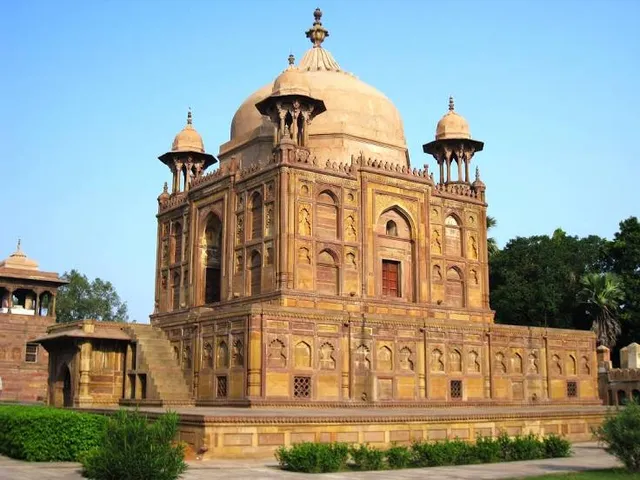
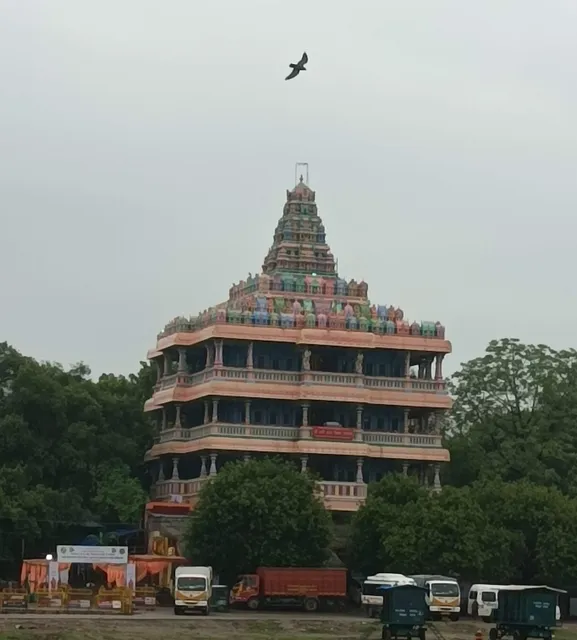
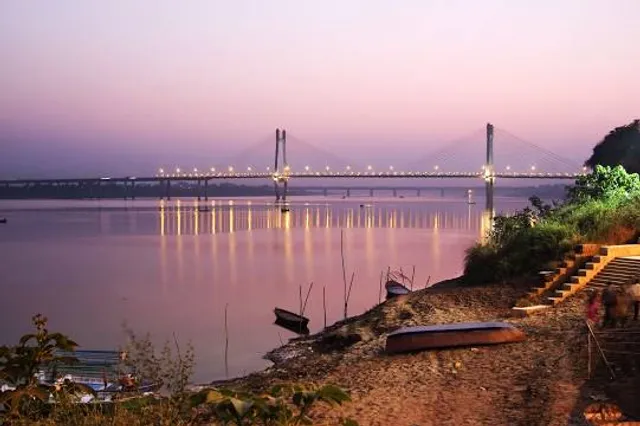
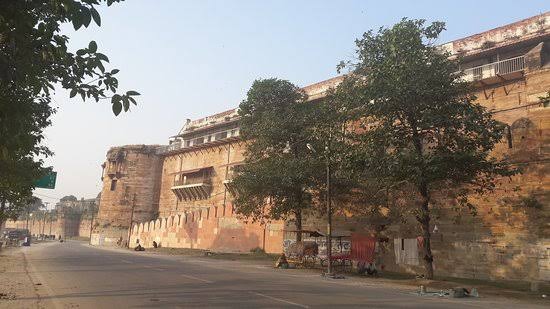
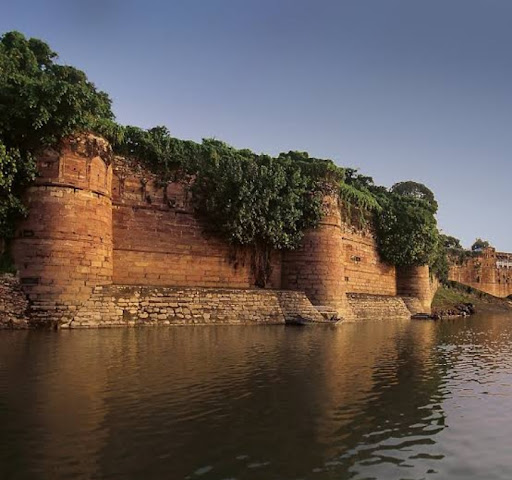
Allahabad Fort, also known as Prayagraj Fort, was built by Mughal Emperor Akbar in 1583 in Prayagraj (formerly Allahabad), Uttar Pradesh, India. Located on the banks of the Yamuna River near its confluence with the Ganges and the mythical Saraswati at Triveni Sangam, it is the largest fort constructed by Akbar and is recognized as a monument of national importance by the Archaeological Survey of India.HistoryConstruction: Akbar commissioned the fort to strengthen Mughal control in the region, naming it Illahabas ("Abode of God"), which later evolved into Allahabad. The fort was strategically built at the sacred confluence, a major pilgrimage site, to serve as a military stronghold and administrative hub.Purpose: Historian Catherine Asher suggests it was built to counter uprisings in eastern India, leveraging its strategic location. While some claim Akbar aimed to tax pilgrims, this is unlikely as he abolished pilgrim taxes in 1563.Challenges: Local legends state that the fort’s foundation repeatedly sank into the sandy riverbank, leading to a human sacrifice by a Brahmin to stabilize it. In return, Akbar granted the Brahmin’s descendants, the Prayagwals, exclusive rights to serve pilgrims at Sangam.Later History: In 1600, Prince Salim (later Emperor Jahangir) revolted against Akbar, briefly holding court in the fort. The British East India Company garrisoned it in 1765 under the Treaty of Allahabad, and it was ceded to them in 1801 by Nawab Saadat Ali. It played a role in the 1857 Indian Rebellion and remains partially under Indian Army control as an Ordnance Depot.Architecture Design: The fort showcases a blend of Mughal, Persian, and Hindu architectural styles, with massive walls, three gateways, and high towers. It spans 173 acres and includes palaces, a mosque, a temple, and gardens.Key Features:Ashoka Pillar: A 10.6-meter polished sandstone pillar from 232 BC, originally from Kaushambi, with inscriptions from Ashoka, Samudragupta, and Jahangir.Akshayavat Tree: A sacred banyan tree, considered “indestructible” in Hindu mythology, linked to legends involving Lord Narayana, Rama, and Akbar’s failed attempt to burn it. Access is restricted.Patalpuri Temple: An underground temple tied to mythology, housing Lord Vishnu’s idol and linked to sage Bharadwaj.Saraswati Koop: A well believed to be the source of the mythical Saraswati River.Jodhabai Palace and Zenana: Palaces showcasing Hindu and Islamic artistry, built for Akbar’s wives.Jama Masjid: A mosque within the fort reflecting Mughal architectural elegance.Visiting InformationAccess: The fort is largely controlled by the Indian Army, with limited public access except during the Kumbh Mela (every 12 years). Visitors can see the Ashoka Pillar, Saraswati Koop, and Patalpuri Temple with permission from the commandant.Timings: Open daily from 7 AM to 6 PM (closed Mondays, per some sources). Entry is free, but restricted areas require special permission.Best Time to Visit: October to March for pleasant weather (4°C–15°C). Avoid summer due to heat.How to Reach:Air: Bamrauli Airport, 12 km away.Train: Prayagraj Junction, 7 km away.Road: Well-connected by taxis, auto-rickshaws, or buses.Tips: Explore the fort’s exterior via a boat ride on the Yamuna during sunrise or sunset for stunning views. Hiring a local guide enhances the experience. Photography may be restricted in some areas.Cultural SignificanceThe fort is a symbol of Prayagraj’s historical and cultural heritage, reflecting Akbar’s syncretic vision, as seen in his naming of Illahabas and the blend of architectural styles.It hosts cultural events and is a key site during the Kumbh Mela, drawing global tourists.Local legends, like Akbar’s past life as a Hindu ascetic or the Akshayavat’s sanctity, add to its mystique.Current StatusWhile the fort’s grandeur remains, its restricted access limits tourism potential. Some argue it should be fully managed by the Archaeological Survey of India to boost heritage tourism, but its military...
Read moreAllahabad fort stands as a regal monument in Prayagraj, which is located on the bank of Yamuna river, near to Sangam. This fort is established by Mughal Emperor Akbar in 1583 which is known as the largest fort ever built by Akbar. It was built to strengthen Mughal control in the region. During the Mughal period, it served as a military stronghold and an administrative hub, later, it became a crucial center for the British East India Company who captured this fort in the year 1798. There is one railway track that was made by the British East India Company to use during the war which is connected to Prayagraj Railway Station. Now it has been recognized by the archaeological Survey of India as National Monument. This huge fort has three galleries flanked by high towers.
Architecture of the Fort: This fort is famous for its intricate design, construction and craftsmanship. It is a grand example of master craftmanship of medieval India. This fort covers an area of about 56 acres, and has a circumference of about 2.5 km. The fort has a rectangular shape, with four gates and each side. East side gate is called as the Delhi gate which is main entrance to the fort. The west side gate is the oldest gate of the fort. it has a mosque with a courtyard and fountain. South side face is the smallest gate of the fort. it has a simple archway and a staircase that leads to the river. North side gate is the newest gate of the fort which was constructed by British in 1856. It was used by the British officers to enter and exit the fort.
History of the Fort: The Allahabad fort has seen many changes and events over the years, as it passed from one ruler to another. Jahangir, the son of Akbar, who added a Zenana palace and a tomb for his wife, Jodhabai inside the fort. Aurangzeb, the grandson of Akbar who demolished the temple and the palace. Built new mosque and a Rang Mahal in the fort. The Marathas, who captured the fort in 1750 and restored the temple and the palace. Also added a Moti Mahal and a Diwan-i-Khas in the fort. The East India Company, who defeated the Marathas in the Battle of Buxar in 1764 and took over the fort. they also signed the treaty of Allahabad with the Mughal emperor Shah Allam II, who granted them rights to collect revenue from Bengal, Bihar and Odisha. Finally The Indian Army, who took over the fort after the Independence of India in 1947. The fort is still under the control of the army, and only part of it is open to the public for Visiting purpose.
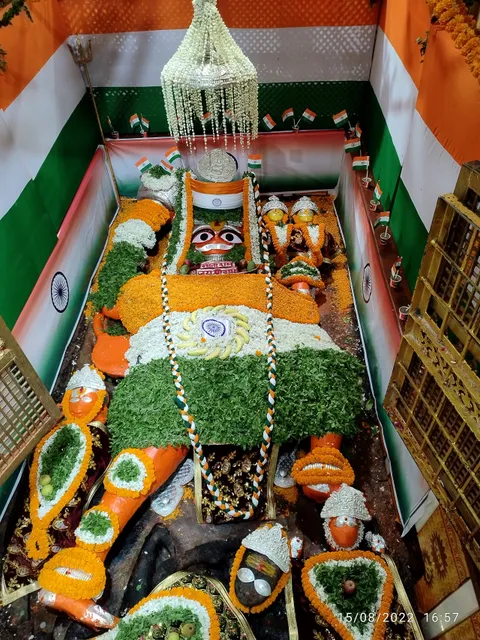
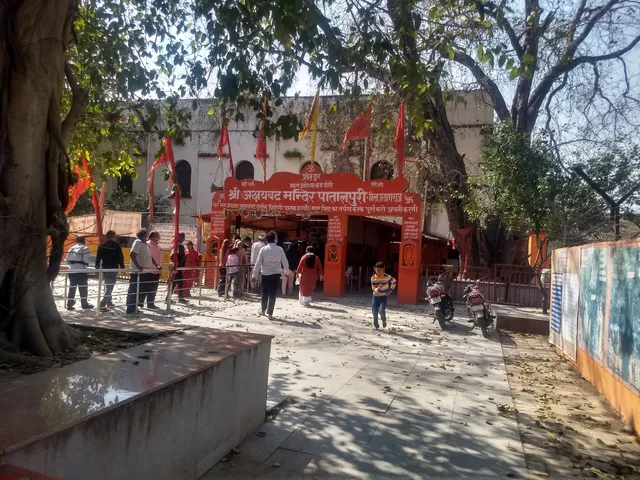
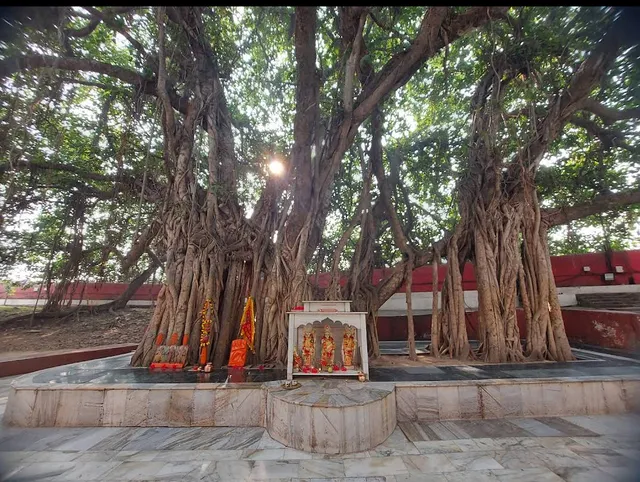
Places to Visit inside Fort: At present this fort is maintained by Army and limited area is open to Visitors and following places are allowed to Visit. Akshaya vat: Akshaya vat is Sacred tree for Chinese, Buddhists and Hindu devotes. Akshaya vat is considered sacred because of its religious, historical and mythological significance. There is one belief, which says that sage Markandeya asked Lord Narayan to display his Devine power. Lord Narayana then flooded the entire world, but only the Akshaya vat tree remained visible above the water. Hence this tree became so important and sacred one. Patalpuri temple: This Patalpuri is an ancient underground temple accessible through a small door on the eastern side of the fort. 3.Saraswathi Kund: Saraswathi Kund is also called as Saraswathi Koop, which is a well that believed to be mythological important for Hindus. At present it is not allowed to Visitors. Ashoka Pillar: One of the most remarkable features in this fort is Ashoka Pillar, which dates back to 232 BC and was relocated here from Kaushambi. Which stand to a height of 35 feet.
There are other places like, The Jodhabai Palace, The Zenana Palace, The Rang Mahal, The Moti Mahal, The Diwan-i-Khas, The Diwan-i-Aam, The Jami Masjid, The Khusro Bagh which are not available for...
Read moreThe Akbar Fort, also known as Allahabad Fort, is one of the most magnificent historical monuments located in Prayagraj (formerly Allahabad), Uttar Pradesh. Constructed by the Mughal Emperor Akbar in 1583, it stands as the largest fort built by him and is an outstanding representation of Mughal architectural grandeur. The fort is strategically situated by the confluence of three holy rivers— the Ganges, Yamuna, and the mythical Saraswati—making it a site of both spiritual and military significance.
Akbar wanted to establish a grand fort at Prayagraj to assert his power in the region and control the critical junction of rivers. According to the chronicles by his court historian Abu'l Fazl in the Akbarnama, the Emperor desired to found a great city at this sacred place, which was revered by pilgrims and ascetics from across India. The fort's construction was also a response to the increasing political unrest and uprisings in eastern India, necessitating a strong military presence. Built under the supervision of his trusted governor Allah Quli Khan, the fort took around 40 years to complete, engaging thousands of workers from diverse religious and ethnic backgrounds.
The fort’s architecture is a magnificent blend of Islamic, Hindu, and Persian elements, reflecting Akbar’s policy of religious tolerance and synthesis. The extensive fort covers around 56 acres with massive red sandstone walls enclosing palatial buildings, mosques, gardens, temples, and other structures. It is rectangular in shape with four fort gates, three of which face the rivers, emphasizing both defensiveness and control over river trade and pilgrimage.
One of the most remarkable relics inside the fort is the Ashoka Pillar, also known as the Allahabad Pillar, dating back to 232 BCE. Originally erected by Emperor Ashoka, it bears inscriptions that are valuable to historians studying ancient India. The fort also includes the Saraswati Koop, a well connected to the mythical Saraswati River, and Patalpuri Temple, an ancient underground shrine revered by pilgrims. The Akshayavata tree inside the fort is another spiritual landmark believed to be immortal and sacred.
The fort also incorporates several significant buildings such as the Jahangir Palace, built during Jahangir’s reign, showcasing Mughal art and architecture. The majestic walls and watchtowers were designed to resist both human and war elephant attacks, with gateways that prevented direct entry. The fort’s expansive Charbagh-style gardens add beauty and serenity to the otherwise robust military installation.
Allahabad Fort has witnessed many historic events—from Mughal battles to the British colonial period and the Indian freedom struggle. During the Revolt of 1857, the fort saw combat and later became an important administrative center for the British. After India’s independence, the fort remains a key tourist attraction and a symbol of the city’s rich heritage.
Visitors to the fort can explore its various sections, including the palaces, temples, and museums, while enjoying panoramic views of the confluence of rivers. Although large parts of the fort are restricted under military control, the open sections reflect centuries of Indian history, culture, and...
Read more