HTML SitemapExplore
logo
Find Things to DoFind The Best Restaurants

Chunar Fort — Attraction in Uttar Pradesh

Name
Chunar Fort
Description
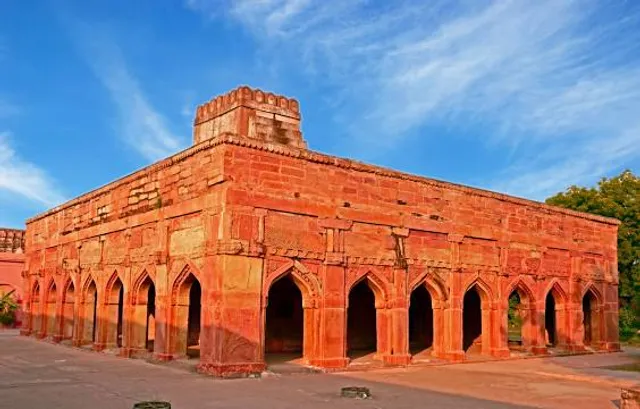
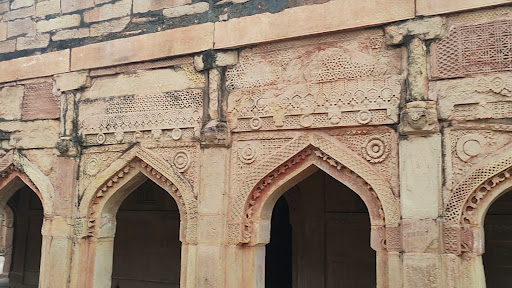
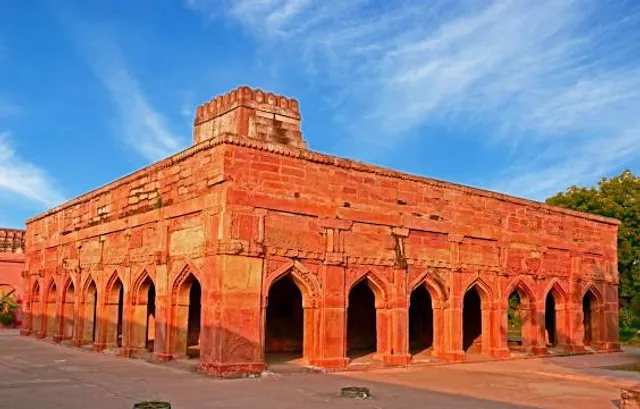
The Chunar Fort is located in Mirzapur district of Uttar Pradesh, in India. Along with Chunar town, near Mirzapur city, situated below the fort, the two are historic places with common history and legends. It is located 34 kilometres North west of Mirzapur.
Nearby attractions
Nearby restaurants
Green Village Hotel & Restaurant
Balughat, beside Head post office, Mirzapur, Uttar Pradesh 231304, India
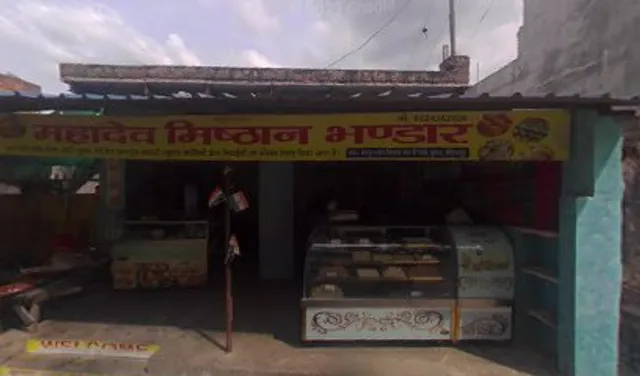
Mahadev Mishthan Bhandar
4VCG+2WM, Chunar, Uttar Pradesh 231304, India
Sandeep Nariyal Pani
Uttar Pradesh 231304, India
Dawat Restaurant & Egg Center
4VGM+6G4, Chunar, Uttar Pradesh 231304, India
Shankar Chat Bhandar
4VHJ+86M, Gangeshwarnath, Bedauli, Uttar Pradesh 231304, India
Spicy momos and fast food
in front of AGRAWAL COLLECTION, Chunar, Aebakpur Mohana, Uttar Pradesh 231304, India
Nearby hotels
Related posts
Keywords
Chunar Fort tourism.Chunar Fort hotels.Chunar Fort bed and breakfast. flights to Chunar Fort.Chunar Fort attractions.Chunar Fort restaurants.Chunar Fort travel.Chunar Fort travel guide.Chunar Fort travel blog.Chunar Fort pictures.Chunar Fort photos.Chunar Fort travel tips.Chunar Fort maps.Chunar Fort things to do.
Chunar Fort things to do, attractions, restaurants, events info and trip planning
Chunar Fort
IndiaUttar PradeshChunar Fort

Basic Info

Chunar Fort

4VFG+87X, Tammanpatti, Uttar Pradesh 231304, India
4.1(4.4K)
Open 24 hours
Save
spot

Ratings & Description

Info

The Chunar Fort is located in Mirzapur district of Uttar Pradesh, in India. Along with Chunar town, near Mirzapur city, situated below the fort, the two are historic places with common history and legends. It is located 34 kilometres North west of Mirzapur.

Cultural
Outdoor
Family friendly
attractions: , restaurants: Green Village Hotel & Restaurant, Mahadev Mishthan Bhandar, Sandeep Nariyal Pani, Dawat Restaurant & Egg Center, Shankar Chat Bhandar, Spicy momos and fast food
logoLearn more insights from Wanderboat AI.

Plan your stay

hotel
Pet-friendly Hotels in Uttar Pradesh
Find a cozy hotel nearby and make it a full experience.
hotel
Affordable Hotels in Uttar Pradesh
Find a cozy hotel nearby and make it a full experience.
hotel
The Coolest Hotels You Haven't Heard Of (Yet)
Find a cozy hotel nearby and make it a full experience.
hotel
Trending Stays Worth the Hype in Uttar Pradesh
Find a cozy hotel nearby and make it a full experience.

Reviews

Things to do nearby

Hidden Gems of Varanasi
Mon, Dec 8 • 3:30 PM
Varanasi, Uttar Pradesh, 221001, India
View details
Explore Sarnath
Explore Sarnath
Mon, Dec 8 • 9:30 AM
Varanasi, Uttar Pradesh, 221002, India
View details
Varanasi Cooking classes with Shobha and Indu
Sun, Dec 7 • 7:00 PM
Varanasi, Uttar Pradesh, 221011, India
View details

Nearby restaurants of Chunar Fort

Green Village Hotel & Restaurant

Mahadev Mishthan Bhandar

Sandeep Nariyal Pani

Dawat Restaurant & Egg Center

Shankar Chat Bhandar

Spicy momos and fast food

Green Village Hotel & Restaurant

Green Village Hotel & Restaurant

4.2

(40)

Click for details
Mahadev Mishthan Bhandar

Mahadev Mishthan Bhandar

4.8

(3)

Click for details
Sandeep Nariyal Pani

Sandeep Nariyal Pani

5.0

(1)

Click for details
Dawat Restaurant & Egg Center

Dawat Restaurant & Egg Center

4.0

(38)

$

Click for details
Get the Appoverlay
Get the AppOne tap to find yournext favorite spots!
Wanderboat LogoWanderboat

Your everyday Al companion for getaway ideas

CompanyAbout Us
InformationAI Trip PlannerSitemap
SocialXInstagramTiktokLinkedin
LegalTerms of ServicePrivacy Policy

Get the app

© 2025 Wanderboat. All rights reserved.
logo

Reviews of Chunar Fort

4.1
(4,356)
avatar
3.0
2y

Chunar Fort: A Treasure Trove of History Neglected

Nestled along the banks of the serene Ganges River, the Chunar Fort stands as a testament to India's rich cultural heritage and ancient history. However, my recent visit to this historical marvel left me with mixed feelings. While the fort's historical significance cannot be denied, the lack of attention to cleanliness and the deplorable condition of the road leading to the site overshadowed the overall experience.

As I approached the fort, I was disheartened to see the sorry state of the road leading to this magnificent monument. Potholes and uneven surfaces made the journey uncomfortable and challenging. A place of historical importance like Chunar Fort should have better accessibility to encourage more visitors to explore its grandeur.

Upon reaching the fort, I was further disappointed by the lack of cleanliness. The surroundings were littered with waste, and the absence of proper waste management was evident. It is disheartening to witness such negligence towards preserving our historical heritage. A place as historically significant as Chunar Fort should be treated with the utmost care and respect, both for its architectural brilliance and as a representation of our culture and past.

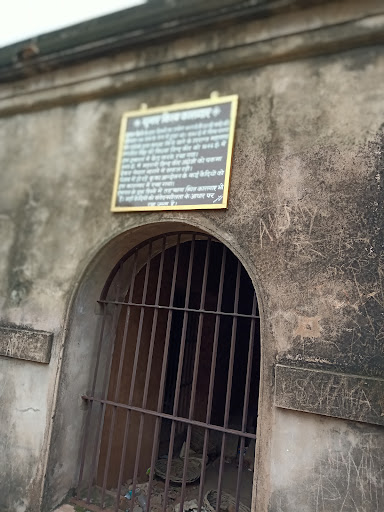
Another aspect that left me unsatisfied was the limited access to the fort's interior. Currently, only the area housing the prison is open to the public, while the rest of the fort remains inaccessible. This restriction significantly restricts the opportunity for visitors to immerse themselves in the history and culture associated with this ancient monument. I strongly urge the government to reconsider this approach and open up the entirety of the Chunar Fort to the public. By doing so, we can foster a deeper connection with our roots and inspire a greater appreciation for our rich heritage.

Chunar Fort has a storied history that dates back to various dynasties, including the Gupta, Mughal, and British periods. It has witnessed the rise and fall of empires, serving as a strategic stronghold and a symbol of power. The historical significance of this fort is immense, and it has the potential to be an educational and enlightening experience for visitors from all walks of life.

I earnestly request the government to take proactive steps in preserving and promoting Chunar Fort as a heritage site of national importance. Regular maintenance and restoration efforts should be undertaken to ensure the fort's structural integrity and enhance the visitor experience. Additionally, public awareness campaigns should be conducted to educate people about the historical importance of the fort and the need for responsible tourism to preserve its legacy for future generations.

Opening up the entirety of Chunar Fort to the public will not only attract more visitors but also contribute to the local economy through tourism. It can provide livelihood opportunities for the surrounding communities and foster a sense of pride among the locals for their rich cultural heritage.

In conclusion, my visit to Chunar Fort left me with a bittersweet experience. The fort's historical significance is undeniable, but the neglect of cleanliness and limited access to its interior are glaring issues that need urgent attention. I urge the government to take proactive measures in preserving and promoting this historical gem, ensuring that it becomes a vibrant hub of cultural exploration for generations to come. Let us come together to celebrate our heritage and create a future where the magnificence of Chunar Fort is cherished and...

   Read more
avatar
5.0
2y

Settlements have been recorded here since 56 BC, from the time of Vikramāditya of Ujjain.6] Chunar's earliest recorded history is from the sixteenth century, traced to a garrison of Babar, when in 1529, many of his soldiers were killed; some of their tombs in Chunar are still venerated.[1 In 1532, Sher Khan (later known as Sher Shah Suri after he captured Bengal), a highly ambitious Pathan of Afghan descent but born in district of Narnaul in the present day state of Haryana in India, took control of the fort with high ambitions of becoming the King in Delhi. He acquired Chunar Fort by strategic marriages to enhance his reputation, first with a childless widow (the wife of the deceased Governor of Chunar),1] and by marrying another widow, he acquired wealth. With these acquisitions, he became very powerful within four years and established a "state within a state". It is also said that the fort was not vital for Sher Khan as he had moved his harem and treasure to Rohtas (a newly won fort in the upper reaches of Son River) during his campaign to win Bengal.[2 When Emperor Humayun attacked the fort and held it in siege for four months, he had proposed to Sher Khan that he would not claim Chunar and Jaunpur and any other place of his choice, provided he gave up Bengal, which Sher Khan had won. Humayun also demanded from Suri the surrender of his treasure which he had taken to Bengal and a precious (chattar) umbrella and throne, and also to agree to be under the protection of the Mughal Empire.[7] He finally succumbed to pressure and signed a deal with Humayun. However, Sher Khan recaptured it when he Humayun marched towards Bengal. After Sher Shah's death in 1545 it remained under his son Islam Shah until 1553. The last of Suris dynasty Adil Shah remained confined to the fort till 1556 handing over the entire administration and military powers to the Hindu Prime Minister Hemu. Hemu launched many attacks from this fort winning several battles across north India and even captured Delhi after the Battle of Tughlaqabad in 1556 and declared independence from the Sur Empire and crowned himself as king. Adil Shah remained in this fort, who lost life in an attack by king of Bengal in 1557. Fort came under the control of the...

   Read more
avatar
5.0
16w

The Chunar Fort was established by Maharaja Vikramaditya, the King of Ujjain, in honour of his brother Raja Bharthari's stay.[3] It is believed that Raja Bharthari left his body and took Mahasamadhi at this fort, a servant disciple continues to maintain the place and offers deepam dhupam to the Raja daily (as of 8 November 2011).

As per Alha Khand in 1029 AD, King Sahadeo made Chunar fort his capital and established the statue of Naina Yogini in a cave of Vindhya hill and put the name as Nainagarh. King Sahadeo built a stone umbrella based on 52 pillars in the memory of the victory on 52 other kings, inside the fort which is still preserved. He had a brave daughter who got married with Alha the then King of Mahoba whose marriage place in still preserved with the name of Sonava Mandap. Beside this some other stories are also related with the fort as Magna-Deogarh, Ratan Deo's Burj (tower) and King Pithaura who named it Patthargarh as well.

In mid July 1537, Humayun left Agra and arrived at Chunar after 5 months and spent 3 months besieging the Chunar fort. Humayun later offered Chunar and Jaunpur to Sher Shah Suri in exchange for Bengal.[4]

It has importance due to the stay of the founder of Mughal Dynasty Babar in 1525 AD. Later on Shershah Suri obtained the possession of the fort by marrying the widow wife of Taj Khan Sarang-Khani, the Governor of Ibrahim Lodi. In 1574 AD, Akbar the Great captured the fort and since then it was in the Mughal regime up to 1772 AD. Once emperor Jahangir appointed one Iftikhar Khan as Nazim and in the regime of Aurangzeb one of his Governor's Mirza Bairam built a mosque in 1663 AD. near the Bhairo-Burj.

In 1772 AD the fort was captured by the East India Company who established in it a depot of Artillery and ammunition. Later it was taken by Maharaja Chait Singh of Benaras temporarily and after Chait Singh outbreak in 1781 AD. Warren Hastings retired for safety to Chunar where a force was collected by Major Phophan, which expelled Chait Singh from his stronghold in his neighbourhood. Hastings liked the situation and climate, and his residence is still standing. Near it, there is a sundial bearing the inscription. The British used the boat for tax collection from...

   Read more
Page 1 of 7
Previous
Next

Posts

Anand MishraAnand Mishra
Chunar Fort: A Treasure Trove of History Neglected Nestled along the banks of the serene Ganges River, the Chunar Fort stands as a testament to India's rich cultural heritage and ancient history. However, my recent visit to this historical marvel left me with mixed feelings. While the fort's historical significance cannot be denied, the lack of attention to cleanliness and the deplorable condition of the road leading to the site overshadowed the overall experience. As I approached the fort, I was disheartened to see the sorry state of the road leading to this magnificent monument. Potholes and uneven surfaces made the journey uncomfortable and challenging. A place of historical importance like Chunar Fort should have better accessibility to encourage more visitors to explore its grandeur. Upon reaching the fort, I was further disappointed by the lack of cleanliness. The surroundings were littered with waste, and the absence of proper waste management was evident. It is disheartening to witness such negligence towards preserving our historical heritage. A place as historically significant as Chunar Fort should be treated with the utmost care and respect, both for its architectural brilliance and as a representation of our culture and past. Another aspect that left me unsatisfied was the limited access to the fort's interior. Currently, only the area housing the prison is open to the public, while the rest of the fort remains inaccessible. This restriction significantly restricts the opportunity for visitors to immerse themselves in the history and culture associated with this ancient monument. I strongly urge the government to reconsider this approach and open up the entirety of the Chunar Fort to the public. By doing so, we can foster a deeper connection with our roots and inspire a greater appreciation for our rich heritage. Chunar Fort has a storied history that dates back to various dynasties, including the Gupta, Mughal, and British periods. It has witnessed the rise and fall of empires, serving as a strategic stronghold and a symbol of power. The historical significance of this fort is immense, and it has the potential to be an educational and enlightening experience for visitors from all walks of life. I earnestly request the government to take proactive steps in preserving and promoting Chunar Fort as a heritage site of national importance. Regular maintenance and restoration efforts should be undertaken to ensure the fort's structural integrity and enhance the visitor experience. Additionally, public awareness campaigns should be conducted to educate people about the historical importance of the fort and the need for responsible tourism to preserve its legacy for future generations. Opening up the entirety of Chunar Fort to the public will not only attract more visitors but also contribute to the local economy through tourism. It can provide livelihood opportunities for the surrounding communities and foster a sense of pride among the locals for their rich cultural heritage. In conclusion, my visit to Chunar Fort left me with a bittersweet experience. The fort's historical significance is undeniable, but the neglect of cleanliness and limited access to its interior are glaring issues that need urgent attention. I urge the government to take proactive measures in preserving and promoting this historical gem, ensuring that it becomes a vibrant hub of cultural exploration for generations to come. Let us come together to celebrate our heritage and create a future where the magnificence of Chunar Fort is cherished and revered by all.
#ilovetoguide#ilovetoguide
Settlements have been recorded here since 56 BC, from the time of Vikramāditya of Ujjain.[6] Chunar's earliest recorded history is from the sixteenth century, traced to a garrison of Babar, when in 1529, many of his soldiers were killed; some of their tombs in Chunar are still venerated.[1][2] In 1532, Sher Khan (later known as Sher Shah Suri after he captured Bengal), a highly ambitious Pathan of Afghan descent but born in district of Narnaul in the present day state of Haryana in India, took control of the fort with high ambitions of becoming the King in Delhi. He acquired Chunar Fort by strategic marriages to enhance his reputation, first with a childless widow (the wife of the deceased Governor of Chunar),[1] and by marrying another widow, he acquired wealth. With these acquisitions, he became very powerful within four years and established a "state within a state". It is also said that the fort was not vital for Sher Khan as he had moved his harem and treasure to Rohtas (a newly won fort in the upper reaches of Son River) during his campaign to win Bengal.[2][7] When Emperor Humayun attacked the fort and held it in siege for four months, he had proposed to Sher Khan that he would not claim Chunar and Jaunpur and any other place of his choice, provided he gave up Bengal, which Sher Khan had won. Humayun also demanded from Suri the surrender of his treasure which he had taken to Bengal and a precious (chattar) umbrella and throne, and also to agree to be under the protection of the Mughal Empire.[7] He finally succumbed to pressure and signed a deal with Humayun. However, Sher Khan recaptured it when he Humayun marched towards Bengal. After Sher Shah's death in 1545 it remained under his son Islam Shah until 1553. The last of Suris dynasty Adil Shah remained confined to the fort till 1556 handing over the entire administration and military powers to the Hindu Prime Minister Hemu. Hemu launched many attacks from this fort winning several battles across north India and even captured Delhi after the Battle of Tughlaqabad in 1556 and declared independence from the Sur Empire and crowned himself as king. Adil Shah remained in this fort, who lost life in an attack by king of Bengal in 1557. Fort came under the control of the Mughals in 1575.
He- ManHe- Man
At a distance of 35 km from Mirzapur and 40 km from Varanasi, Chunar Fort is located at Chunar town in Mirzapur district of Uttar Pradesh. The Chunar Fort was established by Maharaja Vikramaditya, the King of Ujjain for his brother Raja Bhartihari. As per Alha Khand, King Sahadeo made this fort as his capital and renamed as Nainagarh in 1029 AD. Built and rebuilt several times, Chunar first came into prominence in 1177 AD, when Prithviraj Chauhan established his fort here. Later, the fort was ruled by Mughal ruler Babar in 1525 AD and then Sher Shah Suri took control over the fort in 1532 CE. In 1575 AD, Akbar recaptured this fort and then it passed to the nawabs of Awadh in the 18th century. Finally in 1772 AD, it was captured by the British and used it as a warehouse of weapons and missiles till India's independence. Spread across 34,000 sq. ft, the fort is a solid structure that stands on a rock, a detached part of the Vindhya Range. Due to the steep slope, the rocky fort is practically impregnable. The approach to Chunar Hill is marked by a chain of low hills, running parallel to the river on its right bank, which is covered by plantations and bungalows. The southeastern part of the fort is on the rocky bank of Ganga River. Samadhi of Bhartihari, Sonwa Mandap, Hanging Place, Bungalow of Warren Hastings and Prisons are the prime attractions in the fort complex. There is also a Well of Love constructed by King Vikramaditya for his beloved wife who uses this well for ablutions. The well has secret dungeons and changing rooms. One can also find a stone umbrella inside the fort, which was built by King Sahadeo to commemorate his victory over 52 rulers. There is also an underground tunnel from the fort which connects to Raigarh & Vijaygarh.
See more posts
See more posts
hotel
Find your stay

Pet-friendly Hotels in Uttar Pradesh

Find a cozy hotel nearby and make it a full experience.

Chunar Fort: A Treasure Trove of History Neglected Nestled along the banks of the serene Ganges River, the Chunar Fort stands as a testament to India's rich cultural heritage and ancient history. However, my recent visit to this historical marvel left me with mixed feelings. While the fort's historical significance cannot be denied, the lack of attention to cleanliness and the deplorable condition of the road leading to the site overshadowed the overall experience. As I approached the fort, I was disheartened to see the sorry state of the road leading to this magnificent monument. Potholes and uneven surfaces made the journey uncomfortable and challenging. A place of historical importance like Chunar Fort should have better accessibility to encourage more visitors to explore its grandeur. Upon reaching the fort, I was further disappointed by the lack of cleanliness. The surroundings were littered with waste, and the absence of proper waste management was evident. It is disheartening to witness such negligence towards preserving our historical heritage. A place as historically significant as Chunar Fort should be treated with the utmost care and respect, both for its architectural brilliance and as a representation of our culture and past. Another aspect that left me unsatisfied was the limited access to the fort's interior. Currently, only the area housing the prison is open to the public, while the rest of the fort remains inaccessible. This restriction significantly restricts the opportunity for visitors to immerse themselves in the history and culture associated with this ancient monument. I strongly urge the government to reconsider this approach and open up the entirety of the Chunar Fort to the public. By doing so, we can foster a deeper connection with our roots and inspire a greater appreciation for our rich heritage. Chunar Fort has a storied history that dates back to various dynasties, including the Gupta, Mughal, and British periods. It has witnessed the rise and fall of empires, serving as a strategic stronghold and a symbol of power. The historical significance of this fort is immense, and it has the potential to be an educational and enlightening experience for visitors from all walks of life. I earnestly request the government to take proactive steps in preserving and promoting Chunar Fort as a heritage site of national importance. Regular maintenance and restoration efforts should be undertaken to ensure the fort's structural integrity and enhance the visitor experience. Additionally, public awareness campaigns should be conducted to educate people about the historical importance of the fort and the need for responsible tourism to preserve its legacy for future generations. Opening up the entirety of Chunar Fort to the public will not only attract more visitors but also contribute to the local economy through tourism. It can provide livelihood opportunities for the surrounding communities and foster a sense of pride among the locals for their rich cultural heritage. In conclusion, my visit to Chunar Fort left me with a bittersweet experience. The fort's historical significance is undeniable, but the neglect of cleanliness and limited access to its interior are glaring issues that need urgent attention. I urge the government to take proactive measures in preserving and promoting this historical gem, ensuring that it becomes a vibrant hub of cultural exploration for generations to come. Let us come together to celebrate our heritage and create a future where the magnificence of Chunar Fort is cherished and revered by all.
Anand Mishra

Anand Mishra

hotel
Find your stay

Affordable Hotels in Uttar Pradesh

Find a cozy hotel nearby and make it a full experience.

Get the Appoverlay
Get the AppOne tap to find yournext favorite spots!
Settlements have been recorded here since 56 BC, from the time of Vikramāditya of Ujjain.[6] Chunar's earliest recorded history is from the sixteenth century, traced to a garrison of Babar, when in 1529, many of his soldiers were killed; some of their tombs in Chunar are still venerated.[1][2] In 1532, Sher Khan (later known as Sher Shah Suri after he captured Bengal), a highly ambitious Pathan of Afghan descent but born in district of Narnaul in the present day state of Haryana in India, took control of the fort with high ambitions of becoming the King in Delhi. He acquired Chunar Fort by strategic marriages to enhance his reputation, first with a childless widow (the wife of the deceased Governor of Chunar),[1] and by marrying another widow, he acquired wealth. With these acquisitions, he became very powerful within four years and established a "state within a state". It is also said that the fort was not vital for Sher Khan as he had moved his harem and treasure to Rohtas (a newly won fort in the upper reaches of Son River) during his campaign to win Bengal.[2][7] When Emperor Humayun attacked the fort and held it in siege for four months, he had proposed to Sher Khan that he would not claim Chunar and Jaunpur and any other place of his choice, provided he gave up Bengal, which Sher Khan had won. Humayun also demanded from Suri the surrender of his treasure which he had taken to Bengal and a precious (chattar) umbrella and throne, and also to agree to be under the protection of the Mughal Empire.[7] He finally succumbed to pressure and signed a deal with Humayun. However, Sher Khan recaptured it when he Humayun marched towards Bengal. After Sher Shah's death in 1545 it remained under his son Islam Shah until 1553. The last of Suris dynasty Adil Shah remained confined to the fort till 1556 handing over the entire administration and military powers to the Hindu Prime Minister Hemu. Hemu launched many attacks from this fort winning several battles across north India and even captured Delhi after the Battle of Tughlaqabad in 1556 and declared independence from the Sur Empire and crowned himself as king. Adil Shah remained in this fort, who lost life in an attack by king of Bengal in 1557. Fort came under the control of the Mughals in 1575.
#ilovetoguide

#ilovetoguide

hotel
Find your stay

The Coolest Hotels You Haven't Heard Of (Yet)

Find a cozy hotel nearby and make it a full experience.

hotel
Find your stay

Trending Stays Worth the Hype in Uttar Pradesh

Find a cozy hotel nearby and make it a full experience.

At a distance of 35 km from Mirzapur and 40 km from Varanasi, Chunar Fort is located at Chunar town in Mirzapur district of Uttar Pradesh. The Chunar Fort was established by Maharaja Vikramaditya, the King of Ujjain for his brother Raja Bhartihari. As per Alha Khand, King Sahadeo made this fort as his capital and renamed as Nainagarh in 1029 AD. Built and rebuilt several times, Chunar first came into prominence in 1177 AD, when Prithviraj Chauhan established his fort here. Later, the fort was ruled by Mughal ruler Babar in 1525 AD and then Sher Shah Suri took control over the fort in 1532 CE. In 1575 AD, Akbar recaptured this fort and then it passed to the nawabs of Awadh in the 18th century. Finally in 1772 AD, it was captured by the British and used it as a warehouse of weapons and missiles till India's independence. Spread across 34,000 sq. ft, the fort is a solid structure that stands on a rock, a detached part of the Vindhya Range. Due to the steep slope, the rocky fort is practically impregnable. The approach to Chunar Hill is marked by a chain of low hills, running parallel to the river on its right bank, which is covered by plantations and bungalows. The southeastern part of the fort is on the rocky bank of Ganga River. Samadhi of Bhartihari, Sonwa Mandap, Hanging Place, Bungalow of Warren Hastings and Prisons are the prime attractions in the fort complex. There is also a Well of Love constructed by King Vikramaditya for his beloved wife who uses this well for ablutions. The well has secret dungeons and changing rooms. One can also find a stone umbrella inside the fort, which was built by King Sahadeo to commemorate his victory over 52 rulers. There is also an underground tunnel from the fort which connects to Raigarh & Vijaygarh.
He- Man

He- Man

See more posts
See more posts