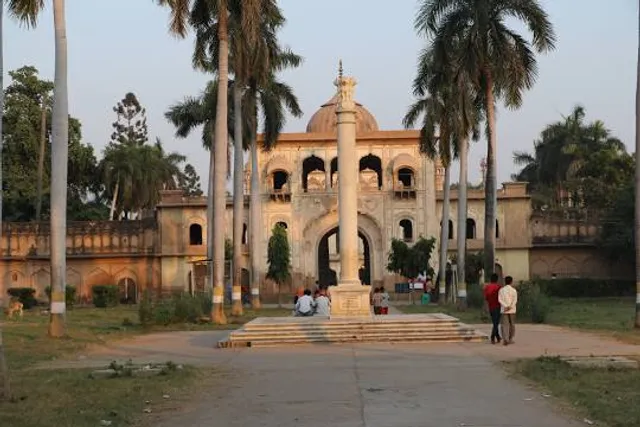
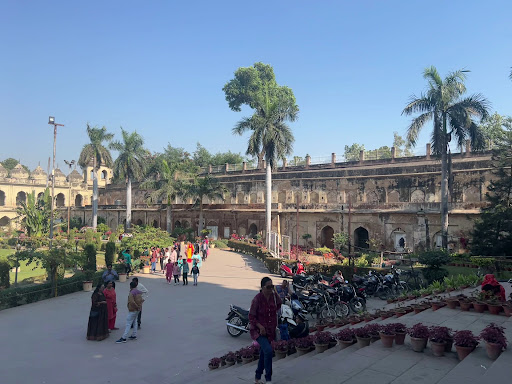
Gulab Bari is famous for the tomb of Nawab Shuja-ud-Daulah. It's located in Faizabad, Uttar Pradesh, India. As it was the first capital of Awadh. The complex is surrounded by a brick wall with plaster. The boundary wall has numerous quarters most probably for the workers and care takers. There are three arched double storeyed entrance gates to access the complex, Imambara, Mosque and tomb. These gateways are quite imposing having decorated balconies and relief works with plaster.
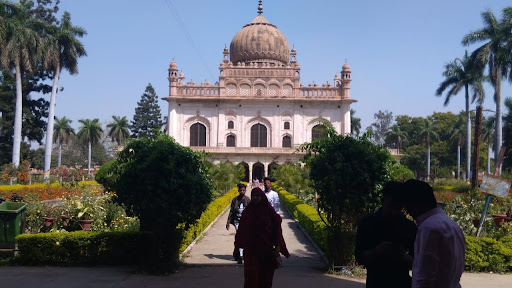
The tomb of Shuja-ud-Daulah is situated in the centre of the Char Bagh. This Char Bagh has fountains and shallow water canals. It is a beautiful building whose central chamber houses the tombs of Nawab Shuja-ud-Daulah and his mother on the ground floor. Nawab Shuja-ud-Daulah died on 26 January 1775. The main chamber on the first floor of the tomb can be reached through three grand arched gateways via staircase. It houses the picture of Nawab, chandeliers, decorated wooden grill which marks the graves and covered with clothes.
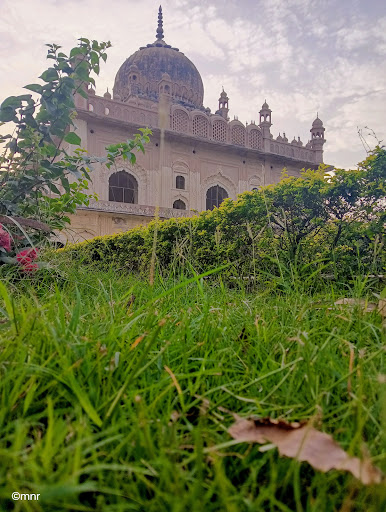
The tomb is a square two-storey structure with arched verandahs all around on the ground floor. The roof of this beautiful building is adorned with a dome. On which there is also a vase with an inverted lotus. There are 4 small minarets around the dome which are decorated with cupola. The parapet in front of the dome is based on arches between the minarets which are decorated with small bulbus structures. Minarets are built on octagonal structures at the four corners which are adorned with domes and finials at the top.
The remaining work of this tomb was completed by the wife of Nawab Shuja-ud-Daulah in 1789 and she herself maintained this rose garden and the tomb. In 1860, the British took over the other buildings except the tomb.
Now this heritage is under the supervision of three departments, Nazul, Garden and Horticulture Department and Archaeological Department because it is a protected monument of national importance. No ticket of any kind is charged here. Nawab Shuja-ud-Daula's father, Nawab Mirza Muqim, who was known by the title Safdar Jung, died in 1753 and his body was kept in this tomb and later buried in Delhi Safdar Jung's Tomb.
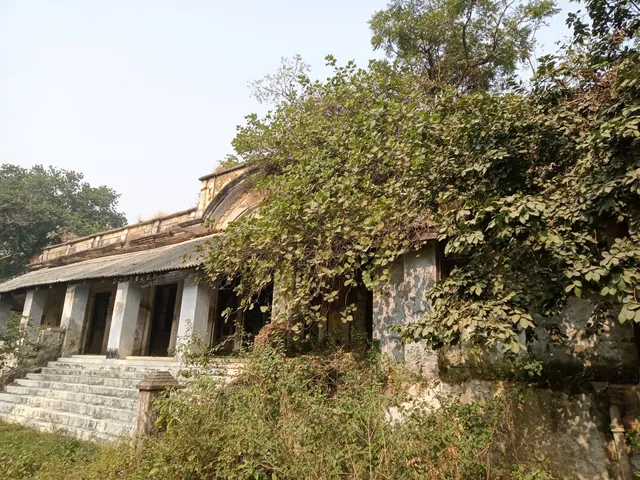
This is very attraction among the locals and visitors as it's magnificent architectural monument. Rose garden is maintained and having many varieties and some other floral plants are planted to enhance the beauty of this marvelous edifice. Imambara is almost turned to ruins and the mosque is also not...
Read moreGulab Bari (literally meaning 'Garden of Roses') the Tomb of Nawab Shuja-ud-Daula is in Faizabad, Uttar Pradesh, India. This place has a good collection of roses of various varieties set by the sides of water fountains. Gulab Bari is the maqbara (Mausoleum) of Nawab Shuja-ud-Daula, the third Nawab of Oudh (now faizabad) in the campus.1 This monument has declared to be of National Importance under the Ancient Monuments and Archaeological Sites and Remains Act 1958 as updated by the Ancient Monuments and Archaeological Sites and Remains (Amendment and Validation) Act, 2010. Further under Sub-section 20 (a) and 20 (b) of Ancient Monuments and Archaeological Monuments and Remains (Amendment and Validation) Act, 2010.
Gulab Bari is surrounded by an enclosure wall, built of Lakhauri bricks lime plastered and decorated with plaster mouldings. The enclosure contains the tomb of Shuja-ud-daula along with mosque Imambara, Shahi Hammam, Baradari and a well approached through triple-arched gateways. The tomb of Shuja-ud-daula (1753–1775) was constructed by himself during his lifetime which is approached through an imposing gateway. The central chamber contains the cenotaph which houses the graves of Nawab Shuja-ud-daula and his mother. The tomb proper stands in the centre of a Charbagh Garden accompanied by fountains and shallow water channels. The square double-storeyed structure of the mausoleum has an arched verandah on each side, while its upper storey has a three arched façade adorned by minarets on the corners. The dome of the central chamber is crowned by inverted louts and metal finial.
Gulab Bari is not only a spot that needs to be visited; it is a place of worship and various cultural events. The locals treat it as a holy place. It is said that the monument is connected to a boali in Lucknow and used to be hiding place for the successors of the Nawab Shuja-ud-daula. The fragrance of roses in the Gulab Udyaan brought relief to the busy mind of the nawab and allowed him to work and take decisions. It might have served as soldier's cabin and a house for the servants (not the main monument but the structures around). Today Gulab Bari is though in a poor condition, it still is very important for the locals (mostly of the Muslim Community). It remained very important, remains important and will remain important only if its tourism is boosted and the people become a little more conscious about...
Read moreGulab Bari is the Tomb of Nawab Shuja-ud-Daula, located in Faizabad, Uttar Pradesh, India. This place has a good collection of roses of various varieties set by the sides of water fountains. Gulab Bari is the maqbara (Mausoleum) of Nawab Shuja-ud-Daula, the third Nawab of Oudh (now faizabad) in the campus.1 The monument has declared to be of National Importance under the Ancient Monuments and Archaeological Sites and Remains Act 1958 as updated by the Ancient Monuments and Archaeological Sites and Remains (Amendment and Validation) Act, 2010. Further under Sub-section 20 (a) and 20 (b) of Ancient Monuments and Archaeological Monuments and Remains (Amendment and Validation) Act, 2010.
Gulab Bari is surrounded by an enclosure wall, built of Lakhauri bricks lime plastered and decorated with plaster mouldings. The enclosure contains the tomb of Shuja-ud-daula along with mosque Imambara, Shahi Hammam, Baradari and a well approached through triple-arched gateways. The tomb of Shuja-ud-daula (1753–1775) was constructed by himself during his lifetime which is approached through an imposing gateway. The central chamber contains the cenotaph which houses the graves of Nawab Shuja-ud-daula and his mother. The tomb proper stands in the centre of a Charbagh Garden accompanied by fountains and shallow water channels. The square double-storeyed structure of the mausoleum has an arched verandah on each side, while its upper storey has a three arched façade adorned by minarets on the corners. The dome of the central chamber is crowned by inverted lotus and metal finial.
Gulab Bari is not only a spot that needs to be visited; it is a place of worship and various cultural events. The locals treat it as a holy place. It is said that the monument is connected to a boali in Lucknow and used to be hiding place for the successors of the Nawab Shuja-ud-daula. The fragrance of roses in the Gulab Udyaan brought relief to the busy mind of the nawab and allowed him to work and take decisions. It might have served as soldier's cabin and a house for the servants (not the main monument but the structures around). Today Gulab Bari is though in a poor condition, it still is very important for the locals (mostly of the Muslim Community). It remained very important, remains important and will remain important only if its tourism is boosted and the people become a little more conscious about...
Read more