HTML SitemapExplore
logo
Find Things to DoFind The Best Restaurants

Sulatana Daku Ka Qila — Attraction in Uttar Pradesh

Name
Sulatana Daku Ka Qila
Description
Nearby attractions
Nearby restaurants
Nearby hotels
Related posts
Keywords
Sulatana Daku Ka Qila tourism.Sulatana Daku Ka Qila hotels.Sulatana Daku Ka Qila bed and breakfast. flights to Sulatana Daku Ka Qila.Sulatana Daku Ka Qila attractions.Sulatana Daku Ka Qila restaurants.Sulatana Daku Ka Qila travel.Sulatana Daku Ka Qila travel guide.Sulatana Daku Ka Qila travel blog.Sulatana Daku Ka Qila pictures.Sulatana Daku Ka Qila photos.Sulatana Daku Ka Qila travel tips.Sulatana Daku Ka Qila maps.Sulatana Daku Ka Qila things to do.
Sulatana Daku Ka Qila things to do, attractions, restaurants, events info and trip planning
Sulatana Daku Ka Qila
IndiaUttar PradeshSulatana Daku Ka Qila

Basic Info

Sulatana Daku Ka Qila

Najibabad, Uttar Pradesh 246763, India
4.1(214)
Open 24 hours
Save
spot

Ratings & Description

Info

Cultural
Scenic
Off the beaten path
attractions: , restaurants:
logoLearn more insights from Wanderboat AI.

Plan your stay

hotel
Pet-friendly Hotels in Uttar Pradesh
Find a cozy hotel nearby and make it a full experience.
hotel
Affordable Hotels in Uttar Pradesh
Find a cozy hotel nearby and make it a full experience.
hotel
The Coolest Hotels You Haven't Heard Of (Yet)
Find a cozy hotel nearby and make it a full experience.
hotel
Trending Stays Worth the Hype in Uttar Pradesh
Find a cozy hotel nearby and make it a full experience.

Reviews

Get the Appoverlay
Get the AppOne tap to find yournext favorite spots!
Wanderboat LogoWanderboat

Your everyday Al companion for getaway ideas

CompanyAbout Us
InformationAI Trip PlannerSitemap
SocialXInstagramTiktokLinkedin
LegalTerms of ServicePrivacy Policy

Get the app

© 2025 Wanderboat. All rights reserved.
logo

Reviews of Sulatana Daku Ka Qila

4.1
(214)
avatar
5.0
1y

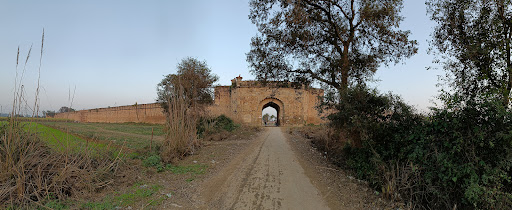
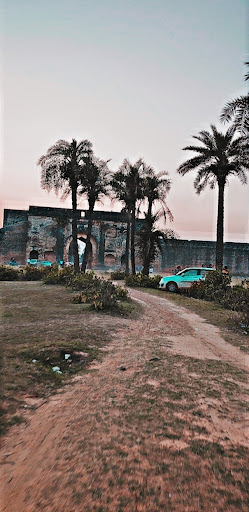
Najibabad Fort, also known as Sultana Daku Qila and Pathargarh Fort, is an 18th-century fort in Najibabad, Bijnor district, Uttar Pradesh, India. It was built in 1755 by the Mughal minister Najib ad-Dawlah.

About najibabad ad- dawalah Najib ad-Dawlah (Pashto: نجيب الدوله), also known as Najib Khan Yousafzai (Pashto: نجيب خان), was a Rohilla Yousafzai Afghan who earlier served as a Mughal serviceman but later deserted the cause of the Mughals and joined Ahmad Shah Abdali in 1757 in his attack on Delhi. He was also a House Chief of Rohilkhand, and in the 1740s founded the city of Najibabad in Bijnor, India. He was instrumental in winning the Third Battle of Panipat. He began his career in 1743 as an immigrant from Maneri, Swabi (of the Umarkhel subbranch of Mandanr Yousafzais) as a soldier. He was an employee of Imad-ul-Mulk but got alerte from going influence of Marhattas and by advise of Shah Waliullah, he invited Ahmad Shah Abdali in 1757 to attack on Delhi and secure the Muslims place in India. He was then appointed as Mir Bakhshi of the Mughal emperor by Abdali. Later in his career he was known as Najib ad-Dawlah, Amir al-Umra, Shuja ad-Dawlah.1] From 1757 to 1770, he was governor of Saharanpur, ruling over Dehradun. Many architectural relics of the period of Rohilla, the remains in Najibabad, were overseen by him, which he founded at the height of his career as a Mughal minister. Biography Najib Khan belonged to the Umar Khel section of the Mandanr Yousafzai. He migrated from Nazar Khel Swabi village, now in the Swabi district of the Khyber Pakhtunkhwa province of Pakistan. His father was Asalat Khan.[3He migrated in 1739 to join his uncle Bisharat Khan, who had settled with his families of Pakhtuns at Bisharatnagar, near Rampur.[citation needed] In 1749, Ali Mohammed Khan, who had captured most of Rohilkhand by 1740, gave Najib Khan a northern portion,[5] where he established the present day town of Najibabad, a state of Najibabad independent from other Rohilla tribes, and received the title, ‘Najib-ud-Daula’. Imad-ul-Mulk appointed Najib ad- Dawlah as the governor of Saharanpur.[6] In 1757, Najib ad-Dawlah, who was then the governor of Saharanpur under Mughal Empire, invaded the city of Dehradun, with his army of Rohillas, and ruled the area for the next decade. His rule was known for its administration, and development of land resources, leading to widespread development and prosperity in the area, with emphasis on agriculture and irrigation. Many mango groves created during the area still exist today. Though after his death in 1770, the Maratha forces expelled the Rohillas...

   Read more

avatar
5.0
7y

This is a place of in NAJIBABAD ,BIJNOR (U.P.) near z village known as Kahawat our billoch . The border of U.P. and U.K. in INDIA a river is found at the named is MALINI. About four hundred years ago this fort was built by Nawab Najibudola of Najibabad. Later, the Sultan's robber who was at this place captured it. Today, people call it the Sultana Daku ka Kila.Sultana was a brave robber who was impossible to catch. The police of that time made constant efforts to catch him. Sultana Daku has a history of itself, a film was also made on the Sultana Daku in which Dara Singh played the role of Sultana.Sultana Daku used this fort on the spot of his hideout. Sultana was a supposed robber of his time, who came from Battu Kabil in...

   Read more
avatar
3.0
3y

The significance of heritage sites like Sultana Daku Ka Kila goes beyond mere aesthetics. They serve as a link to our past, providing insights into the history, architecture, and traditions of our ancestors. Preserving and maintaining such sites not only ensures their longevity but also helps foster a sense of pride and cultural identity within the community.

It is my sincere hope that the authorities recognize the importance of Sultana Daku Ka Kila and take immediate action to restore and maintain this magnificent heritage site. With proper attention, funding, and collaborative efforts, this place can reclaim its former glory and once again become a shining example of our rich...

   Read more
Page 1 of 7
Previous
Next

Posts

Mohd FaisalMohd Faisal
Najibabad Fort, also known as Sultana Daku Qila and Pathargarh Fort, is an 18th-century fort in Najibabad, Bijnor district, Uttar Pradesh, India. It was built in 1755 by the Mughal minister Najib ad-Dawlah. About najibabad ad- dawalah Najib ad-Dawlah (Pashto: نجيب الدوله), also known as Najib Khan Yousafzai (Pashto: نجيب خان), was a Rohilla Yousafzai Afghan who earlier served as a Mughal serviceman but later deserted the cause of the Mughals and joined Ahmad Shah Abdali in 1757 in his attack on Delhi. He was also a House Chief of Rohilkhand, and in the 1740s founded the city of Najibabad in Bijnor, India. He was instrumental in winning the Third Battle of Panipat. He began his career in 1743 as an immigrant from Maneri, Swabi (of the Umarkhel subbranch of Mandanr Yousafzais) as a soldier. He was an employee of Imad-ul-Mulk but got alerte from going influence of Marhattas and by advise of Shah Waliullah, he invited Ahmad Shah Abdali in 1757 to attack on Delhi and secure the Muslims place in India. He was then appointed as Mir Bakhshi of the Mughal emperor by Abdali. Later in his career he was known as Najib ad-Dawlah, Amir al-Umra, Shuja ad-Dawlah.[1] From 1757 to 1770, he was governor of Saharanpur, ruling over Dehradun. Many architectural relics of the period of Rohilla, the remains in Najibabad, were overseen by him, which he founded at the height of his career as a Mughal minister. Biography Najib Khan belonged to the Umar Khel section of the Mandanr Yousafzai. He migrated from Nazar Khel Swabi village, now in the Swabi district of the Khyber Pakhtunkhwa province of Pakistan. His father was Asalat Khan.[3][4]He migrated in 1739 to join his uncle Bisharat Khan, who had settled with his families of Pakhtuns at Bisharatnagar, near Rampur.[citation needed] In 1749, Ali Mohammed Khan, who had captured most of Rohilkhand by 1740, gave Najib Khan a northern portion,[5] where he established the present day town of Najibabad, a state of Najibabad independent from other Rohilla tribes, and received the title, ‘Najib-ud-Daula’. Imad-ul-Mulk appointed Najib ad- Dawlah as the governor of Saharanpur.[6] In 1757, Najib ad-Dawlah, who was then the governor of Saharanpur under Mughal Empire, invaded the city of Dehradun, with his army of Rohillas, and ruled the area for the next decade. His rule was known for its administration, and development of land resources, leading to widespread development and prosperity in the area, with emphasis on agriculture and irrigation. Many mango groves created during the area still exist today. Though after his death in 1770, the Maratha forces expelled the Rohillas from the Dun.
Mayank ChoudharyMayank Choudhary
The significance of heritage sites like Sultana Daku Ka Kila goes beyond mere aesthetics. They serve as a link to our past, providing insights into the history, architecture, and traditions of our ancestors. Preserving and maintaining such sites not only ensures their longevity but also helps foster a sense of pride and cultural identity within the community. It is my sincere hope that the authorities recognize the importance of Sultana Daku Ka Kila and take immediate action to restore and maintain this magnificent heritage site. With proper attention, funding, and collaborative efforts, this place can reclaim its former glory and once again become a shining example of our rich cultural heritage.
Ankit VermaAnkit Verma
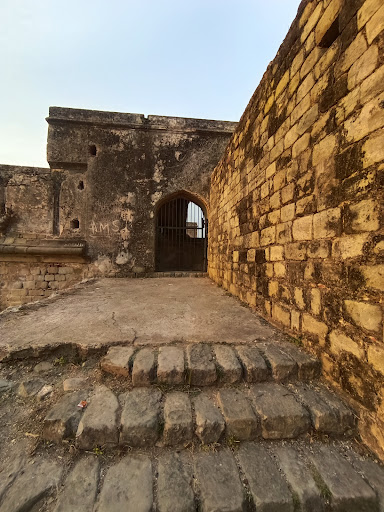
The place is okay! Best timings to go are in evenings. The quila has some tunnels which are closed & wall structure. There is just plain ground inside with a pond in the right side of the place. The place has stairs made of old stones and the wall of quila has small openings which were used to place rifles and do heavy fire on the incoming enemy. The openings are very small holes from outside & they are merely visible but from inside these have 3 angles to place a rifle and fire. Overall an okay place to go and spare some time clicking pics.
See more posts
See more posts
hotel
Find your stay

Pet-friendly Hotels in Uttar Pradesh

Find a cozy hotel nearby and make it a full experience.

Najibabad Fort, also known as Sultana Daku Qila and Pathargarh Fort, is an 18th-century fort in Najibabad, Bijnor district, Uttar Pradesh, India. It was built in 1755 by the Mughal minister Najib ad-Dawlah. About najibabad ad- dawalah Najib ad-Dawlah (Pashto: نجيب الدوله), also known as Najib Khan Yousafzai (Pashto: نجيب خان), was a Rohilla Yousafzai Afghan who earlier served as a Mughal serviceman but later deserted the cause of the Mughals and joined Ahmad Shah Abdali in 1757 in his attack on Delhi. He was also a House Chief of Rohilkhand, and in the 1740s founded the city of Najibabad in Bijnor, India. He was instrumental in winning the Third Battle of Panipat. He began his career in 1743 as an immigrant from Maneri, Swabi (of the Umarkhel subbranch of Mandanr Yousafzais) as a soldier. He was an employee of Imad-ul-Mulk but got alerte from going influence of Marhattas and by advise of Shah Waliullah, he invited Ahmad Shah Abdali in 1757 to attack on Delhi and secure the Muslims place in India. He was then appointed as Mir Bakhshi of the Mughal emperor by Abdali. Later in his career he was known as Najib ad-Dawlah, Amir al-Umra, Shuja ad-Dawlah.[1] From 1757 to 1770, he was governor of Saharanpur, ruling over Dehradun. Many architectural relics of the period of Rohilla, the remains in Najibabad, were overseen by him, which he founded at the height of his career as a Mughal minister. Biography Najib Khan belonged to the Umar Khel section of the Mandanr Yousafzai. He migrated from Nazar Khel Swabi village, now in the Swabi district of the Khyber Pakhtunkhwa province of Pakistan. His father was Asalat Khan.[3][4]He migrated in 1739 to join his uncle Bisharat Khan, who had settled with his families of Pakhtuns at Bisharatnagar, near Rampur.[citation needed] In 1749, Ali Mohammed Khan, who had captured most of Rohilkhand by 1740, gave Najib Khan a northern portion,[5] where he established the present day town of Najibabad, a state of Najibabad independent from other Rohilla tribes, and received the title, ‘Najib-ud-Daula’. Imad-ul-Mulk appointed Najib ad- Dawlah as the governor of Saharanpur.[6] In 1757, Najib ad-Dawlah, who was then the governor of Saharanpur under Mughal Empire, invaded the city of Dehradun, with his army of Rohillas, and ruled the area for the next decade. His rule was known for its administration, and development of land resources, leading to widespread development and prosperity in the area, with emphasis on agriculture and irrigation. Many mango groves created during the area still exist today. Though after his death in 1770, the Maratha forces expelled the Rohillas from the Dun.
Mohd Faisal

Mohd Faisal

hotel
Find your stay

Affordable Hotels in Uttar Pradesh

Find a cozy hotel nearby and make it a full experience.

Get the Appoverlay
Get the AppOne tap to find yournext favorite spots!
The significance of heritage sites like Sultana Daku Ka Kila goes beyond mere aesthetics. They serve as a link to our past, providing insights into the history, architecture, and traditions of our ancestors. Preserving and maintaining such sites not only ensures their longevity but also helps foster a sense of pride and cultural identity within the community. It is my sincere hope that the authorities recognize the importance of Sultana Daku Ka Kila and take immediate action to restore and maintain this magnificent heritage site. With proper attention, funding, and collaborative efforts, this place can reclaim its former glory and once again become a shining example of our rich cultural heritage.
Mayank Choudhary

Mayank Choudhary

hotel
Find your stay

The Coolest Hotels You Haven't Heard Of (Yet)

Find a cozy hotel nearby and make it a full experience.

hotel
Find your stay

Trending Stays Worth the Hype in Uttar Pradesh

Find a cozy hotel nearby and make it a full experience.

The place is okay! Best timings to go are in evenings. The quila has some tunnels which are closed & wall structure. There is just plain ground inside with a pond in the right side of the place. The place has stairs made of old stones and the wall of quila has small openings which were used to place rifles and do heavy fire on the incoming enemy. The openings are very small holes from outside & they are merely visible but from inside these have 3 angles to place a rifle and fire. Overall an okay place to go and spare some time clicking pics.
Ankit Verma

Ankit Verma

See more posts
See more posts