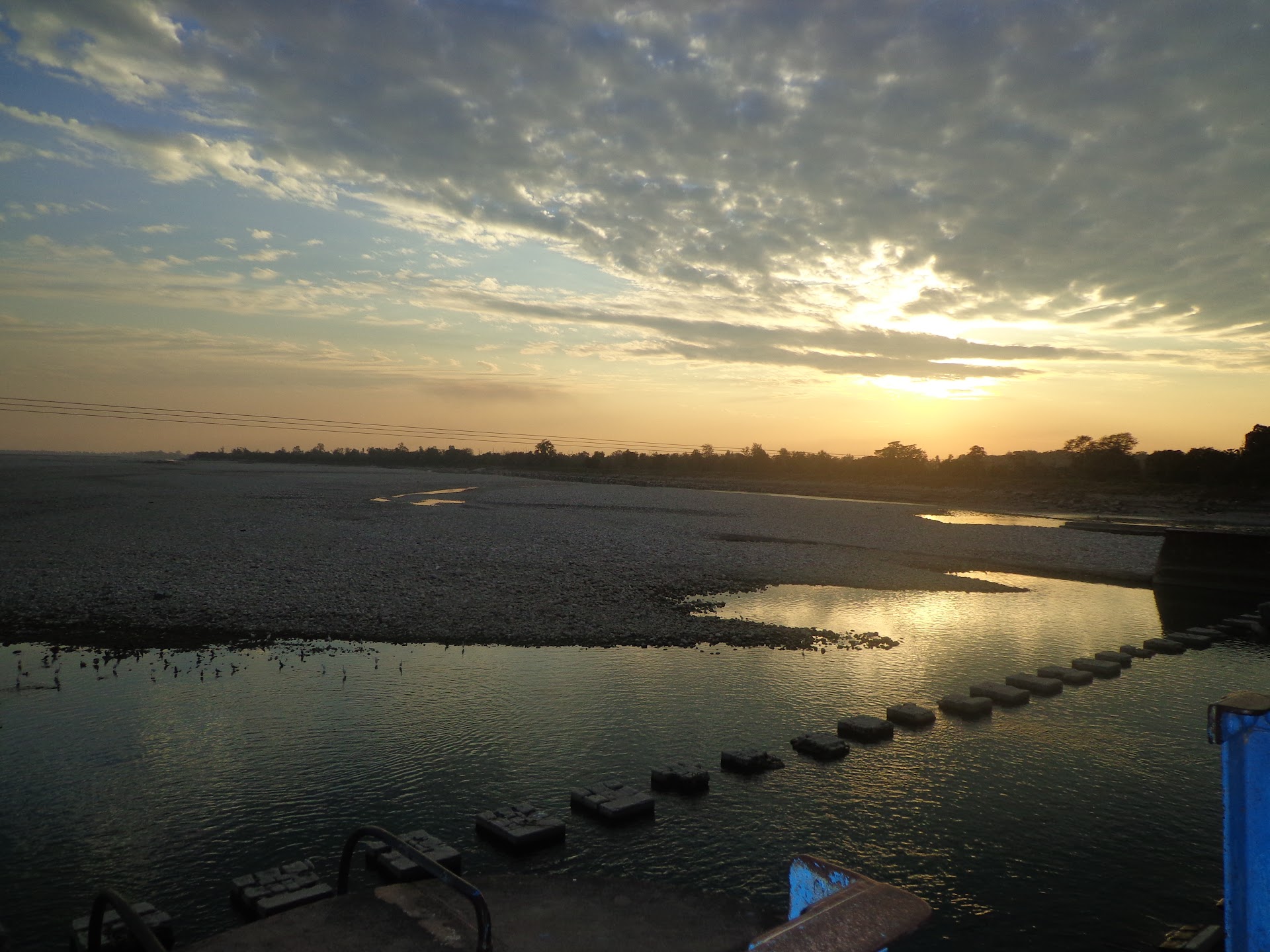
This barrage serves as a demarcation point for the India-Nepal border and is constructed on the Sharda River, representing a British legacy.The Sharda Barrage, also known as Banbasa Barrage, is a barrage located on the Sharda River in the Banbasa town of Champawat district in Uttarakhand, India. The Sharda River originates from the Kali Gandaki River in Nepal and enters the plains of India, where the barrage is situated.
Over 90 years old, it stands as a significant infrastructure project that has contributed to water management, irrigation, and bilateral relations between India and Nepal.These mini railtrack and engine are more than 125 years old and were once used to ferry labours and materials for the construction of Sharda Barrage.In the year 1856–57, Lieutenant Anderson of the Madras Engineering Corps initiated survey work for canal excavation at the Banbasa foothills. However, during the rebellion of 1857, all his records were lost or destroyed. Based on the only surviving diary, Captain Farbes continued the survey work in 1867.After the First World War, Sir Bernard Deirley undertook the design of the barrage. Following his involvement, the construction of the barrage began in 1918 and was completed 10 years later in 1928. After its completion, the barrage facilitated the diversion of water for irrigation purposes, benefiting the surrounding regions in both India and Nepal.The Sharda Barrage has played a crucial role in water management and irrigation in the region. It has a water discharge capacity of six lakh cubic feet per second (cusecs). Over the years, it has continued to serve as a vital link between India and Nepal, fostering bilateral relationships and cooperation in the field of water resources.
The barrage serves as a vital link between India and Nepal, facilitating free movement of people allowing pedestrians to cross at any time during the day. The border gate opens at specific time slots daily, allowing vehicles to pass through
Although there are security checks on both sides, the movement between India and Nepal is...
Read more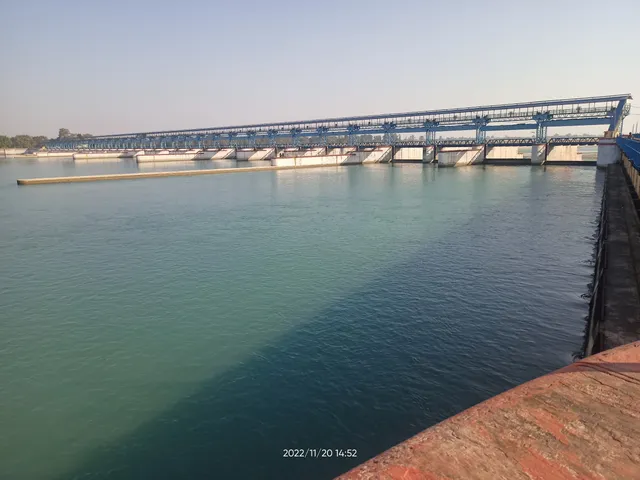
 Learn more insights from Wanderboat AI.