Lakhamandal is an ancient temple complex, situated in the Jaunsar-Bawar region of Dehradun district in the state of Uttarakhand. The temple is dedicated to Bhagwan Shiv Ji. This temple is popular among the Shakti tradition, who believe that a visit to this temple shrine will end their misfortunes.
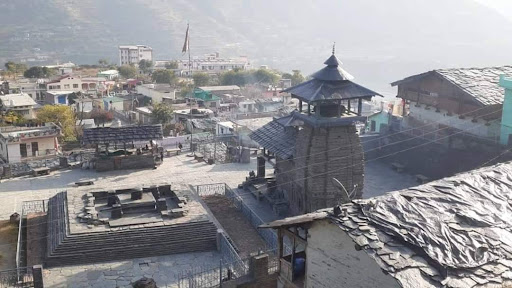
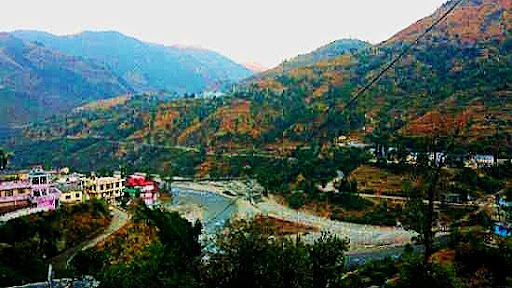
LOCATION: This temple lies 128 km. from Dehradun, and 35 km. from Chakrata on the Mussoorie-Yamnotri road, past Kempty Falls. It is built in North Indian Architectural style, which is common in the hilly regions of Garhwal and Himachal. The Yamuna River flows alongside Lakhamandal village where the temple is situated.
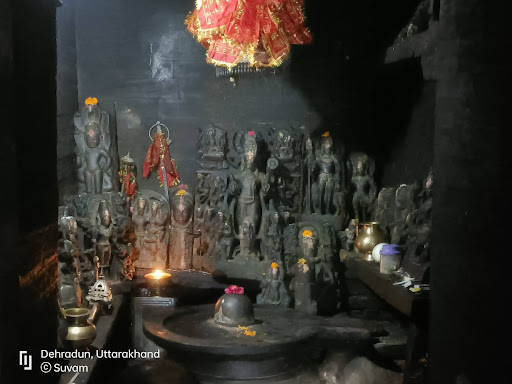
Lakhamandal is a famous temple located in Chakrata region. The deity of temple is Lord Shiva. Remains of several temples still exist in the Lakhamandal premises. Here, the Shivling is made of graphite which shines on pouring water on it.
Lakhamandal gets its name from the two words: lakha (Lakh) meaning "many" and mandals meaning "temples" or "lingam". Plenty of artistic works were found in the excavations by the Archaeological Survey of India.
Lakhamandal - As per the Vedic History, in epic Mahabharata, Lakhamandal is the same place where Duryodhan tried to kill the Pandavas by making them stay at a palace the 'Laksha Grah', the house made of Wax.
Twin statues of Danav and Manav are located beside the main shrine. The statues are its dwarpals (doormen). Some people believe these statues to be those of Pandava brothers Bhima and Arjuna. They also resemble Jai and Vijay, the doormen of Lord Vishnu. When someone was dying or had just died, an appearance in front of these statues, returns them briefly to life before finally expiring.[citation needed] The power of Manav kept the person alive, while Danav took the person's soul to Lord Vishnu's abode.
Another cave near this place is called Dhundhi Odaari in the local Jaunsari language. Dhundi or Dhund means "misty" or "foggy" and odaar or odaari means "cave" or "hidden place". The local people think that the Pandava took refuge in this cave to save themselves from Duryodhana.
लाखामंडल उत्तराखंड के देहरादून जिले के जौनसर-बावार क्षेत्र में ये गांव स्थित है । ये जगह देहरादून से करीब 130 किमी दूर स्थित है। लाखामंडल गांव यमुना नदी के किनारे स्थित है,यह स्थान गुफाओं और भगवान शिव के मंदिर के प्राचीन अवशेषों से घिरा हुआ है. इस गांव के लोगों के मुताबिक़, इस मंदिर और इसके आस-पास का क्षेत्र, महाभारत के एक प्रकरण से सम्बंधित है. प्रकरण के अनुसार, दुर्योधन ने लाक या लाह से लाक्षागृह का निर्माण पांडवों को जिंदा जलाने के एक षड़यंत्र को अंजाम देने के इरादे से किया था. लोगों का मानना है कि लाक्षागृह, लाखामंडल के आस-पास ही निर्मित हुआ था. महाभारत के अनुसार, जब लाक्षागृह को जला दिया गया था, तब पांडवों ने एक सुरंग की मदद से अपने प्राणों की रक्षा की थी. ऐसी मान्यता है कि वह सुरंग एक गुफा के मुहाने पर जा कर खुलती है, जो अभी भी लाखामंडल...
Read moreNestled in the valleys of nature, this village is on the banks of Yamuna river, situated at a distance of 128 kilometers from Patnagar, Dehradun, Uttarakhand state of India. This captivating place is surrounded by caves and ancient remains of the temple of Lord Shiva. It is believed that by praying in this temple a person gets freedom from sins. While digging here, Shivalingas of different sizes and from different historical periods have been found. This temple is 128 km. is far away. From Dehradun, and 35 km. From Chakrata on the Mussoorie-Yamnotri Road, behind Kempty Falls. It is built in the North Indian architectural style, common in the hilly regions of Garhwal and Himachal Pradesh state. Yamuna river flows next to Lakhamandal village where the temple is located.
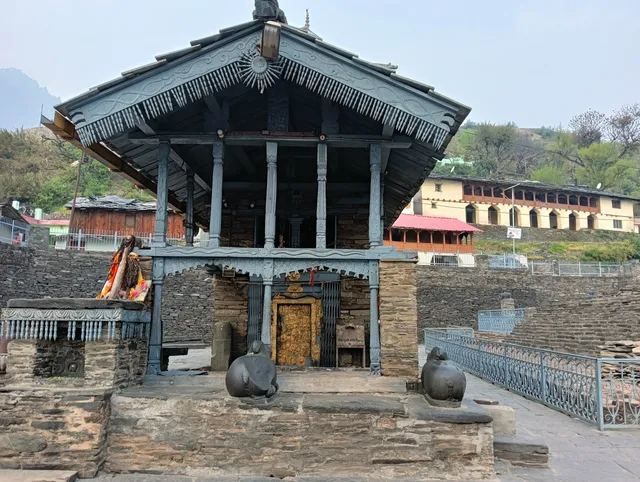
This Nagara style temple of Lord Shiva was built around 12th-13th century. The large number of sculptures and architectural members scattered around suggest the remains of more temples of the same cult in the past.But at present only this temple is left. The earliest evidence of structural activity at Lakhamandal dates back to approximately 5th–8th century AD, a pyramidal structure was built based on the structure of bricks seen beneath the stones. A stone inscription (6th century BCE) from the site records the construction of a Shiva temple at Lakhamandal by Princess Ishvara of the royal caste of Sinhapura for the spiritual welfare of her late husband Chandragupta, who was the son of the king of Jalandhar. Is.Shivalinga The main attraction of this temple is the graphite lingam. It shines when wet and reflects its surroundings. According to local people, this temple and the surrounding area is believed to be the same place where Duryodhana from the Mahabharata episode plotted to burn the Pandavas alive in the Lakshagriha made of conch shells.Main Twin statues of demon and human are situated next to the temple. The idols are its gatekeepers. Some people consider these statues to be of Pandava brothers Bhima and Arjuna.They also resemble Lord Vishnu's gatekeepers Jai and Vijay. When someone was dying or had just died, an appearance before these statues would bring them back to life for a short period of time before finally expiring. [citation needed] The power of the human kept the man alive, while the demon took the man's soul to the abode of Lord Vishnu.
Another cave near this place is called Dhundhi Odari in the local Jaunsari language.Dhundi or Dhund means "mist" or "hazy" and Odar or Odari means "cave" or "hidden place". Local people believe that Pandavas had taken shelter in this cave to escape from Duryodhana.What should we fear? This world is just a web of illusion. We are devotees of Him who is the age of all....
Read moreNestled amidst the serene and lush green landscapes of Uttarakhand, the Lakhamandal Temple is a hidden gem that offers a unique blend of spirituality, history, and natural beauty. For any traveler seeking a destination that goes beyond the typical tourist circuit, this ancient temple complex is a must-visit. The name "Lakhamandal" is a testament to its significance, derived from "lakha" (meaning many) and "mandal" (meaning temples or lingams). As you explore the site, you'll find that the name is fitting, as the temple complex is a treasure trove of ancient sculptures and relics, with a multitude of small Shiva Lingams scattered around the main shrine. The Archaeological Survey of India (ASI) has been conducting excavations here, continually unearthing more artifacts that shed light on its rich past. The temple's architecture is a magnificent example of the Nagara style, a common sight in the hilly regions of Uttarakhand and Himachal Pradesh. The intricate carvings and detailed sculptures on the stone walls have withstood the test of time, showcasing the skilled craftsmanship of a bygone era. The main attraction, however, is the unique graphite Lingam of Lord Shiva. According to local belief and visitor experiences, when water is poured over this Lingam, it shines and reflects its surroundings, creating a truly mesmerizing and spiritual sight. Beyond its architectural and archaeological importance, the Lakhamandal Temple is steeped in the mythology of the Mahabharata. It is widely believed that this is the site of the "Lakshagraha," the house of lac where Duryodhana conspired to burn the Pandavas alive. A nearby cave, known as "Dhundhi Odaari" (misty cave), is said to be the secret tunnel through which the Pandavas escaped. This mythological connection adds an intriguing layer to the visit, allowing you to walk on grounds that are woven into the fabric of one of India's great epics. The tranquil ambiance of the temple is another major draw. Located on the banks of the Yamuna River and surrounded by the majestic Himalayas, the setting is incredibly peaceful and ideal for prayer and reflection. Unlike more commercialized pilgrimage sites, Lakhamandal retains a rustic and ancient charm. There are no bustling shops or loud crowds, allowing for a genuine spiritual experience. For anyone interested in history, mythology, or simply seeking a calm and beautiful place to connect with nature, Lakhamandal Temple offers a deeply enriching and...
Read more