HTML SitemapExplore
logo
Find Things to DoFind The Best Restaurants

Mahasu Temple — Attraction in Uttarakhand

Name
Mahasu Temple
Description
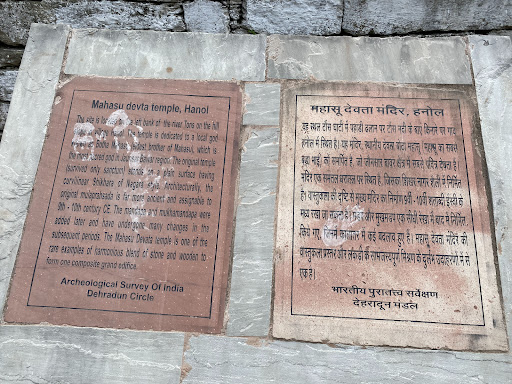
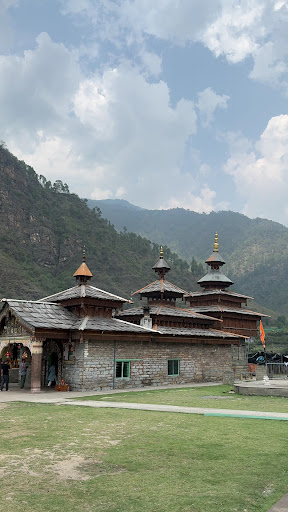
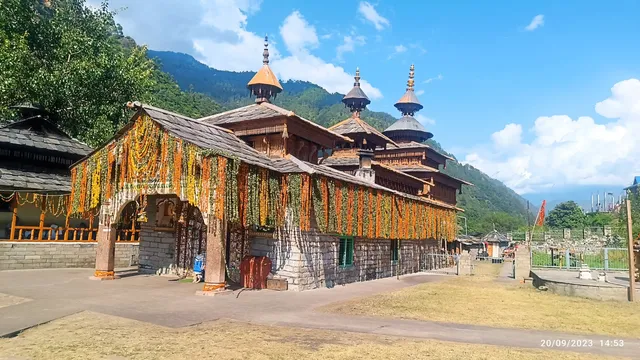
Mahasu Devta Temple, is located on the Tyuni-Mori road at Hanol, Dehradun district, Uttarakhand, India and was built in the 9th century. The temple is dedicated to Mahasu Devta.
Nearby attractions
Nearby restaurants
Nearby hotels
Related posts
Keywords
Mahasu Temple tourism.Mahasu Temple hotels.Mahasu Temple bed and breakfast. flights to Mahasu Temple.Mahasu Temple attractions.Mahasu Temple restaurants.Mahasu Temple travel.Mahasu Temple travel guide.Mahasu Temple travel blog.Mahasu Temple pictures.Mahasu Temple photos.Mahasu Temple travel tips.Mahasu Temple maps.Mahasu Temple things to do.
Mahasu Temple things to do, attractions, restaurants, events info and trip planning
Mahasu Temple
IndiaUttarakhandMahasu Temple

Basic Info

Mahasu Temple

H.N -12, XWCH+95H, Hanol, Devta Range, Uttarakhand 249128, India
4.8(1.1K)
Open 24 hours
Save
spot

Ratings & Description

Info

Mahasu Devta Temple, is located on the Tyuni-Mori road at Hanol, Dehradun district, Uttarakhand, India and was built in the 9th century. The temple is dedicated to Mahasu Devta.

Cultural
Family friendly
attractions: , restaurants:
logoLearn more insights from Wanderboat AI.

Plan your stay

hotel
Pet-friendly Hotels in Uttarakhand
Find a cozy hotel nearby and make it a full experience.
hotel
Affordable Hotels in Uttarakhand
Find a cozy hotel nearby and make it a full experience.
hotel
The Coolest Hotels You Haven't Heard Of (Yet)
Find a cozy hotel nearby and make it a full experience.
hotel
Trending Stays Worth the Hype in Uttarakhand
Find a cozy hotel nearby and make it a full experience.

Reviews

Get the Appoverlay
Get the AppOne tap to find yournext favorite spots!
Wanderboat LogoWanderboat

Your everyday Al companion for getaway ideas

CompanyAbout Us
InformationAI Trip PlannerSitemap
SocialXInstagramTiktokLinkedin
LegalTerms of ServicePrivacy Policy

Get the app

© 2025 Wanderboat. All rights reserved.
logo

Posts

Somil AryaSomil Arya
Mahasu Devta Temple (महासू देवता मंदिर), is located on the Tuini-Mori road at Hanol, Dehradun district, Uttarakhand,India and was built in the 9th century. The temple is dedicated to Mahasu Devta. Lord Mahasu is the chief deity of this area and is worshipped in Mahasu Devta Temple by the people of Hanol and nearby villages of Uttarakhand and Himachal Pradesh state of India. The temple was constructed in Kath-Kuni or Koti-Banal style of architecture and is included in the Archaeological Survey of India's list of the ancient temple in the Dehradun circle, Uttarakhand. Mahasu Devta Temple is on the eastern bank of Tons River (Tamas) at Hanol village, near Chakrata, about 190 km from Dehradun, 156 km from Mussoorie and about 140 km from Shimla. The name of the village according to the legend was kept after the name of Huna Bhatt, a Brahmin. It can also be derived from 'hanul' meaning fire. Before mahasu arrived, this place was used for torturing offenders with the heat of fire by putting them in the hollow of a big drum, placed horizontally and heated from below. Earlier the place was known as Chakrapur, and it is said to be the place to which the pandavas escaped from laksha graha or the Lakhmandal on River Yamuna. The village is at an altitude of 1,050 m above M.S.L. on the left bank of River Tons earlier known as River Tamas (meaning short-tempered). No water can be drawn from it for irrigation purposes, because of its precipitous banks and deep gorges. It is for this reason the river is called Karam Nashini. According to another tradition, the water of River Tons are the tears from the eyes of Bhubruvanan. The temple village of Hanol is a sort of pilgrimage place for people living in vast areas in the mountainous parts of Uttarakhand, west of Yamuna River, The trans giri area of Sirmaur district and a major part of Shimla district of Himachal Pradesh. Hanol is approachable from Tiuni, a well-known trijunction of roads on the Pabbar River after covering a distance of 15 km on an all-weather motorable road that meanders smoothly through the pine clad mountain slopes. Although the terrain through which the road passes is very narrow and by another side of the road one can see the river tons. Besides his ancient and principal temple at Hanol, Mahasu Devta has number of temples scattered in his deitydom. Besides Hanol temples situated at villages namely Thaina, Basoi and Gabela are regarded as Thans (Abode) of Mahasu. Also the temples dedicated to Mahasu Devta birs (His two deputies) Kaulo and Shedkulia have exclusive temples for them in Tiuni and Raaigi. There are many Mahasu Devta Temples in the whole Jaunsar-Bawar region, some famous of them are located at village Bisoi, Buraswa, Kotua, Laksiyar are in Uttarakhand and Nagheta in Sirmour HP. The number of temples of Mahasu and his brothers are situated at various places of Devghar, Jaunsar-Bawar and Sirmour areas. In the deitydom, Mahasu Devta is not only the sole arbiter over the mortals, he also reigns supreme over the innumerable indigenous gods and goddesses. He exercises his authority over the religious dispensation of people and secular matters. Disputes among the people are settled through a unique LotaPani adjuration. For this purpose water is ritually filled in a metallic goblet in the name of Mahasu Devta by a neutral person, then the disputants are asked to drink that water in the name of Mahasu Devta. The party who has given the false statement suffers on drinking the water. The age-old theocratic governance of Mahasu Devta, although acceptable to people and local rulers, was not taken kindly by the British authority. One of their officers, Major Young, found the authority of Mahasu Devta 'a great nuisance'. During land settlement of the territory under the British control in AD 1827 he felt that the traditional twelve-year sojourning of Mahasu (the Chalda Mahasu) with his large entourage to deitydom was extremely burdensome and exploitative to common people.
Jagmohan NegiJagmohan Negi
The **Mahasu Devta Temple in Hanol** is one of the most significant and ancient temples in Uttarakhand, India. Dedicated to **Lord Mahasu** (specifically **Botha Mahasu**, the chief among the four Mahasu brothers), it's a major pilgrimage site and a remarkable example of Himalayan architecture. 1. **Location:** * Situated in the picturesque **Hanol village**, nestled in the **Tons River Valley**. * Administratively in the **Jaunsar-Bawar region** of the **Dehradun district**, Uttarakhand. * Located approximately **180-190 km from Dehradun** and about **45 km from Chakrata**. 2. **The Deity - Mahasu Devta:** * **Mahasu Devta** is not a single deity but refers to four divine brothers: **Botha/Bautha Mahasu** (the chief, worshipped at Hanol), **Pabasi Mahasu**, **Vasik Mahasu**, and **Chalda Mahasu**. * **Botha Mahasu** is the presiding deity at the Hanol temple. He is believed to be the most powerful and resides permanently here. * The Mahasus are considered fierce protectors and rulers (Devtas are often seen as kings in the local theology) of the Jaunsar-Bawar and adjoining regions of Himachal Pradesh. * The legend involves their manifestation to rid the area of a demon king. 3. **Temple Architecture & Features:** * **Style:** Classic **Himachali (Pahari) architecture**, characterized by extensive use of wood and stone. * **Structure:** Built in the traditional **Kath-Kuni** style (alternating layers of wood and stone), common in the region. * **Entrance:** Features imposing, beautifully carved **silver-plated doors**. * **Sanctum Sanctorum (Garbhagriha):** Houses the main **silver idol of Botha Mahasu** along with idols of other deities. A smaller **brass statue** is also present and is the focus of daily worship. * **Intricate Carvings:** The wooden pillars, beams, doors, and ceilings are adorned with exquisite carvings depicting mythological scenes, floral patterns, animals, and deities. * **Courtyard:** A large open courtyard surrounds the main temple complex. * **Unique Feature:** Unlike most Hindu temples, **bells are not used** here. The atmosphere is maintained as quiet and solemn. 4. **Rituals and Practices:** * **Pujaris:** The rituals are performed by **hereditary Brahmin priests** (Pujaris) from specific local families. * **Animal Sacrifice (Bali):** This is a traditional and significant part of the worship, especially during major festivals. Goats and sheep are commonly offered. (This practice can be confronting for some visitors). * **Offerings:** Besides Bali, offerings include grains, fruits, flowers, and coconuts. * **Processions (Yatras):** The idol of Chalda Mahasu (the "moving" brother) undertakes elaborate processions to different villages in the region according to a fixed schedule, visiting his devotees. Botha Mahasu remains in Hanol. 5. **Significance and Festival:** * **Ancient Heritage:** Believed to be over a thousand years old (some sources suggest 9th century), it's a protected monument under the Archaeological Survey of India (ASI). * **Cultural Hub:** It's the epicenter of the unique cultural and religious traditions of the Jaunsar-Bawar region. * **Major Festival - Mahasu Devta Jaat (Fair):** Held annually around **September** (usually starting around the 15th or during the Bhadrapad month). It's a huge gathering lasting several days. Key events include: * Elaborate Pujas and rituals. * Traditional animal sacrifices. * Arrival of Chalda Mahasu's procession at Hanol. * Vibrant local folk music and dance performances (like the Harul dance). * Large fair (mela) with stalls, wrestling bouts, and community feasting. It's the best time to witness the temple's full vibrancy but also the most crowded.
Keshav MahajanKeshav Mahajan
Mahasu Devta temple is situated on the eastern bank of the Tons river in Hanol village near Chakrata in the Dehradun, capital of Uttarakhand. Built in the 9th century, this temple preserves the architecture of mixed style which is worth seeing. People also come here from all over the world to see the beauty of the temple. 'Mahasu Devta' is the collective name of not one but four gods. The names of the four Mahasu brothers are 'Bashik Mahasu', 'Pavasi Mahasu', 'Bautha Mahasu' and 'Chalda Mahasu', which are forms of Lord Shiva. Four small old temples of these four deities are also situated in Jaunsar Bawar. According to the mythoogy, a Brahmin named Hunabhatta worshipped Lord Shiva and Shakti in order to get rid of the people of the area from the terror of the demon Kirmik. With the blessings of Lord Shiva-Shakti, four brothers were born in Hanol and Mahasu Devta killed the Kirmik monster to liberate the regional people from the terror of this monster, since then people considered Mahasu Devta as their totem and started worshipping, it is claimed. Since then Mahasu Devta is the presiding deity of Jaunsar Bawar, Himachal Pradesh and Uttarakhand. Mahasu Devta is worshiped in Uttarkashi, in the entire Jaunsar-Bawar region and Rawai division of Uttarakhand as well as Sirmaur, Solan, Shimla, Bishahar and Jubbal of Himachal Pradesh. It is also believed that Mahasu Devta had won this temple on some condition. People also take its palanquin from one place to another for worship at regular intervals. The devotees are not allowed to go to the sanctum sanctorum of the temple, only the priest can enter there at the time of worship. It is still a mystery how a flame is always burning in this temple. A stream of water also comes out from the sanctum sanctorum of the Mahasu Devta temple, but where it goes and where it comes from, till date no one has been able to find out. This water is given to the devotees as prasad. There are four doors for the entry into the sanctum sanctorum of Mahasu temple. Artifacts resemblinig planets including Sun, Moon, Jupiter, Mercury, Venus, Saturn, Mars, etc have been made on the roof of the temple. Sculptures of various deities have been carved on the first and the second gates of the temple in a manner to give it a shape of garland. The drummers help people worship the god by playing the instruments. Local people, devotees and tourists bow their heads at the third gate. It is believed that the Pandavas had built the Hanol temple with the help of the god Vishwakarma by transporting stones from Ghata Pahar (Shivalik mountain range). The 32 corners of this temple, from the foundation to the dome, rest on cut stones placed on one anotther. At the top of the sanctum sanctorum of the temple, Bhima Chhatri i.e. a giant stone brought from the Ghata mountain of Bhimsen has been installed. The unique carvings add to the grandeur of the temple. It is said that in the Dwapar era, the Pandavas came to this place safely after coming out of the Lakshagriha (house of wax). That is why the temple of Hanol is no less than a place of pilgrimage for the devotees. It is also said that the village where Mahasu Devta temple is built on Tuni-Mori road is named after Huna Bhatt Brahmin. Earlier, this place was known as Chakarpur. Mahasu Devta temple is famous all over the world for its beliefs, but a special thing about it is that every year salt is brought from the Rashtrapati Bhavan as offering.
See more posts
See more posts
hotel
Find your stay

Pet-friendly Hotels in Uttarakhand

Find a cozy hotel nearby and make it a full experience.

Mahasu Devta Temple (महासू देवता मंदिर), is located on the Tuini-Mori road at Hanol, Dehradun district, Uttarakhand,India and was built in the 9th century. The temple is dedicated to Mahasu Devta. Lord Mahasu is the chief deity of this area and is worshipped in Mahasu Devta Temple by the people of Hanol and nearby villages of Uttarakhand and Himachal Pradesh state of India. The temple was constructed in Kath-Kuni or Koti-Banal style of architecture and is included in the Archaeological Survey of India's list of the ancient temple in the Dehradun circle, Uttarakhand. Mahasu Devta Temple is on the eastern bank of Tons River (Tamas) at Hanol village, near Chakrata, about 190 km from Dehradun, 156 km from Mussoorie and about 140 km from Shimla. The name of the village according to the legend was kept after the name of Huna Bhatt, a Brahmin. It can also be derived from 'hanul' meaning fire. Before mahasu arrived, this place was used for torturing offenders with the heat of fire by putting them in the hollow of a big drum, placed horizontally and heated from below. Earlier the place was known as Chakrapur, and it is said to be the place to which the pandavas escaped from laksha graha or the Lakhmandal on River Yamuna. The village is at an altitude of 1,050 m above M.S.L. on the left bank of River Tons earlier known as River Tamas (meaning short-tempered). No water can be drawn from it for irrigation purposes, because of its precipitous banks and deep gorges. It is for this reason the river is called Karam Nashini. According to another tradition, the water of River Tons are the tears from the eyes of Bhubruvanan. The temple village of Hanol is a sort of pilgrimage place for people living in vast areas in the mountainous parts of Uttarakhand, west of Yamuna River, The trans giri area of Sirmaur district and a major part of Shimla district of Himachal Pradesh. Hanol is approachable from Tiuni, a well-known trijunction of roads on the Pabbar River after covering a distance of 15 km on an all-weather motorable road that meanders smoothly through the pine clad mountain slopes. Although the terrain through which the road passes is very narrow and by another side of the road one can see the river tons. Besides his ancient and principal temple at Hanol, Mahasu Devta has number of temples scattered in his deitydom. Besides Hanol temples situated at villages namely Thaina, Basoi and Gabela are regarded as Thans (Abode) of Mahasu. Also the temples dedicated to Mahasu Devta birs (His two deputies) Kaulo and Shedkulia have exclusive temples for them in Tiuni and Raaigi. There are many Mahasu Devta Temples in the whole Jaunsar-Bawar region, some famous of them are located at village Bisoi, Buraswa, Kotua, Laksiyar are in Uttarakhand and Nagheta in Sirmour HP. The number of temples of Mahasu and his brothers are situated at various places of Devghar, Jaunsar-Bawar and Sirmour areas. In the deitydom, Mahasu Devta is not only the sole arbiter over the mortals, he also reigns supreme over the innumerable indigenous gods and goddesses. He exercises his authority over the religious dispensation of people and secular matters. Disputes among the people are settled through a unique LotaPani adjuration. For this purpose water is ritually filled in a metallic goblet in the name of Mahasu Devta by a neutral person, then the disputants are asked to drink that water in the name of Mahasu Devta. The party who has given the false statement suffers on drinking the water. The age-old theocratic governance of Mahasu Devta, although acceptable to people and local rulers, was not taken kindly by the British authority. One of their officers, Major Young, found the authority of Mahasu Devta 'a great nuisance'. During land settlement of the territory under the British control in AD 1827 he felt that the traditional twelve-year sojourning of Mahasu (the Chalda Mahasu) with his large entourage to deitydom was extremely burdensome and exploitative to common people.
Somil Arya

Somil Arya

hotel
Find your stay

Affordable Hotels in Uttarakhand

Find a cozy hotel nearby and make it a full experience.

Get the Appoverlay
Get the AppOne tap to find yournext favorite spots!
The **Mahasu Devta Temple in Hanol** is one of the most significant and ancient temples in Uttarakhand, India. Dedicated to **Lord Mahasu** (specifically **Botha Mahasu**, the chief among the four Mahasu brothers), it's a major pilgrimage site and a remarkable example of Himalayan architecture. 1. **Location:** * Situated in the picturesque **Hanol village**, nestled in the **Tons River Valley**. * Administratively in the **Jaunsar-Bawar region** of the **Dehradun district**, Uttarakhand. * Located approximately **180-190 km from Dehradun** and about **45 km from Chakrata**. 2. **The Deity - Mahasu Devta:** * **Mahasu Devta** is not a single deity but refers to four divine brothers: **Botha/Bautha Mahasu** (the chief, worshipped at Hanol), **Pabasi Mahasu**, **Vasik Mahasu**, and **Chalda Mahasu**. * **Botha Mahasu** is the presiding deity at the Hanol temple. He is believed to be the most powerful and resides permanently here. * The Mahasus are considered fierce protectors and rulers (Devtas are often seen as kings in the local theology) of the Jaunsar-Bawar and adjoining regions of Himachal Pradesh. * The legend involves their manifestation to rid the area of a demon king. 3. **Temple Architecture & Features:** * **Style:** Classic **Himachali (Pahari) architecture**, characterized by extensive use of wood and stone. * **Structure:** Built in the traditional **Kath-Kuni** style (alternating layers of wood and stone), common in the region. * **Entrance:** Features imposing, beautifully carved **silver-plated doors**. * **Sanctum Sanctorum (Garbhagriha):** Houses the main **silver idol of Botha Mahasu** along with idols of other deities. A smaller **brass statue** is also present and is the focus of daily worship. * **Intricate Carvings:** The wooden pillars, beams, doors, and ceilings are adorned with exquisite carvings depicting mythological scenes, floral patterns, animals, and deities. * **Courtyard:** A large open courtyard surrounds the main temple complex. * **Unique Feature:** Unlike most Hindu temples, **bells are not used** here. The atmosphere is maintained as quiet and solemn. 4. **Rituals and Practices:** * **Pujaris:** The rituals are performed by **hereditary Brahmin priests** (Pujaris) from specific local families. * **Animal Sacrifice (Bali):** This is a traditional and significant part of the worship, especially during major festivals. Goats and sheep are commonly offered. (This practice can be confronting for some visitors). * **Offerings:** Besides Bali, offerings include grains, fruits, flowers, and coconuts. * **Processions (Yatras):** The idol of Chalda Mahasu (the "moving" brother) undertakes elaborate processions to different villages in the region according to a fixed schedule, visiting his devotees. Botha Mahasu remains in Hanol. 5. **Significance and Festival:** * **Ancient Heritage:** Believed to be over a thousand years old (some sources suggest 9th century), it's a protected monument under the Archaeological Survey of India (ASI). * **Cultural Hub:** It's the epicenter of the unique cultural and religious traditions of the Jaunsar-Bawar region. * **Major Festival - Mahasu Devta Jaat (Fair):** Held annually around **September** (usually starting around the 15th or during the Bhadrapad month). It's a huge gathering lasting several days. Key events include: * Elaborate Pujas and rituals. * Traditional animal sacrifices. * Arrival of Chalda Mahasu's procession at Hanol. * Vibrant local folk music and dance performances (like the Harul dance). * Large fair (mela) with stalls, wrestling bouts, and community feasting. It's the best time to witness the temple's full vibrancy but also the most crowded.
Jagmohan Negi

Jagmohan Negi

hotel
Find your stay

The Coolest Hotels You Haven't Heard Of (Yet)

Find a cozy hotel nearby and make it a full experience.

hotel
Find your stay

Trending Stays Worth the Hype in Uttarakhand

Find a cozy hotel nearby and make it a full experience.

Mahasu Devta temple is situated on the eastern bank of the Tons river in Hanol village near Chakrata in the Dehradun, capital of Uttarakhand. Built in the 9th century, this temple preserves the architecture of mixed style which is worth seeing. People also come here from all over the world to see the beauty of the temple. 'Mahasu Devta' is the collective name of not one but four gods. The names of the four Mahasu brothers are 'Bashik Mahasu', 'Pavasi Mahasu', 'Bautha Mahasu' and 'Chalda Mahasu', which are forms of Lord Shiva. Four small old temples of these four deities are also situated in Jaunsar Bawar. According to the mythoogy, a Brahmin named Hunabhatta worshipped Lord Shiva and Shakti in order to get rid of the people of the area from the terror of the demon Kirmik. With the blessings of Lord Shiva-Shakti, four brothers were born in Hanol and Mahasu Devta killed the Kirmik monster to liberate the regional people from the terror of this monster, since then people considered Mahasu Devta as their totem and started worshipping, it is claimed. Since then Mahasu Devta is the presiding deity of Jaunsar Bawar, Himachal Pradesh and Uttarakhand. Mahasu Devta is worshiped in Uttarkashi, in the entire Jaunsar-Bawar region and Rawai division of Uttarakhand as well as Sirmaur, Solan, Shimla, Bishahar and Jubbal of Himachal Pradesh. It is also believed that Mahasu Devta had won this temple on some condition. People also take its palanquin from one place to another for worship at regular intervals. The devotees are not allowed to go to the sanctum sanctorum of the temple, only the priest can enter there at the time of worship. It is still a mystery how a flame is always burning in this temple. A stream of water also comes out from the sanctum sanctorum of the Mahasu Devta temple, but where it goes and where it comes from, till date no one has been able to find out. This water is given to the devotees as prasad. There are four doors for the entry into the sanctum sanctorum of Mahasu temple. Artifacts resemblinig planets including Sun, Moon, Jupiter, Mercury, Venus, Saturn, Mars, etc have been made on the roof of the temple. Sculptures of various deities have been carved on the first and the second gates of the temple in a manner to give it a shape of garland. The drummers help people worship the god by playing the instruments. Local people, devotees and tourists bow their heads at the third gate. It is believed that the Pandavas had built the Hanol temple with the help of the god Vishwakarma by transporting stones from Ghata Pahar (Shivalik mountain range). The 32 corners of this temple, from the foundation to the dome, rest on cut stones placed on one anotther. At the top of the sanctum sanctorum of the temple, Bhima Chhatri i.e. a giant stone brought from the Ghata mountain of Bhimsen has been installed. The unique carvings add to the grandeur of the temple. It is said that in the Dwapar era, the Pandavas came to this place safely after coming out of the Lakshagriha (house of wax). That is why the temple of Hanol is no less than a place of pilgrimage for the devotees. It is also said that the village where Mahasu Devta temple is built on Tuni-Mori road is named after Huna Bhatt Brahmin. Earlier, this place was known as Chakarpur. Mahasu Devta temple is famous all over the world for its beliefs, but a special thing about it is that every year salt is brought from the Rashtrapati Bhavan as offering.
Keshav Mahajan

Keshav Mahajan

See more posts
See more posts

Reviews of Mahasu Temple

4.8
(1,109)
avatar
5.0
2y

Mahasu Devta Temple (महासू देवता मंदिर), is located on the Tuini-Mori road at Hanol, Dehradun district, Uttarakhand,India and was built in the 9th century. The temple is dedicated to Mahasu Devta. Lord Mahasu is the chief deity of this area and is worshipped in Mahasu Devta Temple by the people of Hanol and nearby villages of Uttarakhand and Himachal Pradesh state of India. The temple was constructed in Kath-Kuni or Koti-Banal style of architecture and is included in the Archaeological Survey of India's list of the ancient temple in the Dehradun circle, Uttarakhand. Mahasu Devta Temple is on the eastern bank of Tons River (Tamas) at Hanol village, near Chakrata, about 190 km from Dehradun, 156 km from Mussoorie and about 140 km from Shimla. The name of the village according to the legend was kept after the name of Huna Bhatt, a Brahmin. It can also be derived from 'hanul' meaning fire. Before mahasu arrived, this place was used for torturing offenders with the heat of fire by putting them in the hollow of a big drum, placed horizontally and heated from below. Earlier the place was known as Chakrapur, and it is said to be the place to which the pandavas escaped from laksha graha or the Lakhmandal on River Yamuna. The village is at an altitude of 1,050 m above M.S.L. on the left bank of River Tons earlier known as River Tamas (meaning short-tempered). No water can be drawn from it for irrigation purposes, because of its precipitous banks and deep gorges. It is for this reason the river is called Karam Nashini. According to another tradition, the water of River Tons are the tears from the eyes of Bhubruvanan. The temple village of Hanol is a sort of pilgrimage place for people living in vast areas in the mountainous parts of Uttarakhand, west of Yamuna River, The trans giri area of Sirmaur district and a major part of Shimla district of Himachal Pradesh. Hanol is approachable from Tiuni, a well-known trijunction of roads on the Pabbar River after covering a distance of 15 km on an all-weather motorable road that meanders smoothly through the pine clad mountain slopes. Although the terrain through which the road passes is very narrow and by another side of the road one can see the river tons. Besides his ancient and principal temple at Hanol, Mahasu Devta has number of temples scattered in his deitydom. Besides Hanol temples situated at villages namely Thaina, Basoi and Gabela are regarded as Thans (Abode) of Mahasu. Also the temples dedicated to Mahasu Devta birs (His two deputies) Kaulo and Shedkulia have exclusive temples for them in Tiuni and Raaigi. There are many Mahasu Devta Temples in the whole Jaunsar-Bawar region, some famous of them are located at village Bisoi, Buraswa, Kotua, Laksiyar are in Uttarakhand and Nagheta in Sirmour HP. The number of temples of Mahasu and his brothers are situated at various places of Devghar, Jaunsar-Bawar and Sirmour areas. In the deitydom, Mahasu Devta is not only the sole arbiter over the mortals, he also reigns supreme over the innumerable indigenous gods and goddesses. He exercises his authority over the religious dispensation of people and secular matters. Disputes among the people are settled through a unique LotaPani adjuration. For this purpose water is ritually filled in a metallic goblet in the name of Mahasu Devta by a neutral person, then the disputants are asked to drink that water in the name of Mahasu Devta. The party who has given the false statement suffers on drinking the water. The age-old theocratic governance of Mahasu Devta, although acceptable to people and local rulers, was not taken kindly by the British authority. One of their officers, Major Young, found the authority of Mahasu Devta 'a great nuisance'. During land settlement of the territory under the British control in AD 1827 he felt that the traditional twelve-year sojourning of Mahasu (the Chalda Mahasu) with his large entourage to deitydom was extremely burdensome and exploitative to...

   Read more
avatar
5.0
4y

Hanol Mahasu Devta Temple was built by Pandit Mihirkul Hun of Hun dynasty. Located in Hanol village, Jaunsar Bhabhar, Uttarakhand, this temple is a splendid specimen of Hun architectural style and is a precious heritage of art and culture. It is said that it was built by Hoon Bhat. It is notable here that Bhat means warrior. The Mahasu Devta temple named Hanaul or Hanol village is named after Hun Bhat, the Hun warrior. It is noteworthy that Bhat means warrior ie Hun Yoddha. This village lies in Jaunsar Bhabhar, Uttarakhand and about 190 km from Dehradun. And is 156 km from Mussoorie. Mihirkul Hoon was a staunch Shaiva. He built thousands of Shiva temples during his reign. According to the Mandsaur inscription, he did not bow his head to anyone other than Lord Stasham (Shiva) before the war with Yashodharman. Mihirkul himself also in Gwalior inscription. Is said to be a devotee of Shiva. On the coins of Mihirkul, Jayatu Vris is written which means Jai Nandi. Vrish is the ride of Shiva whose mythical name is Nandi. Their coins have been in circulation in centuries of Western India ruled by Huno, especially from 7th to 10th century. Rameshwar Mahadev, Bhimalat and Jhur in Bundi area. Mahadev is a famous Shiva temple built by Hunas. Bijolia, located near Chittorgarh, was once the capital of the Hun king Angatsi, where the Huns built the temple of Tilaswa Mahadev. This temple still attracts tourists and devotees. According to Colonel Tad, the famous Shiva temple at Badoli, Kota was built by Hunaraja of the Panwar / Parmar dynasty. A Greek named Kasmos Indikplastes traveled to India at the time of Mihirkul, he wrote in his book called "Christchin Topography" The Huns live in the northern mountainous regions of India. Their king Mihirkul walks with a huge cavalry and at least two thousand elephants, he is the lord of India. The Chinese Buddhist pilgrim Hwennsang arrived in India in 629 AD, almost a hundred years after Mihirkul. He writes in his book "Si-Yu-ki" that hundreds of years ago there used to be a king named Mihirkul who ruled India from Sialkot. He says that Mihirkul was naturally gifted and brave. A famous temple in the lap of nature is the 'Mahasu Devta'. It is believed that whoever asks here with a sincere heart that Mahasu Devta fulfills his wishes. It is interesting that salt is presented to Rashtrapati Bhavan from Delhi every year. This temple, adorned by mixed-style architecture, is 190 km from Dehradun and 156 km from Mussoorie. The temple is located on the eastern spur of the Tons River in Hanol village near Chakrata. Devotees are not allowed in the sanctum sanctorum of Mahasu Devta's temple. Only the priest of the temple can enter the temple. This thing is still a mystery today. There is always a flame burning in the temple which has been burning for decades. A stream of water also comes out in the sanctum sanctorum of the temple, but where it goes, where it comes out is unknown. Actually 'Mahasu Devta' is the collective name of not one but four deities and in the local language Mahasu is a corruption of the word 'Mahashiva'. The names of the four Mahasu brothers are Basik Mahasu, Pabasik Mahasu, Buthia Mahasu (Botha Mahasu) and Chalda Mahasu, which are the same forms of Lord Shiva. The Mahasu god is worshiped in Uttarkashi in Uttarakhand, the entire Jaunsar-Bawar region, the Rwai pargana, as well as Sirmaur, Solan, Shimla, Bishahar and Jubbal in Himachal Pradesh. In these areas, Mahasu Devta is considered as the god of justice and the temple as a court.At present, devotees of Mahasu Devta plead for justice in the temple which is fulfilled by them. This temple was built in the 9th century. The temple is currently under the patronage of the Archaeological Survey Department (ASI). The Mahasu deity is the form of Lord Bholenath. It is also believed that Mahasu won this temple of Hanol on any condition. The Mahasu god is Jaunsar Bhabhar, the Isht Dev of Himachal Pradesh and...

   Read more
avatar
5.0
22w

The Mahasu Devta Temple in Hanol is one of the most significant and ancient temples in Uttarakhand, India. Dedicated to Lord Mahasu (specifically Botha Mahasu, the chief among the four Mahasu brothers), it's a major pilgrimage site and a remarkable example of Himalayan architecture.

Location: Situated in the picturesque Hanol village, nestled in the Tons River Valley. Administratively in the Jaunsar-Bawar region of the Dehradun district, Uttarakhand. Located approximately 180-190 km from Dehradun and about 45 km from Chakrata.

The Deity - Mahasu Devta: Mahasu Devta is not a single deity but refers to four divine brothers: Botha/Bautha Mahasu (the chief, worshipped at Hanol), Pabasi Mahasu, Vasik Mahasu, and Chalda Mahasu. Botha Mahasu is the presiding deity at the Hanol temple. He is believed to be the most powerful and resides permanently here. The Mahasus are considered fierce protectors and rulers (Devtas are often seen as kings in the local theology) of the Jaunsar-Bawar and adjoining regions of Himachal Pradesh. The legend involves their manifestation to rid the area of a demon king.

Temple Architecture & Features: Style: Classic Himachali (Pahari) architecture, characterized by extensive use of wood and stone. Structure: Built in the traditional Kath-Kuni style (alternating layers of wood and stone), common in the region. Entrance: Features imposing, beautifully carved silver-plated doors. Sanctum Sanctorum (Garbhagriha): Houses the main silver idol of Botha Mahasu along with idols of other deities. A smaller brass statue is also present and is the focus of daily worship. Intricate Carvings: The wooden pillars, beams, doors, and ceilings are adorned with exquisite carvings depicting mythological scenes, floral patterns, animals, and deities. Courtyard: A large open courtyard surrounds the main temple complex. Unique Feature: Unlike most Hindu temples, bells are not used here. The atmosphere is maintained as quiet and solemn.

Rituals and Practices: Pujaris: The rituals are performed by hereditary Brahmin priests (Pujaris) from specific local families. Animal Sacrifice (Bali): This is a traditional and significant part of the worship, especially during major festivals. Goats and sheep are commonly offered. (This practice can be confronting for some visitors). Offerings: Besides Bali, offerings include grains, fruits, flowers, and coconuts. Processions (Yatras): The idol of Chalda Mahasu (the "moving" brother) undertakes elaborate processions to different villages in the region according to a fixed schedule, visiting his devotees. Botha Mahasu remains in Hanol.

Significance and Festival: Ancient Heritage: Believed to be over a thousand years old (some sources suggest 9th century), it's a protected monument under the Archaeological Survey of India (ASI). Cultural Hub: It's the epicenter of the unique cultural and religious traditions of the Jaunsar-Bawar region. Major Festival - Mahasu Devta Jaat (Fair): Held annually around September (usually starting around the 15th or during the Bhadrapad month). It's a huge gathering lasting several days. Key events include: Elaborate Pujas and rituals. Traditional animal sacrifices. Arrival of Chalda Mahasu's procession at Hanol. Vibrant local folk music and dance performances (like the Harul dance). Large fair (mela) with stalls, wrestling bouts, and community feasting. It's the best time to witness the temple's full vibrancy but also the...

   Read more

Page 1 of 7
Previous
Next