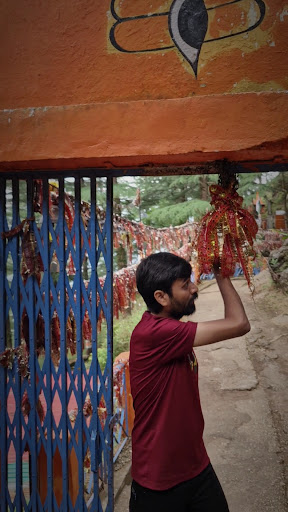
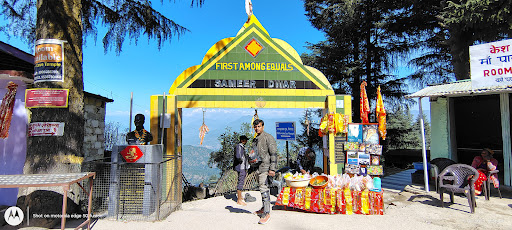
Patal Bhuvaneshwar is a fascinating limestone cave temple located in the Pithoragarh district of Uttarakhand, India. Here's what makes it significant: Location: It's situated in Bhubneshwar village, about 14 kilometers away from Gangolihat, at an altitude of 1,350 meters (4,429 feet). Description: This isn't just one cave, but rather a series of interconnected caves. The main cave is about 160 meters long and descends 90 feet from its entrance. Inside, you'll find stunning natural formations of stalactites and stalagmites that have, over time, taken the shapes of various Hindu deities and mythological figures. These include representations of Lord Shiva, Ganesha, Sheshnag (the divine serpent), and even what is believed to be the severed head of Ganesha. The cave is electrically illuminated, allowing visitors to witness these intricate formations. Mythological and Historical Significance: Ancient Mentions: Patal Bhuvaneshwar finds mention in the ancient Hindu scripture, the Skanda Purana, specifically in the Manas Khand. Discovery: Legend has it that the cave was first discovered in the Treta Yuga by King Rituparna of the Surya dynasty. It is believed that he was guided through the cave by Sheshnag himself. Rediscovery: In the Kali Yuga (the present epoch), the great sage Adi Shankaracharya is said to have rediscovered this cave in 1191 AD, establishing its modern pilgrimage history. Abode of Deities: It's a strong belief that this cave is the abode of 33 crore (33 types, as "koti" in this context means type) Hindu gods and goddesses. Connection to Char Dham: Many believe that a pilgrimage to Patal Bhuvaneshwar is as sacred as visiting the Char Dham (the four major pilgrimage sites) of Uttarakhand. Passage of the Pandavas: Some legends suggest that the Pandavas, the heroes of the Mahabharata, meditated here during their final journey to the Himalayas. Symbolic Entrances: The cave is said to have four entrances: Randwar (path to war), Paapdwar (door of sin), Dharamdwar (door of righteousness), and Mokshadwar (door of salvation). Currently, only Dharamdwar and Mokshadwar are open. It is believed that Paapdwar closed after the death of Ravana and Randwar closed after the Mahabharata war. Link to Mount Kailash: There's a belief that Patal Bhuvaneshwar is connected to Mount Kailash through an underground passage. Visiting Patal Bhuvaneshwar: The journey inside the cave involves descending about 82 steps and navigating narrow, sometimes wet passages, often with the help of iron chains for support. The atmosphere inside is typically dimly lit and solemn, adding to the mystical experience. Priests from the Bhandari family have been performing religious rites here since the time of Adi Shankaracharya. The cave timings are generally from 8 am to 6 pm during summer and 9 am to 5 pm during winter, but it's always good to confirm locally. Entry into the cave is often in batches of 20-30 people. In essence, Patal Bhuvaneshwar is more than just a cave; it's a place steeped in mythology and spirituality, offering a unique and somewhat adventurous...
Read moreReview of Patal Bhuvneshwar:
Patal Bhuvneshwar, a mystical cave temple hidden in the Kumaon region of Uttarakhand, unfolds as an awe-inspiring journey into the depths of Hindu mythology and natural wonder. This sacred cave, dedicated to Lord Shiva, is believed to be the dwelling place of numerous deities and a gateway to the netherworld.
The entrance to Patal Bhuvneshwar is unassuming, located in a small village, but it leads to a subterranean world of stalactite and stalagmite formations that evoke a sense of reverence and wonder. The cave is adorned with naturally sculpted rock formations that, according to local legends, represent various gods and goddesses.
Exploring the intricate passages of Patal Bhuvneshwar, illuminated by dim lamps, creates a spiritual and otherworldly experience. The various chambers, each named after mythological figures, add a cultural and historical depth to the journey.
Best Time to Visit:
The best time to visit Patal Bhuvneshwar is during the months of April to June and September to November. During these periods, the weather is generally mild, allowing for a comfortable exploration of the cave. The summer months offer a respite from the heat in the plains, making it an ideal time for pilgrims and tourists alike.
It's advisable to avoid the winter months (December to February) when the region experiences cold temperatures, and the cave may be closed due to snowfall. Additionally, the monsoon season (July to August) can lead to increased water levels, affecting travel conditions.
Altitude:
Patal Bhuvneshwar is situated at an altitude of approximately 1,350 meters (4,429 feet) above sea level. The moderate elevation contributes to a pleasant climate, and visitors should be prepared for the cool temperatures inside the cave.
In conclusion, Patal Bhuvneshwar beckons adventurers and spiritual seekers to embark on a unique underground pilgrimage. Whether you're drawn to the religious significance, the geological marvels, or the cultural richness, Patal Bhuvneshwar promises an unforgettable journey into the heart of...
Read morePatal Bhuvaneshwar is a limestone cave temple 14 km from Gangolihat situated at an altitude of 1350 meters asl. The cave has a very narrow opening and is about 160 m long and 90 feet deep from the point of entrance. The limestone rock formations have created various spectacular stalactite and stalagmite figures of various forms depicting Hindu gods and other mythological figures. There are four entrances inside the cave named Ran-dwar, Paapdwar, Dharmdwar & Mokshadwar. At present there are only two gateways opened, Paapdwar was closed soon after Ravan’s death & Ran-dwar closed down after the Mahabharat war.
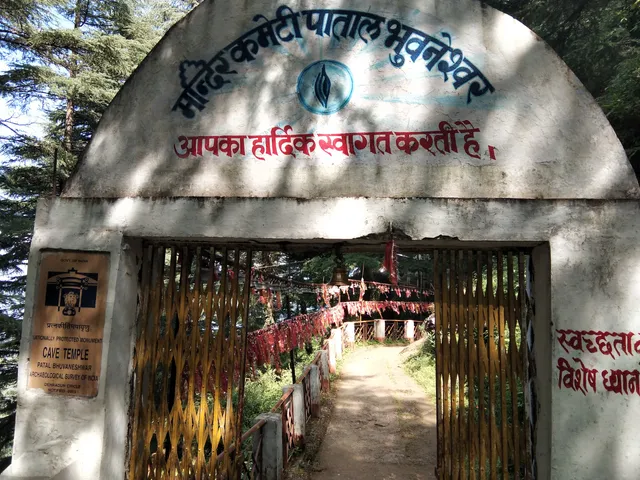
It is believed that all the 33-crore gods and goddesses reside in this holy cave. It is also believed that this holy cave is internally connected to the four abodes of Uttarakhand. Also, it is believed to be inter-connected with to Mount Kailash as well. According to belief King Rituparna of the Sun dynasty, ruler of Ayodhya discovered these caves in ‘Treta yug’. It has been described in the Manas Khand of Skand Puran. Adi Shankaracharya rediscovered these caves in 1191 AD.
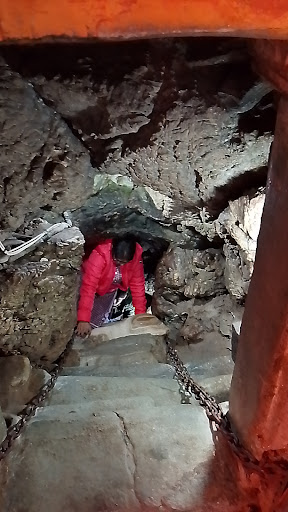
It is disappointing to know that photography is not allowed inside the cave. A guide is allotted to each group entering inside the cave. Entrance of the cave was narrow and one has to slip through with the help of thick iron chains for support. The whole cave is slimy and we had to be extra careful while taking each step. From the mouth of the cave, there is an almost vertical drop. The steps are slippery due to water and mud. Yet, it is an astonishing experience inside the cave when you can actually see the figures long associated with Hindu mythology right in front of your eyes. The cave is dimly lit. You instantly feel lack of oxygen inside the cave and one gets little breathless while climbing up towards mouth...
Read more