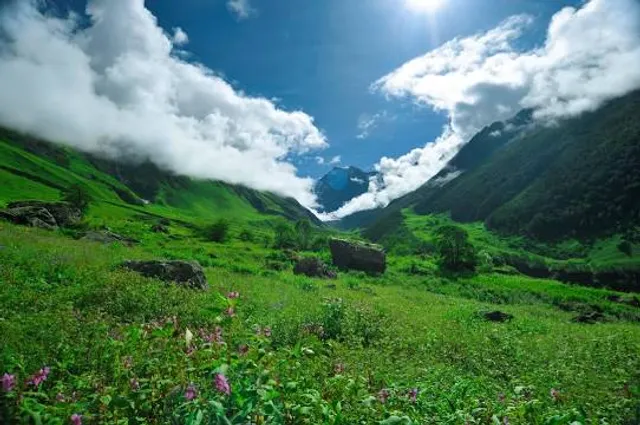
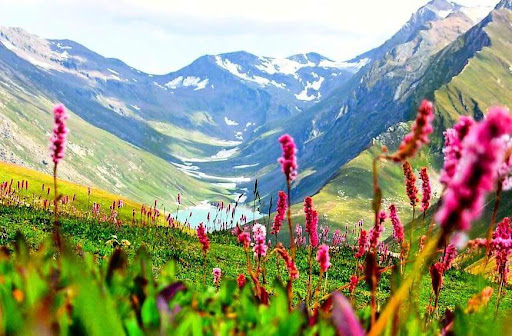
Located in Chamoli district within the Nanda Devi Biosphere Reserve, the Valley of Flowers stretches over approximately 87.5âŻkm², at altitudes ranging from 3,352âŻm to 3,658âŻm . Nestled between the Zanskar and Great Himalayan ranges, this high-altitude valley surprises with expanses of alpine meadows awash in color during blooming season .
đ¸ Floral & Faunal Highlights
The valley is home to over 600 species of flowering plants, including rare blooms like Blue Poppy, Brahma Kamal, Cobra Lily, primulas, anemones, saxifrages, and more . The forest and grasslands also harbour wildlife such as snow leopard, Asiatic black bear, musk deer, brown bear, blue sheep, and Himalayan monal pheasant .
đ Best Time to Visit
Open from June through October, the ideal window is mid-July to mid-August, when mid-monsoon rains breathe life into the valley and produce its most spectacular blooms . Late August into early September offers a quieter, less crowded experience with still-lush flora and clearer skies .
đśââď¸ Trekking Route & Access
Trekking to the Valley involves:
Govindghat (1,828âŻm) â Ghangaria (3,049âŻm): ~14âŻkm
Ghangaria â Valley Entrance: ~3â5âŻkm one-way
Round trip distance: ~16â18âŻkm, depending on route changes .
Trails follow the Alaknanda River, pass through forested and pastoral terrain, and require moderate fitness. The last stretch to the valley is scenic but sometimes rough and rockyâespecially sections affected by monsoon landslides .
Notable support options include porter services, ponies, and helicopter flights (weather permitting) between Govindghat and Ghangaria .
đ Timings, Permits & Regulations
The valley opens 06/01 to approx. 31 October 2025 .
Daily entry window: 7:00 AM to 2:00 PM, with exit by 5:00 PM .
Entry fees (2025): âš200 per Indian adult; âš800 per foreign adult; additional days charged nominally .
Only â¤300 visitors per day permitted for conservation .
Online permit mandatory, via official site; ID proofs required. Camping inside the valley is strictly prohibited .
â Tips & Practical Advice
Acclimatize at Ghangaria before trekking further.
Start early to avoid afternoon rains or landslide-prone periods .
Carry essentials: waterproofs, warm layers, good trekking shoes with grip, basic first aid, torch, extra batteries, and sufficient cash (ATM services are limited beyond Joshimath/Govindghat) .
Respect the fragile ecosystemâdonât pick flowers, stay on trails, and dispose of waste correctly .
Monitor weather reports; avoid visiting immediately after heavy rain events that risk landslides .
đ§ł Value & Visitor Experience
The Valley offers a soul-stirring trek through pristine meadows amid soaring peaks and cascading streams. Ideal for nature lovers, botanists, birders, and avid photographers, it delivers a nearly dreamlike landscape at its seasonal peak . While logistics require careful planning and moderate fitness, the sensory reward is richâvivid blooms, crisp mountain air, and a strong sense of wilderness preserve.
However, be prepared for occasional route disruptions, sudden weather changes, and limited services en route. With advance planning, the right season, and respect for local regulations, Valley of Flowers becomes much more than a trekâitâs a transcendent...
   Read moreThe place is heavenly and surprisingly gorgeous than one can imagine. The trek is moderate with an initial 1.5 km being easily walkable followed by 2 km of steep hike on a rocky terrain and last half km to 1 being straight walk again as descent to the plains. Once you enter from the beautifully crafted Forest Post entrance paying INR 150 per person with 3-4 boards of painted information including a map, list of species with broad areas, the trail and large large cutout of flower names with pictures the scenery starts getting marvelous. The entrance timings allowed are from 7 AM to 12 noon only. With kids and women this ideally becomes even more stringent as one has to return back by 5 or maximum 6 PM before it starts getting dark and cold.
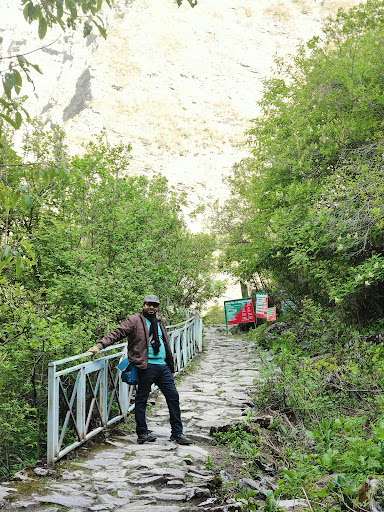
The initial trail of around 1.5 Kms is easy , leafy and gorgeous till Dwari bridge. First glacier is crossed right after the entrance with moderate inclination building up to Dwari on Pushpawati river. The scene from Dwari is picturesque beyond imagination when first glimpse of valley can be seen. The gushing sound and roaring water of Pushpawati at Dwari is a timeless memory.
It is interesting to observe a variety of honey bees, nectar bees along with small flowers of yellow, pink, white flat rose and red even in early June with at least 10-15 species evident even till Dwari.
After the bridge real trek starts and this steep climb of 2 Kms raises the height from 3000 mts at the entrance or base of Ghangria to 3400 mts above sea level. The way paved is rocky and needs to tracked carefully with moderate efforts. The views of course start getting clear of the green valley of 87.5 sq km amidst the steep climb. What is also interesting is when looking towards East one can see the trek to Hemkund specially the last 2 Kms of same as lines on snow mountain from this part of Valley.
After the climb comes another glacier from where little decent starts. This relatively easier trek continues to Bhamandhaur where there is a wooden bridge with aluminium roof sheet on a gushing stream named Khunt Khaul River originating from the Himalayan mountain above with paradise flow. Here one finds a milestone mentioning welcome to VoF NP and from here the trail is simpler with curves and flowers all around. We would have easily got another 10 species as colour riot after the Bhamandhaur cave or resting point.
We went to the glacier after this point to at least a km or more and found Brahm Kamal as well in early June.
This trek is gateway to Heaven and had elevated the respect for Himalayas, Dev Bhoomi Uttrakhand and our Incredible India even more. We need to extremely responsible to take care of this UNESCO World Heritage national park and one of its kind...
   Read moreThe trek was amazing. I had heard about this trek from many people and when I actually went for it, I got to know why it's so popular. The pick up from Haridwar was punctual, but we reached Govindghat a bit late because of bad roads. Next day, we started to Ghangharia and the view was spectacular. After that came the main day when we went for Valley of Flowers, the view and weather was just spectacular. Didn't want to leave the place but because of time constraints had to start the return trip to guesthouse. Trek to Hemkund Sahib was great as well because of all the natural beauty and glaciers that we get to see when we are at top. The Kund in the Gurudwara is just beautiful. Couple of places where the trip could have been better: 1) Food taste wasn't upto the mark. I'd like to request Thrillophilia guys to please take a look into this. 2) Guides need to be given walkie-talkie for better communication. We saw other tour operators' guides carrying walkie-talkie. This makes the trek and communication a bit better. Overall, it was a great experience. Met many new people, made many new friends, got to see too much natural beauty. A great trip, that's how I'd like to finish.
About Valley of Flowers The Valley of Flowers The biggest reason for me to love and remember the trek is the beautiful valley itself. When you stand at the entry of the valley you see ahead of you a colourful carpet laid out. The valley is at least a couple of kilometres wide and more than 10 kilometres long. In front of me was the carpet with waves of pinks, blues and yellows flowing along with the breadth and width.
A narrow path in between the flowers beckons you to go n now start seeing a variety of flowers. Not only in colours but in shapes, sizes, textures and smell. A few tens of steps bring you to a totally new variety of flowers. You wonder who got them here. What made the variety change? It was also interesting to see the big fauna change along with the changing flora.
I stood by the flowers, sat down beside them, lay down on the small exposed trail trying to immerse myself and feel a part of the multitude of flowers in the valley. The cool mountain breeze coming from the glacial end of the valley brought with it scents that I had never known before
Best Time To Visit Valley Of Flowers The gates to Valley Of Flowers open at the beginning of June. But the best time to visit is between July and September. You can extend it to the end of September.
Even in the best months between July and September, the trek is not the same...
   Read more