HTML SitemapExplore
logo
Find Things to DoFind The Best Restaurants

Char Bangla Temple — Attraction in West Bengal

Name
Char Bangla Temple
Description
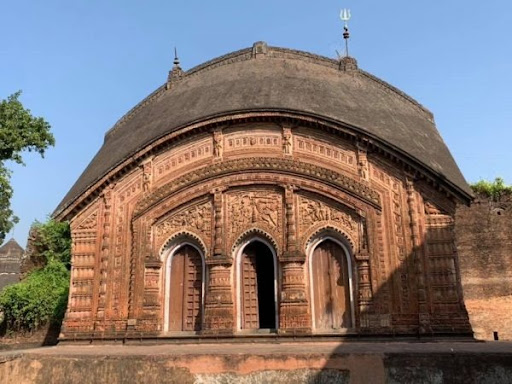
Char Bangla Temples, are located at Baranagar in the Murshidabad-Jiaganj CD block in the Lalbag subdivision of Murshidabad district in the Indian state of West Bengal.
Nearby attractions
Nearby restaurants
Nearby hotels
Related posts
Keywords
Char Bangla Temple tourism.Char Bangla Temple hotels.Char Bangla Temple bed and breakfast. flights to Char Bangla Temple.Char Bangla Temple attractions.Char Bangla Temple restaurants.Char Bangla Temple travel.Char Bangla Temple travel guide.Char Bangla Temple travel blog.Char Bangla Temple pictures.Char Bangla Temple photos.Char Bangla Temple travel tips.Char Bangla Temple maps.Char Bangla Temple things to do.
Char Bangla Temple things to do, attractions, restaurants, events info and trip planning
Char Bangla Temple
IndiaWest BengalChar Bangla Temple

Basic Info

Char Bangla Temple

762V+HG9, Baranagar, Jiaganj Azimganj, 742122, India
4.6(203)
Open 24 hours
Save
spot

Ratings & Description

Info

Char Bangla Temples, are located at Baranagar in the Murshidabad-Jiaganj CD block in the Lalbag subdivision of Murshidabad district in the Indian state of West Bengal.

Cultural
Scenic
attractions: , restaurants:
logoLearn more insights from Wanderboat AI.

Plan your stay

hotel
Pet-friendly Hotels in West Bengal
Find a cozy hotel nearby and make it a full experience.
hotel
Affordable Hotels in West Bengal
Find a cozy hotel nearby and make it a full experience.
hotel
The Coolest Hotels You Haven't Heard Of (Yet)
Find a cozy hotel nearby and make it a full experience.
hotel
Trending Stays Worth the Hype in West Bengal
Find a cozy hotel nearby and make it a full experience.

Reviews

Get the Appoverlay
Get the AppOne tap to find yournext favorite spots!
Wanderboat LogoWanderboat

Your everyday Al companion for getaway ideas

CompanyAbout Us
InformationAI Trip PlannerSitemap
SocialXInstagramTiktokLinkedin
LegalTerms of ServicePrivacy Policy

Get the app

© 2025 Wanderboat. All rights reserved.
logo

Reviews of Char Bangla Temple

4.6
(203)
avatar
5.0
2y

The centuries-old Char Bangla Mandiralaya at Baranagar is one of the most picturesque and interesting temple complexes built in Bengal. Located on the bank of the Bhagirathi River, this temple is a short boat ride upstream from Azimganj Sadarghat on the opposite bank.

This temple is one of many built by the affluent philanthropist, Rani Bhabani of Natore. Popularly known as Queen of Natore or Natorer Rani, Rani Bhabani was one of the wealthiest zamindars of Bengal. She oversaw a flourishing estate which had a staggering annual income in the tune of 1.5 crores of which a large part was used to build temples, water tanks, dharmashalas and educational institutions.

Rani Bhabani had a vision to make her capital city of Baranagar like the ancient city of Varanasi. She built many temples with bathing ghats between 1753 to 1760 of which very few have survived. According to the locals, she wished to build 108 temples dedicated to Lord Shiva in Baranagar. Some say, she managed to build only 107 while others say she built 108 but many structures are sitting in the bottom of the Bhagirathi River as its course has changed considerably over the decades.

Some of the most famous temples that have survived the ravages of time are the Jor Bangla temple also known as Gangeswar Temple, Ek Bangla Panchanan Shiva Temple, Bhabaniswar Temple, Raj Rajeswari Temple and of course, Char Bangla Temple.

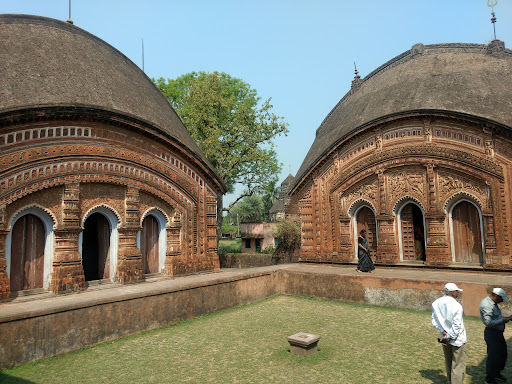
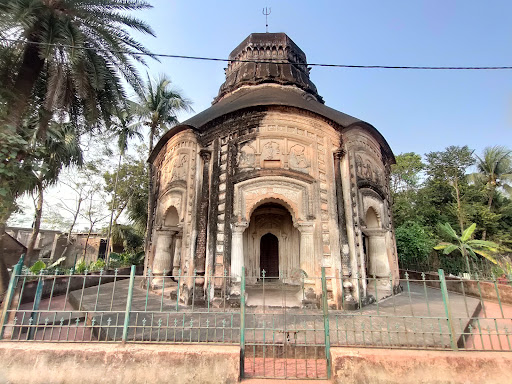
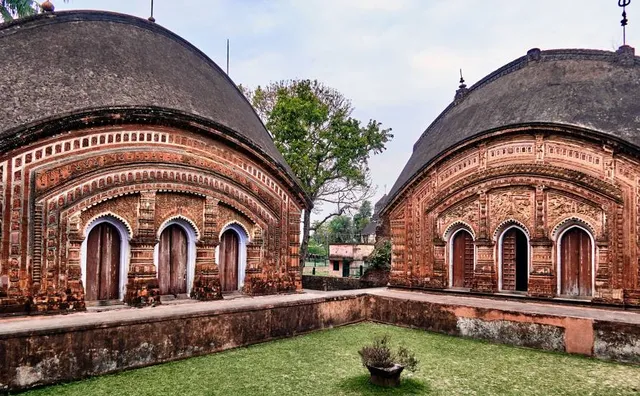
The Char Bangla Temple was built in 1755 (1760 according to some locals) and each temple in this cluster of four is built in the traditional Bengali village hut style with two sloping roofs called do chala or ek bangla. Each temple has a triple arched entrance with three Shiva Lingas seated inside. Three temples with the exception of the northern temple share a platform which is about 1.5 feet high. The northern temple stands on a separate platform behind the kachari bari (administrative wing).

The northern and western temple facades have richly decorated terracotta work. The eastern temple has beautiful lime and mortar relief work with the large scene of the Kurukshetra taking centre stage above one of the arches. The fourth temple has simple terracotta motifs on its walls.

The northern temple has panels depicting scenes from the Puranas, Ramayana, Mahabharata, Krishna Leela, different forms of Ma Shakti, social and rural life, damsels, musicians, dancers and others.

One of the most remarkable panels is the one of Lord Shiva sitting with Nandi with Bhringi serving him. The central arch in the western temple shows Lord Rama sitting on the shoulders of Lord Hanuman battling the ten-headed Ravana. The expressions and detailing that has gone into each part of this panel titled ‘Last Prayer of Ravana’ is spectacular. Lord Krishna and Radha Devi, scenes from the Srimad Bhagavata Purana narrating the life of Lord Krishna and Durga Devi slaying demons are lifelike.

Locals say that when this temple was built 250 years ago, the Bhagirathi River was a kilometre away but as the years have gone by, the current and course of this holy river has changed many times and is now barely 10 feet away from the temple. The boundary wall has already been damaged by the water current and it appears that the Bhagirathi River is inching closer to the temple every year.

Though this temple is protected by the Archaeological Survey of India (ASI), a great deal will need to be done quickly to prevent the Bhagirathi River from submerging this rare temple complex in its...

   Read more

avatar
5.0
6y

Reaching at Jiagang we crossed the Bhagirathi river from Devipur ferry ghat. We had to wait for some time as there only one boat was engaged for ferry. We went to Char bangla Temple, only 7-8 minutes walking distance from the ghat. It is a cluster of four temples on raised platforms forming an inner courtyard. Char Bangla indicate the number of structures that were built in the form of a typical Bengal village. Those were built under the patronage of Rani Bhabani in the years 1755-1760. It is an example of one of the best ornamental brick work in Bengal. Rani Bhabani was a pious lady and she was also a loyal follower of Lord Shiva. So she constructed or patronized all the temples dedicating to Lord Shiva. Char (four in Bengali) means there are four houses. Each one is built on high foundation and is dochala (2 roofed) hut shaped. Each temple has three doors and three Shiva Lingas inside. The Northern and the Western temple are most exquisitely decorated with terracotta. The eastern temple is decorated with lime and mortar reliefs. The temple walls are the examples of exquisite art work of terracotta reflecting Hindu mythological stories in a unique style of its own. The works depicts about the daily life incidents to the North side temple at the down two rows. And others are about the epics “The Ramayana” and “The Mahabharata”. There are several episode of Krisna Lila also. The terracotta works as well as the lime and mortar reliefs are simply stunning. The Northern Temple has a beautiful figure of Lord Shiva seated on a raised platform with his disciple Nandi and Bhringi. Adjacent to the temples there was a large wood apple (Bell) tree full of fruits. One local boy with smiling face volunteerily plucked some fruits, brought a pitcher full of ganga water and collected flowers from local trees. He handed over all the items to our wives, who were visiting with us. They were overwhelmed with joy for that unexpected help and started to worship Lord Shiva. All the well wishes showered to that guy. The Char Bangla Temple is no doubt an excellent example of Bengal temple...

   Read more
avatar
2.0
9y

Most popular tourist spot of Azimganj Jiaganj town – Baranagar town located at Azimganj town. The people from different parts used to here for the purpose of ‘Trade’. Baranagar means ‘Big City’ or a ‘BIG AREA’ ,Bara-means ‘big’ and ‘nagar’ –means ;city with a population . But this area (Baranagar) has came in front of the world when it was known for the ‘Terracota’ works on the walls of temples. One could find here a magnificent and outstanding works of burnt clay known as Terracota. When Rani (Queen).Bhabani came in this village then from Nator (Now in Bangladesh) after her husband death leaving her everything built these wonderful creations monuments. Rani Bhabani was a pious lady and she was also a loyal follower of lord Shiva. So she constructed or patronized all the temples dedicating to lord Shiva. There were lots of temples and buildings in this vast village. But unfortunately, there are some of them left now. Most of them have been gone in the river and of course some of them have been broken down for other purposes. Which are left now in this village are under preservation. And of course there is a building known as Rajbari where Rani used to live. Char Bangla temple was constructed in the year of 1755 almost. The name refers to Four Banglow. Char means four and bangle means Banglow. The noticeable things of this temple is observe the works on the tablets. These tell about mythological story and about daily life. You would find out about the daily life incidents to the North side temple at the down two rows. And others are about the epics’ The Ramayana’ and ‘The Mahabharata’. Unfortunately, there are also many temples which are beyond preservation. These temples are not protected, the Government should take steps immediately. Otherwise one important chapter of History is going...

   Read more
Page 1 of 7
Previous
Next

Posts

SUBHAM KUNDUSUBHAM KUNDU
The centuries-old Char Bangla Mandiralaya at Baranagar is one of the most picturesque and interesting temple complexes built in Bengal. Located on the bank of the Bhagirathi River, this temple is a short boat ride upstream from Azimganj Sadarghat on the opposite bank. This temple is one of many built by the affluent philanthropist, Rani Bhabani of Natore. Popularly known as Queen of Natore or Natorer Rani, Rani Bhabani was one of the wealthiest zamindars of Bengal. She oversaw a flourishing estate which had a staggering annual income in the tune of 1.5 crores of which a large part was used to build temples, water tanks, dharmashalas and educational institutions. Rani Bhabani had a vision to make her capital city of Baranagar like the ancient city of Varanasi. She built many temples with bathing ghats between 1753 to 1760 of which very few have survived. According to the locals, she wished to build 108 temples dedicated to Lord Shiva in Baranagar. Some say, she managed to build only 107 while others say she built 108 but many structures are sitting in the bottom of the Bhagirathi River as its course has changed considerably over the decades. Some of the most famous temples that have survived the ravages of time are the Jor Bangla temple also known as Gangeswar Temple, Ek Bangla Panchanan Shiva Temple, Bhabaniswar Temple, Raj Rajeswari Temple and of course, Char Bangla Temple. The Char Bangla Temple was built in 1755 (1760 according to some locals) and each temple in this cluster of four is built in the traditional Bengali village hut style with two sloping roofs called do chala or ek bangla. Each temple has a triple arched entrance with three Shiva Lingas seated inside. Three temples with the exception of the northern temple share a platform which is about 1.5 feet high. The northern temple stands on a separate platform behind the kachari bari (administrative wing). The northern and western temple facades have richly decorated terracotta work. The eastern temple has beautiful lime and mortar relief work with the large scene of the Kurukshetra taking centre stage above one of the arches. The fourth temple has simple terracotta motifs on its walls. The northern temple has panels depicting scenes from the Puranas, Ramayana, Mahabharata, Krishna Leela, different forms of Ma Shakti, social and rural life, damsels, musicians, dancers and others. One of the most remarkable panels is the one of Lord Shiva sitting with Nandi with Bhringi serving him. The central arch in the western temple shows Lord Rama sitting on the shoulders of Lord Hanuman battling the ten-headed Ravana. The expressions and detailing that has gone into each part of this panel titled ‘Last Prayer of Ravana’ is spectacular. Lord Krishna and Radha Devi, scenes from the Srimad Bhagavata Purana narrating the life of Lord Krishna and Durga Devi slaying demons are lifelike. Locals say that when this temple was built 250 years ago, the Bhagirathi River was a kilometre away but as the years have gone by, the current and course of this holy river has changed many times and is now barely 10 feet away from the temple. The boundary wall has already been damaged by the water current and it appears that the Bhagirathi River is inching closer to the temple every year. Though this temple is protected by the Archaeological Survey of India (ASI), a great deal will need to be done quickly to prevent the Bhagirathi River from submerging this rare temple complex in its unfathomable waters.
Amares SahaAmares Saha
Reaching at Jiagang we crossed the Bhagirathi river from Devipur ferry ghat. We had to wait for some time as there only one boat was engaged for ferry. We went to Char bangla Temple, only 7-8 minutes walking distance from the ghat. It is a cluster of four temples on raised platforms forming an inner courtyard. Char Bangla indicate the number of structures that were built in the form of a typical Bengal village. Those were built under the patronage of Rani Bhabani in the years 1755-1760. It is an example of one of the best ornamental brick work in Bengal. Rani Bhabani was a pious lady and she was also a loyal follower of Lord Shiva. So she constructed or patronized all the temples dedicating to Lord Shiva. Char (four in Bengali) means there are four houses. Each one is built on high foundation and is dochala (2 roofed) hut shaped. Each temple has three doors and three Shiva Lingas inside. The Northern and the Western temple are most exquisitely decorated with terracotta. The eastern temple is decorated with lime and mortar reliefs. The temple walls are the examples of exquisite art work of terracotta reflecting Hindu mythological stories in a unique style of its own. The works depicts about the daily life incidents to the North side temple at the down two rows. And others are about the epics “The Ramayana” and “The Mahabharata”. There are several episode of Krisna Lila also. The terracotta works as well as the lime and mortar reliefs are simply stunning. The Northern Temple has a beautiful figure of Lord Shiva seated on a raised platform with his disciple Nandi and Bhringi. Adjacent to the temples there was a large wood apple (Bell) tree full of fruits. One local boy with smiling face volunteerily plucked some fruits, brought a pitcher full of ganga water and collected flowers from local trees. He handed over all the items to our wives, who were visiting with us. They were overwhelmed with joy for that unexpected help and started to worship Lord Shiva. All the well wishes showered to that guy. The Char Bangla Temple is no doubt an excellent example of Bengal temple architecture.
Yeasin AliYeasin Ali
I recently visited the Char Bangla Temple in, Azimganj, Murshidabad, West Bengal, and I must say, it was a truly spiritual and peaceful experience. The temples were built by Rani Bhabani of of Natore. The temple is situated in the charming village of Char Bangla, which is located around 5 km from the nearest railway station in Azimganj and around 10km from the nearest bus stop. It is one of the most important tourist attractions apart from the Hazarduari and other historical places. The temple is situated on the banks of the Hoogly River and is surrounded by lush green fields and picturesque countryside. The temple complex is quite large and boasts several beautiful shrines, each dedicated to different deities. The main temple is adorned with intricate carvings and beautiful frescoes, depicting various scenes from Hindu mythology. The temple is quite popular among locals and tourists alike, and there are several daily pooja rituals that take place here. Visitors can also take part in the aarti ceremony, which is held every evening. Overall, the Char Bangla Temple is a must-visit for anyone interested in exploring the rich cultural and spiritual heritage of West Bengal. The distance to the nearest railway station and bus stop is not a problem as it is easily accessible by local transportation. It is an ideal place for those who want to spend some time in a peaceful and serene atmosphere.
See more posts
See more posts
hotel
Find your stay

Pet-friendly Hotels in West Bengal

Find a cozy hotel nearby and make it a full experience.

The centuries-old Char Bangla Mandiralaya at Baranagar is one of the most picturesque and interesting temple complexes built in Bengal. Located on the bank of the Bhagirathi River, this temple is a short boat ride upstream from Azimganj Sadarghat on the opposite bank. This temple is one of many built by the affluent philanthropist, Rani Bhabani of Natore. Popularly known as Queen of Natore or Natorer Rani, Rani Bhabani was one of the wealthiest zamindars of Bengal. She oversaw a flourishing estate which had a staggering annual income in the tune of 1.5 crores of which a large part was used to build temples, water tanks, dharmashalas and educational institutions. Rani Bhabani had a vision to make her capital city of Baranagar like the ancient city of Varanasi. She built many temples with bathing ghats between 1753 to 1760 of which very few have survived. According to the locals, she wished to build 108 temples dedicated to Lord Shiva in Baranagar. Some say, she managed to build only 107 while others say she built 108 but many structures are sitting in the bottom of the Bhagirathi River as its course has changed considerably over the decades. Some of the most famous temples that have survived the ravages of time are the Jor Bangla temple also known as Gangeswar Temple, Ek Bangla Panchanan Shiva Temple, Bhabaniswar Temple, Raj Rajeswari Temple and of course, Char Bangla Temple. The Char Bangla Temple was built in 1755 (1760 according to some locals) and each temple in this cluster of four is built in the traditional Bengali village hut style with two sloping roofs called do chala or ek bangla. Each temple has a triple arched entrance with three Shiva Lingas seated inside. Three temples with the exception of the northern temple share a platform which is about 1.5 feet high. The northern temple stands on a separate platform behind the kachari bari (administrative wing). The northern and western temple facades have richly decorated terracotta work. The eastern temple has beautiful lime and mortar relief work with the large scene of the Kurukshetra taking centre stage above one of the arches. The fourth temple has simple terracotta motifs on its walls. The northern temple has panels depicting scenes from the Puranas, Ramayana, Mahabharata, Krishna Leela, different forms of Ma Shakti, social and rural life, damsels, musicians, dancers and others. One of the most remarkable panels is the one of Lord Shiva sitting with Nandi with Bhringi serving him. The central arch in the western temple shows Lord Rama sitting on the shoulders of Lord Hanuman battling the ten-headed Ravana. The expressions and detailing that has gone into each part of this panel titled ‘Last Prayer of Ravana’ is spectacular. Lord Krishna and Radha Devi, scenes from the Srimad Bhagavata Purana narrating the life of Lord Krishna and Durga Devi slaying demons are lifelike. Locals say that when this temple was built 250 years ago, the Bhagirathi River was a kilometre away but as the years have gone by, the current and course of this holy river has changed many times and is now barely 10 feet away from the temple. The boundary wall has already been damaged by the water current and it appears that the Bhagirathi River is inching closer to the temple every year. Though this temple is protected by the Archaeological Survey of India (ASI), a great deal will need to be done quickly to prevent the Bhagirathi River from submerging this rare temple complex in its unfathomable waters.
SUBHAM KUNDU

SUBHAM KUNDU

hotel
Find your stay

Affordable Hotels in West Bengal

Find a cozy hotel nearby and make it a full experience.

Get the Appoverlay
Get the AppOne tap to find yournext favorite spots!
Reaching at Jiagang we crossed the Bhagirathi river from Devipur ferry ghat. We had to wait for some time as there only one boat was engaged for ferry. We went to Char bangla Temple, only 7-8 minutes walking distance from the ghat. It is a cluster of four temples on raised platforms forming an inner courtyard. Char Bangla indicate the number of structures that were built in the form of a typical Bengal village. Those were built under the patronage of Rani Bhabani in the years 1755-1760. It is an example of one of the best ornamental brick work in Bengal. Rani Bhabani was a pious lady and she was also a loyal follower of Lord Shiva. So she constructed or patronized all the temples dedicating to Lord Shiva. Char (four in Bengali) means there are four houses. Each one is built on high foundation and is dochala (2 roofed) hut shaped. Each temple has three doors and three Shiva Lingas inside. The Northern and the Western temple are most exquisitely decorated with terracotta. The eastern temple is decorated with lime and mortar reliefs. The temple walls are the examples of exquisite art work of terracotta reflecting Hindu mythological stories in a unique style of its own. The works depicts about the daily life incidents to the North side temple at the down two rows. And others are about the epics “The Ramayana” and “The Mahabharata”. There are several episode of Krisna Lila also. The terracotta works as well as the lime and mortar reliefs are simply stunning. The Northern Temple has a beautiful figure of Lord Shiva seated on a raised platform with his disciple Nandi and Bhringi. Adjacent to the temples there was a large wood apple (Bell) tree full of fruits. One local boy with smiling face volunteerily plucked some fruits, brought a pitcher full of ganga water and collected flowers from local trees. He handed over all the items to our wives, who were visiting with us. They were overwhelmed with joy for that unexpected help and started to worship Lord Shiva. All the well wishes showered to that guy. The Char Bangla Temple is no doubt an excellent example of Bengal temple architecture.
Amares Saha

Amares Saha

hotel
Find your stay

The Coolest Hotels You Haven't Heard Of (Yet)

Find a cozy hotel nearby and make it a full experience.

hotel
Find your stay

Trending Stays Worth the Hype in West Bengal

Find a cozy hotel nearby and make it a full experience.

I recently visited the Char Bangla Temple in, Azimganj, Murshidabad, West Bengal, and I must say, it was a truly spiritual and peaceful experience. The temples were built by Rani Bhabani of of Natore. The temple is situated in the charming village of Char Bangla, which is located around 5 km from the nearest railway station in Azimganj and around 10km from the nearest bus stop. It is one of the most important tourist attractions apart from the Hazarduari and other historical places. The temple is situated on the banks of the Hoogly River and is surrounded by lush green fields and picturesque countryside. The temple complex is quite large and boasts several beautiful shrines, each dedicated to different deities. The main temple is adorned with intricate carvings and beautiful frescoes, depicting various scenes from Hindu mythology. The temple is quite popular among locals and tourists alike, and there are several daily pooja rituals that take place here. Visitors can also take part in the aarti ceremony, which is held every evening. Overall, the Char Bangla Temple is a must-visit for anyone interested in exploring the rich cultural and spiritual heritage of West Bengal. The distance to the nearest railway station and bus stop is not a problem as it is easily accessible by local transportation. It is an ideal place for those who want to spend some time in a peaceful and serene atmosphere.
Yeasin Ali

Yeasin Ali

See more posts
See more posts