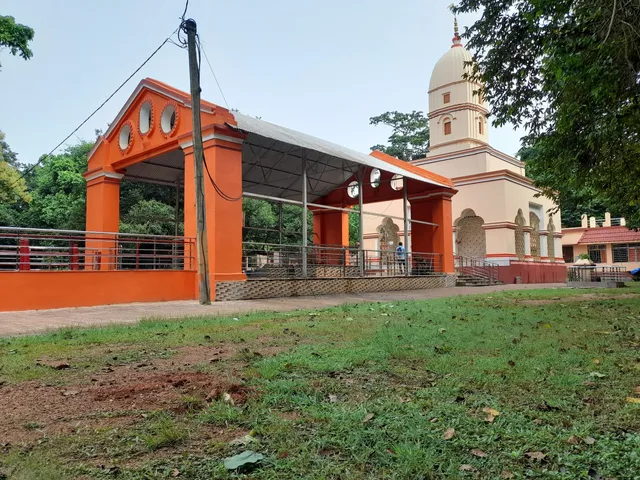
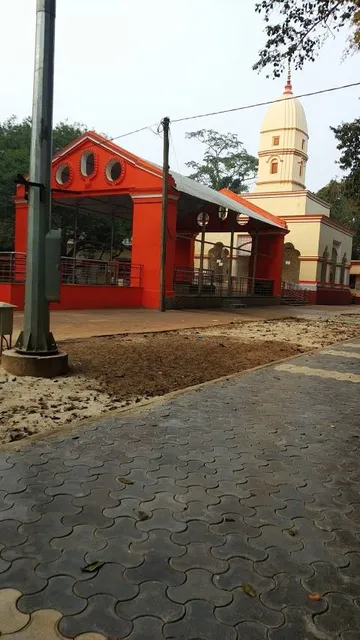
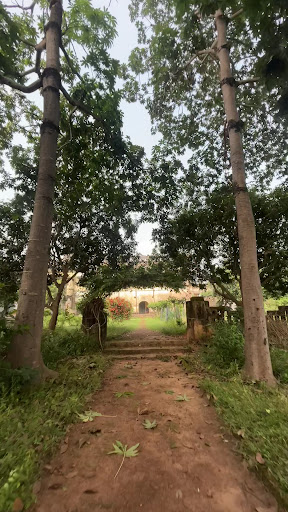
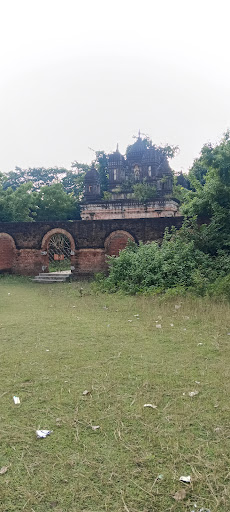
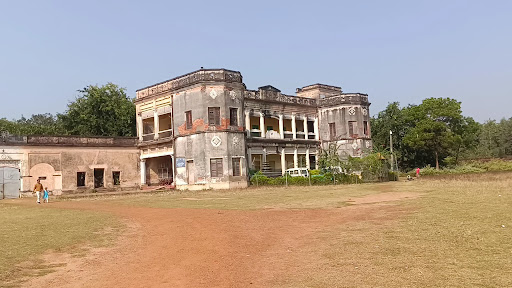
If you’re looking for a peaceful getaway surrounded by nature and history, Chilkigarh Raj Palace is a hidden gem worth exploring. Nestled amidst lush greenery, the palace offers a unique blend of old-world charm and rustic simplicity.
One of the best things about this place is that night stays are allowed, which is a rare opportunity for visitors wanting to experience the tranquil ambiance after sunset. Rooms are available at just ₹800 per night, making it an affordable stay for nature lovers, backpackers, and history enthusiasts alike.
The palace grounds are serene and scenic, perfect for early morning or evening walks. While the amenities are basic, the overall experience is enriched by the natural surroundings and the historical significance of the location.
It’s ideal for a short weekend trip, especially if you’re looking to escape the chaos of the city and enjoy some quiet time close to nature.
Pro Tips: • Carry your own food/snacks as options nearby may be limited. • The mobile network can be patchy, which is great if you’re trying to digitally detox. • Best enjoyed with a group or during cooler months.
Overall, Chilkigarh Raj Palace offers a simple yet memorable experience for those who appreciate heritage and the quiet countryside.
About:
Chilkigarh Raj Palace, located near Jhargram in West Bengal, India, is a historical edifice with a rich and complex past. The palace’s history is closely linked to the Dhalbhum dynasty, which once ruled the region. According to local traditions, King Jagatdeo of the Suryavansh Dynasty defeated Dhalreaj, the reigning king of Chilkigarh, and subsequently assumed the title of King Dhawaldev. This marked the beginning of the Dhawaldev lineage in Chilkigarh.  
The palace is believed to be approximately 450 years old, serving as a testament to the area’s historical significance. Its strategic location near the Dulung River and proximity to the Kanak Durga Temple adds to its cultural and spiritual importance. The temple, reportedly over 500 years old, is said to have been established following a vision experienced by King Gopinath, leading to the creation of the golden idol of Goddess Kanak Durga.  
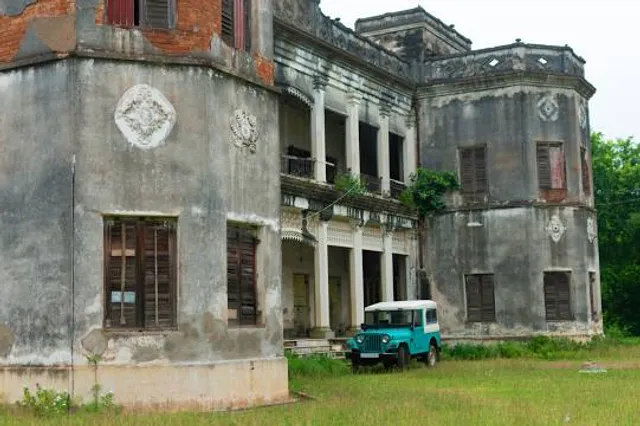
Architecturally, Chilkigarh Raj Palace showcases the grandeur of its era, featuring structures like the Thakur Dalan (courtyard) adorned with intricate arches and pillars. The extensive use of red bricks and terracotta tiles reflects traditional Bengali architectural styles. Despite the ravages of time, the palace’s ruins continue to narrate stories of its opulent past. 
Today, while parts of the palace are utilized for governmental purposes, the site remains a point of interest for tourists and history enthusiasts. Visitors are drawn to its historical allure, the adjacent Kanak Durga Temple, and the serene natural surroundings, making Chilkigarh Raj Palace a significant cultural landmark in...
Read moreChilkigarh Raj Bari (also spelled Chilkigarh Raj Palace / Chilkigarh Raj Bari) in Jhargram, West Bengal:
Basic Info
Chilkigarh is a village and gram panchayat in Jamboni CD block, in the Jhargram subdivision of Jhargram district, West Bengal.
The PIN code is 721503.
It is about 14 km from Jhargram town.
History & Architecture
The palace is ancient, around 450 years old according to local sources.
It’s also known locally as Chilkigarh Raj Palace, “Raj Bari” meaning royal house/palace.
One version of the legend/history says that Jagannath Dhabaldeb invaded Jungle Mahal (the forested region that included present-day Bankura, Purulia, West Midnapore, Jhargram) in the 13th century, defeated the local ruler of Chilkigarh, and built the palace on the other side of the river Dulung.
The palace is a two-storey building, in a somewhat dilapidated yet majestic style, surrounded by dense forest, with the Kanak Durga Temple nearby.
Surroundings & Attractions
The Dulung River flows between the Raj Bari and the Kanak Durga temple.
The campus is quite scenic: dense forests, medicinal plants, fauna, old trees. The forest is said to be so dense that even in summer it remains cooler/shadier.
The Kanak Durga Temple is considered the main attraction in the area aside from the palace. It has its own lore. According to tradition, it was built by the feudal king of Chilkigarh, Gopinath Singh, following a dream in which Devi Mahamaya appeared. The idol is said to have been made using his wife’s bangles.
Visiting & Tourism
It lies about 12-14 km from Jhargram town, so reasonably reachable.
Recently, the palace has opened up for stays at night: some of the older inner rooms (around five) inside the Raj Bari have been converted into a heritage guest house ("Heritage Chilkigarh Raj Palace Guest House") by members of the royal family.
Cost is modest: around ₹800 (Indian Rupees) per night for staying in those heritage rooms.
There is also a temple festival vibe: people visit especially during Puja or special...
Read moreJHARGRAM RAJ PALACE
History of Jhargram Legend has it that around 1574.AD Man Singh had come to conquer Bengal on behalf of Mughal Emperor Akbar the Great from Rajasthan(Erstwhile Rajputana Kingdom). He appointed two of his loyal officers in the army,Sarveshwar Singh and his elder brother to defeat the local tribal rulers of the region known as Jungalkhand, the area was populated by Tribals known as Santhals, Mallas ,Bhumij and Lodhas.The area belonged to Malla Raja. Raja Sarveshwar Singh together with the Rajput Military force and Cavalry invaded the deep forest region known as Junglekhanda, and defeated the tribal rulers the Mallas and adopted the surname Malla Deb and set up his kingdom with it's capital naming it Jhargram. In order to commerate this victory every year an idol of Malla Raja is made and killed on Vijaya Dasami (Dessehra) day.
DIRECTION→ At distance of 12 Kms from Jhargram. 1KM from Kanak Durga Temple. It is a historical place. Long wall around the Palace to protect from Borgi. It is the main tributary of the Subarnarekha. It originates in the north-west portion of the division near Dulungdiha (J.L.No. 100, P.S. : Binpur) and runs generally in a southern direction near the western boundary of the division till it enters Jamboni Police Station. While passing through this police station from north to south it is joined by the Kupon river, Bashi Khal, Polpala Khal, Deb river and Putrangi Khal. Thereafter, it enters Gopiballavpur Police Station where its general direction is from west to east and then Sankrail police station where it again runs in a southernly direction and joins the...
Read more