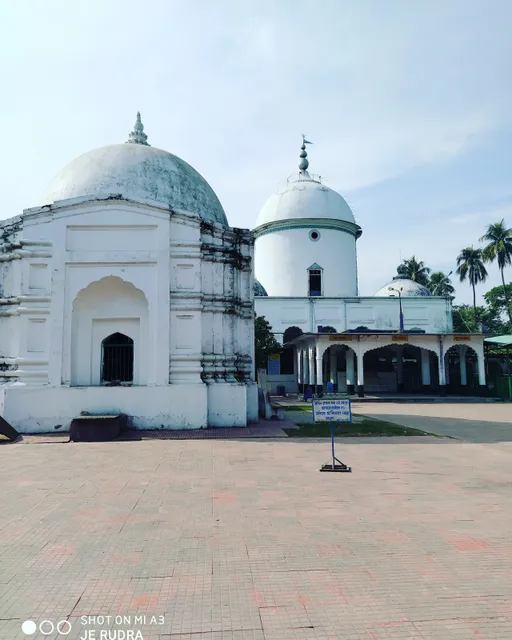
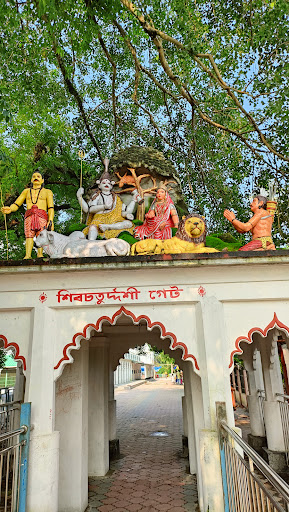
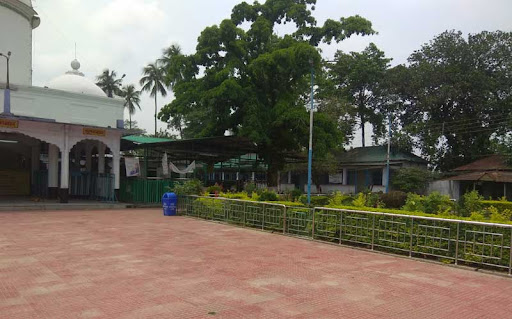
Jalpesh Temple, also known as Jalpesh Mandir or Jalpeshwar Temple, is a renowned Hindu temple located in the Jalpaiguri district of West Bengal, India. It is dedicated to Lord Shiva and is considered one of the most significant Shiva temples in the region. The temple attracts devotees from various parts of the country who come to seek the blessings of Lord Shiva.
The origin of Jalpesh Temple can be traced back to ancient times, and it has a rich history associated with it. According to local legends, the temple was built around the 16th century by the Koch dynasty rulers. It is said that Maharaja Pran Nath, a Koch king, had a divine vision instructing him to establish the temple. Following the vision, the king built the temple and dedicated it to Lord Shiva, whom he deeply revered.
The architecture of Jalpesh Temple is a perfect blend of traditional Bengali and Hindu styles. The main temple structure is made of terracotta and red bricks, giving it a distinctive appearance. The temple complex comprises several other smaller temples dedicated to various deities such as Goddess Kali, Lord Krishna, and Lord Hanuman. The serene atmosphere and the peaceful surroundings of the temple complex create a tranquil ambiance, ideal for spiritual contemplation.
One of the highlights of Jalpesh Temple is the annual festival known as "Jalpesh Mela." It is celebrated with great enthusiasm and draws a large number of devotees and visitors. The festival takes place during the Bengali month of Ashar (June-July) and lasts for several days. Devotees perform special rituals, prayers, and cultural programs during this time. The temple premises come alive with vibrant decorations, devotional music, and the aroma of incense.
Jalpesh Temple is not only a religious center but also a significant cultural landmark in the region. It has played a vital role in preserving and promoting the rich cultural heritage of West Bengal. The temple serves as a gathering place for the local community, fostering a sense of unity and devotion among its followers.
Visitors to Jalpesh Temple are not only mesmerized by its architectural beauty but also by the spiritual aura it exudes. The temple offers a tranquil sanctuary for devotees seeking solace and divine blessings. The serenity and divinity experienced within the temple premises make it a popular destination for...
Read moreA few years back, before the pandemic cast its shadow, the Jalpesh Temple stood as a beacon of devotion and architectural splendor. Devotees and curious souls alike would cross the threshold, their footsteps echoing against ancient stone walls, as if whispering secrets of centuries past. The air carried the fragrance of incense, mingling with the soft rustle of silk sarees and the murmurs of prayers.
In the preceding year, a remarkable transformation graced the temple: the installation of a pipeline system that channeled water directly to Lord Shiva’s sacred idol. This ingenious mechanism allowed devotees to witness the abhishekam, a ritual bathing of the deity, in real time. A strategically placed display screen became a window to divinity, bridging ancient traditions with modern technology.
The temple itself, nestled on the banks of the Jarda river, exuded serenity. Its architecture, adorned with intricate carvings, told stories of gods and goddesses, of celestial battles and cosmic dances.
But then, the pandemic arrived, and the temple doors reluctantly closed. Silence replaced the chants, and the pipeline lay dormant. The display screen, once a marvel, remained blank. We yearned for the familiar rhythm of temple bells, the touch of cool stone underfoot, and the solace of sacred space.
Now, as normalcy returns, the Jalpesh Temple reawakens. The doors swing open, inviting us back into its hallowed embrace. The pipeline flows anew, Shiva’s abhishekam a testament to resilience. And as we bow our heads in reverence, we remember that even amidst uncertainty, faith endures—a steady stream, like water to the deity, connecting past, present, and eternity. Now, the crowds are increasing generously so there are sentries for the temple kept by the temple authority and every year on the ground of Jalpesh, there comes a fair in Shivaratri and in the...
Read moreJalpesh Mandir is a famous temple of North Bengal located near Jalpaiguri town. The 350-year-old temple of Lord Shiva was founded by Sri Bisu Singh, the father of Coochbehars king Maharaja Narayan who later repaired it. It was then reconstructed by the erstwhile King of Coochbehar, Shri Prananarayan in the year 1663. During the monsoon month (Hindu calendar month of Shravan), thousands of pilgrims from North Bengal and around flock to Jalpesh Mandir for puja, chanting ‘Bholey Bom’. During this time a large fair is organized around the temple complex. Jalpesh Temple can be reached from Mainaguri. From the Mainaguri bypass crossing, the temple is just 6 km away. Jalpaiguri town is about 23 km away. The nearest airport is Bagdogra about 75 km away and the nearest rail station is Jalpaiguri road 25 km. The Jalpesh Temple is the main attraction here which is considered highly sacred by the Hindu disciples. The Teen Bigha Corridor near the Haldibari area is also not very far from here and can be visited on the same day trip (35 km from the temple). Jarda river near the Jalpesh Temple is a small stream without much significance. Recently a depression occurred on part of the Jarda riverbed which created a small waterfall. This has now become another tourist attraction...
Read more