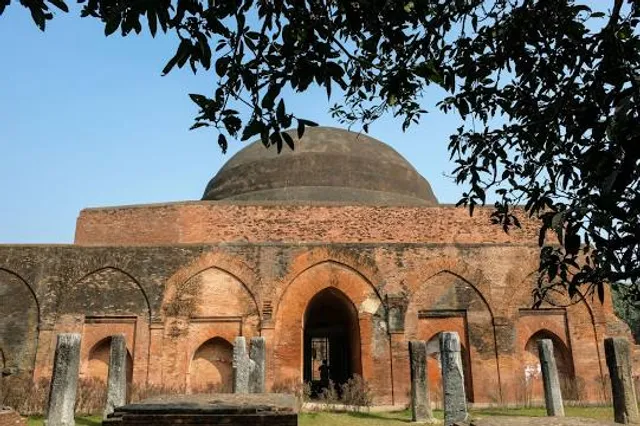
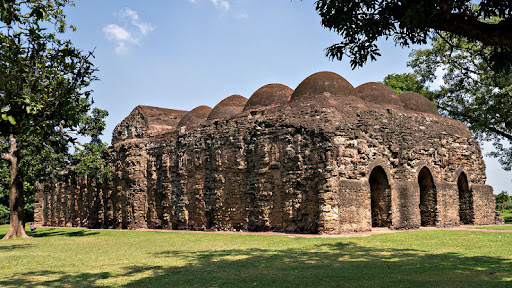
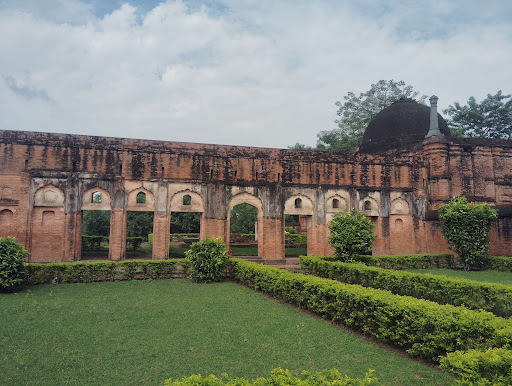
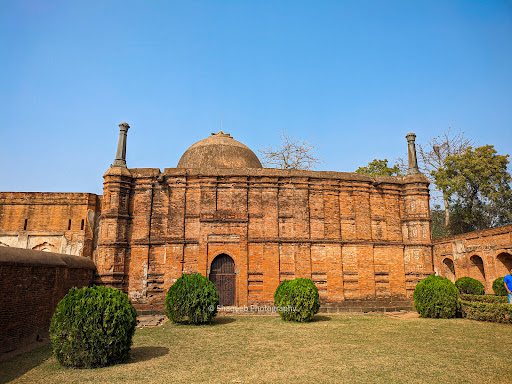
Gauḍa (also known as Gaur, Gour, গৌড়, Lakhnauti, and Jannatabad) is a historic city of bengal in the eastern part of the Indain sub-continent, and one of the most prominent capitals of classical and medieval India.
Gauda was one of the most prominent capitals in the history of Bengal and the history of the Indian subcontinent, and a centre of stately medieval architecture.
Gauda's ruins were depicted in the artwork of European painters during the 18th and 19th centuries. Colonial officials, left detailed surveys of the former Bengali capital.
The Gauḍa region was also a province of several pan-Indian empires. During the 7th century, the Gauda Kingdom was founded by King Shashanka, whose reign corresponds with the beginning of the Bengali calendar.
Gauda became known as Lakhnauti during the Sena dynasty.Gauda gradually became synonymous with Bengal and Bengalis. It was conquered by the Delhi Sultanate in 1204.
For a period of 115 years, between 1450 and 1565, Gauda was the capital of the Bengal Sultanate. In 1500, Gauda was the fifth-most populous city in the world, with a population of 200,000, as well as one of the most densely populated cities in the Indian subcontinent.
Mughal Emperor Humayun invaded the region, he renamed the city Jannatabad ("heavenly city"). Most of the surviving structures in Gauda are from the period of the Bengal Sultanate. The city was sacked by Sher Shah Suri.
it is now becomes a place for tourists, people arrived here in the picnic times, all then ancient structures recollects us the journey of history,,
Monuments of Gour
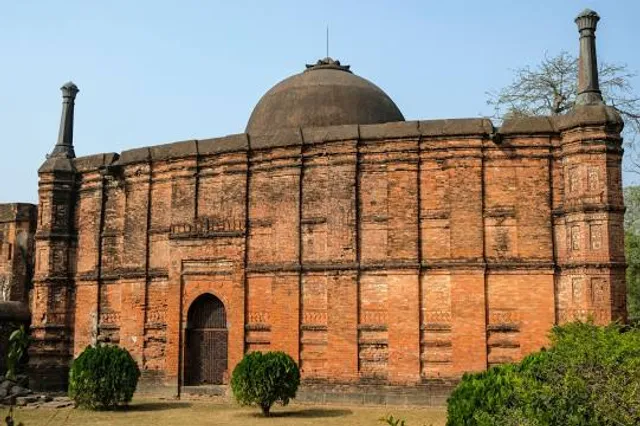
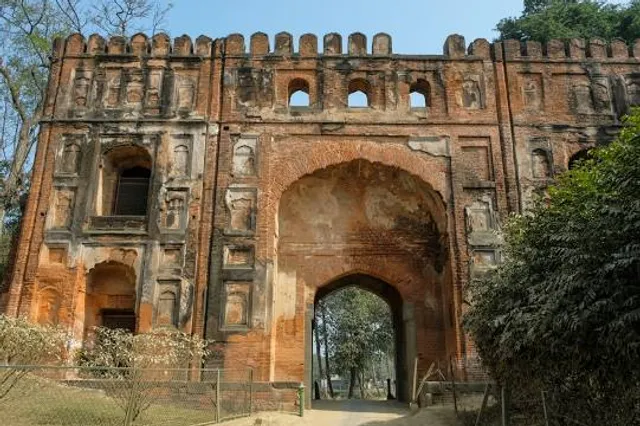
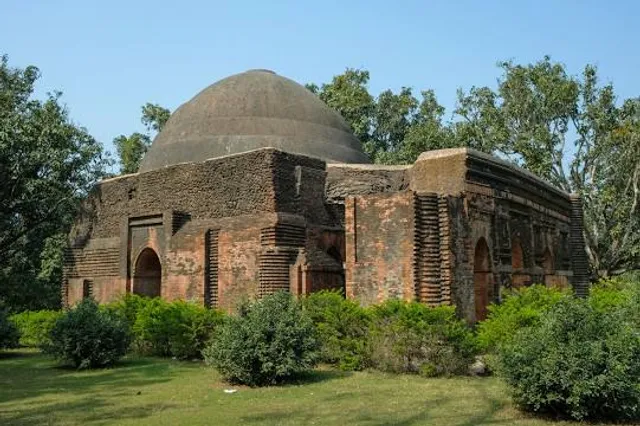
Gour is a feast for history lovers lots of monuments within proximity. The Bada Darwaza is an imposing structure which is marvelous and humbling at the same time. Revel in the magnificence of God at the famous mosques of Gour- Eunuch's Mosque, Tantipar Mosque and Kadam Rasut Mosque. Dakhil Darwaza is a regal gateway which opens into the ruins of a 15th-century castle.
The Firoz Minar is a three storey construction which has twelve adjacent faces, and the top two storeys are circular in their...
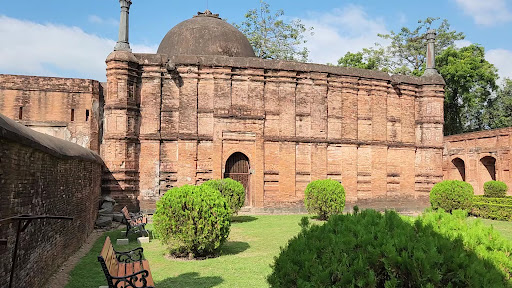
Read moreLocated in Malda's Gaur region, Kadam Rasul Masjid is a historic mosque and revered Islamic shrine, showcasing the rich cultural heritage of Bengal.
Highlights:
Sacred footprint of Prophet Muhammad's sandal Elegant architecture, blending Tughlaq and Bengal Sultanate styles Historic significance, built in 1530 AD by Sultan Alauddin Hussain Shah Serene atmosphere, perfect for contemplation Well-maintained premises
Experience:
Deep sense of spiritual connection and reverence Insight into Islamic history and Bengal's Muslim heritage Tranquil ambiance, ideal for reflection Opportunity to explore nearby historical sites (Baroduari Masjid, Dakhil Darwaza, Firoz Minar) Warm hospitality from local devotees
Tips:
Visit during sunrise or sunset for breathtaking views Remove shoes before entering the mosque Dress modestly and respect Islamic customs Hire local guides for in-depth historical insights Photography allowed, but be respectful
Recommendation:
Must-visit for Islamic devotees, history enthusiasts, and architecture lovers Ideal for those seeking spiritual connection and cultural understanding Combine with nearby historical sites for a comprehensive experience
Kadam Rasul Masjid is a sacred and historic treasure, embodying Malda's rich Islamic heritage.
Experience: Spiritual, Historic, Tranquil
Highlights:
Sacred Prophet's footprint Elegant architecture Historic significance Serene atmosphere Well-maintained premises
Tips:
Visit during sunrise/sunset Remove shoes Dress modestly Respect Islamic customs Photography allowed
Recommendation:
Islamic devotees History enthusiasts Architecture lovers Cultural explorers Spiritual seekers
Additional Information:
Best time to visit: October to February Entry fee: Free (donations welcome) Opening hours: 6 am-7 pm Nearest airport: Malda Airport (MLD) Nearest railway station: Malda Town Railway...
Read moreIn Bengal the oldest and most famous shrine is in Gaur and was erected by Sultan Nusrat Shahin 1530-31. According to tradition, the footprint came from the meditation room of the 13th century saint jalaluddin tabriziof pandua. It was moved to Gaur by Sultan husain shah(1494-1519). Qadam Rasul of Gaur is also important for its place in the development of the Bengali regional style of architecture, which reached its maturity under the Sultanate. Designed like a hut, it is a square room with verandahs on three sides. The central domed room contains a small, carved pedestal of black stone that holds the relic.
The ruined city of Gaur is located on the India-Bangladesh border in the Malda district of Bengal. Previously known as Lakshmanavati or Lakhnauti, the city was an ancient capital of Bengal, a seat of the Budddhist Pala dynasty from the 8th century and later the Hindu Sena dynasty from the 12th century. The Hindu kings were overcome by the Delhi Sultanate in the early 13th century and Gaur became the capital of the Sultans of Bengal, and together with neighbouring Pandua a centre of provincial Islamic culture until its abandonment in the late 16th century. The Qadam Rasul, a single-domed square edifice, was built by Sultan Nusrat Shah in 1530 to enshrine a stone reproduction of an impression of the Prophet's foot. It has a verandah forming a barrel-vaulted corridor on three sides which is elaborately decorated on the eastern side. Arched entrances pierce the north, south...
Read more