HTML SitemapExplore
logo
Find Things to DoFind The Best Restaurants

Kalika Shaktipeeth Shri Nalateswari Temple, Nalhati — Attraction in West Bengal

Name
Kalika Shaktipeeth Shri Nalateswari Temple, Nalhati
Description
Nearby attractions
Nearby restaurants
Nearby hotels
Related posts
Keywords
Kalika Shaktipeeth Shri Nalateswari Temple, Nalhati tourism.Kalika Shaktipeeth Shri Nalateswari Temple, Nalhati hotels.Kalika Shaktipeeth Shri Nalateswari Temple, Nalhati bed and breakfast. flights to Kalika Shaktipeeth Shri Nalateswari Temple, Nalhati.Kalika Shaktipeeth Shri Nalateswari Temple, Nalhati attractions.Kalika Shaktipeeth Shri Nalateswari Temple, Nalhati restaurants.Kalika Shaktipeeth Shri Nalateswari Temple, Nalhati travel.Kalika Shaktipeeth Shri Nalateswari Temple, Nalhati travel guide.Kalika Shaktipeeth Shri Nalateswari Temple, Nalhati travel blog.Kalika Shaktipeeth Shri Nalateswari Temple, Nalhati pictures.Kalika Shaktipeeth Shri Nalateswari Temple, Nalhati photos.Kalika Shaktipeeth Shri Nalateswari Temple, Nalhati travel tips.Kalika Shaktipeeth Shri Nalateswari Temple, Nalhati maps.Kalika Shaktipeeth Shri Nalateswari Temple, Nalhati things to do.
Kalika Shaktipeeth Shri Nalateswari Temple, Nalhati things to do, attractions, restaurants, events info and trip planning
Kalika Shaktipeeth Shri Nalateswari Temple, Nalhati
IndiaWest BengalKalika Shaktipeeth Shri Nalateswari Temple, Nalhati

Basic Info

Kalika Shaktipeeth Shri Nalateswari Temple, Nalhati

7RWG+HJR, Parbati Tola Rd, Nalhati, West Bengal 731243, India
4.7(1.2K)
Open 24 hours
Save
spot

Ratings & Description

Info

Cultural
Outdoor
Family friendly
attractions: , restaurants:
logoLearn more insights from Wanderboat AI.
Phone
+91 89186 33598
Website
nalateswari.com

Plan your stay

hotel
Pet-friendly Hotels in West Bengal
Find a cozy hotel nearby and make it a full experience.
hotel
Affordable Hotels in West Bengal
Find a cozy hotel nearby and make it a full experience.
hotel
The Coolest Hotels You Haven't Heard Of (Yet)
Find a cozy hotel nearby and make it a full experience.
hotel
Trending Stays Worth the Hype in West Bengal
Find a cozy hotel nearby and make it a full experience.

Reviews

Get the Appoverlay
Get the AppOne tap to find yournext favorite spots!
Wanderboat LogoWanderboat

Your everyday Al companion for getaway ideas

CompanyAbout Us
InformationAI Trip PlannerSitemap
SocialXInstagramTiktokLinkedin
LegalTerms of ServicePrivacy Policy

Get the app

© 2025 Wanderboat. All rights reserved.
logo

Reviews of Kalika Shaktipeeth Shri Nalateswari Temple, Nalhati

4.7
(1,199)
avatar
5.0
1y

Kalika Shaktipeeth Nalhati, or Nalateshwari Temple, is one of the revered Shaktipeeths mentioned in Hindu scriptures. Here's a deeper look into its history, mythology, religious practices, and cultural significance:

Mythological Background

According to Hindu legend, the Shaktipeeths are holy sites where the body parts of Goddess Sati fell when Lord Shiva carried her lifeless body, overcome with grief after her self-immolation during a yajna (sacrificial ritual). The incident took place when Sati's father, Daksha, insulted her and Lord Shiva. Unable to bear the insult, Sati immolated herself, and Lord Shiva, in his grief and anger, began his cosmic dance, the Tandava. As he carried her body across the universe, Lord Vishnu, in an attempt to calm Shiva, used his Sudarshan Chakra to cut Sati’s body into 51 pieces, which fell on different parts of the Indian subcontinent. These places became sacred Shaktipeeths, where different forms of Goddess Shakti are worshipped.

In Nalhati, it is believed that Sati's throat (or "nal") fell, giving the place its name. The presiding deity of the temple is Goddess Nalateshwari, a form of Goddess Kali, who is worshipped with great devotion by devotees.

Architecture and Layout

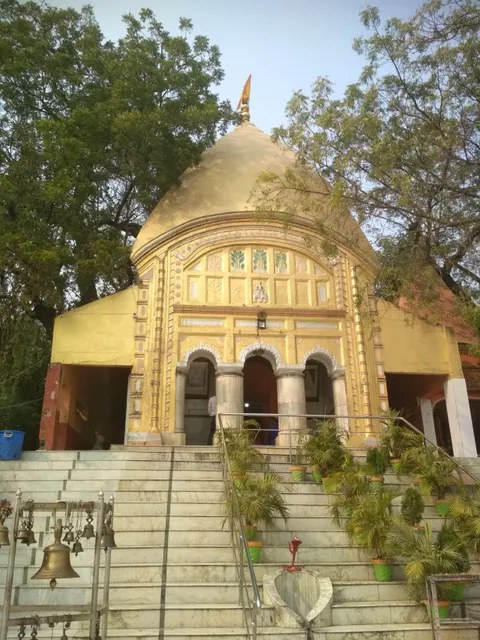
The temple follows a traditional Bengali style of architecture with a simple yet spiritually charged design. The sanctum sanctorum houses the stone idol of Goddess Nalateshwari. The temple is relatively small compared to other temples, but the spiritual atmosphere draws thousands of devotees. The entire complex is considered highly sacred, and the rituals are performed with much reverence.

Religious Practices

The temple is famous for its Tantric rituals, which are often associated with Shakti worship. Devotees offer flowers, fruits, sweets, and sometimes animal sacrifices, though this practice is becoming less common. The temple attracts a significant number of pilgrims during:

Navratri: The nine-day festival dedicated to the worship of the feminine divine in the form of Durga.

Kali Puja: The worship of Goddess Kali, which is particularly grand in Bengal.

Amavasya (New Moon): This is considered an auspicious time for offering prayers to Kali.

Festivals and Fairs

The temple sees a surge in visitors during major Hindu festivals, particularly:

Durga Puja and Kali Puja, which are widely celebrated in West Bengal. Devotees come from far and wide to participate in the rituals and seek blessings.

Makar Sankranti and other traditional Bengali festivals also witness gatherings at the temple. During these festivals, the temple becomes a hub of spiritual activity, with rituals, fairs, and cultural programs.

Pilgrimage Significance

For devotees of Shakti, a visit to Nalateshwari Temple is considered highly auspicious. Many believe that offering prayers here can help overcome personal and spiritual obstacles. The temple is especially known for granting wishes related to health, prosperity, and fertility. It is also believed to have a calming influence on the mind and spirit.

Location and Accessibility

Nalhati is located in the Birbhum district of West Bengal. The temple is easily accessible by road and rail. The Nalhati Railway Station is nearby, and buses and taxis frequently ply between the temple and other parts of the region. The nearest major cities are Kolkata and Santiniketan, making it a convenient destination for pilgrims and tourists alike.

Cultural Significance

The temple is not just a religious site but also a part of the local culture and heritage of Bengal. It plays an essential role in the spiritual life of the region, and many folk songs, legends, and stories revolve around the temple and the power of Goddess Nalateshwari. The fairs and festivals around the temple have a cultural vibrancy, where local crafts, music, and dances are showcased, blending spirituality with the rich heritage of Bengal.

Nearby Attractions

While visiting Nalateshwari Temple, you can also explore nearby places of interest:

Tarapith Temple: Another famous Shaktipeeth in Birbhum, dedicated to...

   Read more

avatar
5.0
1y

The legend of Maa Nalateswari Temple is deeply intertwined with the tale of Sati's self-immolation. According to mythology, after being humiliated by her father Daksha Prajapati, Sati, unable to bear the insult to her husband Lord Shiva, sacrificed herself in a divine fire. Overcome with grief, Shiva carried her lifeless body and performed the Tandava dance, causing chaos throughout the universe. To pacify him, Lord Vishnu used his Sudarshana Chakra to dismember Sati's body into 51 parts, which scattered across the Indian subcontinent. It is believed that Sati's throat, or "Nala," fell at the site of the present-day Nalateswari Temple in Nalhati, West Bengal. The temple is thus considered one of the 51 Shakti Peethas, sacred sites associated with the divine feminine energy. The temple's unique feature is a "Nala" or hollow tube beneath the idol's throat. Devotees believe that no matter how much water is poured into this Nala, it never overflows. This is seen as a miraculous sign of the divine energy present within the temple. The exact origins of the temple's establishment are shrouded in mystery. Some legends attribute it to the discovery of Sati's throat by the sage Ram Sharam Devsharma, who then established a place of worship there. Others credit the discovery to the Hindu god of love, Kamadeva. Regardless of its origins, the Nalateswari Temple has been a significant pilgrimage site for centuries. Devotees from all over India visit the temple to seek blessings from the divine mother. The temple's serene atmosphere, coupled with the belief in its miraculous powers, makes it a spiritually uplifting experience for...

   Read more
avatar
5.0
1y

The Kalika Shaktipeeth Shri Nalateshwari Temple is a Hindu temple located in Nalhati, Birbhum district, West Bengal, India. It is one of the 51 Shakti Peethas, pilgrimage sites in Hinduism where body parts of the goddess Sati, wife of Lord Shiva, are believed to have fallen. According to legend, Sati's throat fell here. The temple is dedicated to the goddess Nalateshwari, a form of the goddess Kali. The goddess is depicted as a four-armed figure, holding a sword, a trident, a skull, and a severed head. The temple is also home to a lingam of Lord Shiva. The temple is a popular pilgrimage site, and is especially crowded during the Navratri festival. The temple is also a center for Tantric rituals. The temple is believed to have been built in the 10th century by the Pala dynasty. The temple was later renovated by the Sen dynasty and the Malla dynasty. The temple is a brick structure with a curvilinear roof. The temple is decorated with intricate carvings of gods, goddesses, and mythical creatures. The temple celebrates a number of festivals throughout the year, including Navratri, Durga Puja, and Kali Puja. If you are planning to visit the Kalika Shaktipeeth Shri Nalateshwari Temple, here are some things to keep in mind. Visitors are expected to dress modestly. Photography is not allowed inside the temple. Visitors are required to remove their shoes before entering the temple. The temple is well-guarded, but it is always a good idea to be aware of your surroundings and take precautions...

   Read more
Page 1 of 7
Previous
Next

Posts

Koushani DasKoushani Das
The legend of Maa Nalateswari Temple is deeply intertwined with the tale of Sati's self-immolation. According to mythology, after being humiliated by her father Daksha Prajapati, Sati, unable to bear the insult to her husband Lord Shiva, sacrificed herself in a divine fire. Overcome with grief, Shiva carried her lifeless body and performed the Tandava dance, causing chaos throughout the universe. To pacify him, Lord Vishnu used his Sudarshana Chakra to dismember Sati's body into 51 parts, which scattered across the Indian subcontinent. It is believed that Sati's throat, or "Nala," fell at the site of the present-day Nalateswari Temple in Nalhati, West Bengal. The temple is thus considered one of the 51 Shakti Peethas, sacred sites associated with the divine feminine energy. The temple's unique feature is a "Nala" or hollow tube beneath the idol's throat. Devotees believe that no matter how much water is poured into this Nala, it never overflows. This is seen as a miraculous sign of the divine energy present within the temple. The exact origins of the temple's establishment are shrouded in mystery. Some legends attribute it to the discovery of Sati's throat by the sage Ram Sharam Devsharma, who then established a place of worship there. Others credit the discovery to the Hindu god of love, Kamadeva. Regardless of its origins, the Nalateswari Temple has been a significant pilgrimage site for centuries. Devotees from all over India visit the temple to seek blessings from the divine mother. The temple's serene atmosphere, coupled with the belief in its miraculous powers, makes it a spiritually uplifting experience for all who visit.
kaushik majumderkaushik majumder
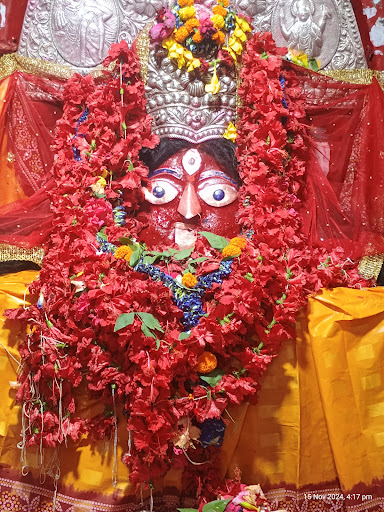
Nalhateshwari temple is one of the 51 Shaktipeethas where parts of Sati's body fell. According to the mythologies it is here where the "nala" or throat of goddess Shakti had fallen and so the shrine came to be known as the Maa Nalateswari. It is located in Nalhati, a municipality in Birbhum District of West Bengal. The terracotta designs on the quintessential 'aatchala temple' of Bengal entice pilgrims. The temple architecture is very old and signifies the presence of enriched Bengali heritage enshrined in the temple designing. Inside the sanctum sanctorum- Mata Nalateshwari is consecrated. The stone idol of 4 feet height has three eyes (trinetra) and a huge golden tongue hanging in between the teeth. The larynx or the "Nala" of the deity is positioned where the tongue ends. She drinks water creating the sound of the gulping. On the way to the sanctum sanctorum or the garbha griha, Ganeshji is sitting and is surrounded by eight snakes. Rani Bhavani of Natur constructed the Ganeshji Shrine here. At the northern side of the temple, the Pancha munda asana is placed. There is also a Neem tree that offers sweet leafs. There is also the foot prints of Mata Shasti preserved on an ancient tablet by this tree. The temple timing is from 5.30 AM to 8.30 PM.
indrajit chakrabortyindrajit chakraborty
From Tarapith to Nalhati, distance is 23 km. Driving 40 minutes by car. Rented car cost is 750/- to 850/- . Rampurhat to Nalhati is 16 km . Temple open at 6:30 am. Temple authority has own guest house accommodation. Visitors may use small local shops for breakfast, but for lunch or dinner, no nearby facility Nalhateshwari temple is one of the 51 Shaktipeethas where parts of Sati's body fell. According to the mythologies, it is here where the "nala" or throat of goddess Shakti had fallen, and so the shrine came to be known as the Maa Nalateswari According to the legends and stories, in the 252nd Bengali year or Bongabdo, Kamdev, the Hindu god of love and desire, who had dreamt about its existence discovered the larynx of Maa Sati at this Nalahati forest. Dedicated to the revered goddess Shakti, the Nalhateshwari Temple is steeped in legend and lore. Believed to have been constructed by the Malla kings in the 16th century, its origins trace back to the mythical narrative of Goddess Sati’s sacrifice and Lord Shiva’s inconsolable grief. Here, amidst the tranquil ambiance of Nalhati town, pilgrims embark on a spiritual odyssey, seeking solace and blessings from the divine.
See more posts
See more posts
hotel
Find your stay

Pet-friendly Hotels in West Bengal

Find a cozy hotel nearby and make it a full experience.

The legend of Maa Nalateswari Temple is deeply intertwined with the tale of Sati's self-immolation. According to mythology, after being humiliated by her father Daksha Prajapati, Sati, unable to bear the insult to her husband Lord Shiva, sacrificed herself in a divine fire. Overcome with grief, Shiva carried her lifeless body and performed the Tandava dance, causing chaos throughout the universe. To pacify him, Lord Vishnu used his Sudarshana Chakra to dismember Sati's body into 51 parts, which scattered across the Indian subcontinent. It is believed that Sati's throat, or "Nala," fell at the site of the present-day Nalateswari Temple in Nalhati, West Bengal. The temple is thus considered one of the 51 Shakti Peethas, sacred sites associated with the divine feminine energy. The temple's unique feature is a "Nala" or hollow tube beneath the idol's throat. Devotees believe that no matter how much water is poured into this Nala, it never overflows. This is seen as a miraculous sign of the divine energy present within the temple. The exact origins of the temple's establishment are shrouded in mystery. Some legends attribute it to the discovery of Sati's throat by the sage Ram Sharam Devsharma, who then established a place of worship there. Others credit the discovery to the Hindu god of love, Kamadeva. Regardless of its origins, the Nalateswari Temple has been a significant pilgrimage site for centuries. Devotees from all over India visit the temple to seek blessings from the divine mother. The temple's serene atmosphere, coupled with the belief in its miraculous powers, makes it a spiritually uplifting experience for all who visit.
Koushani Das

Koushani Das

hotel
Find your stay

Affordable Hotels in West Bengal

Find a cozy hotel nearby and make it a full experience.

Get the Appoverlay
Get the AppOne tap to find yournext favorite spots!
Nalhateshwari temple is one of the 51 Shaktipeethas where parts of Sati's body fell. According to the mythologies it is here where the "nala" or throat of goddess Shakti had fallen and so the shrine came to be known as the Maa Nalateswari. It is located in Nalhati, a municipality in Birbhum District of West Bengal. The terracotta designs on the quintessential 'aatchala temple' of Bengal entice pilgrims. The temple architecture is very old and signifies the presence of enriched Bengali heritage enshrined in the temple designing. Inside the sanctum sanctorum- Mata Nalateshwari is consecrated. The stone idol of 4 feet height has three eyes (trinetra) and a huge golden tongue hanging in between the teeth. The larynx or the "Nala" of the deity is positioned where the tongue ends. She drinks water creating the sound of the gulping. On the way to the sanctum sanctorum or the garbha griha, Ganeshji is sitting and is surrounded by eight snakes. Rani Bhavani of Natur constructed the Ganeshji Shrine here. At the northern side of the temple, the Pancha munda asana is placed. There is also a Neem tree that offers sweet leafs. There is also the foot prints of Mata Shasti preserved on an ancient tablet by this tree. The temple timing is from 5.30 AM to 8.30 PM.
kaushik majumder

kaushik majumder

hotel
Find your stay

The Coolest Hotels You Haven't Heard Of (Yet)

Find a cozy hotel nearby and make it a full experience.

hotel
Find your stay

Trending Stays Worth the Hype in West Bengal

Find a cozy hotel nearby and make it a full experience.

From Tarapith to Nalhati, distance is 23 km. Driving 40 minutes by car. Rented car cost is 750/- to 850/- . Rampurhat to Nalhati is 16 km . Temple open at 6:30 am. Temple authority has own guest house accommodation. Visitors may use small local shops for breakfast, but for lunch or dinner, no nearby facility Nalhateshwari temple is one of the 51 Shaktipeethas where parts of Sati's body fell. According to the mythologies, it is here where the "nala" or throat of goddess Shakti had fallen, and so the shrine came to be known as the Maa Nalateswari According to the legends and stories, in the 252nd Bengali year or Bongabdo, Kamdev, the Hindu god of love and desire, who had dreamt about its existence discovered the larynx of Maa Sati at this Nalahati forest. Dedicated to the revered goddess Shakti, the Nalhateshwari Temple is steeped in legend and lore. Believed to have been constructed by the Malla kings in the 16th century, its origins trace back to the mythical narrative of Goddess Sati’s sacrifice and Lord Shiva’s inconsolable grief. Here, amidst the tranquil ambiance of Nalhati town, pilgrims embark on a spiritual odyssey, seeking solace and blessings from the divine.
indrajit chakraborty

indrajit chakraborty

See more posts
See more posts