HTML SitemapExplore
logo
Find Things to DoFind The Best Restaurants

KATRA MASJID — Attraction in West Bengal

Name
KATRA MASJID
Description
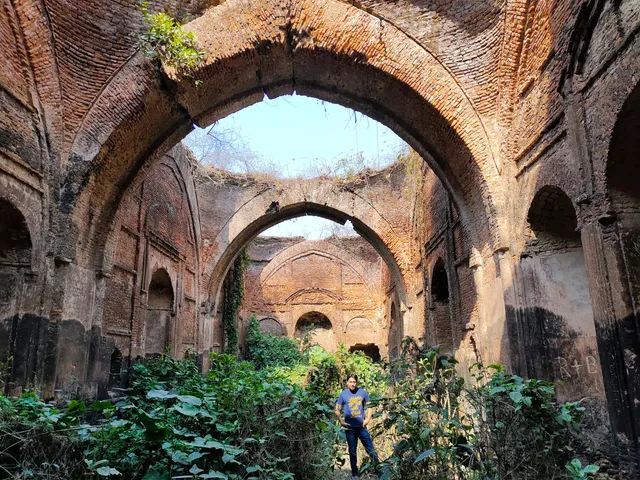
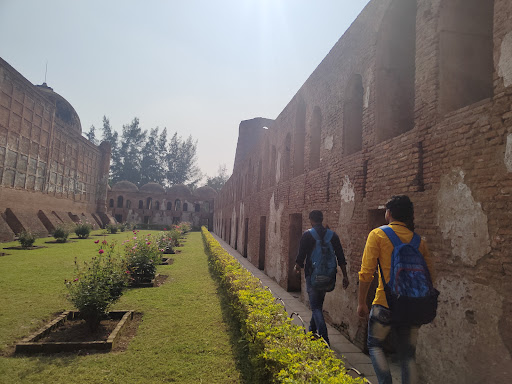
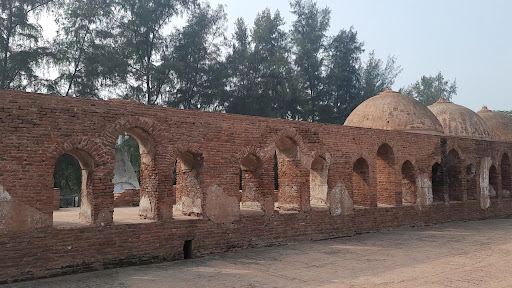
The Katra Masjid is a former caravanserai, mosque and the tomb of Nawab Murshid Quli Khan. It was built between 1723 and 1724. It is one of the largest caravanserais in the Indian subcontinent. It was built during the 18th century, when the early modern Bengal Subah was a major hub of trade in Eurasia.
Nearby attractions
Fauti Masjid
57PJ+953, Barowaritala, Murshidabad, West Bengal 742149, India
Nearby restaurants
Nearby hotels
Related posts
Keywords
KATRA MASJID tourism.KATRA MASJID hotels.KATRA MASJID bed and breakfast. flights to KATRA MASJID.KATRA MASJID attractions.KATRA MASJID restaurants.KATRA MASJID travel.KATRA MASJID travel guide.KATRA MASJID travel blog.KATRA MASJID pictures.KATRA MASJID photos.KATRA MASJID travel tips.KATRA MASJID maps.KATRA MASJID things to do.
KATRA MASJID things to do, attractions, restaurants, events info and trip planning
KATRA MASJID
IndiaWest BengalKATRA MASJID

Basic Info

KATRA MASJID

57MQ+W3V, Murshidabad Station Rd, Kadamsarif, Murshidabad, Sabjikatra, West Bengal 742149, India
4.5(1.2K)
Open 24 hours
Save
spot

Ratings & Description

Info

The Katra Masjid is a former caravanserai, mosque and the tomb of Nawab Murshid Quli Khan. It was built between 1723 and 1724. It is one of the largest caravanserais in the Indian subcontinent. It was built during the 18th century, when the early modern Bengal Subah was a major hub of trade in Eurasia.

Cultural
Accessibility
attractions: Fauti Masjid, restaurants:
logoLearn more insights from Wanderboat AI.

Plan your stay

hotel
Pet-friendly Hotels in West Bengal
Find a cozy hotel nearby and make it a full experience.
hotel
Affordable Hotels in West Bengal
Find a cozy hotel nearby and make it a full experience.
hotel
The Coolest Hotels You Haven't Heard Of (Yet)
Find a cozy hotel nearby and make it a full experience.
hotel
Trending Stays Worth the Hype in West Bengal
Find a cozy hotel nearby and make it a full experience.

Reviews

Nearby attractions of KATRA MASJID

Fauti Masjid

Fauti Masjid

Fauti Masjid

4.0

(125)

Open until 12:00 AM
Click for details
Get the Appoverlay
Get the AppOne tap to find yournext favorite spots!
Wanderboat LogoWanderboat

Your everyday Al companion for getaway ideas

CompanyAbout Us
InformationAI Trip PlannerSitemap
SocialXInstagramTiktokLinkedin
LegalTerms of ServicePrivacy Policy

Get the app

© 2025 Wanderboat. All rights reserved.
logo

Reviews of KATRA MASJID

4.5
(1,187)
avatar
5.0
1y

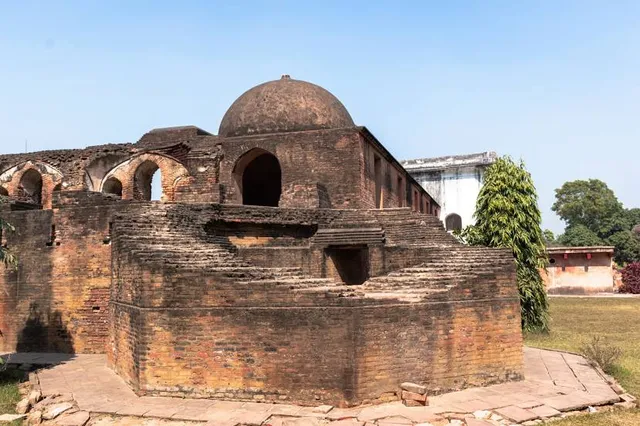
Katra masjid Mursidabad a famous tourist spot.the English artist William Hodges described Katra Masjid as a grand seminary of Muslim learning. He traveled to Murshidabad in 1781 and painted the mosque with its two huge octagonal minarets and five domes, part of a six-year trip throughout India. Today, the mosque looks a little different; With the ravages of time and the great earthquake of 1897, two of its domes have been destroyed.

Constructed in 1724 by Murshid Kuli Khan, this red burnt brick-built quadrangle Katra Masjid served multiple purposes. It was a caravanserai, a mosque, and a mausoleum. The place is no longer used for prayers, but back in the day the small rooms around the mosque were used by those who read the Quran and the large courtyard in the mosque was used to offer namaz (prayers).

According to historians, the word katra refers to caravanserai (roadside inn) in Arabic and Persian. Katra Masjid was the largest caravanserai in the Indian subcontinent, built during the era when Bengal was a major hub of trade in Eurasia. Traders flocked to Bengal for silk, jute, and muslin.

Katra Masjid is also a mausoleum of its creator, Murshid Kuli Khan, whose remains are interred below the staircase of the entrance. According to historians, Khan, the first Nawab Nazim or the ruler of Bengal, Bihar, and Orissa between 1717 to 1727 and the emperor who established the town of Murshidabad wanted to be buried under a mosque’s staircase as a mark of humility.

Khan died on June 30, 1727. Popular belief holds that he wanted to be buried this way as a mark of repentance, as it is said that Khan built the mosque using materials obtained upon destroying several Hindu temples and residences. He believed every time a person who would climb the stairs to reach the mosque would cross over his body, their footsteps dust would help cleanse his sin. However, this theory of looting Hindu shrines hardly holds any ground because the mosque shows the uniformity of material and the Nawab was a known patron of many Hindu temples including the neighboring Radha Madhab temple of Kumarpara.

The mosque has two inscriptions on basalt slabs. The Persian inscribed slab says that this mosque was constructed by Nawab Nazim Murshid Quli Khan, while the Arabic inscription reads: “Muhammad, the Arabian, is the glory of both worlds. Dust be on the head of him who is not the dust of his portal.”

According to local stories, Murshid Quli was also known as Jaffer Khan Jinda Pir, or the living saint. It was believed that cholera would never break in the vicinity of this sacred building through his blessings and benedictions. Today, the mosque is maintained by the Archaeological...

   Read more

avatar
5.0
1y

Katra Masjid, located in Murshidabad, West Bengal, is a historical gem that beautifully encapsulates the rich architectural and cultural heritage of the region. As I entered the premises, I was immediately struck by the grandeur of its design and the sense of tranquility that pervaded the air.

The mosque's imposing structure, built during the 18th century by Nawab Murshid Quli Khan, boasts intricate artwork and detailed craftsmanship. The red bricks used in its construction lend a warm and inviting hue to the exterior, while the towering minarets and domes add an air of majesty. The courtyard is spacious, providing a serene space for contemplation and prayer.

Inside, the prayer hall continues to impress with its spacious layout and arched doorways. The mihrab, indicating the direction of Mecca, is adorned with delicate carvings, showcasing the skilled artistry of the era. The play of light and shadow through the jali work creates a mesmerizing ambiance, making it a spiritual haven for worshippers.

What sets Katra Masjid apart is its historical significance. It stands as a testament to the cultural synthesis prevalent during the Mughal period, blending indigenous Bengali architecture with Islamic influences. The adjacent Katra mosque and the imposing Hazarduari Palace add to the overall historical richness of the site, offering visitors a comprehensive glimpse into the bygone era.

However, to enhance the visitor experience, it would be beneficial for the local authorities to provide more informational signage or guided tours explaining the historical context and architectural nuances. Additionally, facilities such as clean restrooms and well-maintained pathways would contribute to a more comfortable visit.

In conclusion, Katra Masjid is a must-visit destination for history enthusiasts, architecture aficionados, and anyone seeking a peaceful retreat. Its historical significance, architectural splendor, and cultural resonance make it a valuable asset not only for West Bengal but for the entire nation. A visit to Katra Masjid is a journey back in time, a pilgrimage through the annals of history, and an opportunity to appreciate the enduring beauty of India's...

   Read more
avatar
4.0
1y

The Katra Mosque, also known as the Katra Masjid, is a historic mosque in Murshidabad, West Bengal, India. Here's some information about this iconic landmark:

Location: The Katra Mosque is situated in Murshidabad, once the capital of the Nawabs of Bengal, along the banks of the Bhagirathi River.

History: The mosque was built in the 18th century by Nawab Murshid Quli Khan, the first Nawab of Bengal under the Mughal Empire. Construction of the mosque began in 1723 and was completed in 1724.

Architecture: The Katra Mosque is an impressive example of Mughal architecture, featuring a blend of Islamic, Persian, and Bengali architectural styles. The mosque is known for its large central courtyard, multiple domes, and towering minarets.

Design: The mosque is rectangular and is surrounded by a high wall with four large gateways. The main prayer hall, located in the centre of the courtyard, is adorned with intricate carvings, marble panels, and calligraphic inscriptions from the Quran.

Purpose: The Katra Mosque served as a place of worship for the Muslim community of Murshidabad and the surrounding regions. It was also used for religious gatherings, festivals, and community events.

Historical Significance: The mosque holds historical significance as one of the largest and most important mosques in West Bengal. It is considered a symbol of the region's rich cultural and religious heritage and reflects the influence of Mughal architecture in Bengal during the 18th century.

Tourism: The Katra Mosque is a popular tourist attraction, drawing visitors worldwide to admire its architectural beauty, learn about its history, and experience its spiritual significance. The mosque is open to visitors of all faiths and welcomes tourists with its serene ambience and historic charm.

Overall, the Katra Mosque is a testament to the religious tolerance, architectural brilliance, and cultural diversity of Murshidabad and remains an essential landmark in West...

   Read more
Page 1 of 7
Previous
Next

Posts

Pramit DasPramit Das
Katra Masjid, located in Murshidabad, West Bengal, is a historical gem that beautifully encapsulates the rich architectural and cultural heritage of the region. As I entered the premises, I was immediately struck by the grandeur of its design and the sense of tranquility that pervaded the air. The mosque's imposing structure, built during the 18th century by Nawab Murshid Quli Khan, boasts intricate artwork and detailed craftsmanship. The red bricks used in its construction lend a warm and inviting hue to the exterior, while the towering minarets and domes add an air of majesty. The courtyard is spacious, providing a serene space for contemplation and prayer. Inside, the prayer hall continues to impress with its spacious layout and arched doorways. The mihrab, indicating the direction of Mecca, is adorned with delicate carvings, showcasing the skilled artistry of the era. The play of light and shadow through the jali work creates a mesmerizing ambiance, making it a spiritual haven for worshippers. What sets Katra Masjid apart is its historical significance. It stands as a testament to the cultural synthesis prevalent during the Mughal period, blending indigenous Bengali architecture with Islamic influences. The adjacent Katra mosque and the imposing Hazarduari Palace add to the overall historical richness of the site, offering visitors a comprehensive glimpse into the bygone era. However, to enhance the visitor experience, it would be beneficial for the local authorities to provide more informational signage or guided tours explaining the historical context and architectural nuances. Additionally, facilities such as clean restrooms and well-maintained pathways would contribute to a more comfortable visit. In conclusion, Katra Masjid is a must-visit destination for history enthusiasts, architecture aficionados, and anyone seeking a peaceful retreat. Its historical significance, architectural splendor, and cultural resonance make it a valuable asset not only for West Bengal but for the entire nation. A visit to Katra Masjid is a journey back in time, a pilgrimage through the annals of history, and an opportunity to appreciate the enduring beauty of India's architectural legacy.
Abul AsifAbul Asif
Katra Masjid, Murshidabad, West Bengal is one of the most historically significant and architecturally impressive mosques in Eastern India. Here's a summary of typical reviews and experiences shared by visitors: Overall Rating: ★★★★☆ (4.3/5) Highlights from Reviews: 1. Architectural Beauty: Visitors are often awestruck by the Indo-Islamic architecture. The mosque has massive domes, grand arches, and twin minarets that once allowed views of the whole city. “Stunning architecture with an aura of Mughal-era magnificence.” 2. Historical Significance: Built by Nawab Murshid Quli Khan in the early 18th century, the site also houses his tomb under the front steps. “The history behind this place is fascinating—it’s not just a mosque but a resting place of Bengal’s first Nawab.” 3. Peaceful Atmosphere: Many reviewers mention the serene ambiance of the place. “Very peaceful and spiritual. A great place to reflect and admire the past.” 4. Maintenance: While the mosque is relatively well-maintained by the ASI (Archaeological Survey of India), some visitors note signs of aging. “Could use a little more care, especially around the gardens and pathways.” 5. Accessibility: It's easily reachable from other attractions in Murshidabad, such as Hazarduari Palace. “A short ride from Hazarduari—worth combining in your day trip.” Tips for Visitors: Best time to visit: Early morning or late afternoon for cooler weather and softer lighting for photography. Take a guide if you're interested in the detailed history. Dress modestly out of respect for the religious nature of the site. Don’t miss the view from the minarets (if access is allowed during your visit).
Masudul IslamMasudul Islam
Katra Masjid is a historic building that is a witness to the rich Mughal architectural heritage of the region. Constructed in the 18th century by Nawab Murshid Quli Khan, this mosque is famous for its grandeur and intricate architecture, with its imposing minarets and large courtyard. The location is a vital reminder of the city's past glory as the capital of Bengal under the Nawabs. Even though it is rich in history, it is unfortunate to note that Murshidabad, the former capital of Bengal, has not developed or improved much over the past few years. The absence of infrastructure, modern facilities, and tourism development has checked its potential to become a big historical and cultural center. Whereas Katra Masjid and other such historical sites are treasures which should draw tourists and experts in equal measure, lack of government interest and investment has caused the area to be in a quandary in terms of saving its history without developing further into the future. Murshidabad's heritage is undeniable, but it is stuck in the past. There is potential for bringing the city back to life and leveraging its rich history towards tourism and education that is untapped. Given how rich in history the place is, it is a missed opportunity for Murshidabad as a cultural hotspot that could be otherwise pushed further up in prominence.
See more posts
See more posts
hotel
Find your stay

Pet-friendly Hotels in West Bengal

Find a cozy hotel nearby and make it a full experience.

Katra Masjid, located in Murshidabad, West Bengal, is a historical gem that beautifully encapsulates the rich architectural and cultural heritage of the region. As I entered the premises, I was immediately struck by the grandeur of its design and the sense of tranquility that pervaded the air. The mosque's imposing structure, built during the 18th century by Nawab Murshid Quli Khan, boasts intricate artwork and detailed craftsmanship. The red bricks used in its construction lend a warm and inviting hue to the exterior, while the towering minarets and domes add an air of majesty. The courtyard is spacious, providing a serene space for contemplation and prayer. Inside, the prayer hall continues to impress with its spacious layout and arched doorways. The mihrab, indicating the direction of Mecca, is adorned with delicate carvings, showcasing the skilled artistry of the era. The play of light and shadow through the jali work creates a mesmerizing ambiance, making it a spiritual haven for worshippers. What sets Katra Masjid apart is its historical significance. It stands as a testament to the cultural synthesis prevalent during the Mughal period, blending indigenous Bengali architecture with Islamic influences. The adjacent Katra mosque and the imposing Hazarduari Palace add to the overall historical richness of the site, offering visitors a comprehensive glimpse into the bygone era. However, to enhance the visitor experience, it would be beneficial for the local authorities to provide more informational signage or guided tours explaining the historical context and architectural nuances. Additionally, facilities such as clean restrooms and well-maintained pathways would contribute to a more comfortable visit. In conclusion, Katra Masjid is a must-visit destination for history enthusiasts, architecture aficionados, and anyone seeking a peaceful retreat. Its historical significance, architectural splendor, and cultural resonance make it a valuable asset not only for West Bengal but for the entire nation. A visit to Katra Masjid is a journey back in time, a pilgrimage through the annals of history, and an opportunity to appreciate the enduring beauty of India's architectural legacy.
Pramit Das

Pramit Das

hotel
Find your stay

Affordable Hotels in West Bengal

Find a cozy hotel nearby and make it a full experience.

Get the Appoverlay
Get the AppOne tap to find yournext favorite spots!
Katra Masjid, Murshidabad, West Bengal is one of the most historically significant and architecturally impressive mosques in Eastern India. Here's a summary of typical reviews and experiences shared by visitors: Overall Rating: ★★★★☆ (4.3/5) Highlights from Reviews: 1. Architectural Beauty: Visitors are often awestruck by the Indo-Islamic architecture. The mosque has massive domes, grand arches, and twin minarets that once allowed views of the whole city. “Stunning architecture with an aura of Mughal-era magnificence.” 2. Historical Significance: Built by Nawab Murshid Quli Khan in the early 18th century, the site also houses his tomb under the front steps. “The history behind this place is fascinating—it’s not just a mosque but a resting place of Bengal’s first Nawab.” 3. Peaceful Atmosphere: Many reviewers mention the serene ambiance of the place. “Very peaceful and spiritual. A great place to reflect and admire the past.” 4. Maintenance: While the mosque is relatively well-maintained by the ASI (Archaeological Survey of India), some visitors note signs of aging. “Could use a little more care, especially around the gardens and pathways.” 5. Accessibility: It's easily reachable from other attractions in Murshidabad, such as Hazarduari Palace. “A short ride from Hazarduari—worth combining in your day trip.” Tips for Visitors: Best time to visit: Early morning or late afternoon for cooler weather and softer lighting for photography. Take a guide if you're interested in the detailed history. Dress modestly out of respect for the religious nature of the site. Don’t miss the view from the minarets (if access is allowed during your visit).
Abul Asif

Abul Asif

hotel
Find your stay

The Coolest Hotels You Haven't Heard Of (Yet)

Find a cozy hotel nearby and make it a full experience.

hotel
Find your stay

Trending Stays Worth the Hype in West Bengal

Find a cozy hotel nearby and make it a full experience.

Katra Masjid is a historic building that is a witness to the rich Mughal architectural heritage of the region. Constructed in the 18th century by Nawab Murshid Quli Khan, this mosque is famous for its grandeur and intricate architecture, with its imposing minarets and large courtyard. The location is a vital reminder of the city's past glory as the capital of Bengal under the Nawabs. Even though it is rich in history, it is unfortunate to note that Murshidabad, the former capital of Bengal, has not developed or improved much over the past few years. The absence of infrastructure, modern facilities, and tourism development has checked its potential to become a big historical and cultural center. Whereas Katra Masjid and other such historical sites are treasures which should draw tourists and experts in equal measure, lack of government interest and investment has caused the area to be in a quandary in terms of saving its history without developing further into the future. Murshidabad's heritage is undeniable, but it is stuck in the past. There is potential for bringing the city back to life and leveraging its rich history towards tourism and education that is untapped. Given how rich in history the place is, it is a missed opportunity for Murshidabad as a cultural hotspot that could be otherwise pushed further up in prominence.
Masudul Islam

Masudul Islam

See more posts
See more posts