The Rathayatra of Mahesh (Bengali: মাহেশের রথযাত্রা) is the 629 years (2025) old chariot festival in Bengal and is said to have been celebrated since 1396. The first temple of Jagannath Deb was built by Raja Manohar Roy of Sheoraphuli Raj who also donated a large portion of land in establishing the Jagganathpur Mouza. It is held in Mahesh, a historical locality within Serampore in the Indian state of West Bengal. It is a week-long festival and a grand fair is held at that time.People throng to have a share in pulling the long ropes (Rosshi) attached to the chariots of Lord Jagannath, Balarama and Subhadra on the journey from the temple to Mahesh Gundicha Bari (or, Masir Bari) and back within 8th day.
Raja Manohar Roy of Sheoraphuli donated land and entrusted Jagannathpur Mouza in service of Lord Jagannath, the initial Mandir was built in Mahesh by the King of Sheoraphuli as it fell under his territory.
It was the fourteenth century. Drubananda Brahmachari, a great Bengali sage went to Puri for pilgrimage. He had a desire to offer Lord Jagannath ‘Bhoga’ with his own hand. But the Temple authority prevented him do so. Broken-hearted Drubananda decided to fast until death. On the third day, he heard the Lord’s voice in his dream, “Drubananda, go back to Bengal. At the bank of Bhagirathi, you will find a place called Mahesh. There I shall send you a huge Daru-Brahma (Neem trunk). Make Balarama, Subhadra and my Idol with this trunk. I am eager to have ‘Bhoga’ in your hand.” So Drubanada returned to Mahesh and started his Sadhana. Then in a scary rainy night, that Daru-Brahma appeared at Mahesh. He jumped into the water and received it. Then he made the Idols of the Holy Trinity and established a Temple.
After taking sanyas, Sri Chaitanya left for Puri. In the way, he reached at Mahesh.After visiting Drubananda’s Temple, he lost his sense, and absorbed in deep Samādhi. Sri Chaitanya christened Mahesh as 'Naba Nilachal' meaning the 'new Puri'. Later old Drubananda requested him to take charge of the temple. On his request he made Kamalakar Piplai, the fifth of his twelve Gopalas, the sebait of the temple. After few days Dhrubananda died.
Kamalakar Piplai was, as it is mentioned earlier, fifth of the twelve Gopalas of Sri Chaitanya. He was the son of the Zamindar of Khalijuli in Sunderbans. He came to Navadwip to study Logic. Later he became a favorite of Mahaprabhu and joined his ministry. He was the first of the 64 Mohantas. After taking the charge of Mahesh Temple, he remained there and it is he who started the famous chariot festival, more than 600 years ago. His heirs still lives in Mahesh and some in Kolkata as the Sebait or ‘Adhikary’ of the Temple.
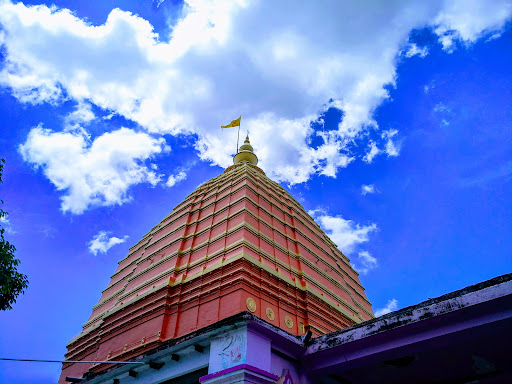
But nor the Ratha neither the Temple of Kamalakar has existed. The modern Temple was made by Nayanchand Mallik of Pathuriaghata, Kolkata in 1755. It cost Rs. 20,000.
Nothing about the first Ratha is known. Once a devotee of Baidyabati donated a ratha to the Temple. In 1797, Sri Ramakrishna’s famous disciple Balarama Basu’s grandfather Krishnaram Basu donated another Ratha. His son Guruprasad Basu renewed the Ratha in 1835. But after some years the Ratha was burnt. Then Kalachand Basu made another in 1852. But one day a person committed suicide inside the Ratha. Taking this as a sign of evil, Biswambhar Basu made a different Ratha in 1857, but it also got burnt. Then Dewan Krishnachandra Basu ordered an Iron-Chariot from Martin Burn This Ratha is still inexistent.
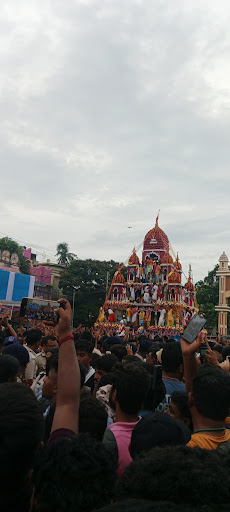
The present ratha or the chariot was constructed under the patronage of Krishnaram Basu by the Martin Burn Company in 1885. The cost of the construction was two million rupees. The ratha is a Nabaratna temple having nine shikharas. The ratha has a steel framework with wooden scaffolding. It is fitted with twelve iron wheels each measuring twelve inches in circumference. The ratha is four storied, measuring 50 feet in height and 125 tonnes in weight. Two copper horses are attached to the front.
Bankim Chandra Chatterjee’s famous novel ‘Radharani’ consists of a wonderful description of...
Read more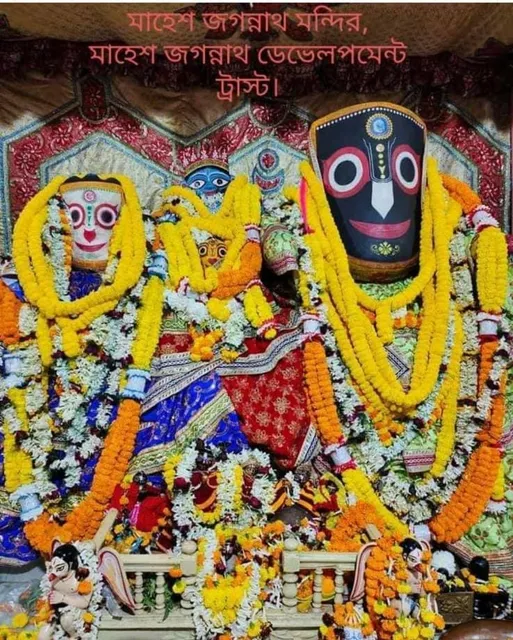
 Learn more insights from Wanderboat AI.