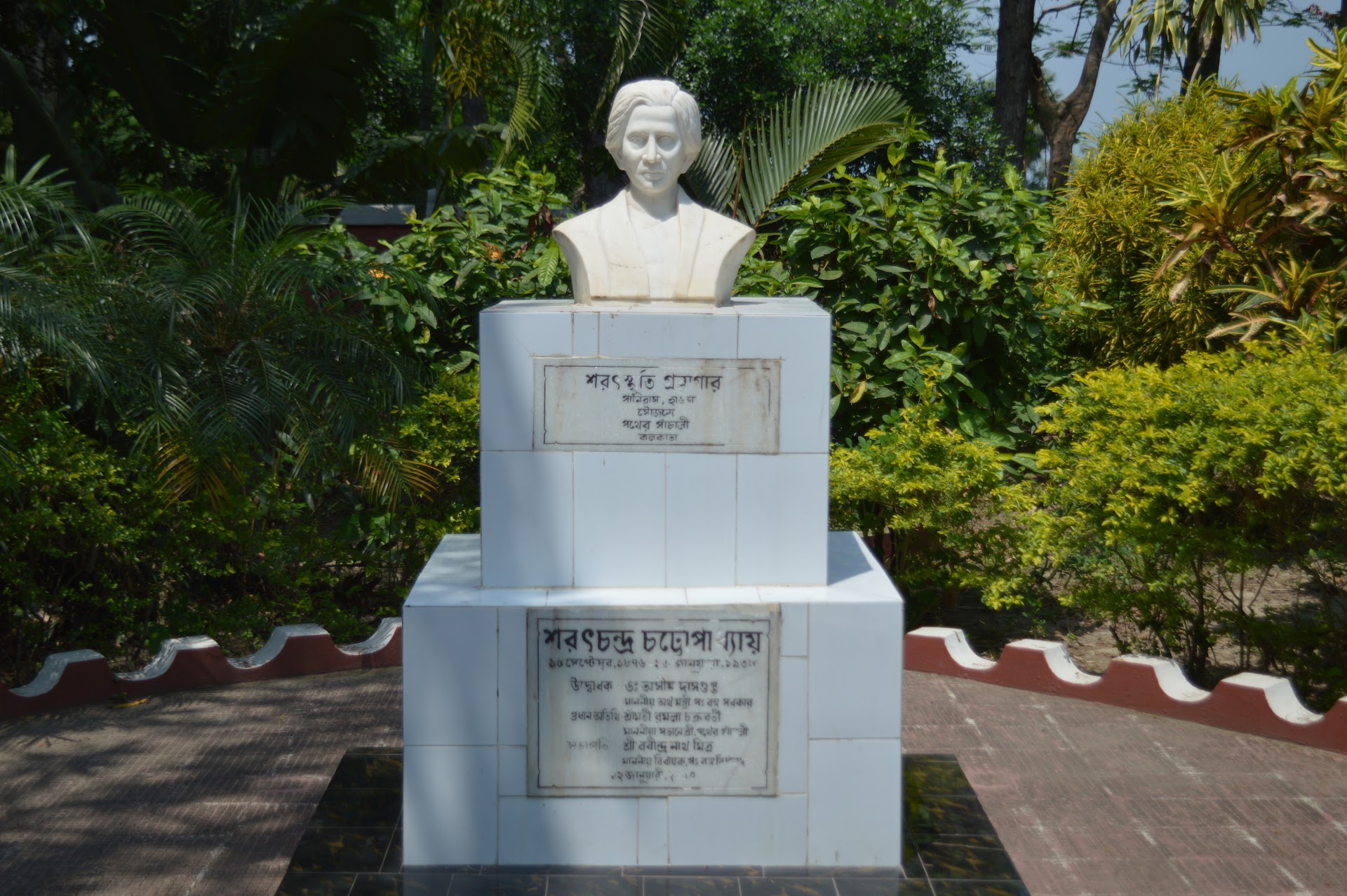
Sarat Chandra Kuthi is the house of Sarat Chandra Chattopadhyay and is located in Samtaber (Samta), Howrah in the Indian state of West Bengal. Sarat Chandra was born into poverty in Debanandapur, Hooghly, West Bengal in India but he spent the early years of his lifetime as a novelist in this house. His house in Samta is known as "Sarat Chandra Kuthi" in the locality.
Sarat Chandra used to live in Samta and stay in his house with the fishermen and washermen. So the villagers separated him from the village - as fishermen and washer men were considered to be of low caste. So he along with the houses where he lived came to be known as a separate village, called "Samtaber". Now, Samtaber is a part of Samta.
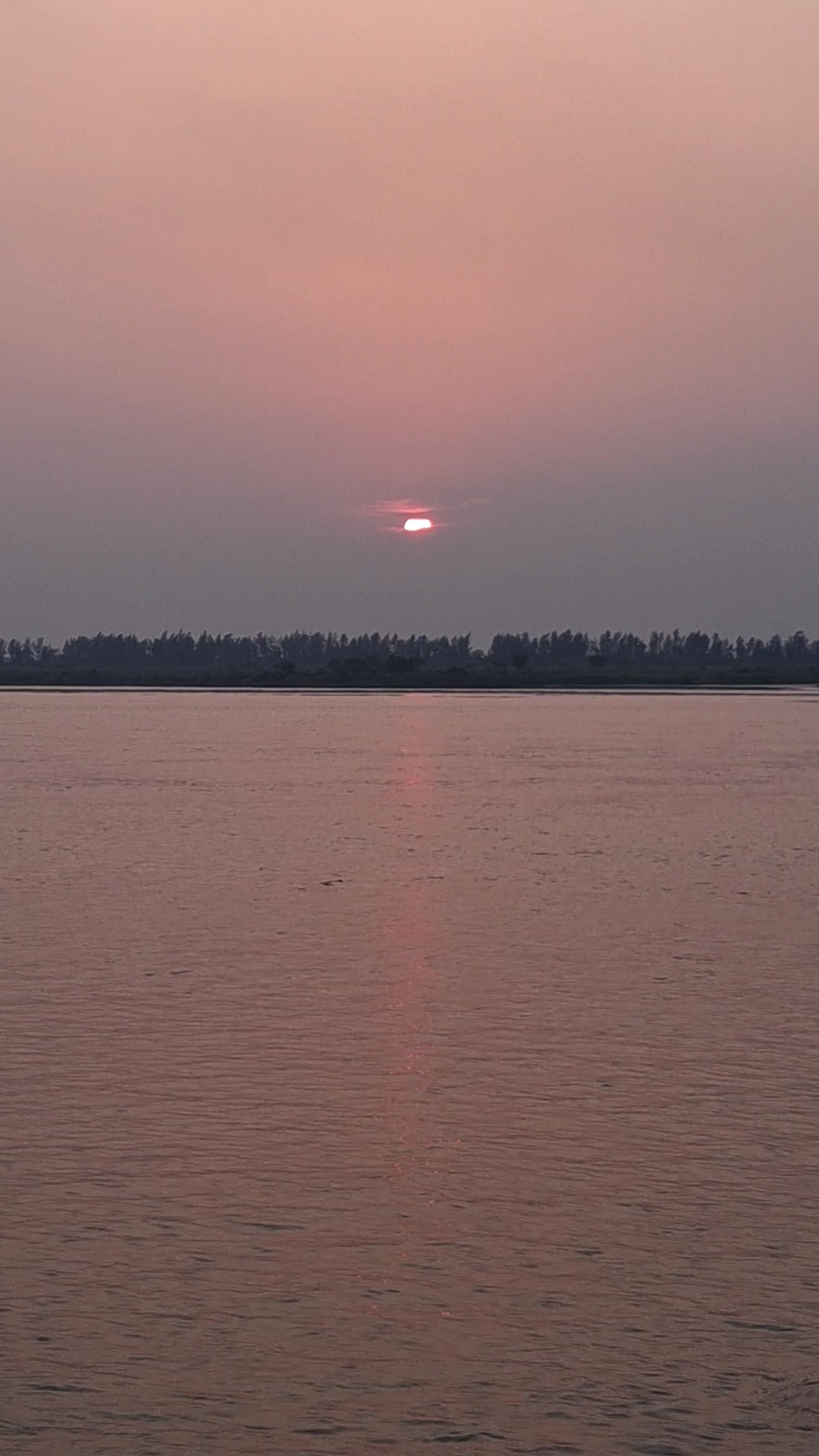
The Rupnarayan River then used to flow near the house and was visible from the window of Sarat Chandra’s ground floor study room. Now, the river has changed its route and has moved far away. The author has written great stories and novels in this study like Abhagir Swarga, Kamal Lata, Shesh Prashna, Palli Samaj, Ramer Sumati, Pather Dabi and Mahesh.
The two storied Burmese style house was also home to Sarat Chandra's brother, Swami Vedananda, who was a disciple of Belur Math. His and his brother's samadhi can be seen in the gardens of the house. Swami Vedananda was a disciple in Belur Math. The trees like that of bamboo, galoncho and the guava trees, planted by the renowned author are still tourist attractions.
Parts of the house-like the mud-walled kitchen collapsed and the house was damaged in the 1978 floods. To repair it the Zilla Parishad spent ₹77000. After it was declared as a Heritage or Historical Site by the Clause 2 of the West Bengal Heritage Commission Act 2001 (Act IX of 2001) in 2009 the whole house was renovated and the belongings of Sarat Chandra were polished and preserved in showcases. The trees which were going to fall down and die were given proper care and support. The house’s boundary was extended until the Samadhis, which earlier used to lie on the road. Except these, trees have been planted around the house which now add to its beauty.
Opposite to the house there is also a pond, which he mentioned in his novel, Palli Samaj; he also mentioned about two fishes of the pond who lived there, as Kartika and Ganesh,...
Read moreDeulti, the ancestral home of the renowned Bengali author Sarat Chandra Chattopadhyay, holds a special place in the literary landscape of India. This quaint village, situated in the Howrah district of West Bengal, is where Sarat Chandra Chattopadhyay spent a significant part of his life and drew inspiration for his timeless literary works.
Visiting Deulti allows you to delve into the world of Sarat Chandra Chattopadhyay, one of the most celebrated authors in Bengali literature. The ancestral house, often referred to as the Sarat Chandra Kuthi, stands as a cherished heritage site. Stepping into this historic house takes you back in time, immersing you in the ambiance that once nurtured the creative genius of Sarat Chandra.
The Sarat Chandra Kuthi, with its old-world charm, is a treasure trove for literature enthusiasts. It offers a glimpse into the life of the legendary author, showcasing personal belongings, manuscripts, and memorabilia. Exploring the house, you can imagine the writer at work, penning his iconic stories and weaving narratives that touched the hearts of millions.
Deulti itself is a serene and picturesque village, nestled along the banks of the river Rupnarayan. The tranquil surroundings and rustic beauty of the village provide a serene backdrop to appreciate the settings that influenced Sarat Chandra's works. Walking through the village lanes, you can soak in the essence of rural Bengal, the same essence that finds its way into the pages of his novels.
The legacy of Sarat Chandra Chattopadhyay continues to captivate readers and inspire generations. His writings delve deep into human emotions, societal complexities, and the struggles of the common man, making them timeless classics that resonate with readers across borders and cultures.
A visit to Deulti allows you to pay homage to Sarat Chandra Chattopadhyay's literary genius, to explore the settings that shaped his stories, and to appreciate the beauty of rural Bengal that served as the backdrop for his narratives. It is a journey that takes you into the heart of one of India's most revered authors, allowing you to experience the profound impact of his words and the enduring power of his...
Read moreThis is the place where eminent Bengali novelist (once Indian best seller writer) Sarat Chandra Chattopaadhyaay spent the last 12 years (1926-1938) of his life. The place is on the road to Samtaberia, left to Bombay highway, about 7km from famous Sher-e-Punjab dhaba, Kolaghat. The house of the famous writer is a heritage building now and it is maintained in accordance with the early 20th century style of rural bengali homes, known as "মাঠ কোঠা". It is a two storied building, surrounded by greenery. A pond is located just opposite the entrance. The moment I crossed the main gate, the aura of the place stuck me. Ground floor has a writing room, a living room ( বৈঠকখানা), a prayer room (containing a Radha Krishna idol gifted by Deshbandhu Chittaranjan Ghosh) and a bird room known as "ময়ূর কুঠি" Though it's empty now. The backside has a kitchen, a storage place (for paddy) and a lavatory outside the main house. A staircase leads to the first floor. It has two bedrooms a separate bathroom (made later) and surrounded by a beautiful verandah in all 4 sides. One can enjoy the view of Rupnarayan river in the horizon. It used to flow beside the house, but now the river shifted. The whole place is really well maintained. I wish I could get better glimpes of the rooms. But entry inside the rooms is prohibited now thanks to covid pandemic. There's Mr Dulal Manna who describes the history like it was yesterday. The guides don't charge anything from the tourists but we helped them with some amount on our own. Overall I thoroughly enjoyed this afternoon. Hope that the state govt gets more involved in...
Read more