Every time I hear about Sundarbans, it excites me as the name itself casts a magical spell. Being a UNESCO World Heritage Site and a renowned place for tiger conservation under the Tiger Project, the destination is a choice for every tiger lover for catching the glimpse of the magnificent creatures along the delta’s banks in India and Bangladesh. The awe-inspiring sight of tigers swimming and relaxing in the brackish water of Sundarbans and some wild animals roaming around may raise goosebumps in your body. Enclosed by thick mangrove forest and huge saline mudflats, Sunderban offers you an experience of witnessing the best of both flora and fauna including 260 bird species and other threatened species such as the estuarine crocodile and the Indian Python. But, with this there are some other interesting facts about Sundarbans which would give you more reasons to plan a trip to Sundarbans right away.
Let’s take a look at some of the fascinating and amazing facts about Sundarbans:
You’ll be amazed to know that Sundarbans (India) is 10 times bigger than the city of Venice. Comprising 4000 sq. km, the Sundarbans Forest on Indian side has 102 islands, out of which 54 are inhabited and rest of the area is covered with the forest.
Sundarbans has got the world’s largest coastal mangrove forest (an area of about 10,000 km2, with enormous beauty shared between India (4,000 km2) and Bangladesh (6,000 km2 ).
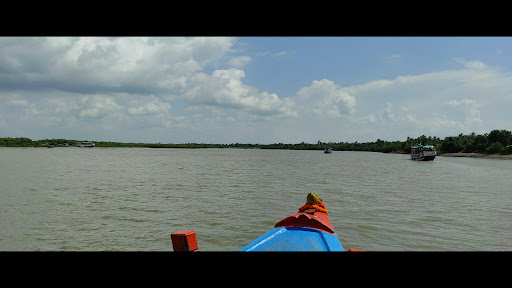
The interconnected network of waterways in Sundarbans makes almost every corner of the forest accessible by ferries and boats.This gives the traveller a good opportunity for sightseeing and getting thrilled by the exotic wizardry of the jungle.
Being one of the distinctive and natural resource endowments, Sundarbans Biosphere Reserve is considered to be India’s Largest Fishery Board because of its brackish water fish production and marine fisheries.
Sundarban Jungle has been named after the large mangrove trees Sundari (Heritiera littoralis).
Sundarbans Tiger Reserve is estimated to have 400 majestic and fiery Royal Bengal Tigers. So, escape from the chaos of the city jungles to witness the only place on Earth with the largest concentration of this big cat
Gosaba (13 ft from the sea level) is the biggest and last inhabited island on Sundarbans (Indian part). You would find it right where the dense forest reserve starts. Even though the island is isolated from the mainland, it has its own panchayat, schools, hospitals, local self-governance and more.
Sundarban has unique Tidal Phenomenon twice a day – there are high tides when water level seems to rise around 6-10 feet and low tides when one can see the huge mud land area lying flat.
It is believed that most of the families have been attacked by the man-eater tigers in one of the villages (the Widow Village) of Sundarbans, which is a home to India’s resilient Tiger Widows . For this reason, fishermen need to take a special permission from the reserve forest office department for fishing into the core zone forests. This isn’t to scare you, you can freely go to Sundarbans without any worry.
You shouldn’t miss out on sighting Phytoplanktons – the small micro-organisms that reflect light in the dark new moon. You need to take night safari in Sundarbans
Cyclone Sidr damaged 40% of the Sundarbans in the year 2007. The high tide impacted the agricultural lands of Sundarbans with salty water which took almost 2-3 years for the villagers to practice agriculture again. Right after the incident, the local people had set up dikes to prevent the high tide waters from coming inside the village, a step for the conservation of the Sundarbans.
To stay in Sundarbans one needs to take permission from the forest range officers.
The human population density of Sundarban Jungle (1,000-person sq. km) is equivalent to 1,029-person sq. km of West Bengal. As per the report “Building resilience for sustainable development of Sundarbans, the population tends to grow and exert at a greater pressure due to which high birth rates and migration inflows.”
Sundarbans was declared...
Read moreThe Sundarbans
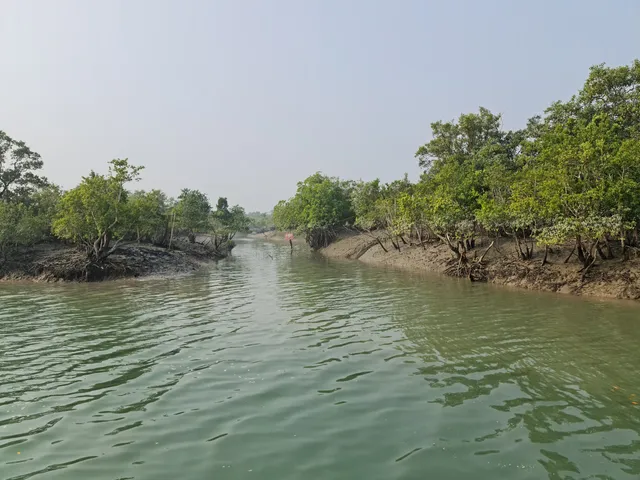
The Sundarbans mangrove forest, one of the largest such forests in the world (140,000 ha), lies on the delta of the Ganges, Brahmaputra and Meghna rivers on the Bay of Bengal. It is adjacent to the border of India’s Sundarbans World Heritage site inscribed in 1987. The site is intersected by a complex network of tidal waterways, mudflats and small islands of salt-tolerant mangrove forests, and presents an excellent example of ongoing ecological processes. The area is known for its wide range of fauna, including 260 bird species, the Bengal tiger and other threatened species such as the estuarine crocodile and the Indian python.
The sundarban Reserve Forest (SRF), located in the south-west of Bangladesh between the river Baleswar in the East and the Harinbanga in the West, adjoining to the Bay of Bengal, is the largest contiguous mangrove forest in the world. Lying between latitude 21° 27′ 30″ and 22° 30′ 00″ North and longitude 89° 02′ 00″ and 90° 00′ 00″ East and with a total area of 10,000 km2, 60% of the property lies in Bangladesh and the rest in India. The land area, including exposed sandbars, occupies 414,259 ha (70%) with water bodies covering 187,413 ha (30%).
The three wildlife sanctuaries in the south cover an area of 139,700 ha and are considered core breeding areas for a number of endangered species. Situated in a unique bioclimatic zone within a typical geographical situation in the coastal region of the Bay of Bengal, it is a landmark of ancient heritage of mythological and historical events. Bestowed with magnificent scenic beauty and natural resources, it is internationally recognized for its high biodiversity of mangrove flora and fauna both on land and water.
The immense tidal mangrove forests of Bangladeshs’ Sundarbans Forest Reserve, is in reality a mosaic of islands of different shapes and sizes, perennially washed by brackish water shrilling in and around the endless and mind-boggling labyrinths of water channels. The site supports exceptional biodiversity in its terrestrial, aquatic and marine habitats; ranging from micro to macro flora and fauna. The Sundarbans is of universal importance for globally endangered species including the Royal Bengal Tiger, Ganges and Irawadi dolphins, estuarine crocodiles and the critically endangered endemic river terrapin (Batagur baska). It is the only mangrove habitat in the world for Panthera tigris tigris species. One of the largest remaining areas of mangroves in the world, the Sundarbans supports an exceptional level of biodiversity in both the terrestrial and marine environments, including significant populations of globally endangered cat species, such as the Royal Bengal Tiger. Population censuses of Royal Bengal Tigers estimate a population of between 400 to 450 individuals, a higher density than any other population of tigers in the world.
The property is the only remaining habitat in the lower Bengal Basin for a wide variety of faunal species. Its exceptional biodiversity is expressed in a wide range of flora; 334 plant species belonging to 245 genera and 75 families, 165 algae and 13 orchid species. It is also rich in fauna with 693 species of wildlife which includes; 49 mammals, 59 reptiles, 8 amphibians, 210 white fishes, 24 shrimps, 14 crabs and 43 mollusks species. The varied and colourful bird-life found along the waterways of the property is one of its greatest attractions, including 315 species of waterfowl, raptors and forest birds including nine species of kingfisher and the magnificent white-bellied sea eagle.
Integrity
The Sundarbans is the biggest delta, back water and tidal phenomenon of the region and thus provides diverse habitats for several hundreds of aquatic, terrestrial and amphibian species. The property is of sufficient size to adequately represent its considerably high floral and faunal diversity with all key values included within the boundaries. The site includes the entire landscape of mangrove habitats with an adequate surrounding area of aquatic (both marine...
Read moreThere must have been numerous columns and reviews written on Sundarbans before and will be written after this but what I and few others have experienced is what I am putting down.
There is no doubt about the mystical beauties of this place but visiting the mangroves in the peak of summer is not the best time.
Tour operator here hub for a 2 night 3days trip but really speaking it's only 1 days or 2/3 of a days that you are likely to spend in the core area. The remaining time is simply to and fro travel and some village visit which the operator conduct.
If you are a wildlife enthusiast like me and the purpose of your visit is to give yourself the best chance to view animals you need have a clear discussion with the operator for a 2 days core visit or more.
Some good point from the trip -
Considering ours was a budget trip we where put up at AmanTran resort at Sonagaon, on the opposite of the main channel and was a decent stay. The resort and the surrounding area is going to give you a real feel of the village life and is kind of a cutoff from the concrete jungle that we stay in. The resort in itself has a huge premises with couple of 2 stored house, each having 4 rooms.
The premises has 2 ponds n a small wooded area which gives it's a nice feel. There is also a BBQ sit out for a evening gathering n refreshment.
The food in general was very good. If you are food lover and the motive is to travel out of Kolkata for a relaxing you will not be disappointed, with fish, prawns, mutton, chicken and other accompaniment in the menu plus a bbq at night you will really love the setup.
Birding in the area near the resort and overall is decent and you will get to see and photography some good collections.
Kingfishers, Adjutant storks, rails, parakeet, kites, woodpecker, owls are some of the highlights.
Area which needs to be addressed
As already explained tour operator should expand and give more viewing time in the core area, after all tourists coming here are mostly with the intention of viewing wild animals. This is even more needed now with most the buffer zone been fenced with nets to prevent tigers coming to the villages. The wildlife in the area have been pushed back deep into the core area of the forest.
Loud music played in the villages adjacent to the forest. It's simply disturbs both the wildlife as well as tourist who come here to relax in peace.
Lastly the transport facility and roads from canning to gadkhali is in very bad shape.
Sundarbans in my mind was always a special place and I am sure it is. For an wildlife enthusiast and photographer, it left me wanting for more.
Yes only the very lucky get to sight a tiger but I am sure with the experience gained and a better tour operator I will get to see more wildlife in...
Read more