HTML SitemapExplore
logo
Find Things to DoFind The Best Restaurants

Zafar Khan Ghazi Darga — Attraction in West Bengal

Name
Zafar Khan Ghazi Darga
Description
Nearby attractions
Nearby restaurants
To Hunger Point
193/1 Shibpur Bazar, Tribeni, West Bengal 712502, India
Nearby hotels
Related posts
Keywords
Zafar Khan Ghazi Darga tourism.Zafar Khan Ghazi Darga hotels.Zafar Khan Ghazi Darga bed and breakfast. flights to Zafar Khan Ghazi Darga.Zafar Khan Ghazi Darga attractions.Zafar Khan Ghazi Darga restaurants.Zafar Khan Ghazi Darga travel.Zafar Khan Ghazi Darga travel guide.Zafar Khan Ghazi Darga travel blog.Zafar Khan Ghazi Darga pictures.Zafar Khan Ghazi Darga photos.Zafar Khan Ghazi Darga travel tips.Zafar Khan Ghazi Darga maps.Zafar Khan Ghazi Darga things to do.
Zafar Khan Ghazi Darga things to do, attractions, restaurants, events info and trip planning
Zafar Khan Ghazi Darga
IndiaWest BengalZafar Khan Ghazi Darga

Basic Info

Zafar Khan Ghazi Darga

XCH2+H3X Zafar Khan Ghazi Mosque and Dargah, Tribeni - Shibpur Rd, near to Bansberia municipal high School, Shibpur, Tribeni, West Bengal 712503, India
4.4(628)
Open 24 hours
Save
spot

Ratings & Description

Info

Cultural
Family friendly
Accessibility
attractions: , restaurants: To Hunger Point
logoLearn more insights from Wanderboat AI.

Plan your stay

hotel
Pet-friendly Hotels in West Bengal
Find a cozy hotel nearby and make it a full experience.
hotel
Affordable Hotels in West Bengal
Find a cozy hotel nearby and make it a full experience.
hotel
The Coolest Hotels You Haven't Heard Of (Yet)
Find a cozy hotel nearby and make it a full experience.
hotel
Trending Stays Worth the Hype in West Bengal
Find a cozy hotel nearby and make it a full experience.

Reviews

Nearby restaurants of Zafar Khan Ghazi Darga

To Hunger Point

To Hunger Point

To Hunger Point

5.0

(1)

Click for details
Get the Appoverlay
Get the AppOne tap to find yournext favorite spots!
Wanderboat LogoWanderboat

Your everyday Al companion for getaway ideas

CompanyAbout Us
InformationAI Trip PlannerSitemap
SocialXInstagramTiktokLinkedin
LegalTerms of ServicePrivacy Policy

Get the app

© 2025 Wanderboat. All rights reserved.
logo

Reviews of Zafar Khan Ghazi Darga

4.4
(628)
avatar
4.0
2y

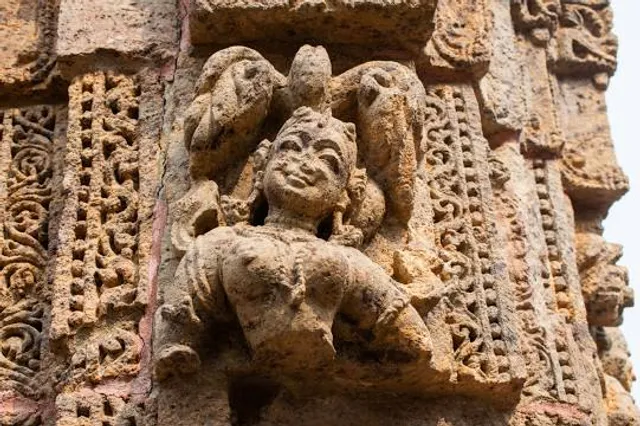
Nice place to visit. The mosque is an oblong structure measuring 23.38m x 10.53m externally. It is the earliest surviving example of the brick-and-stone style introduced by the Muslims in Bengal in place of the traditional Hindu style of laying rectangular cut stones one upon another without mortar. The stones used in the mosque were originally materials from temples, as evidenced by figures of Hindu deities carved on some pieces. The original structure has suffered reconstruction a number of times.

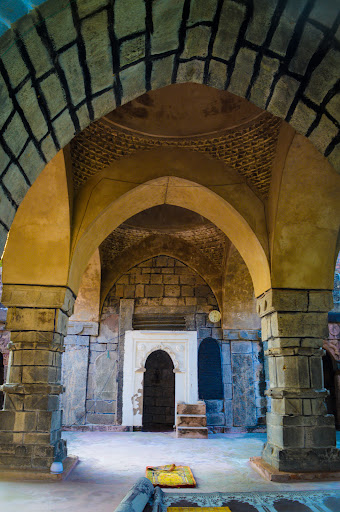
There are five arched entrances in the east wall. Stumpy hexagonal stone piers support the arches. The mosque represents the multi-domed oblong type developed by the Muslims in Bengal in which the number of domes on the roof equals the number of entrances in the east wall multiplied by those on either side. The north and south walls have two doors each. There are thus ten domes roofing the mosque. The interior of the structure is broken into two longitudinal aisles and five short bays by means of stone pillars, creating ten equal compartments. The brick-built domes rest on stone pillars and pointed arches with brick pendentives at the corners.

The silhouette of the successive pointed arches has added to the spaciousness and grandeur of the mosque interior. Corresponding to the five entrances in the east, there are five mihrabs in the west wall contained within multifoil arches. The mihrab wall shows sparse decoration within panels. The cornice and the parapet of the structure are straight. The mosque follows the Bengali type with only the prayer chamber without court, riwaq and minaret. A significant feature of the mosque interior is that a brick wall up to the level of the arch-spring has closed the bay at each end, north and south, across the middle. These are the only parts of the mosque which show terracotta ornamentation. The southern part is in a fair state of preservation and shows a panelled composition. The central panel is broken into two halves vertically by means of rosettes within square frames - the lower depicting a swinging creeper with luxuriant leaf age and the upper two half-arch motifs with a finial in the thick of shrubs and foliage. The flanking panels are similarly disposed and ornamented. All the panels depict multifoil arches with finials. The vegetal motifs betray local influence and speak of the Muslim adaptive spirit.

The ornamentation of the northern bay wall is in ruins, but surviving traces show its dissimilarity from the southern. The composition here shows two small vertical panels each containing a multifoil arch with a finial from which hangs a chain ending in a round pendant. What is significant about these bay walls is that they are completely incongruous with the mosque interior but their ornamentation surprisingly resembles that in the Bagha Mosque(1524) in Rajshahi district.

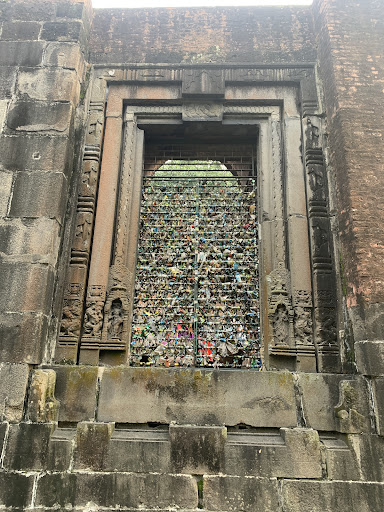
Only yards away to the east of the mosque, beyond an open courtyard, stand two square rooms aligned east-west side by side, the western housing two graves - those of Zafar Khan Ghazi and his wife and the eastern showing four graves on a masonry platform. The walls are built of old temple materials - rectangular stone pieces - and the rooms are without a roof and open to the sky. A rectangular shallow niche enters them through a central door in the north wall flanked on either side with a trefoil arch above. The northern door of the western room is made up of a Hindu frame as shown by carved Hindu figures. The eastern room shows sculptured scenes from the Ramayana and the Mahabharata. There are other stone sculptures fixed at the plinth on the outer face. It is, however, surprising that the structure neither conforms to a Hindu temple nor to a Muslim tomb. What is probable is that it was built on a makeshift plan with reshuffled temple materials. The unsettled nature of Muslim occupation of the region at the time supports such...

   Read more

avatar
5.0
3y

Zafar Khan Ghazi Mosque and Dargah

Situated at Tribeni in Hooghly district, West Bengal, India, are considered to be among the earliest surviving Muslim monuments in Bengal. According to an inscription, the mosque is dated 698 AH/1298 AD. Tribeni (junction of three rivers viz, the Ganga, the Jamuna and the Sarasvati - hence the name) was an ancient holy place of the Hindus. The Muslims conquered it during the early phase of their conquest of Bengal.

The ornamentation of the northern bay wall is in ruins, but surviving traces show its dissimilarity from the southern. The composition here shows two small vertical panels each containing a multifoil arch with a finial from which hangs a chain ending in a round pendant. What is significant about these bay walls is that they are completely incongruous with the mosque interior but their ornamentation surprisingly resembles that in the bagha mosque (1524) in Rajshahi district.

Only yards away to the east of the mosque, beyond an open courtyard, stand two square rooms aligned east-west side by side, the western housing two graves - those of Zafar Khan Ghazi and his wife and the eastern showing four graves on a masonry platform. The walls are built of old temple materials - rectangular stone pieces - and the rooms are without a roof and open to the sky. A rectangular shallow niche enters them through a central door in the north wall flanked on either side with a trefoil arch above. The northern door of the western room is made up of a Hindu frame as shown by carved Hindu figures. The eastern room shows sculptured scenes from the ramayana and the mahabharata. There are other stone sculptures fixed at the plinth on the outer face. It is, however, surprising that the structure neither conforms to a Hindu temple nor to a Muslim tomb. What is probable is that it was built on a makeshift plan with reshuffled temple materials. The unsettled nature of Muslim occupation of the region at the time supports such...

   Read more
avatar
4.0
6y

Zafar Khan Ghazi Mosque and Dargah situated at Tribeni in Hughli district, West Bengal, India, are considered to be among the earliest surviving Muslim monuments in Bengal. According to an inscription, the mosque is dated 698 AH (1298 AD).Tribeni (junction of three rivers viz, the Ganges, the Yamuna, and the Sarasvati - hence the name) was an ancient holy place of the Hindus.The Muslims conquered it during the early phase of their conquest of Bengal.The mosque is an oblong structure measuring 23.38 by 10.53 metres (76.7 by 34.5 ft) externally. It is the earliest surviving example of the brick-and-stone style introduced by the Muslims in Bengal in place of the traditional Hindu style of laying rectangular cut stones one upon another without mortar. The stones used in the mosque were originally materials from temples, as evidenced by figures of Hindu deities carved on some pieces.The original structure has suffered reconstruction a number of times.

There are five arched entrances in the east wall. The arches are supported by stumpy hexagonal stone piers. The mosque represents the multi-domed oblong type developed by the Muslims in Bengal in which the number of domes on the roof equals the number of entrances in the east wall multiplied by those on either sides. The north and south walls have two doors each. There are thus ten domes roofing the mosque. The interior of the structure is broken into two longitudinal aisles and five short bays by means of stone pillars, creating ten equal compartments. The brick-built domes rest on stone pillars and pointed arches with brick pendentives at...

   Read more
Page 1 of 7
Previous
Next

Posts

Debasish BoseDebasish Bose
Nice place to visit. The mosque is an oblong structure measuring 23.38m x 10.53m externally. It is the earliest surviving example of the brick-and-stone style introduced by the Muslims in Bengal in place of the traditional Hindu style of laying rectangular cut stones one upon another without mortar. The stones used in the mosque were originally materials from temples, as evidenced by figures of Hindu deities carved on some pieces. The original structure has suffered reconstruction a number of times. There are five arched entrances in the east wall. Stumpy hexagonal stone piers support the arches. The mosque represents the multi-domed oblong type developed by the Muslims in Bengal in which the number of domes on the roof equals the number of entrances in the east wall multiplied by those on either side. The north and south walls have two doors each. There are thus ten domes roofing the mosque. The interior of the structure is broken into two longitudinal aisles and five short bays by means of stone pillars, creating ten equal compartments. The brick-built domes rest on stone pillars and pointed arches with brick pendentives at the corners. The silhouette of the successive pointed arches has added to the spaciousness and grandeur of the mosque interior. Corresponding to the five entrances in the east, there are five mihrabs in the west wall contained within multifoil arches. The mihrab wall shows sparse decoration within panels. The cornice and the parapet of the structure are straight. The mosque follows the Bengali type with only the prayer chamber without court, riwaq and minaret. A significant feature of the mosque interior is that a brick wall up to the level of the arch-spring has closed the bay at each end, north and south, across the middle. These are the only parts of the mosque which show terracotta ornamentation. The southern part is in a fair state of preservation and shows a panelled composition. The central panel is broken into two halves vertically by means of rosettes within square frames - the lower depicting a swinging creeper with luxuriant leaf age and the upper two half-arch motifs with a finial in the thick of shrubs and foliage. The flanking panels are similarly disposed and ornamented. All the panels depict multifoil arches with finials. The vegetal motifs betray local influence and speak of the Muslim adaptive spirit. The ornamentation of the northern bay wall is in ruins, but surviving traces show its dissimilarity from the southern. The composition here shows two small vertical panels each containing a multifoil arch with a finial from which hangs a chain ending in a round pendant. What is significant about these bay walls is that they are completely incongruous with the mosque interior but their ornamentation surprisingly resembles that in the Bagha Mosque(1524) in Rajshahi district. Only yards away to the east of the mosque, beyond an open courtyard, stand two square rooms aligned east-west side by side, the western housing two graves - those of Zafar Khan Ghazi and his wife and the eastern showing four graves on a masonry platform. The walls are built of old temple materials - rectangular stone pieces - and the rooms are without a roof and open to the sky. A rectangular shallow niche enters them through a central door in the north wall flanked on either side with a trefoil arch above. The northern door of the western room is made up of a Hindu frame as shown by carved Hindu figures. The eastern room shows sculptured scenes from the Ramayana and the Mahabharata. There are other stone sculptures fixed at the plinth on the outer face. It is, however, surprising that the structure neither conforms to a Hindu temple nor to a Muslim tomb. What is probable is that it was built on a makeshift plan with reshuffled temple materials. The unsettled nature of Muslim occupation of the region at the time supports such a suggestion.
Avik MukherjeeAvik Mukherjee
Zafar Khan Ghazi Mosque and Dargah Situated at Tribeni in Hooghly district, West Bengal, India, are considered to be among the earliest surviving Muslim monuments in Bengal. According to an inscription, the mosque is dated 698 AH/1298 AD. Tribeni (junction of three rivers viz, the Ganga, the Jamuna and the Sarasvati - hence the name) was an ancient holy place of the Hindus. The Muslims conquered it during the early phase of their conquest of Bengal. The ornamentation of the northern bay wall is in ruins, but surviving traces show its dissimilarity from the southern. The composition here shows two small vertical panels each containing a multifoil arch with a finial from which hangs a chain ending in a round pendant. What is significant about these bay walls is that they are completely incongruous with the mosque interior but their ornamentation surprisingly resembles that in the bagha mosque (1524) in Rajshahi district. Only yards away to the east of the mosque, beyond an open courtyard, stand two square rooms aligned east-west side by side, the western housing two graves - those of Zafar Khan Ghazi and his wife and the eastern showing four graves on a masonry platform. The walls are built of old temple materials - rectangular stone pieces - and the rooms are without a roof and open to the sky. A rectangular shallow niche enters them through a central door in the north wall flanked on either side with a trefoil arch above. The northern door of the western room is made up of a Hindu frame as shown by carved Hindu figures. The eastern room shows sculptured scenes from the ramayana and the mahabharata. There are other stone sculptures fixed at the plinth on the outer face. It is, however, surprising that the structure neither conforms to a Hindu temple nor to a Muslim tomb. What is probable is that it was built on a makeshift plan with reshuffled temple materials. The unsettled nature of Muslim occupation of the region at the time supports such a suggestion.
Aditya GhoshAditya Ghosh
Inscription on Zafar Khan’s tomb was translated by British office H.Balochman, which read as “Khan the lion of lions has appeared by conquering the towns of India in every expedition and by restoring the decayed religious institutions. And he has destroyed the obdurate among the infidels with his sword and spear and lavished the treasures of his wealth in helping miserable”. The title Ghazi is given to an Islamic warrior who has slaughtered and destroyed the kaffirs (non-believers). One can notice Hindu temple architecture on entrance doors, walls and pillars. Details regarding history of Vishnu Temple like who built it and when are still unknown. British officer D.Money of the Bengal civil services who had met with the Khadims(servents) of Ghazi Zafar Khan’s mausoleum in the year 1847 scanned some of the documents given to him by the Khadims, the documents clearly stated that Zafar Mohamed Khan along with his nephew Shah Sufi came from western India to slay the infidels (Hindus) of Bengal and turn them to Islam. It mentions that Zafar Khan fought and converted local ruler Man Nirapati to Islam. It was the second battle with the ruler Budheb that the all-conquering Ghazi met his fate by having his head chopped off and his torso buried in Tribeni. Mosque’s east door clearly resembles at temple entrance architecture, while the Mangal Ghat is full of designs on temple walls. Metal pieces in the below picture are from the Battle Axe of Zafar Khan, which he used to destroy temple walls.
See more posts
See more posts
hotel
Find your stay

Pet-friendly Hotels in West Bengal

Find a cozy hotel nearby and make it a full experience.

Nice place to visit. The mosque is an oblong structure measuring 23.38m x 10.53m externally. It is the earliest surviving example of the brick-and-stone style introduced by the Muslims in Bengal in place of the traditional Hindu style of laying rectangular cut stones one upon another without mortar. The stones used in the mosque were originally materials from temples, as evidenced by figures of Hindu deities carved on some pieces. The original structure has suffered reconstruction a number of times. There are five arched entrances in the east wall. Stumpy hexagonal stone piers support the arches. The mosque represents the multi-domed oblong type developed by the Muslims in Bengal in which the number of domes on the roof equals the number of entrances in the east wall multiplied by those on either side. The north and south walls have two doors each. There are thus ten domes roofing the mosque. The interior of the structure is broken into two longitudinal aisles and five short bays by means of stone pillars, creating ten equal compartments. The brick-built domes rest on stone pillars and pointed arches with brick pendentives at the corners. The silhouette of the successive pointed arches has added to the spaciousness and grandeur of the mosque interior. Corresponding to the five entrances in the east, there are five mihrabs in the west wall contained within multifoil arches. The mihrab wall shows sparse decoration within panels. The cornice and the parapet of the structure are straight. The mosque follows the Bengali type with only the prayer chamber without court, riwaq and minaret. A significant feature of the mosque interior is that a brick wall up to the level of the arch-spring has closed the bay at each end, north and south, across the middle. These are the only parts of the mosque which show terracotta ornamentation. The southern part is in a fair state of preservation and shows a panelled composition. The central panel is broken into two halves vertically by means of rosettes within square frames - the lower depicting a swinging creeper with luxuriant leaf age and the upper two half-arch motifs with a finial in the thick of shrubs and foliage. The flanking panels are similarly disposed and ornamented. All the panels depict multifoil arches with finials. The vegetal motifs betray local influence and speak of the Muslim adaptive spirit. The ornamentation of the northern bay wall is in ruins, but surviving traces show its dissimilarity from the southern. The composition here shows two small vertical panels each containing a multifoil arch with a finial from which hangs a chain ending in a round pendant. What is significant about these bay walls is that they are completely incongruous with the mosque interior but their ornamentation surprisingly resembles that in the Bagha Mosque(1524) in Rajshahi district. Only yards away to the east of the mosque, beyond an open courtyard, stand two square rooms aligned east-west side by side, the western housing two graves - those of Zafar Khan Ghazi and his wife and the eastern showing four graves on a masonry platform. The walls are built of old temple materials - rectangular stone pieces - and the rooms are without a roof and open to the sky. A rectangular shallow niche enters them through a central door in the north wall flanked on either side with a trefoil arch above. The northern door of the western room is made up of a Hindu frame as shown by carved Hindu figures. The eastern room shows sculptured scenes from the Ramayana and the Mahabharata. There are other stone sculptures fixed at the plinth on the outer face. It is, however, surprising that the structure neither conforms to a Hindu temple nor to a Muslim tomb. What is probable is that it was built on a makeshift plan with reshuffled temple materials. The unsettled nature of Muslim occupation of the region at the time supports such a suggestion.
Debasish Bose

Debasish Bose

hotel
Find your stay

Affordable Hotels in West Bengal

Find a cozy hotel nearby and make it a full experience.

Get the Appoverlay
Get the AppOne tap to find yournext favorite spots!
Zafar Khan Ghazi Mosque and Dargah Situated at Tribeni in Hooghly district, West Bengal, India, are considered to be among the earliest surviving Muslim monuments in Bengal. According to an inscription, the mosque is dated 698 AH/1298 AD. Tribeni (junction of three rivers viz, the Ganga, the Jamuna and the Sarasvati - hence the name) was an ancient holy place of the Hindus. The Muslims conquered it during the early phase of their conquest of Bengal. The ornamentation of the northern bay wall is in ruins, but surviving traces show its dissimilarity from the southern. The composition here shows two small vertical panels each containing a multifoil arch with a finial from which hangs a chain ending in a round pendant. What is significant about these bay walls is that they are completely incongruous with the mosque interior but their ornamentation surprisingly resembles that in the bagha mosque (1524) in Rajshahi district. Only yards away to the east of the mosque, beyond an open courtyard, stand two square rooms aligned east-west side by side, the western housing two graves - those of Zafar Khan Ghazi and his wife and the eastern showing four graves on a masonry platform. The walls are built of old temple materials - rectangular stone pieces - and the rooms are without a roof and open to the sky. A rectangular shallow niche enters them through a central door in the north wall flanked on either side with a trefoil arch above. The northern door of the western room is made up of a Hindu frame as shown by carved Hindu figures. The eastern room shows sculptured scenes from the ramayana and the mahabharata. There are other stone sculptures fixed at the plinth on the outer face. It is, however, surprising that the structure neither conforms to a Hindu temple nor to a Muslim tomb. What is probable is that it was built on a makeshift plan with reshuffled temple materials. The unsettled nature of Muslim occupation of the region at the time supports such a suggestion.
Avik Mukherjee

Avik Mukherjee

hotel
Find your stay

The Coolest Hotels You Haven't Heard Of (Yet)

Find a cozy hotel nearby and make it a full experience.

hotel
Find your stay

Trending Stays Worth the Hype in West Bengal

Find a cozy hotel nearby and make it a full experience.

Inscription on Zafar Khan’s tomb was translated by British office H.Balochman, which read as “Khan the lion of lions has appeared by conquering the towns of India in every expedition and by restoring the decayed religious institutions. And he has destroyed the obdurate among the infidels with his sword and spear and lavished the treasures of his wealth in helping miserable”. The title Ghazi is given to an Islamic warrior who has slaughtered and destroyed the kaffirs (non-believers). One can notice Hindu temple architecture on entrance doors, walls and pillars. Details regarding history of Vishnu Temple like who built it and when are still unknown. British officer D.Money of the Bengal civil services who had met with the Khadims(servents) of Ghazi Zafar Khan’s mausoleum in the year 1847 scanned some of the documents given to him by the Khadims, the documents clearly stated that Zafar Mohamed Khan along with his nephew Shah Sufi came from western India to slay the infidels (Hindus) of Bengal and turn them to Islam. It mentions that Zafar Khan fought and converted local ruler Man Nirapati to Islam. It was the second battle with the ruler Budheb that the all-conquering Ghazi met his fate by having his head chopped off and his torso buried in Tribeni. Mosque’s east door clearly resembles at temple entrance architecture, while the Mangal Ghat is full of designs on temple walls. Metal pieces in the below picture are from the Battle Axe of Zafar Khan, which he used to destroy temple walls.
Aditya Ghosh

Aditya Ghosh

See more posts
See more posts