Kanchenjunga National Park also Kanchenjunga Biosphere Reserve is a National Park and a Biosphere reserve located in Sikkim, India. It was inscribed to the UNESCO World Heritage Sites list on July 17, 2016, becoming the first "Mixed Heritage" site of India.1] The park gets its name from the mountain Kangchenjunga (alternative spelling Khangchendzonga) which is 8,586 metres (28,169 ft) tall, the third-highest peak in the world. The total area of this park is 849.5 km2 (328.0 sq mi).
There are many glaciers in the park including the Zemu glacier. Animals like musk deer, snow leopard, Clouded Leopard,[2 and Himalayan tahr all make their home in this park.There are a few Lepcha tribal settlements inside the park.
The park contains Tholung Monastery, a gompa located in the park's buffer zone. It is considered one of the most sacred monasteries in Sikkim.3[5]
Geography
Map of the Indian protected areas of the Kangchenjunga Biosphere Reserve and National Park The Kanchenjunga Park is situated in the North and West Sikkim districts in the Indian state of Sikkim. It has an elevation of 1,829 metres (6,001 ft) to over 8,550 metres (28,050 ft) and has an area of 849.50 km2 (327.99 sq mi). It is one of the few high altitude National parks of India and was recently included as a mixed-criteria UNESCO World Heritage site.[6]
In the north it adjoins the Qomolangma National Nature Preserve in Tibet, and in the west the Kanchenjunga Conservation Area in Nepal.[7]
Flora The vegetation of the park include temperate broadleaf and mixed forests consisting of oaks, fir, birch, maple, willow etc. The vegetation of the park also includes alpine grasses and shrubs at higher altitudes along with many medicinal plants and herbs.
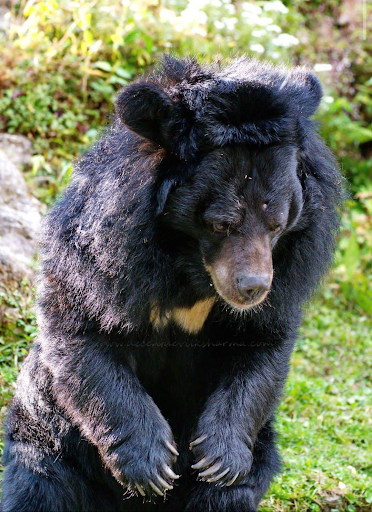
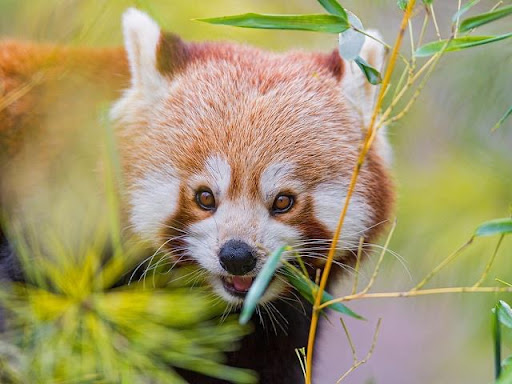
Fauna The park contains many mammal species including musk deer, snow leopard, Himalayan tahr, wild dog, sloth bear, civet, Himalayan black bear, red panda, Tibetan wild ass, Himalayan blue sheep, serow, goral and takin, as well as reptiles including rat snake and Russell's viper.
A recent study revealed, that the Asiatic wild dog has become very rare in the area. The wild dogs in the Khangchendzonga Biosphere Reserve are believed to belong to the rare and genetically distinct subspecies C. a. primaevus.Most of the trekking routes starts from Yuksom (145 km (90 mi) from Gangtok) in West Sikkim. Necessary Permit can be obtained from the Wildlife Education and Interpretation center at Yuksom or from the check post. State Tourism Department along with other travel agents organize treks to Dzongri (4,050 metres (13,290 ft)) and other places. The popular trek routes are:
Yuksom - Tshoka - Dzongri Bakim - Dzongri - Thangshing - Samuteng - Goechala Dzongri Base Camp - Rathong – Khangerteng Thangshing - Lam Pokhari - Kasturi Orar - Labdang not ladang - Tashiding. Another popular trekking point includes trekking to the Green Lake with Lachen, a village in North Sikkim as the starting point. Foreign nationals would require a restricted area permit from the Ministry of Home Affairs, Government of India, Delhi to visit the park and the associated region. Indian nationals are required to obtain an Inner-Line Permit from the State Home Department. Permission of the State Chief Wildlife Warden is also mandatory for everybody visiting the park. The important and popular routes are:
Lucanes Jakchen-Yabuk-Rest Camp (Marco Polo Camp) - Green Lake Lachen-Thasngu (13,695 feet (4,174 m)) - Muguthang (16,000 feet (4,900 m)) - Thay La (17,000 feet (5,200 m)) - Khyoksa La (18,000 feet (5,500 m)) - Rest Camp - Green Lake. Most of these trekking routes pass through the Kanchenjunga National Park and is shown in the film Singalila in...
Read moreCircling the Kathmandu Valley on the descent to the capital, you may well catch a sight of Everest. Cast your eyes yet further to the east, and on a clear day you will see the hazy outline of a hulking white massif, an entire range unto itself. That is Kanchenjunga. In Tibetan, ‘Kanchenjunga’ means ‘the five treasure houses of snow’, which gives you some idea of what to expect should you visit this area. At 8586 m, massive Kanchenjunga is the world’s third highest mountain, and marks the eastern border of Nepal with the Indian state of Sikkim. The conservation area that surrounds it extends into protected areas in Sikkim and Tibet, and comprises a beautiful, unspoilt wilderness. This is Snow Leopard territory, but the reclusive predator shares the unbounded forests with the Himalayan Black Bear and the Assamese Macaque, among others. Cascading waterfalls, lush vegetation and thousands of species of plants await those who take the long trail to Kanchenjunga Base Camp, the main route which has been described as ‘untrekked’. Unabashedly wild, Kanchenjunga is for the true adventurer within you. The east of Nepal is more developed than the west, but the remoteness of this terrain, its rugged trails, scattered human habitation, and monsoonal downpours make for a perfectly challenging beginning to the Great Himalaya Trail. Wending slowly up through Ghunsa for views of Kanchenjunga’s massive north face, you will reach base camp at Pangpema, then push on to Jhinsing La, the starting point of the Great Himalaya Trail. Along the way, you will walk along paths used mostly by locals, as very few trekkers make their way to the wild east of Nepal. For those who do, the reward lies in more than just the breathtaking views of Kanchenjunga and its companions. Like neighbouring Makalu Barun, the region endures the full force of the monsoon and is consequently bursting with life. Over 2000 different flowering plants have been recorded here, and you’ll see some of the richest rhododendron forests in Nepal. New species are still being discovered in the pristine forests! The east of Nepal also provides a fascinating introduction to its cultural diversity. The villages tend to be more prosperous than elsewhere in Nepal, but the further you go the more isolated the communities. An easy way to make friends is to join the locals for a heart-warming drink of hot tongba, the fermented millet drink of the east. If you ever wanted to test your mettle, wild Kanchenjunga is the place to begin. The rest...
Read moreKhangchendzonga National Park, also known as Kanchenjunga National Park, is a UNESCO World Heritage site located in the Indian state of Sikkim. It is named after Mount Khangchendzonga, the third highest peak in the world, which is a prominent feature of the park.
Spanning an area of approximately 850 square kilometers, Khangchendzonga National Park is renowned for its unique biodiversity and stunning natural beauty. It was established in 1977 and became a World Heritage site in 2016.
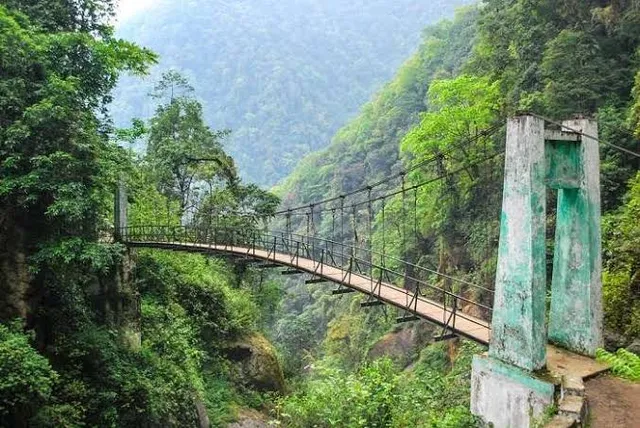
The park is home to a wide variety of flora and fauna, including several rare and endangered species. It encompasses diverse ecosystems ranging from subtropical to alpine, with altitudes ranging from 1,829 meters to 8,586 meters. The park is characterized by lush green forests, cascading waterfalls, glacial lakes, and snow-capped mountains.
Flora in the park includes numerous species of rhododendrons, orchids, primulas, and medicinal plants. The rich vegetation supports a diverse range of wildlife, including the elusive snow leopard, red panda, Himalayan black bear, musk deer, and several species of birds and butterflies.
Trekking is a popular activity in Khangchendzonga National Park, with several trails leading to stunning viewpoints and alpine meadows. The Goechala trek is particularly famous, offering breathtaking views of Mount Khangchendzonga and the surrounding peaks.
The park is also home to several sacred sites revered by the local communities, showcasing the cultural and religious significance of the area. The Lepcha and Bhutia communities, indigenous to Sikkim, consider Mount Khangchendzonga as sacred and believe it to be the abode of their guardian deity.
To preserve and protect the fragile ecosystem, the park has strict regulations in place. Permits are required to enter the park, and visitors are expected to follow guidelines for waste disposal, wildlife observation, and camping. It is recommended to visit the park with a licensed guide who can provide valuable insights and ensure responsible exploration.
Khangchendzonga National Park offers a unique opportunity to immerse oneself in the pristine beauty of the Eastern Himalayas. With its stunning landscapes, rich biodiversity, and cultural significance, it is an enchanting destination for nature lovers, wildlife enthusiasts, and adventure...
Read more