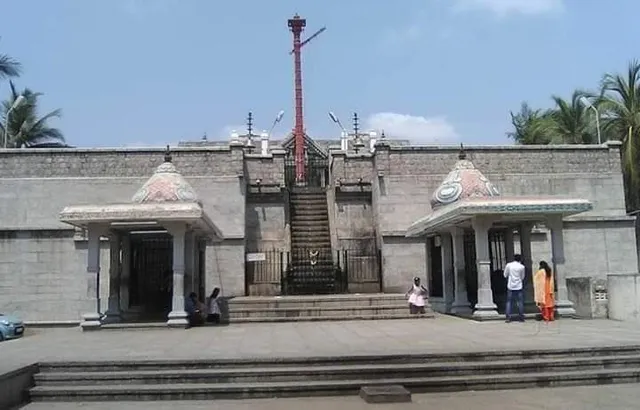
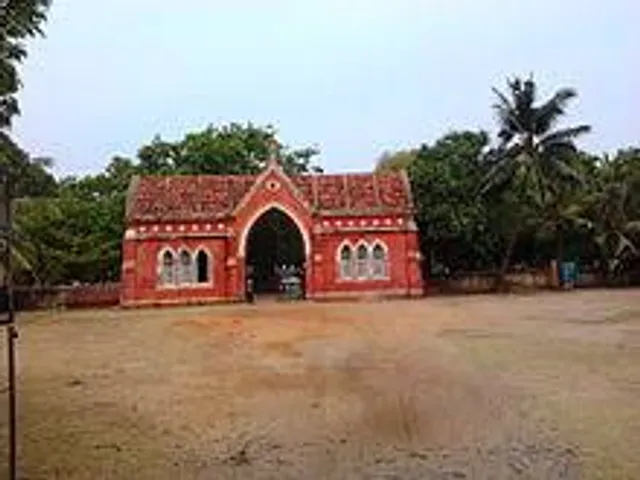
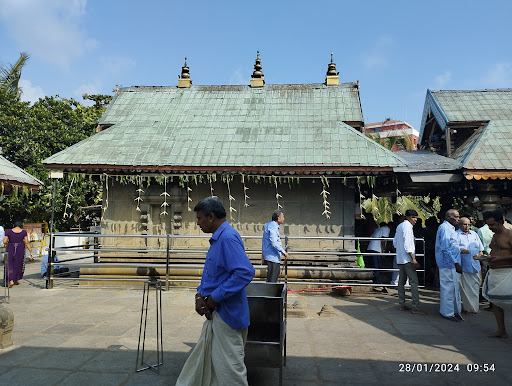
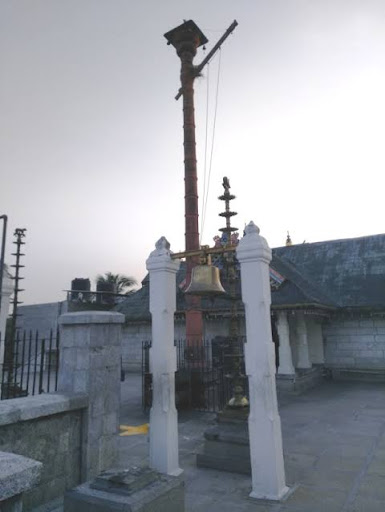
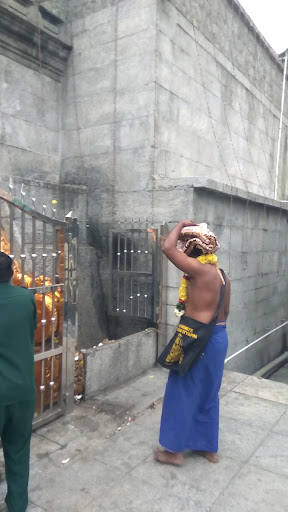
This Ayyappan Temple at Rajah Annamalaipuram is on the right side, of the Greenways Road from Adyar to Paris and opposite to Dr Ambedkar Manimandapam. The temple is also known as Vada Sabari. The speciality of this temple, is that the ladies irrespective of age are allowed for darshan and the temple will kept open throughout the year. For ascending in Pathinettampadi 18 steps the rules and regulations are followed similar to Sabarimala. Moolavar : Sri Ayyappan Some of the salient features of this temple are… The temple is facing east with 18 steps to climb up to the first level with irumudi. Others can climb through steps provided out side. Balipeedam and Dwajasthambam are on the First level. A Mandapam, with Thulabaram, Homa kund and madapalli are in front of sanctum sanctorum. Main deity Sri Ayyappan is in sitting posture with yogapatti, made out of Panchaloka similar to Sabarimala. Koshtas are empty without images. Kannimoola Ganapathy and Nagars are on the first Level. In the Ground level Vinayagar, Navagrahas, Anjaneyar and Manchamatha / Maligaipuraththamman. Chinna Kaduthaswamy and Periya Kadutha swamy are at the beginning of the 18 steps. ARCHITECTURE The main temple consists of sanctum sanctorum with ardha mandapam. The construction was followed similar to Sabaraimala with slopping roof. But the total temple was constructed with cement concrete. The roof was covered with copper plate tiles coated with gold. The Kostas are constructed with stone like doors & Key holes. The ground floor below the sanctum Sanctorum floor is being used for Trustees office, conduct Bhajans, religious discourses, to serve annadhanam etc. The floor is paved with marbles brought from Jaipur. The Dwajasthambam is of 40 feet tall covered with brass plate. Ashta Lakhmi are at the pedestal. The Manchamatha sannidhi was also constructed similar to the Sri Ayyappan sannidhi with slopping rood, Kerala style. But the newly constructed Vinayagar sannidhi followed the South Indian architecture. HISTORY AND INSCRIPTIONS The temple was built by Dr M. A. M. Ramaswamy, son of Rajah Sir Muthiah Chettiar of the Chettinad. He used to undertake pilgrimage every year to Sabarimala, thought of building a similar temple in Chennai near the Chettinad Palace. A New temple was constructed and consecrated in 1982, on the land donated to the temple by Rajah Sir Muthiah Chettiar. The Ayyappa idol, made of Panchaloha (five precious metals representing the five elements of nature), was made by Sri Bhattanachariar, a sculptor from Nagercoil. It was taken in a procession from the Krishnan Temple in Nagercoil to various places of religious importance in Tamil Nadu before it was installed in the Rajah Annamalaipuram temple on 25th January 1982. The first ashta bandhana maha kumbabishekam was performed with the great help of Dr. Rajah Sir, Muthia Chettiar and Dr. V Vaidya Subramaniya Iyer on 29th January 1982, The Kumbhabhishekam was done by Sringeri Peedam Sri Jagathguru Sankarachariyar Swamigal and Sannidhanam Swamigal. The second Jeernodharana Ashta bandhana Maha Kumbhabhishekam was performed on 27th March 1994, by Sabarimala Chief Thantri, Brahma Sri T K Maheswara Thantri, the hereditary Chief Priest of Sabarimala, The third Jeernodharana ashta bhandhana maha Kumbhabhishekam was performed on 07th May 2008, by Brahma Sri T K Maheswara Thantri, the hereditary Chief Priest of Sabarimala, On 27th March 2024, fourth ashta bandhana maha kumbhabhishekam ( Palalayam was conducted on 28th January 2024 )was performed with three newly constructed sub-sannidhis, for Vinayagar, Navagrahas and Anjaneyar. The Main deity was consecrated by the Sabarimala thantri Brahma sri Kandaru Mohan Thantri and Vinayagar, Navagrahas and Anjaneyar sannidhis are consecrated as per the South Indian style, by Chief Gurukkal Dr Sivasri K Pichai Gurukkal of Sri Karpaga Vinayagar of...
Read moreThe temple was built by noted industrialist of Tamil Nadu M. A. M. Ramaswamy, son of Rajah Sir Muthiah Chettiar of the Chettinad Royal Family, who upon taking a pilgrimage to Sabarimala envisioned building a similar temple in 1973. The temple was established in 1981 and constructed and congregated in 1982 on the land donated to the temple by Rajah Sir Muthiah Chettiar. The Ayyappa idol, made of Panchaloha (five precious metals representing the five elements of nature), was made by Sri Bhattanachariar, a sculptor from Nagercoil. It was taken in a procession from the Krishnan Temple in Nagercoil to various places of religious importance in Tamil Nadu before it was installed in the Rajah Annamalaipuram temple on 25 January 1982.The first kumbabishekam (renovative ablusion) was performed on 29 January 1982 and the second one was performed on 27 March 1994.
The templeEdit
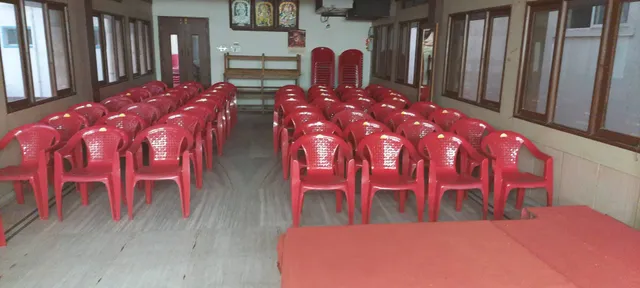
The temple is built as an exact replica of the original Ayyappan Temple at Sabarimala in Kerala. The temple was constructed in three floors presumably to lend the feeling of being atop a hill similar to the Sabarimala hill.The architecture follows the Kerala style and tradition with 18 steps to the main shrine and the sanctum sanctorum. The temple is known as Vada Sabari or North Sabarimala. Methods of worship is similar to the Sabarimala temple, whereby devotees observe all fasting, carry Irumudi (the sacred twin baggage) and sing bajans as they do for a pilgrimage to Sabarimala. There is a separate passage for other devotees coming to the temple without the Irumudi.The temple has all the features of Sabarimala with sub-shrines of Kannimoola Maha Ganapathy, Maaligaipurathu Amman, Nagaraja and other "Parivara Devatas".The single piece Dhvajasthamba or kodimaram (the flag post) of the temple is 40 feet tall. A meditation hall measuring 125 feet by 100 feet below the temple is where pilgrims are made to stay during the Mandala Pooja and the main festival. It is built of Jaipur tiles and is capable of accommodating 1,500 devotees.Music performances, religious discourses and other events are held in the hall during the festival and other important days.
The temple has a golden and a silver chariots taken on procession during festival days.
WorshipEdit
The poojas (religious practices) in the temple are performed per the rules in Sabarimala, the difference being that the Sabarimala temple is open only on specific days in a year, while Rajah Annamalaipuram temple is open to devotees...
Read moreRaja Annamalai Puram Ayyappan Temple, situated in the heart of Chennai, India, is a sacred haven for devotees of Lord Ayyappan. This temple, dedicated to the revered deity, Ayyappan, is renowned for its spiritual ambiance and cultural significance. Lord Ayyappan is a prominent figure in Hinduism, particularly worshipped in South India, and is often associated with unity, diversity, and spiritual growth.
The Raja Annamalai Puram Ayyappan Temple, with its architectural grandeur, stands as a testament to the rich cultural heritage of the region. The temple complex is adorned with intricate carvings, vibrant sculptures, and symbolic representations, creating an atmosphere that resonates with devotion and tranquility. Pilgrims and visitors flock to this sacred site to seek blessings, participate in religious ceremonies, and experience the divine aura that surrounds the temple.
What sets the Raja Annamalai Puram Ayyappan Temple apart is the profound spiritual power attributed to Lord Ayyappan, believed to be manifested in the temple. Devotees firmly believe that the deity possesses a unique power, transcending mundane challenges and providing solace to those who seek divine intervention. The temple is not merely a physical structure but a spiritual powerhouse, radiating energy that resonates with the spiritual quests of its worshippers.
The divine energy associated with Lord Ayyappan at this temple is said to be transformative, instilling a sense of inner strength, resilience, and clarity in the minds of the devotees. It is believed that the deity's blessings can empower individuals to overcome obstacles, find spiritual balance, and lead a life guided by righteousness.
With a power that surpasses the tangible, the influence of Ayyappan at Raja Annamalai Puram Ayyappan Temple extends beyond religious rituals. The temple becomes a focal point for community gatherings, cultural celebrations, and social initiatives that promote a sense of unity and harmony among its followers.
In essence, the Raja Annamalai Puram Ayyappan Temple is not just a place of worship; it is a sacred space where devotees connect with a higher spiritual power that transcends the ordinary. The temple stands as a beacon of faith, drawing people from diverse backgrounds into its fold, fostering a sense of belonging, and imparting a transformative spiritual experience that lingers long after the devotees have left its...
Read more