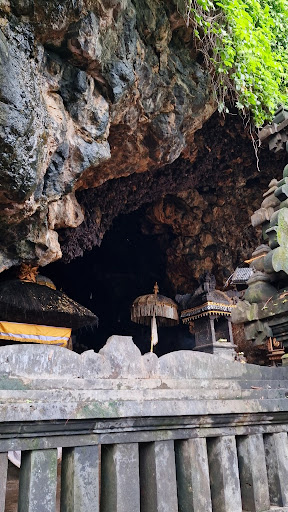
Goa Lawah is one of Bali’s most important temples. It features a complex built around a cave opening that is inhabited by hordes of bats, and its name translates to 'Bat Cave’. This temple was established in the 11th century by Mpu Kuturan, one of early priests who laid the foundations of Hinduism on the island.
Goa Lawah is located in the village of Pesinggahan, Dawan district, bordering the Klungkung and Karangasem regencies. This landmark is one of the first stops on tours to Candidasa and further eastern regions within the Karangasem regency.
The Goa Lawah Temple is a large complex on the north side of the Jalan Raya Goa Lawah main road. It is a stopover for holidaying locals who come in with offerings and do short prayers before continuing with their journey. For general visitors, it is an included itinerary on temple tours for photo opportunities together with refreshment breaks at the kiosks across the road on Goa Lawah Beach. You can see the outline of Nusa Penida Island on the horizon from here.
Location and Setting
The Bat Cave temple is located at the south east coast of Bali, roughly 10km away from Klungkung, 10km south of Candidasa in the village of Pasinggahan. It's just beside the main road tot he eastern part of Bali such as Candidasa, Padangbai, Karangasem, Amlapura and next to a beautiful black sandy beach. From here you can see at the horizon the coast of Nusa Penida. It’s now a common stop for heading towards the east. For tourists and worshipping locals who are on their way and stop to give offerings and pray.
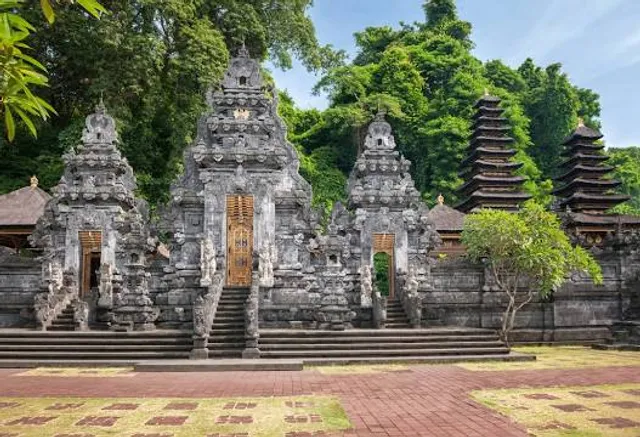
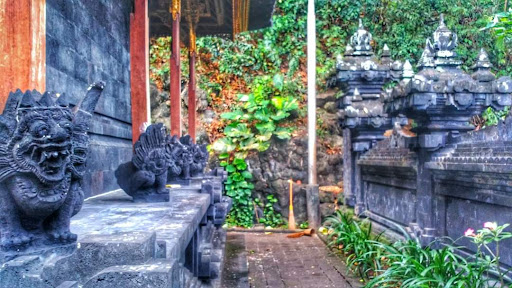
The rather large temple complex is built around the entrance to a cave that is home to many, many, many! bats. Goa Lawah translates into Bat Cave for a good reason. You will see two large, majestic banyan trees at the main entrance. Some shrines in the centre are ancient from the time the temple has been established. Take notice of the motifs of the dragon who is in charge of keeping the universe at balance.
Good to Know
According to some tales, the cave has a pathway up to Besakih temple in the north at the foot of Mount Agung. It is believed that a Mengwi prince discovered the connection when he took refuge in the cave hiding from enemies. Some locals also believe that there are two more pathways, one to Tangkid Bangbang and one to Talibeng. Although those claims have never been proven.
Mornings is a good time to witness many locals who come for their prayers. It’s generally a busy place because of its popularity and its easy access but one can still experience the magnificence of this place. Afternoons are also nice as it is not so hot anymore and visitors enjoy the shady places underneath the trees. Hindus on Bali celebrate the anniversary of their temples (piodalan), which is based on the Balinese 210 days cycle calendar (Pawukon). To visit main temples such as Goa Lawah or Uluwatu is a great experience. When on Bali always check with the locals if some piodalan is scheduled during your visit. The busy temples on Bali are well kept and maintained, also Goa Lawah is in great shape and some costly renovations can be financed due to the entrance fee and the high numbers of visitors.
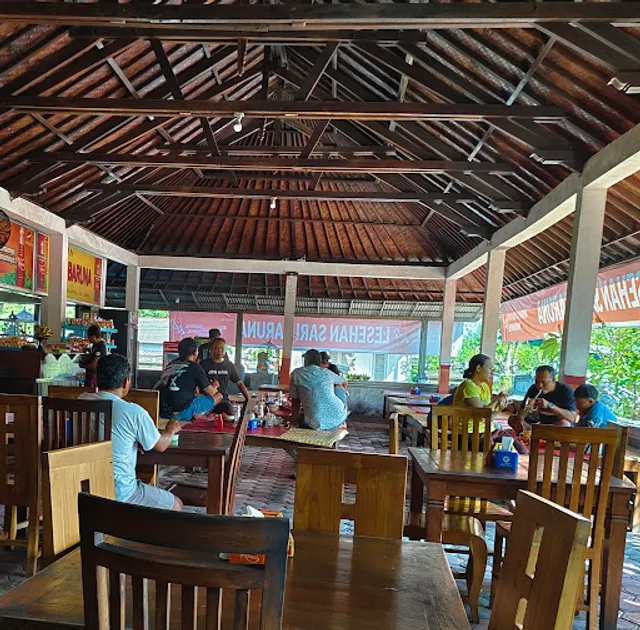
Like at all main temples on Bali you will find countless souvenir shops and little restaurants (warung) where you can buy the usual souvenirs, some...
Read moreGoa Lawah Temple, situated on the southeastern coast of Bali, is a sacred sanctuary that captivates visitors with its unique amalgamation of natural wonders, historical depth, and spiritual significance. My recent visit to this mystical temple, famed for its resident bats, left me in awe of its rich history, architectural beauty, and the serene backdrop of the adjacent beach.
Bats in the Temple: The defining feature of Goa Lawah Temple is the population of bats that inhabit the temple's sacred cave. As you enter, the air is filled with the gentle fluttering of wings and the occasional echo of bat calls. Witnessing these creatures in their natural habitat adds an element of mystery and enchantment to the spiritual atmosphere of the temple.
Historical Significance: Goa Lawah Temple's history dates back over a thousand years, and it is intrinsically linked to Balinese mythology. Legend has it that the temple is part of a chain of protective sea temples established by a revered sage to safeguard the island from evil spirits. The cave, with its bats, is believed to be an opening to the mythical underworld.
Architectural Beauty: The temple's architecture is a testament to Balinese craftsmanship and devotion. Intricate stone carvings adorn the entrance gate, depicting mythological figures and sacred motifs. The tiered meru towers, symbolizing the cosmic mountain, create a striking silhouette against the sky. The temple's layout and design reflect the island's rich cultural and spiritual heritage.
Spiritual Resonance: Goa Lawah Temple is not merely a historical site; it emanates a palpable spiritual energy. The rhythmic sound of waves, the gentle sea breeze, and the aura of reverence within the temple create an environment conducive to introspection and spiritual connection. The temple serves as a place of worship and reflection for both locals and visitors seeking spiritual solace.
Adjacent Beachfront Setting: One of the unique features of Goa Lawah Temple is its proximity to the black sand beach along the southeastern coast. The temple's setting, with waves crashing against the shore and the rhythmic sound of the sea, adds a serene and picturesque backdrop. The juxtaposition of the ancient temple against the natural beauty of the beach creates a harmonious blend of the sacred and the scenic.
Cultural Rituals and Offerings: During my visit, I had the opportunity to witness traditional ceremonies and offerings taking place at the temple. The vibrant colors of ceremonial attire, the rhythmic chants, and the fragrant smell of incense contribute to the immersive cultural experience. Participating in or observing these rituals provides a deeper understanding of Balinese...
Read moreLet's delve into the enchanting world of the Goa Lawah Temple, also known as the Bat Cave Temple, situated in the beautiful island of Bali, Indonesia.
As you approach the Goa Lawah Temple, you're immediately struck by its awe-inspiring location—a magnificent temple perched upon the rocky cliffs, overlooking the vast expanse of the Indian Ocean. The temple's setting alone is enough to captivate your senses and fill your heart with a sense of wonder.
The name "Goa Lawah" translates to "Bat Cave," and as you draw closer, you'll understand why. The temple is famous for its unique feature—a natural cave that houses thousands of bats. The sight of these mystical creatures fluttering around the cave's entrance is a sight to behold, adding an air of mystery to the temple's allure.
Goa Lawah Temple is steeped in ancient Balinese traditions and folklore. It is believed to be one of the island's nine directional temples, strategically positioned to protect the Balinese people from evil spirits and negative energies. Locals and pilgrims flock to this sacred site to pay their respects and seek blessings from the divine.
Upon entering the temple, you'll be surrounded by intricate Balinese architecture and intricate stone carvings, reflecting the island's rich cultural heritage. The temple's inner sanctum houses a sacred shrine where devotees come to offer prayers and leave offerings as a sign of reverence and gratitude.
The temple's spiritual ambiance is palpable, drawing you into a sense of serenity and introspection. The soft chants of prayers and the aroma of incense fill the air, creating an atmosphere of devotion and connection with the divine.
One of the most magical times to visit Goa Lawah Temple is during sunset. As the sun dips below the horizon, the temple is bathed in a golden glow, casting an ethereal aura over the entire area. It's a moment of tranquility and beauty, etching a lasting memory in your heart.
As you leave the temple grounds, you can't help but feel a sense of spiritual rejuvenation and a deeper connection to the mystical essence of Bali. Goa Lawah Temple is more than just a tourist attraction—it's a place of spiritual significance, where ancient traditions and natural wonders come together to create an unforgettable experience.
So, my friends, if you find yourself in Bali, make sure to visit Goa Lawah Temple. Embrace the mystical ambiance, witness the dance of the bats, and immerse yourself in the sacred rituals that have been carried out here for generations. It's a journey that will leave you with a profound appreciation for the spiritual heritage of this...
Read more