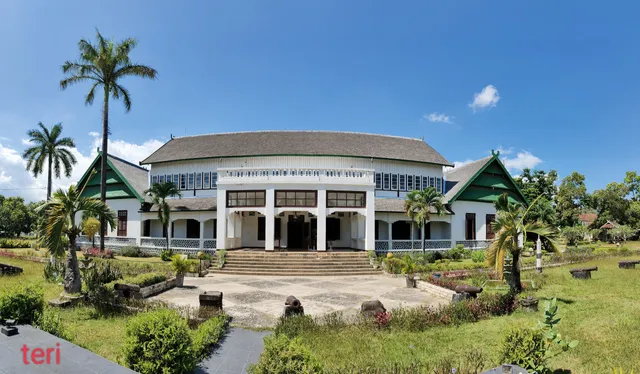
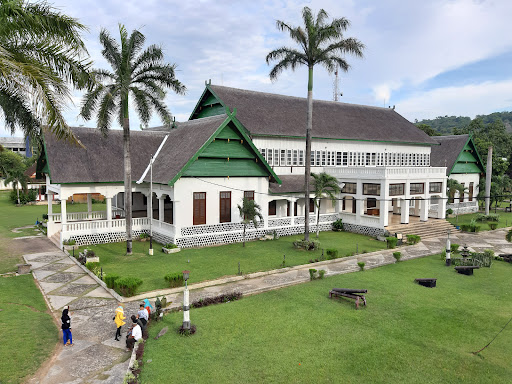
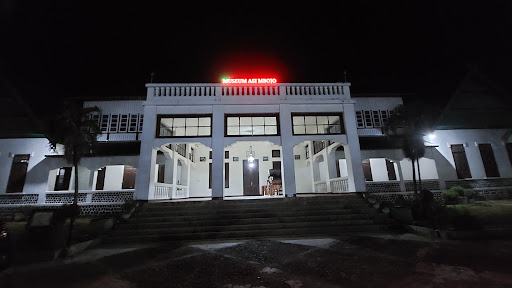
This is the Palace of Bima Sultanate, a palace built in the central part of Bimanese land, which once has a very long history of Bimanese civilization from Bima Hindu-Buddha Kingdom to Bima Islamic Sultanate period. This palace is restored by the last Bimanese Sultan, Muhammad Salahuddin, in 1929 in the Dutch colonization era of Indonesia which created a blend of Bima Sultanate and Dutch Colonial architectural styles. A wooden-based building called Asi Bou Palace then built to be used as a temporary replacement palace during the restoration.
The Palace of Bima Sultanate and the Mosque of Sultan Muhammad Salahuddin along with Serasuba or the plaza in front of them are 3 main components made up an integrated complex which can also be seen in many parts of Indonesia that had passed through the same historical Hindu-Buddha Kingdom and Islamic Sultanate period. The plaza which in the Bimanese language is called "Serasuba" consists of two words, "Sera" which means land and "Suba" which means spear. In this case, "serasuba" can be clearly intepreted as the land to rule. The plaza is used as the main place for holding big events such as kingdom/sultanate ceremonies, religious celebration days, or days when the king/sultan announces big things to his people.
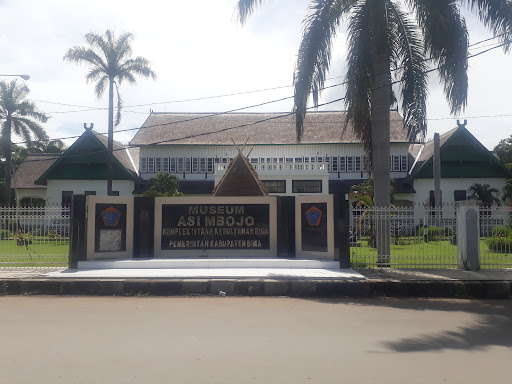
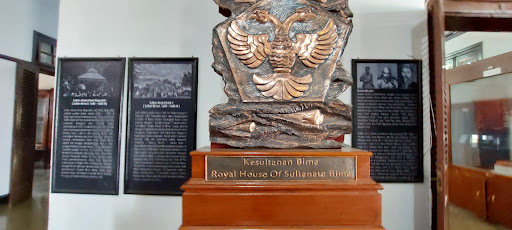
Over time, during the independence of Indonesia, this building changed its function to become an army barracks then a government office. Finally, after Indonesian independence, it becomes as a museum named the Museum of Asi Mbojo. This museum presents the most complete data and information of Bima's history. Its contents include: -nature, geographic, flora and fauna that exists in Bima landscape; -cultural traditions in Bima such as houses, clothing, weapons and heirlooms, traditional ceremonies such as weddings in the palace environment as well as in the ordinary community environment; -Bimanese civilization starting from the era of hunting and fishing, farming and cultivation, the Hindu-Buddha kingdom era, the Islamic sultanate era, the Dutch colonial era, to the era of Indonesian...
Read moreوكان قصر بيما أو يسمى أيضا آسي مبوجو وسط حكومة مزرعة السلطاني، فضلا عن سونستان إبراهيم ريسيدنس. عملية بناء هذا القصر يستغرق لمدة ثلاث سنوات، 1927 - 1929، تم تصميمها من خلال الجمع بين النمط المعماري النموذجي من بيما مع النمط الهولندي. يقع قصر مواجهة نحو ساحة سيراسوبا على بوابة رئيسية وبرنامجا إلى حد ما، حوالي 500 متر مربع. إلى حق القصر كان هناك مبنى قديم تأسست في عام 1872، وهي محمد مالحماد اسمه شامان بيما. إن مفهوم تخطيط القصر والمسجد، ومبنى مربع يرمز ثلاثة عناصر يجب أن تشكل كامل كله، بين الحكومة (باليس)، الدين (المسجد)، والساحة (الناس). منطقة القصر لديها مشهد جميل جدا. هناك أيضا مدفع قديم يؤدي إلى الشمال والساحة. هذا المدفع هو ثنائي الاستعمار الهولندي. وجود أشجار النخيل يضيف بشكل متزايد إلى نخيل القصر في منتصف الحرارة من درجة حرارة الهواء في بيما. قصر بيما أسي مبوجو عدة مرات شهدت وظيفة وظيفة، وخاصة بعد وفاة السلطان محمد صلاح الدين. وقد تم بناء هذا المبنى التاريخي إلى مبنى إقليمي، هوستيل هوستيل، حرمان سونان جيري، وغيرها. ثم في عام 1986، واقر أومار هيرون، الذي كان في وقت لاحق، الذي اتسم في ذلك الوقت، أنشق قصر بيما أسي مبوجاوا ليكون متحفا مع اسم المتحف ميل كما مبوجو. في المتحف، الكائنات التاريخية المخزنة من سلطنة بيما، مثل الأسرة، القماش، مجلس الوزراء، صورة سلطان، سلطان التاج، ماكا ماسيه "غوني رانت"، والأسلحة، والثروة الحيوانية، وأدوات المنزلية، المشرف، وغيرها. وقد تغيرت بيما بريم بلامبو الآن إلى هذا المتحف من السهل جدا العثور على موقفها المجاورة إلى ساحة مدينة بيما. تذاكر الدخول إلى رخيصة جدا: 2000 ريال قطري للبالغين، رب 5000000 للأطفال، و 3000.00 روبية للسياحة، و 1000.00 روبية...
Read moreOne common thing about museums is that we can have a look at ancient goods from the past, learn the history from captions, posters and many printed information.
The admission ticket is Rp. 2.000 which is very cheap. The very special thing about this place is I had the opportunity to get more information about the displayed goods from a senior guide who possesses thorough knowledge on history of Bima,...
Read more