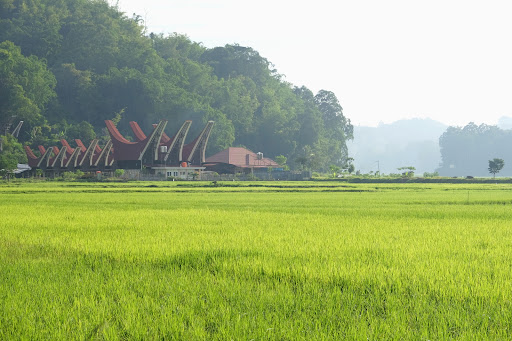
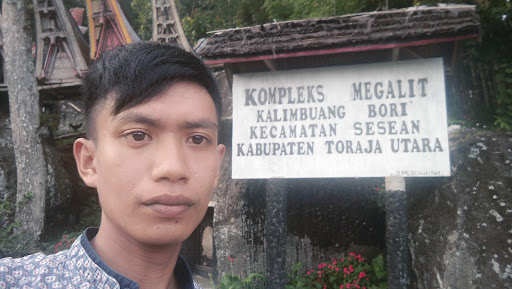
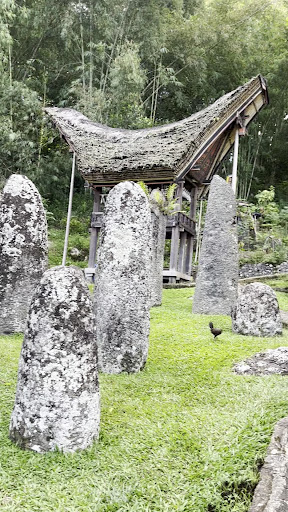
Bori Kalimbuang is a megalithic site located in Sesean Village, North Toraja Regency, South Sulawesi Province, Indonesia. It is one of the most important megalithic sites in Tana Toraja, and is part of the UNESCO World Heritage Site "Megalithic Sites of South Sulawesi".
Bori Kalimbuang is home to a large number of menhirs, which are tall, standing stones. There are over 100 menhirs in the site, ranging in size from small stones to massive boulders. The menhirs are believed to have been erected by the Toraja people over 1,000 years ago, and were used for various purposes, including religious ceremonies, burials, and as markers of social status.
In addition to the menhirs, Bori Kalimbuang also contains a number of other megalithic structures, including stone circles, stone tombs, and stone statues. The site is also home to a number of traditional Toraja houses, known as tongkonan.
Bori Kalimbuang is a popular tourist destination, and is known for its impressive megalithic structures and its scenic setting. The site is located in a valley surrounded by mountains, and offers stunning views of the Torajan countryside.
Bori Kalimbuang is also an important cultural site for the Toraja people. The site is used for a number of traditional ceremonies, including the Rambu Solo, or funeral ceremony.
• How to get to Bori Kalimbuang. Bori Kalimbuang is located about 8 km north of Rantepao, the capital of North Toraja Regency. The site can be reached by public transportation, including buses and minibuses. There are also a number of tour operators in Rantepao that offer day trips to Bori Kalimbuang.
• When to visit Bori Kalimbuang. Bori Kalimbuang can be visited year-round. However, the best time to visit is during the dry season, which runs from June to September. During the dry season, the weather is pleasant and there is less chance of rain.
• What to do at Bori Kalimbuang. Visit the menhirs and other megalithic structures. Take photos of the scenic views. Visit the traditional Toraja houses. Learn about the Toraja culture and history from a local guide. Attend a traditional Toraja ceremony, if possible.
• Tips for visiting Bori Kalimbuang Wear comfortable shoes, as you will be doing a lot of walking. Bring sunscreen, sunglasses, and a hat, as the sun can be strong. Bring water and snacks, as there are limited food and beverage options at the site. Be respectful of the Toraja culture and customs. Ask permission before taking photos of the menhirs and other...
Read moreThe erect stones stand on the green expanse of grass. Menhir shaped. Elongated height rising from the mainland. But not uniform. Some are small, some are big. Some are short and tall. I'm interested in sneaking in between these rocks. Move from one stone to another. Lightning doesn't sound. Ah, I'm fad playing clandestinely. Dooorrr! Basho was shocked when he was busy looking for me who seemed lost in the Kalanteuang Rante.
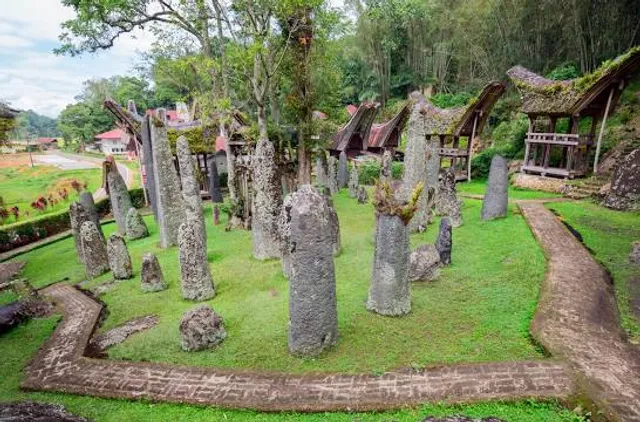
"The total number of menhir stones here is said to be 102. Consists of 54 small menhirs, 24 medium and 24 large stones. "Explained Basho as he controlled himself from his surprise. Luckily, Basho was friendly. There did not seem to be anger after I ignited. He is very professional.
Rante Kalimbuang is the main area in Bori ’Kalimbuang, Sesean, North Toraja. Rante is a traditional burial ceremony or Rambu Solo 'which is equipped with menhirs known in the Toraja language as a stone simbuang. In Tana Toraja actually found many megalith sites like this. In Bori Kalimbuang, the Menhir was established in honor of the adat leaders or noble families who died. There are some menhir rocks that are up to hundreds of years old.
Not just any build menhir. The community must hold a traditional ceremony called Rapasan Sapurandanan. In this ceremony, at least 24 buffaloes were sacrificed. The amount sacrificed actually has no effect on the height and size of the menhir. The same is the custom value. But now, many people think that the higher and bigger the menhirs are erected, the higher the degree of nobility. Maybe that's true too. On high menhirs, I observe that the rock...
Read moreOur final day in Toraja began at Kalimbuang Bori, one of Indonesia's most impressive megalithic sites that most travelers have never heard of. Here, scattered across a ceremonial ground the size of several football fields, over 100 ancient menhirs (standing stones) rise from the earth like a frozen army of giants. Each megalith tells a story – they're not just random stones, but markers of grand funeral ceremonies past, where noble Torajans completed their journey to the afterlife.
These weathered sentinels, some reaching heights of over 4 meters (13 feet), create an almost mystical atmosphere in the morning light. The Torajans believe these stones possess supernatural power, each one erected to commemorate a significant funeral ceremony of the nobility. The size of each menhir corresponds to the status of the deceased and the grandeur of their funeral – a permanent record of past ceremonies written in stone.
From the ancient stones of Bori, we traveled to To'barana in the Sa'dan region, where another form of Torajan heritage lives on through the skilled hands of local weavers. To'barana is renowned as one of Toraja's most important weaving centers, where traditional textiles known as ikat are still created using age-old techniques. At To'barana, we watched master weavers work their looms beneath traditional tongkonan houses, their fingers dancing across threads in patterns passed down through generations. The most intricate pieces can take months to complete, with patterns so complex they seem to shift and change as you...
Read more