HTML SitemapExplore
logo
Find Things to DoFind The Best Restaurants

Lut Desert — Attraction in دهستان تکاب

Name
Lut Desert
Description
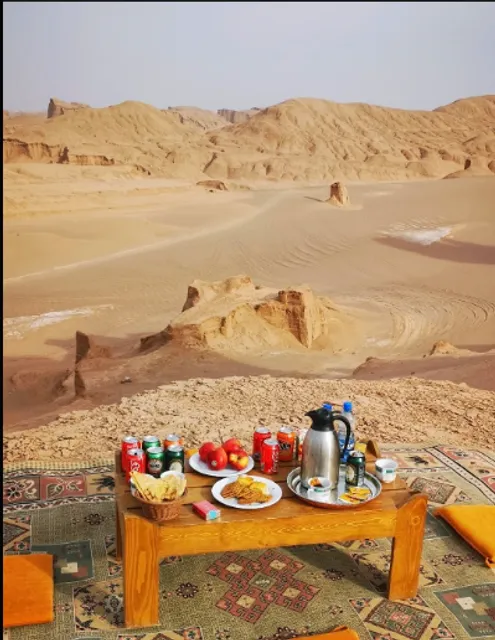
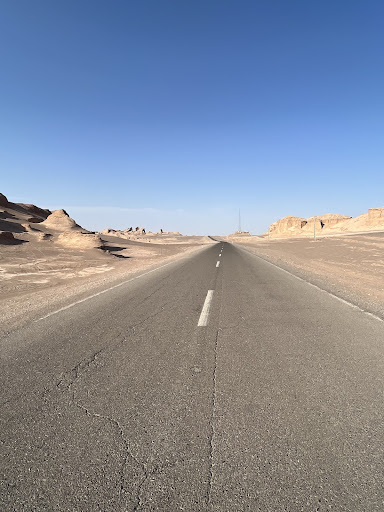
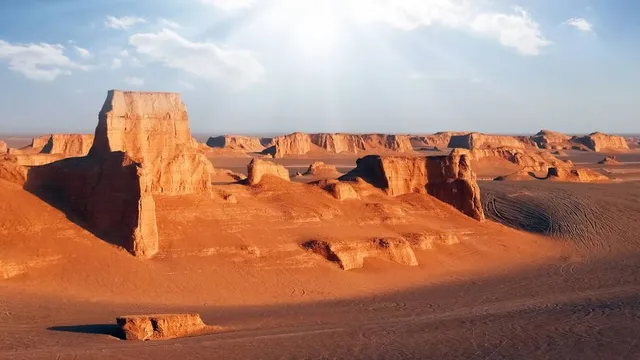
The Lut Desert, widely referred to as Dasht-e Lut, is a large salt desert located in the provinces of Kerman and Sistan and Baluchestan, Iran. It is the world's 33rd-largest desert, and was included on UNESCO's World Heritage List on July 17, 2016.
Nearby attractions
Nearby restaurants
Nearby hotels
Related posts
The "Natural Art Gallery" of Lut Desert
Keywords
Lut Desert tourism.Lut Desert hotels.Lut Desert bed and breakfast. flights to Lut Desert.Lut Desert attractions.Lut Desert restaurants.Lut Desert travel.Lut Desert travel guide.Lut Desert travel blog.Lut Desert pictures.Lut Desert photos.Lut Desert travel tips.Lut Desert maps.Lut Desert things to do.
Lut Desert things to do, attractions, restaurants, events info and trip planning
Lut Desert
IranKerman Provinceدهستان تکابLut Desert

Basic Info

Lut Desert

FWFJ+6H2, Kerman, Kerman Province, Iran
4.5(156)
Open until 12:00 AM
Save
spot

Ratings & Description

Info

The Lut Desert, widely referred to as Dasht-e Lut, is a large salt desert located in the provinces of Kerman and Sistan and Baluchestan, Iran. It is the world's 33rd-largest desert, and was included on UNESCO's World Heritage List on July 17, 2016.

Outdoor
Adventure
Scenic
Off the beaten path
attractions: , restaurants:
logoLearn more insights from Wanderboat AI.
Open hoursSee all hours
SatOpen 24 hoursOpen

Plan your stay

hotel
Pet-friendly Hotels in دهستان تکاب
Find a cozy hotel nearby and make it a full experience.
hotel
Affordable Hotels in دهستان تکاب
Find a cozy hotel nearby and make it a full experience.
hotel
The Coolest Hotels You Haven't Heard Of (Yet)
Find a cozy hotel nearby and make it a full experience.
hotel
Trending Stays Worth the Hype in دهستان تکاب
Find a cozy hotel nearby and make it a full experience.

Reviews

Get the Appoverlay
Get the AppOne tap to find yournext favorite spots!
Wanderboat LogoWanderboat

Your everyday Al companion for getaway ideas

CompanyAbout Us
InformationAI Trip PlannerSitemap
SocialXInstagramTiktokLinkedin
LegalTerms of ServicePrivacy Policy

Get the app

© 2025 Wanderboat. All rights reserved.
logo

Reviews of Lut Desert

4.5
(156)
avatar
5.0
1y

YouTube: SkyVistadrifts The Lut Desert, or Dasht-e-Lut, is located in the south-east of the country. Between June and October, this arid subtropical area is swept by strong winds, which transport sediment and cause aeolian erosion on a colossal scale. Consequently, the site presents some of the most spectacular examples of aeolian yardang landforms (massive corrugated ridges). It also contains extensive stony deserts and dune fields. The property represents an exceptional example of ongoing geological processes. Outstanding Universal Value Brief synthesis The Lut Desert is in the southeast of the Islamic Republic of Iran, an arid continental subtropical area notable for a rich variety of spectacular desert landforms. At 2,278,015 ha the area is large and is surrounded by a buffer zone of 1,794,134 ha. In the Persian language ‘Lut’ refers to bare land without water and devoid of vegetation. The property is situated in an interior basin surrounded by mountains, so it is in a rain shadow and, coupled with high temperatures, the climate is hyper-arid. The region often experiences Earth’s highest land surface temperatures: a temperature of 70.7°C has been recorded within the property.

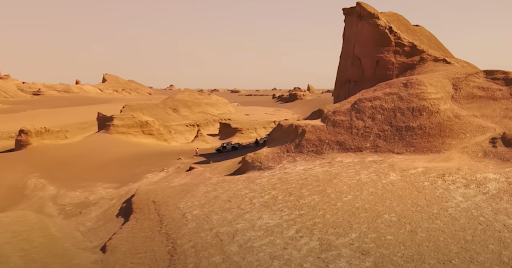
A steep north-south pressure gradient develops across the region in spring and summer causing strong NNW-SSE winds to blow across the area between June and October each year. These long periods of strong winds propel sand grains at great velocity creating transportation of sediment and aeolian erosion on a colossal scale. Consequently, the area possesses what are considered the world’s best examples of aeolian yardang landforms, as well as extensive stony deserts and dune fields. Yardangs are bedrock features carved and streamlined by sandblasting. They cover about one third of the property and appear as massive and dramatic corrugations across the landscape with ridges and corridors oriented parallel to the dominant prevailing wind. The ridges are known as kaluts. In the Lut Desert some are up to 155 m high and their ridges can be followed for...

   Read more
avatar
5.0
6y

Lut Çölü, güneybatı İran'da geniş bir tuz çölüdür. İran iklim olarak Batı Afrika'daki Yeşil Burun Adaları'ndan başlayıp Moğolistan üzerinden Çin'in başkenti Pekin yakınlarına kadar uzanan Afro-Asyatik çöller kuşağının bir paçasıdır. Kum tepeleri Lut'un merkezinin güneyindedir. Bu kum tepelerinin yüksekliği 480 metreye kadardır. Kum tepelerine ulaşmak için, 4WD ve deneyimli bir rehberle bir tur atmanız gerekir. Rüzgar, aynı zamanda, sert kayalık fosilleri soyunmakta ve bu da, alanın yaklaşık% 12'sinde kum taşlı taşlarla geniş taşlı çöl parkeleri bırakmaktadır. Geniş, siyah taşlı bir çöl, ana bölgenin kuzeybatısında bulunan bazaltik Gandom Beryan platosunu kaplar. Doğu Lut'daki taşlı çöller, moloz bir kaplama olarak, ana kayayı kesen ve komşu tepelerin ayağından hafifçe eğimli kaya platformları olan geniş pediplainler olarak kaplanmıştır. Iran is climatically part of the Afro-Asian belt of deserts, which stretches from the Cape Verde islands off West Africa all the way to Mongolia near Beijing, China. The patchy, elongated, light-colored feature in the foreground (parallel to the mountain range) is the northernmost of the Dasht dry lakes that stretch southward 300 kilometers (190 mi). In near-tropical deserts, elevated areas capture most precipitation. As a result, the desert is largely an abiotic zone[further explanation needed iran's geography consists of a plateau surrounded by mountains and divided into drainage basins. Dasht-e Loot is one of the largest of these desert basins, 480 kilometers (300 mi) long and 320 kilometers (200 mi) wide, and is considered to be one of the driest places on Earth. The area of the desert is about 51,800 square kilometres (20,000 sq mi).The other large basin is the Dasht-e Kavir. During the spring wet season, water briefly flows down from the Kerman mountains, but it soon dries up, leaving behind only rocks, sand, and salt. The eastern part of Dasht-e Loot is a low plateau covered with salt flats. In contrast, the center has been sculpted by the wind into a series of parallel ridges and furrows, extending over 150 km (93 mi) and reaching 75 metres (246 ft) in height. This area is also riddled with ravines and sinkholes. The southeast is a vast expanse of sand, like a Saharan erg, with dunes 300 metres (980 ft) high, among the tallest in the world. The Sand dunes are situated in the south of central Lut. The height of these sand dunes is up to 480 meters. In order to reach the dunes, you'll need to do a tour with a 4WD and experienced guide. The wind also strips hard rocky outcrops bare of soil, which leaves extensive stony desert pavements (hamada) with sand-blasted faceted stones (ventifacts) across about 12% of the area. An extensive, black stony desert covers the basaltic Gandom Beryan plateau in the northwest of the core zone. The stony deserts in eastern Lut cover, as a rubbly veneer, extensive pediplains, which are rock platforms that truncate bedrock and gently slope away from the foot of...

   Read more

avatar
5.0
24w

The Dasht-e Lut Desert is one of those places that words simply can’t capture — it has to be experienced. Some say it’s overrated, just sand and rock — but I feel something entirely different. It’s a unique, raw space where nature reveals its most primal, unforgiving face. It’s incredibly hot — one of the hottest places on Earth — but that extremity is part of its character. What strikes you most, though, is the silence. Deep, overwhelming, almost physical. So quiet, it feels like you can hear it. An experience that lingers in your memory. You might come across a military checkpoint, but even that seems to happen in a strange, respectful calm — as if no one dares disturb the desert’s stillness. Dasht-e Lut is a place that humbles you. It offers a rare moment of reflection in a world that...

   Read more
Page 1 of 7
Previous
Next

Posts

 The "Natural Art Gallery" of Lut Desert
Sophia AndersonSophia Anderson
The "Natural Art Gallery" of Lut Desert
Kasia Z.Kasia Z.
The Dasht-e Lut Desert is one of those places that words simply can’t capture — it has to be experienced. Some say it’s overrated, just sand and rock — but I feel something entirely different. It’s a unique, raw space where nature reveals its most primal, unforgiving face. It’s incredibly hot — one of the hottest places on Earth — but that extremity is part of its character. What strikes you most, though, is the silence. Deep, overwhelming, almost physical. So quiet, it feels like you can hear it. An experience that lingers in your memory. You might come across a military checkpoint, but even that seems to happen in a strange, respectful calm — as if no one dares disturb the desert’s stillness. Dasht-e Lut is a place that humbles you. It offers a rare moment of reflection in a world that almost never stops
Tony GTony G
This is a very unique experience but you should target a professional company to keep alive lol . This place is different from Furnace Creek, California or Death Valley. A heat wave in this geography is the worst. NASA's medium resolution imaging spectroradiometer installed on the Aqua satellite recorded that the world's hottest land surface was in the Lut Desert, where temperatures reached 70.7°C (159.3°F) in 2005. Located in the southeast of Iran, the distance from the northernmost tip to the southernmost tip of the Lut Desert is considered 480 km and its distance from the westernmost tip to the easternmost tip is considered 320 km. This vast salt desert contains many mysterious spots. Like Gandom Beryan: The hottest point on the planet where 70.7°C is measured from space.
See more posts
See more posts
hotel
Find your stay

Pet-friendly Hotels in دهستان تکاب

Find a cozy hotel nearby and make it a full experience.

The "Natural Art Gallery" of Lut Desert
Sophia Anderson

Sophia Anderson

hotel
Find your stay

Affordable Hotels in دهستان تکاب

Find a cozy hotel nearby and make it a full experience.

Get the Appoverlay
Get the AppOne tap to find yournext favorite spots!
The Dasht-e Lut Desert is one of those places that words simply can’t capture — it has to be experienced. Some say it’s overrated, just sand and rock — but I feel something entirely different. It’s a unique, raw space where nature reveals its most primal, unforgiving face. It’s incredibly hot — one of the hottest places on Earth — but that extremity is part of its character. What strikes you most, though, is the silence. Deep, overwhelming, almost physical. So quiet, it feels like you can hear it. An experience that lingers in your memory. You might come across a military checkpoint, but even that seems to happen in a strange, respectful calm — as if no one dares disturb the desert’s stillness. Dasht-e Lut is a place that humbles you. It offers a rare moment of reflection in a world that almost never stops
Kasia Z.

Kasia Z.

hotel
Find your stay

The Coolest Hotels You Haven't Heard Of (Yet)

Find a cozy hotel nearby and make it a full experience.

hotel
Find your stay

Trending Stays Worth the Hype in دهستان تکاب

Find a cozy hotel nearby and make it a full experience.

This is a very unique experience but you should target a professional company to keep alive lol . This place is different from Furnace Creek, California or Death Valley. A heat wave in this geography is the worst. NASA's medium resolution imaging spectroradiometer installed on the Aqua satellite recorded that the world's hottest land surface was in the Lut Desert, where temperatures reached 70.7°C (159.3°F) in 2005. Located in the southeast of Iran, the distance from the northernmost tip to the southernmost tip of the Lut Desert is considered 480 km and its distance from the westernmost tip to the easternmost tip is considered 320 km. This vast salt desert contains many mysterious spots. Like Gandom Beryan: The hottest point on the planet where 70.7°C is measured from space.
Tony G

Tony G

See more posts
See more posts