HTML SitemapExplore
logo
Find Things to DoFind The Best Restaurants

Apadana Castle Shush — Attraction in دهستان حسین آباد

Name
Apadana Castle Shush
Description
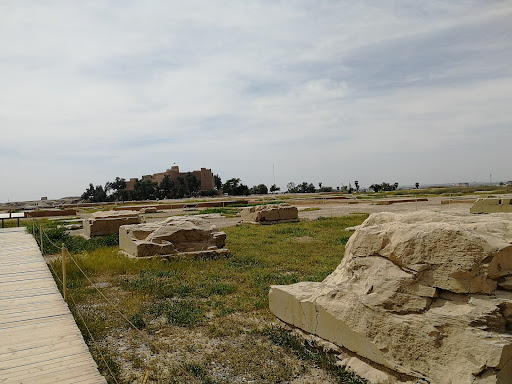
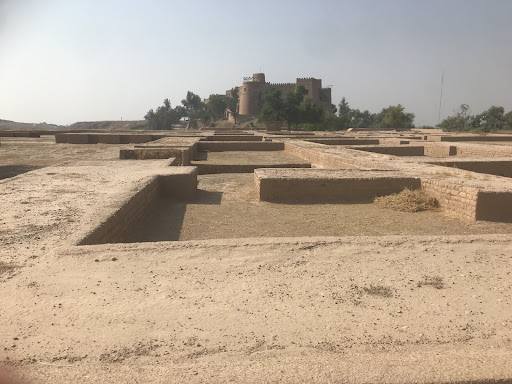
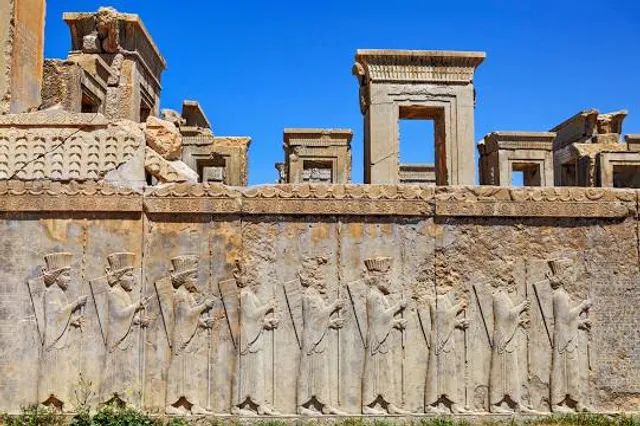
The Palace of Darius in Susa was a palace complex that was built at the site of Susa, Iran, during the reign of Darius I over the Achaemenid Empire. The construction was conducted parallel to that of Persepolis. Manpower and raw materials from various parts of the Achaemenid Empire contributed to its construction.
Nearby attractions
Shoosh Castle
Khuzestan Province, Shush, Imam-Khomeini Boulevard, 56RW+4MQ, Iran
Tomb of Daniel Nabi
Khuzestan Province, Shush، امام خمینی، مسجد جامع شهرستان شوش دانیال, Iran
Shavoor's Palace
56VV+G46, Shush, Khuzestan Province, Iran
Nearby restaurants
Nearby hotels
Related posts
Keywords
Apadana Castle Shush tourism.Apadana Castle Shush hotels.Apadana Castle Shush bed and breakfast. flights to Apadana Castle Shush.Apadana Castle Shush attractions.Apadana Castle Shush restaurants.Apadana Castle Shush travel.Apadana Castle Shush travel guide.Apadana Castle Shush travel blog.Apadana Castle Shush pictures.Apadana Castle Shush photos.Apadana Castle Shush travel tips.Apadana Castle Shush maps.Apadana Castle Shush things to do.
Apadana Castle Shush things to do, attractions, restaurants, events info and trip planning
Apadana Castle Shush
IranKhuzestan Provinceدهستان حسین آبادApadana Castle Shush

Basic Info

Apadana Castle Shush

56VX+4P4, Shush, Khuzestan Province, Iran
4.5(172)
Open 24 hours
Save
spot

Ratings & Description

Info

The Palace of Darius in Susa was a palace complex that was built at the site of Susa, Iran, during the reign of Darius I over the Achaemenid Empire. The construction was conducted parallel to that of Persepolis. Manpower and raw materials from various parts of the Achaemenid Empire contributed to its construction.

Cultural
Scenic
Family friendly
attractions: Shoosh Castle, Tomb of Daniel Nabi, Shavoor's Palace, restaurants:
logoLearn more insights from Wanderboat AI.

Plan your stay

hotel
Pet-friendly Hotels in دهستان حسین آباد
Find a cozy hotel nearby and make it a full experience.
hotel
Affordable Hotels in دهستان حسین آباد
Find a cozy hotel nearby and make it a full experience.
hotel
The Coolest Hotels You Haven't Heard Of (Yet)
Find a cozy hotel nearby and make it a full experience.
hotel
Trending Stays Worth the Hype in دهستان حسین آباد
Find a cozy hotel nearby and make it a full experience.

Reviews

Nearby attractions of Apadana Castle Shush

Shoosh Castle

Tomb of Daniel Nabi

Shavoor's Palace

Shoosh Castle

Shoosh Castle

4.5

(144)

Open until 6:00 PM
Click for details
Tomb of Daniel Nabi

Tomb of Daniel Nabi

4.3

(375)

Open until 10:00 PM
Click for details
Shavoor's Palace

Shavoor's Palace

4.0

(29)

Open until 12:00 AM
Click for details
Get the Appoverlay
Get the AppOne tap to find yournext favorite spots!
Wanderboat LogoWanderboat

Your everyday Al companion for getaway ideas

CompanyAbout Us
InformationAI Trip PlannerSitemap
SocialXInstagramTiktokLinkedin
LegalTerms of ServicePrivacy Policy

Get the app

© 2025 Wanderboat. All rights reserved.
logo

Reviews of Apadana Castle Shush

4.5
(172)
avatar
5.0
6y

Susa (also called Shushan, Greek Susiane), was one of the city-states of ancient Elam which later became the winter capital of the Persian Achaemenian kings (c. 675 - 330 BCE). There is evidence that Susa has been continuously inhabited from 4,200 BCE placing it among the oldest continuously inhabited cities in the world. In addition, there are traces at Susa of a village inhabited around 7,000 BCE and painted pottery dating from ca. 5,000 BCE at the site. The Susa historical site is located in the Susiana Plain that is irrigated by the Karkheh Kur (Choaspes), Ab-i Dez and Karun rivers, The Karkheh and Karun rivers form the western and eastern (together with the Zagros mountains) boundaries of the plain. Today, the site is surrounded by the modern-day Shush, a town in the south-west Iranian province of Khuzestan. The archaeological site includes the ruins of the Achaemenian palace complex of Darius I, the Great, and is located on a fifteen metre high artificial raised 100-hectare terrace. It has suffered greatly in the past seventy years. The photographs below show the reckless spread of urbanization close to the main citadel and over unexcavated area immediately surrounding the mound. In addition, the site is being greatly harmed by illegal excavations, garbage dumping, a planned bus depot, and a hotel on unexcavated land. The surviving walls have been greatly eroded. To add to this tragedy, the site was also heavily damaged by Iraqi bombardment during the first Gulf War. Aerial view of Susa (looking north) and taken October 23, 1935. Also see University of Chicago archives Aerial view of Susa (looking north) and taken October 23, 1935. The Saimarrah River is to the left of the mound and flows beside the 'tomb of Daniel' (with a pointed roof) Also see University of Chicago archives Modern day (2009) aerial view of SusaNote the sprawling urbanization around the site Modern day (2009) aerial view of Susa Note the sprawling urbanization around the site, the reckless building over & close to the site as well as the considerable erosion of the walls. Courtesy Google Earth Susa became part of the Persian empire under Cyrus II, the Great in 538 or 539 BCE. During the balance of Achaemenian period (to 330 BCE), Susa functioned as one of the rotating capitals (a winter capital) of the Achaemenian Kings. Darius I, the Great, built an extensive palace complex (see image below) ca. 510 BCE, and Herodotus mentions Susa as being the capital of Darius' empire (Herodotus does not make any mention Persepolis being a Persian capital). The palace complex - whose building continued under Darius' son Xerxes - was destroyed by a fire during the reign of Artaxerxes I (465-424 BCE) and then restored fifty years later by his grandson, Artaxerxes II (404-358 BCE). Alexander of Macedonia captured Susa in December 330 BCE and plundered the city, seizing some 40,000 talents of gold and silver from the treasury. Source: Ridpath's History of the World by John Ridpath. 1901 Reconstruction of the Apadana (Audience Hall) at Susa Reconstruction of the Apadana (Audience Hall) at Susa Note stone capitals at the top of the wooden columns (see below) In Darius' inscription (Dsf) found in Susa's great hall, he notes: "The materials, ornamentation and artisans for this palace which I built at Susa have come from afar. "For its foundations, the earth was dug until I reached rock. When the excavation was complete, foundation rock was packed down some 40 cubits to 20 cubits in depth. On that foundation the palace was constructed using sun-dried brick. These tasks were performed by Babylonians. "The cedar timber was brought by the Assyrians to Babylon from a mountain in Lebanon. From Babylon, the Carians and Ionians brought it to Susa. The yaka-timber was brought from Kandahar (Gandara) and...

   Read more
avatar
5.0
6y

Book Description

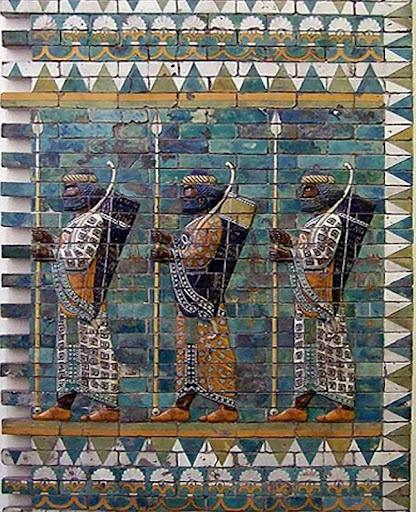
The palace complex of the Persian King Darius I, the Great (522-486 BCE), provides unique evidence of the sophistication of Achaemenid architecture and construction. This palace, built 2500 years ago in western Iran, lay at the centre of the Persian Empire that stretched from the Nile and the Aegean to the Indus Valley. First rediscovered in 1851, the palace of Darius was partly excavated over the next century. But it was only field research between 1969 and 1979 by the noted French archaeologist Jean Perrot which revealed the site's full dimension and complexity. Its bull-headed capitals, enamel friezes of richly-clad archers holding spears, figures of noble lions and winged monsters, introduced a new iconography into the ancient Persian world. The discovery and excavation of the palace, which this book records, thus casts a new light on the beginnings of the Achaemenid period. Edited by the distinguished scholar of ancient Persia, John Curtis, the lavishly illustrated volume is a work of seminal importance for the understanding of ancient Persia, likely to be radically altered by Perrot's research and findings.

Editorial Reviews

'King Darius’ Palace at Susa is perhaps the least well known yet the most important of the Achaemenid Persian palaces, less perhaps for its remains on the ground than for its architecture and treasures which are to be seen in Teheran and notably in the Louvre. French exploration of Susa, which began in 1885/6, continues. This magisterial volume, the translation of the French edition of 2010, brings together at last a comprehensive account of the architectural remains and the finds, from various scholarly hands. It is a major resource and, with its lavish illustration, a joy to handle and read.' Sir John Boardman, FBA, Emeritus Lincoln Professor of Classical Art and Archaeology, University of Oxford

'This lavishly illustrated volume on Darius I’s palace at Susa is not only of utmost importance for the specialist in Near Eastern Archaeology. With its chapters on the history of Elam in Achaemenid times, and on the royal builder himself, it is also an indispensable tool for historians of Pre-Islamic Persia. Its comprehensive account of the French excavations provides key insights into European encounters with Iran as well into the history of scholarship.' Josef Wiesehöfer, Professor of Ancient History, Kiel University

'This sumptuous volume provides a richly illustrated, authoritative survey of the key structures and many individual objects found at Susa that can be said to have contributed so much to the advancement of Achaemenid studies, beginning in the second half of the nineteenth century. Above all, students of the evolution of early Achaemenid art and architecture will find this multi-authored volume to be essential reading.' David Stronach, OBE, Professor Emeritus of Near Eastern Archaeology, University of...

   Read more
avatar
5.0
7y

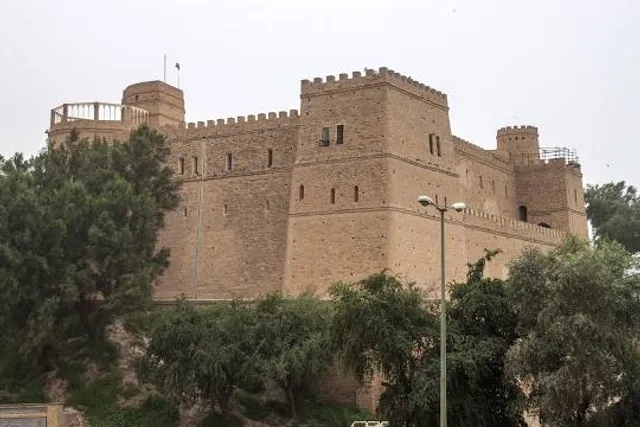
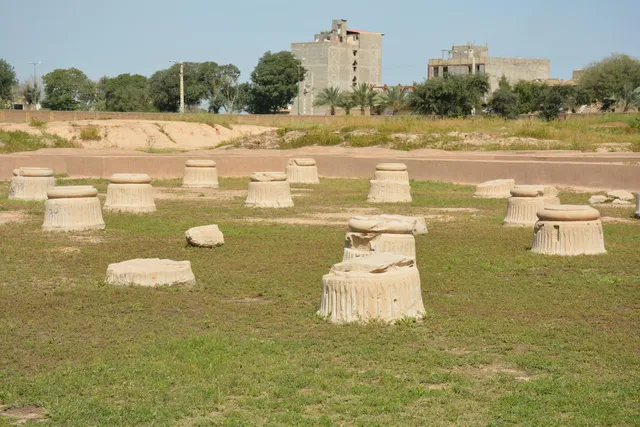
Few things remain in the site except from many column foundations. The only notable building structure that catches the eyes of visitors is a 19th century French castle built in order to provide protection to archaeologists from local hostilities during that time. (It is a beautiful castle, but it should not be confused with the Apadana Palace and other earlier remains). Those French archaeologists took many treasures home, and many of them are now exhibited in Musée du Louvre in Paris. Despite that unfortunate episode, one can definitely imagine the former glory of the palace during the golden ages of successive Persian empires before the arrival of Arab conquerors in the...

   Read more
Page 1 of 7
Previous
Next

Posts

ehsan ahmadiehsan ahmadi
Book Description The palace complex of the Persian King Darius I, the Great (522-486 BCE), provides unique evidence of the sophistication of Achaemenid architecture and construction. This palace, built 2500 years ago in western Iran, lay at the centre of the Persian Empire that stretched from the Nile and the Aegean to the Indus Valley. First rediscovered in 1851, the palace of Darius was partly excavated over the next century. But it was only field research between 1969 and 1979 by the noted French archaeologist Jean Perrot which revealed the site's full dimension and complexity. Its bull-headed capitals, enamel friezes of richly-clad archers holding spears, figures of noble lions and winged monsters, introduced a new iconography into the ancient Persian world. The discovery and excavation of the palace, which this book records, thus casts a new light on the beginnings of the Achaemenid period. Edited by the distinguished scholar of ancient Persia, John Curtis, the lavishly illustrated volume is a work of seminal importance for the understanding of ancient Persia, likely to be radically altered by Perrot's research and findings. Editorial Reviews 'King Darius’ Palace at Susa is perhaps the least well known yet the most important of the Achaemenid Persian palaces, less perhaps for its remains on the ground than for its architecture and treasures which are to be seen in Teheran and notably in the Louvre. French exploration of Susa, which began in 1885/6, continues. This magisterial volume, the translation of the French edition of 2010, brings together at last a comprehensive account of the architectural remains and the finds, from various scholarly hands. It is a major resource and, with its lavish illustration, a joy to handle and read.' Sir John Boardman, FBA, Emeritus Lincoln Professor of Classical Art and Archaeology, University of Oxford 'This lavishly illustrated volume on Darius I’s palace at Susa is not only of utmost importance for the specialist in Near Eastern Archaeology. With its chapters on the history of Elam in Achaemenid times, and on the royal builder himself, it is also an indispensable tool for historians of Pre-Islamic Persia. Its comprehensive account of the French excavations provides key insights into European encounters with Iran as well into the history of scholarship.' Josef Wiesehöfer, Professor of Ancient History, Kiel University 'This sumptuous volume provides a richly illustrated, authoritative survey of the key structures and many individual objects found at Susa that can be said to have contributed so much to the advancement of Achaemenid studies, beginning in the second half of the nineteenth century. Above all, students of the evolution of early Achaemenid art and architecture will find this multi-authored volume to be essential reading.' David Stronach, OBE, Professor Emeritus of Near Eastern Archaeology, University of California, Berkeley
Shengye BaiShengye Bai
Few things remain in the site except from many column foundations. The only notable building structure that catches the eyes of visitors is a 19th century French castle built in order to provide protection to archaeologists from local hostilities during that time. (It is a beautiful castle, but it should not be confused with the Apadana Palace and other earlier remains). Those French archaeologists took many treasures home, and many of them are now exhibited in Musée du Louvre in Paris. Despite that unfortunate episode, one can definitely imagine the former glory of the palace during the golden ages of successive Persian empires before the arrival of Arab conquerors in the seventh century.
Paul MeylemansPaul Meylemans
This palace was constructed by Darius I during the Achaemenid Empire. Construction started some 450 years before Christ. The ground plan shows you how big this palace must have been and a few remaining capitals and columns give you an impression how beautiful this palace must have been. The palace was excavated by French archeologists and most of the beautiful remainders have been transported to France. They are now located and can be seen in the Louvre in Paris.
See more posts
See more posts
hotel
Find your stay

Pet-friendly Hotels in دهستان حسین آباد

Find a cozy hotel nearby and make it a full experience.

Book Description The palace complex of the Persian King Darius I, the Great (522-486 BCE), provides unique evidence of the sophistication of Achaemenid architecture and construction. This palace, built 2500 years ago in western Iran, lay at the centre of the Persian Empire that stretched from the Nile and the Aegean to the Indus Valley. First rediscovered in 1851, the palace of Darius was partly excavated over the next century. But it was only field research between 1969 and 1979 by the noted French archaeologist Jean Perrot which revealed the site's full dimension and complexity. Its bull-headed capitals, enamel friezes of richly-clad archers holding spears, figures of noble lions and winged monsters, introduced a new iconography into the ancient Persian world. The discovery and excavation of the palace, which this book records, thus casts a new light on the beginnings of the Achaemenid period. Edited by the distinguished scholar of ancient Persia, John Curtis, the lavishly illustrated volume is a work of seminal importance for the understanding of ancient Persia, likely to be radically altered by Perrot's research and findings. Editorial Reviews 'King Darius’ Palace at Susa is perhaps the least well known yet the most important of the Achaemenid Persian palaces, less perhaps for its remains on the ground than for its architecture and treasures which are to be seen in Teheran and notably in the Louvre. French exploration of Susa, which began in 1885/6, continues. This magisterial volume, the translation of the French edition of 2010, brings together at last a comprehensive account of the architectural remains and the finds, from various scholarly hands. It is a major resource and, with its lavish illustration, a joy to handle and read.' Sir John Boardman, FBA, Emeritus Lincoln Professor of Classical Art and Archaeology, University of Oxford 'This lavishly illustrated volume on Darius I’s palace at Susa is not only of utmost importance for the specialist in Near Eastern Archaeology. With its chapters on the history of Elam in Achaemenid times, and on the royal builder himself, it is also an indispensable tool for historians of Pre-Islamic Persia. Its comprehensive account of the French excavations provides key insights into European encounters with Iran as well into the history of scholarship.' Josef Wiesehöfer, Professor of Ancient History, Kiel University 'This sumptuous volume provides a richly illustrated, authoritative survey of the key structures and many individual objects found at Susa that can be said to have contributed so much to the advancement of Achaemenid studies, beginning in the second half of the nineteenth century. Above all, students of the evolution of early Achaemenid art and architecture will find this multi-authored volume to be essential reading.' David Stronach, OBE, Professor Emeritus of Near Eastern Archaeology, University of California, Berkeley
ehsan ahmadi

ehsan ahmadi

hotel
Find your stay

Affordable Hotels in دهستان حسین آباد

Find a cozy hotel nearby and make it a full experience.

Get the Appoverlay
Get the AppOne tap to find yournext favorite spots!
Few things remain in the site except from many column foundations. The only notable building structure that catches the eyes of visitors is a 19th century French castle built in order to provide protection to archaeologists from local hostilities during that time. (It is a beautiful castle, but it should not be confused with the Apadana Palace and other earlier remains). Those French archaeologists took many treasures home, and many of them are now exhibited in Musée du Louvre in Paris. Despite that unfortunate episode, one can definitely imagine the former glory of the palace during the golden ages of successive Persian empires before the arrival of Arab conquerors in the seventh century.
Shengye Bai

Shengye Bai

hotel
Find your stay

The Coolest Hotels You Haven't Heard Of (Yet)

Find a cozy hotel nearby and make it a full experience.

hotel
Find your stay

Trending Stays Worth the Hype in دهستان حسین آباد

Find a cozy hotel nearby and make it a full experience.

This palace was constructed by Darius I during the Achaemenid Empire. Construction started some 450 years before Christ. The ground plan shows you how big this palace must have been and a few remaining capitals and columns give you an impression how beautiful this palace must have been. The palace was excavated by French archeologists and most of the beautiful remainders have been transported to France. They are now located and can be seen in the Louvre in Paris.
Paul Meylemans

Paul Meylemans

See more posts
See more posts