Chughazanbil more
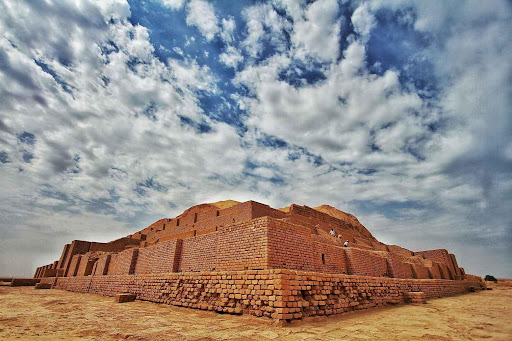
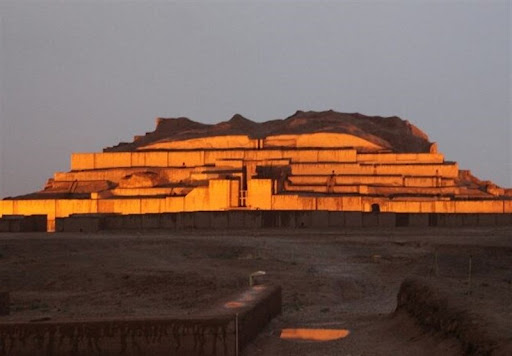
Ziggurat Duravantash (Assyrian: Dūr Untaš, Elamite: Āl Untaš dNapiriša) or Choghazanbil in Persian, is an ancient place of worship that was built around 1250 BC in the Elamite civilization. In the Lori language, Chagha means hill and basket means basket. This ziggurat is the central building of the ancient site left from the Elamite complex Duravantash (Ontash city), which is located near Shush in Khuzestan province. In 1979, Chaghazenbil was included in the UNESCO World Heritage List as the first historical monument from Iran, and its unique architecture, along with the ziggurats discovered in the middle of Rhodan, is known to archaeologists and those interested in history and world cultural heritage. Orientalists consider Chaghazanbil to be the oldest known religious building in Iran
In 1890, the famous geologist Jacques de Morgan reported that there are oil mines in Chaghazanbil area. It seems that Iran Oil Company was founded after this report. After fifty years, engineers who were engaged in oil activities in Chaghazanbil found a brick with writings on it. The brick was sent to the archaeologists who were excavating in Susa, and after that a chain of excavations took place in Chaghazanbil, which led to the discovery of Chaghazanbil Temple and other important works.
This building was first discovered by "Brown" Boraven, a New Zealand expert of Iran and England Oil Company in 1936 [source required] and was excavated by Roman Girshman between 1953 and 1963.
For many centuries, this building was buried under the soil in the form of an overturned basket until it was excavated by the French Roman Girshman during the Pahlavi II era. Although the excavation of this symmetrical convex building located in the heart of the Saf plain completed the world's knowledge about the ancient history of Iranians, but after about 50 years of this discovery, leaving this building in the hands of natural erosive factors and defenseless against them caused many damages. into this clay-mud building and especially the remnants of the upper floors have suffered severe erosion that if immediate basic protection and maintenance measures are not taken for this precious work, its destruction will accelerate and it will turn into a pile of mud in the coming...
Read moreA beautiful and magnificent temple! Choghaznabil is one of the most prominent religious shrines in Iran, built in 1250 BC during the Elamite period. Choghaznabil is located near the ancient city of Susa in the province of Khuzestan and near the ancient region of Haft Tappeh. This structure was the first historical monument in Iran in 1979 to be inscribed on the UNESCO World Heritage List. It was built 52 meters, of which only 2 floors remain today with a height of about 25 meters. The route to reach Choghaznabil is via Ahvaz-Shush road, which passes through the cities of Shush and Shushtar and along the Dez River. Napirish, the king of Ilam, was built to praise the ancient god Inshushinak, the goddess of guardianship of Susa. Around 1935, while employees of the Anglo-Iranian Oil Company were drilling for oil, they found an inscribed brick and noticed a large hill in an area that was later discovered by the French archaeologist Roman Gershman during the 8th to 8th centuries. Much information was obtained from that area and the ziggurat.
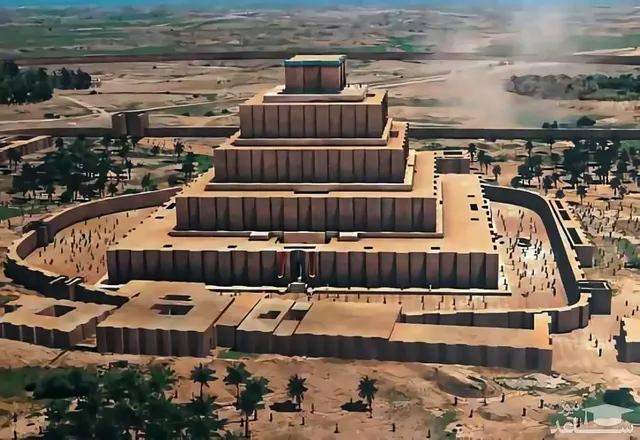
In the main area of Choghaznabil, there are three brick buildings that are built in a circle and the information obtained indicates that they are something like a sundial. Of these three buildings, only one of them has survived to some extent. It is said that these buildings were the basis for the sculptures that existed on all four sides of Choghaznabil, but with a little care it can be understood that they were used to identify the time. Together, these buildings formed a single set, in fact, an observatory or solar calendar to calculate the year and year and extract the calendar, or to identify the first and middle days of each season or the vernal and autumn equinoxes, as well as to determine the autumn revolutions and It was winter. The changes between the angles of the sunscreens are equal to the changes in the angle of the sunrise at the beginning of each season. In fact, the sunscreens have been used to detect shadows at sunrise and sunset. The bricks used to make this sunscreen They are also specially made and molded for this purpose and have an octagonal shape.
It can be surprising to the whole world that thousands of years ago Iranians thought of using tools and structures that could account for their year...
Read moreThe Elamites came into being around 3000 BCE – or, quite possibly, a millennium or more before this; it’s pretty hard to put a precise date on these things – and occupied what is now Khuzestan Province in Iran, as well as part of southeast Iraq. They were neighbours to the Babylonians, the Sumerians, the Akkadians, the Assyrians, and the Medes.Ptolemy, the Egyptian geographer, called the kingdom of the Elamites Susiana, after their capital Susa (now Shush, in Iran). The Elamites thrived for thousands of years, but came undone after their capital was crushed in 646 BCE by the Assyrian king Ashurbanipal. A tablet discovered in Nineveh (Iraq) tells of the Elamite’s downfall through the words of the vindictive Assyrian king.Susa, the great holy city, abode of their Gods, seat of their mysteries, I conquered. I entered its palaces, I opened their treasuries where silver and gold, goods and wealth were amassed … I destroyed the ziggurat of Susa. I smashed its shining copper horns. I reduced the temples of Elam to naught; their gods and goddesses I scattered to the winds. The tombs of their ancient and recent kings I devastated, I exposed to the sun, and I carried away their bones toward the land of Ashur. I devastated the provinces of Elam and on their lands I sowed salt.Chogha Zanbil Chogha Zanbil, also known as the city of Untash, was built for King Untash-Napirisha, and was dedicated to Inshushinak, the god of darkness and the underworld. The foundations of eleven small temples surround the ziggurat, these dedicated to gods of lower rank. Outside the ziggurat’s walls are the remains of a royal palace and several vaults believed to be tombs.Chogha Zanbil was abandoned following the destruction of the Elamite culture in roughly 646 BCE. During the following centuries it became overgrown by vegetation – Iran was still densely forested at the time – and over time became covered by sands as the nation succumbed to desertification. Chogha Zanbil was lost to the world for the next 2,500 years.
It lay buried and forgotten until 1935 when stumbled upon by oil...
Read more