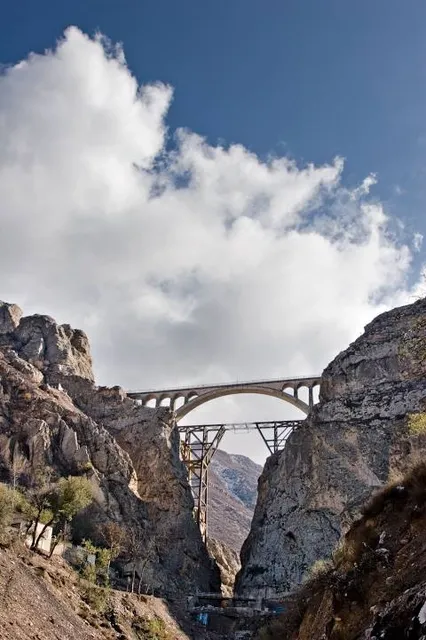
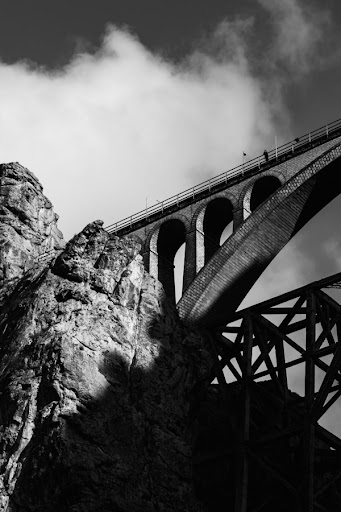
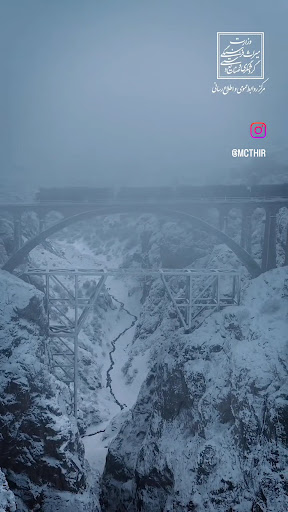
Veresk Bridge is considered one of the engineering marvels of both the country and the world. Its location in the highlands makes crossing it an exhilarating experience. This bridge is recorded in the Guinness Book of Records for its height from the valley floor. Veresk Bridge is the largest railway bridge in Iran, enhancing the beauty of the Alborz mountain landscape. Its historical and engineering significance has led to its inclusion in the national heritage list. Winston Churchill dubbed it the 'Bridge of Victory.'
Located in the village of Veresk in Savadkuh County, Mazandaran, this bridge connects two large mountains, Abbasabad, along the Tehran-North railway line. It links the north and south of the country and is used exclusively for passenger trains between Tehran and Gorgan, Tehran and Sari, as well as for fuel and freight trains. It is situated 45 kilometers south of Zirab and 85 kilometers from Qaemshahr.
After the contract was signed, the best European engineers were dispatched to survey and design the route. However, their initial plan was abandoned due to the steep slopes and potential dangers. Eventually, they designed a challenging route three kilometers from the Veresk Valley, featuring three steps to minimize the risk for trains. This route became known as the 'Three Golden Lines.' To cross the Veresk Valley, a bridge had to be built, which was ultimately constructed using the simplest engineering tools like hand drills, wooden scaffolding, and dynamite.
Veresk Bridge played a crucial role in the Allies' victory during World War II. This statement is no exaggeration; the bridge's significance in the war is undeniable, and Allied commanders acknowledged its importance in their success. Without the railway and Veresk Bridge, the course of history might have been different. During World War II, Iran served as a transit point for weapons and ammunition between the Allied forces, aiding the Soviet Union in preventing Nazi domination. Churchill, the British Prime Minister, called it the 'Bridge of Victory.'
The beautiful nature of the Savadkuh region and its surrounding villages make it an ideal destination for nature adventures and camping. Along this route, you can see various attractions, including Veresk Bridge. You can set up camp in areas with views of the bridge or join guided tours to visit Veresk Waterfall. On the way from the village to the waterfall, which takes less than half an hour, you will pass under Veresk Bridge and get a closer look at its...
Read moreThere is old and amazing that be made artistically! This bridge was built before Islamic revolution in Iran in order of Pahlavi dynasty’s king, Reza Shah. It was built by the Austrian-Germany company and even without any complicated material. And for showing how much this monument is secured the director of this project with his family stood under the bridge when for the first time the train was passing on the rail of this bridge. It was also named the bridge of victory by Churchill because by this bridge Iran helped the Allied to complete their weapons. Almost every 25 minutes each train full of weapons passed on this bridge! Shocking ha! The name of the bridge in the Guinness Book of Records is recorded in the bridge section at altitudes above 61 meters. After rebuilding the bridge, Reza Shah came to the mountains to open the bridge. After examining and understanding how the bridge was built on a marvelous job, the Austrian engineer, along with his family, went under the bridge and Stay there until the first train crossed the bridge. Reza Shah wanted to get Austrian engineer assured, and the Austrian engineer, as sure as he and his team, was working on, the first train was taken over from the bridge and then Austrian and German engineers ensured this beautiful bridge for 70 years. The work of Reza Shah for the Indians and others who saw and heard this story was very wonderful, and today, after decades, this story is still flowing...
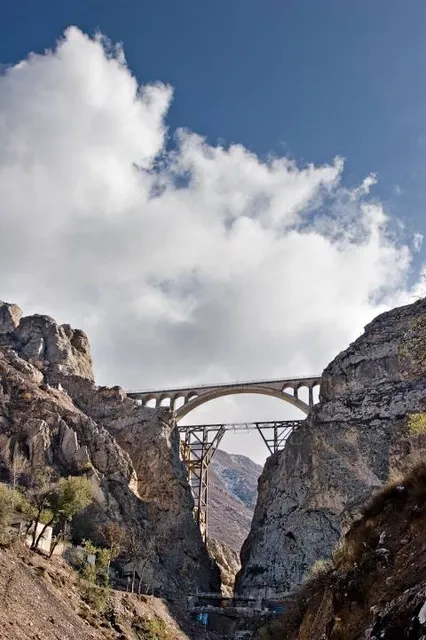
Read moreVeresk Bridge is a historic railway bridge in Iran, located in Mazandaran province. It was constructed during the reign of Reza Shah Pahlavi in 1936 by a Danish engineering company. The bridge, standing at approximately 110 meters high and spanning 66 meters, is a crucial part of Iran’s railway network, connecting Tehran to the northern regions.
Veresk Bridge is known for its remarkable engineering and the challenging conditions under which it was built. It was constructed without the use of modern heavy machinery, relying on traditional methods and human labor. The bridge played a significant role during World War II, facilitating the transport of supplies and military equipment for the Allies.
Today, Veresk Bridge is a symbol of Iranian engineering and resilience. It attracts tourists and railway enthusiasts who admire its architectural beauty and historical significance. Surrounded by breathtaking mountain landscapes, the bridge offers a scenic view of the Alborz Mountains, making it a popular spot for photography. Despite being nearly a century old, Veresk Bridge remains operational and continues to serve as a vital transportation route in Iran. It stands as a testament to the ingenuity and perseverance of the engineers who built...
Read more