YouTube: SkyVistaDrifts
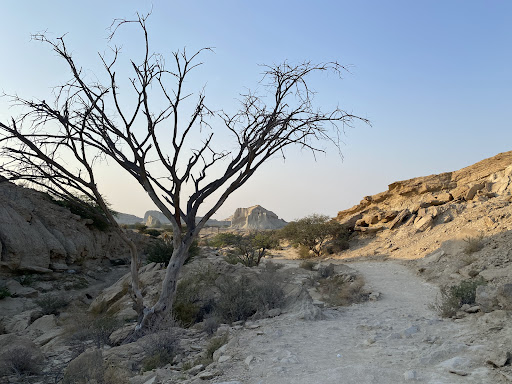
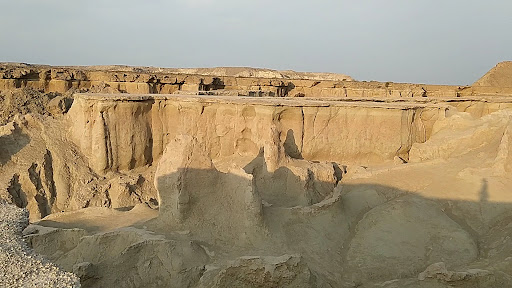
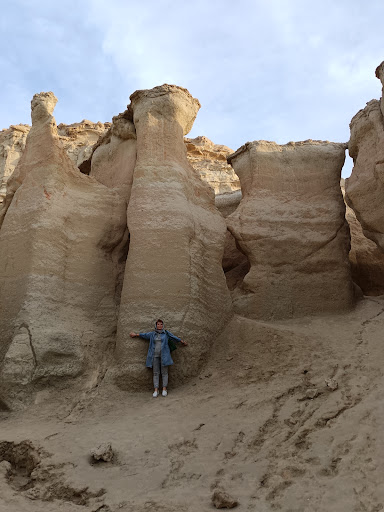
Once upon a time in Qeshm Island in Iran, a star fell down from the sky and hit the ground right in the heart and shaped a giant, mysterious, and weird valley which we call it Stars Valley or Valley of Stars now. This geographical site is one of the most unique natural attractions in Qeshm and Iran. Let’s take a closer look at this fascinating natural phenomenon which is also a UNESCO World Natural Heritage Sites and the only geopark in the Middle East. Stars Valley or Valley of Stars is located in Qeshm Island and it is definitely on your “MUST SEE” list in Qeshm. As mentioned, based on local anecdotes, a star hit the ground and shaped this valley. Well, locals aren’t entirely wrong. Scientific investigations on this place revealed that this phenomenon might be formed by a cosmic in the first place. Moreover, the mysterious shapes inside this valley are made by water and wind erosions. This attraction is unique because you can only find these kinds of geographical sites in Iran and Arizona, USA. Although we now know no stars involve in shaping Stars Valley, in the night sky, you can see hundreds of stars with naked eyes and that alone, justifies the name “Valley of Stars”. At first glance, you might think you have stepped on planet Mars! You will see red pointy cones, pillars that made from erosion, arcs, bulkheads, and stripped shaped parapets that have more than millions of years ago. Due to the layouts’ weak structure, there are appreciable changes in the valley’s appearance after any heavy rain (which rarely happens). DO NOT GO THERE AT NIGHT! Any local person will say this to you. Why? Because it’s haunted! Like any great scary story. Locals believe that this valley is the home of ghosts and genes and if you step into this place at night; there is no way to turn back. Those who survive say they heard terrifying and mysterious sounds! Pretty scary, right? Well, don’t freak out yet. There is an explanation for all of this. The wind circulation between labyrinth structures of this valley made these horrifying sounds at night. So it is safe to say that no one or nothing is going to haunt you while you are there. Still, it is better to avoid staying in this place at night, as you should have camping equipment. Also, note that you cannot stay inside Qeshm geopark without a permit from Cultural Heritage, Handicrafts, and Tourism...
Read moreQeshm Island, the largest island in Iran and the Middle East, is situated in the Persian Gulf within Hormozgan Province. This captivating island boasts a variety of attractions, including mangrove forests, the Khorbes caves, the Chahkouh Strait, playful blue dolphins, the stunning Persian Gulf, the enchanting Valley of Stars, and charming smaller islands, as well as a unique salt cave.
Geographically, Qeshm Island is bordered to the north by Bandar Abbas, the capital of Hormozgan Province, and part of Bandar Lengeh city. To the northeast lies Hormuz Island, while Lark Island is to the east. To the south, you will find Hengam Island, and to the southwest are the islands of Tanb Bozor, Koch, and Abu Musi.
The nearest port on the mainland to Qeshm Island is Bandar Abbas, located approximately 10.8 nautical miles (20 kilometers) from Qeshm Port. The closest point between the island and the mainland is at Bandar Laft on Qeshm Island, which is about one nautical mile (1,800 meters) from Bandar Pul in Hormozgan city.
Covering an area of 1,491 square kilometers, Qeshm Island is roughly 2.5 times larger than Bahrain, the second-largest island in the Persian Gulf. The island stretches approximately 100 to 130 kilometers from Qeshm Port to Basaidu Port at its southern tip, according to various sources.
Qeshm Island experiences an average annual temperature of around 26 degrees Celsius, with daily maximum and minimum temperatures averaging 33 and 18 degrees Celsius, respectively. The island exhibits significant seasonal temperature variations, with the hottest months occurring from July 10 to September 10, and the coldest months being January and February. Notably, Qeshm Island has recorded absolute temperature extremes of 46 degrees Celsius at its peak and 16 degrees Celsius...
Read moreChakavir is one of the beautiful geosites of Qeshm and its distance to Qeshm city is about 92 km. This strait is formed by the erosion of layers by wind and water over millions of years, and because the resistance of the layers is very different from each other. #Qeshm...
Read more