The Hamun lake region is one of the most critical social and environmental emergencies in post-Taliban Afghanistan. Largely unknown by the international community, this man made disaster with acute political and social implications, has now hit crisis level, impacting on the lives of hundreds of thousands of people in Iran and Afghanistan.
"This is devastating. This was a completely lake-based culture and it's been completely wiped out," a consultant for the United Nations Development Programme (UNDP), Murray Wilson, told IRIN in the Iranian capital, Tehran. "It's just a dustbowl now."
This once vibrant area, known for its abundant wetlands, bio-diversity and natural productivity - purportedly protected under an international wetlands convention - is lost. Today it bears testament to the political tensions that have divided the two countries for decades. As Afghanistan begins a new path towards reconstruction, the question now is how to restore the region to sustainability.
Once covering an area of four thousand square kilometres - or almost double the size of Luxembourg - the Hamun lake region, a series of three interconnected lakes in southeastern Iran and southwestern Afghanistan, is now a wasteland. No water has reached the lower river basin in Sistan for three years now and the destruction of the environment is almost complete. Agricultural lands have been devastated by desertification, while whole villages have been deserted and populations displaced as pressure on local resources intensifies.
At issue is the Helmand river, Afghanistan's longest river. Rising in the central Hindu Kush mountains, it flows 1,300 km in a southwesterly direction across more than half the length of the country before flowing northward for a short distance through Iranian territory and emptying into a series of landlocked lakes and marshy lagoons straddling the Iranian Afghan border.
With several tributaries, including the Arghandab and Tarnak, and draining more than 160,000 square km, the Helmand is one of Afghanistan's most important rivers, providing vital irrigation and water for millions within Afghanistan and Iran alike.
But a long dispute between Kabul and Tehran has centred on Iran's claim to a portion of the Helmand's waters. The river's flow is controlled by a number of regulatory structures, principally the Garishk, Kajaki, Daula and Boghra dams, constructed in the 1940s with US assistance, deep inside Afghanistan.
Under an agreement between the two countries signed in 1973, Afghanistan is obliged to let at least 26 cubic metres of water per second flow from the dams into Iran. And while control over the flow has long proven a source of contention between the two countries, in 1999, the Taliban turned the taps off completely.
According to a recent UNDP mission to the region from Tehran, the destruction of the lakes and its social system which had been sustained for thousands of years, is complete. Today there is a real danger of social conflict compounded by a number of other causal factors which are interrelated and interdependent.
Among these are water rights issues from the Helmand, extensive environmental degradation of productive agricultural land, drought and pressure on the Iranian social safety net. There are also the cultural implications of the prolonged presence of Afghans in Iran, environmental degradation, drug smuggling, weapons proliferation and unemployment.
Viewed objectively, Wilson believes all the ingredients exist for a deepening of the ongoing complex social and environmental emergency, with the potential for destabilising and delaying the Afghan recovery process.
Located in the historic state of Sistan, which today includes the northern parts of Sistan-Baluchistan province in Iran, as well as the Afghan provinces of Nimroz, Farah and parts of Helmand, the Hamun area has been a centre for Persian culture and agriculture for thousands of years. Long known as the "bread basket" of Iran, its soils were rich and potentially productive, while ironically, the Helmand or Hirmand river derives its...
Read more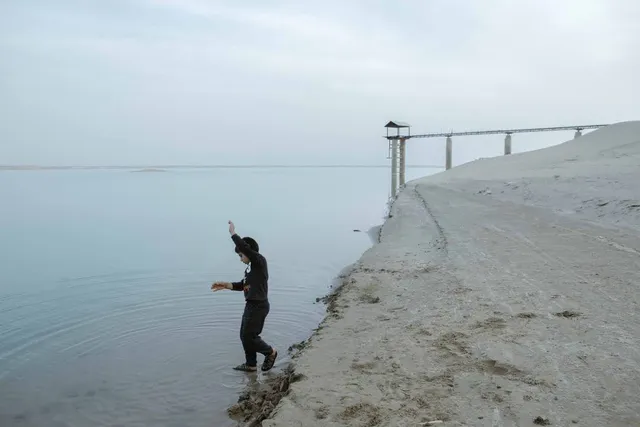
 Learn more insights from Wanderboat AI.