HTML SitemapExplore
logo
Find Things to DoFind The Best Restaurants

Sheikh Safi Al-Din Ardabili's Shrine — Attraction in Ardabil

Name
Sheikh Safi Al-Din Ardabili's Shrine
Description
Nearby attractions
Mirza Ali Akbar Mosque
Ardabil Province, Ardabil، قاضی، 67XV+HJW, Iran
Mobashsheri Historical House
Ardabil Province, Ardabil، uchdukan street, Ochdokan St, 67WX+VFV, Iran
شهربازی الماس شهر
67RQ+JWR, Ardabil, Ardabil Province, Iran
Nearby restaurants
Nearby hotels
Related posts
Keywords
Sheikh Safi Al-Din Ardabili's Shrine tourism.Sheikh Safi Al-Din Ardabili's Shrine hotels.Sheikh Safi Al-Din Ardabili's Shrine bed and breakfast. flights to Sheikh Safi Al-Din Ardabili's Shrine.Sheikh Safi Al-Din Ardabili's Shrine attractions.Sheikh Safi Al-Din Ardabili's Shrine restaurants.Sheikh Safi Al-Din Ardabili's Shrine travel.Sheikh Safi Al-Din Ardabili's Shrine travel guide.Sheikh Safi Al-Din Ardabili's Shrine travel blog.Sheikh Safi Al-Din Ardabili's Shrine pictures.Sheikh Safi Al-Din Ardabili's Shrine photos.Sheikh Safi Al-Din Ardabili's Shrine travel tips.Sheikh Safi Al-Din Ardabili's Shrine maps.Sheikh Safi Al-Din Ardabili's Shrine things to do.
Sheikh Safi Al-Din Ardabili's Shrine things to do, attractions, restaurants, events info and trip planning
Sheikh Safi Al-Din Ardabili's Shrine
IranArdabil ProvinceArdabilSheikh Safi Al-Din Ardabili's Shrine

Basic Info

Sheikh Safi Al-Din Ardabili's Shrine

Ardabil, Sheikh Safi Al-din Ardabili, 67XR+6FF عالی قاپو, Iran
4.5(671)
Open 24 hours
Save
spot

Ratings & Description

Info

Cultural
Scenic
Family friendly
attractions: Mirza Ali Akbar Mosque, Mobashsheri Historical House, شهربازی الماس شهر, restaurants:
logoLearn more insights from Wanderboat AI.
Phone
+98 45 3324 2411

Plan your stay

hotel
Pet-friendly Hotels in Ardabil
Find a cozy hotel nearby and make it a full experience.

hotel
Affordable Hotels in Ardabil
Find a cozy hotel nearby and make it a full experience.

hotel
The Coolest Hotels You Haven't Heard Of (Yet)
Find a cozy hotel nearby and make it a full experience.

hotel
Trending Stays Worth the Hype in Ardabil
Find a cozy hotel nearby and make it a full experience.

Reviews

Nearby attractions of Sheikh Safi Al-Din Ardabili's Shrine

Mirza Ali Akbar Mosque

Mobashsheri Historical House

شهربازی الماس شهر
Mirza Ali Akbar Mosque

Mirza Ali Akbar Mosque

4.3

(13)

Open 24 hours
Click for details
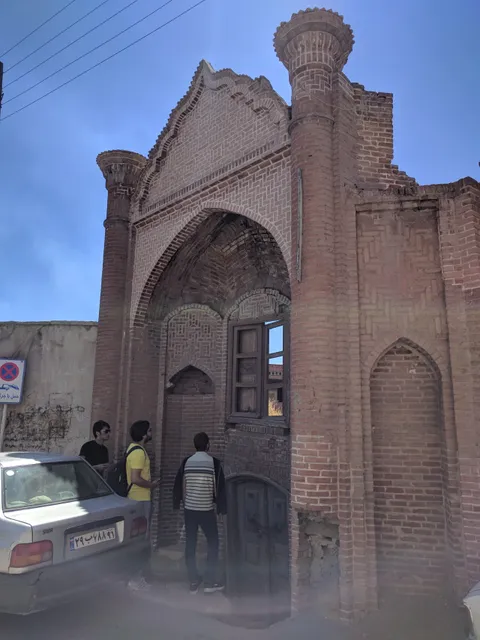
Mobashsheri Historical House

Mobashsheri Historical House

3.4

(10)

Open until 12:00 AM
Click for details

شهربازی الماس شهر

شهربازی الماس شهر

3.7

(8)

Open 24 hours
Click for details
Get the Appoverlay
Get the AppOne tap to find yournext favorite spots!
Wanderboat LogoWanderboat

Your everyday Al companion for getaway ideas

CompanyAbout Us
InformationAI Trip PlannerSitemap
SocialXInstagramTiktokLinkedin
LegalTerms of ServicePrivacy Policy

Get the app

© 2025 Wanderboat. All rights reserved.
logo

Reviews of Sheikh Safi Al-Din Ardabili's Shrine

4.5
(671)
avatar
5.0
6y

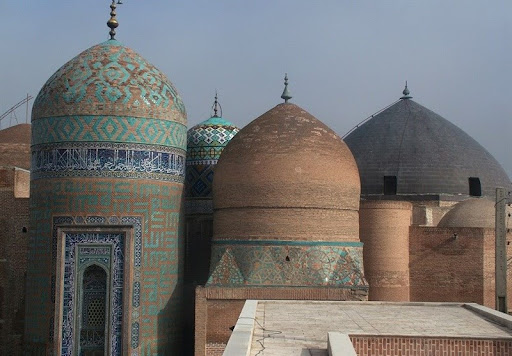
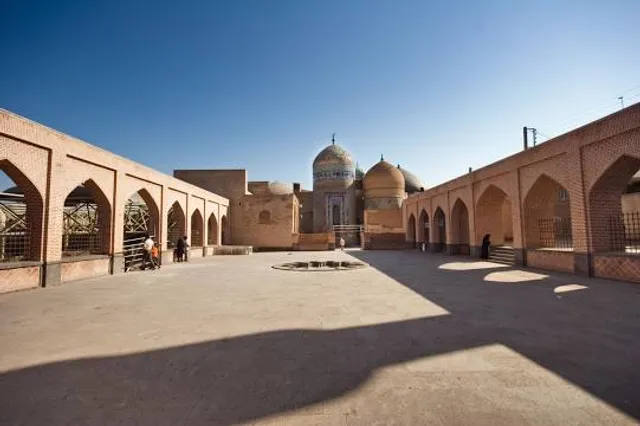
Built between the beginning of the 16th century and the end of the 18th century, this place of spiritual retreat in the Sufi tradition uses Iranian traditional architectural forms to maximize use of available space to accommodate a variety of functions (including a library, a mosque, a school, mausolea, a cistern, a hospital, kitchens, a bakery, and some offices). It incorporates a route to reach the shrine of the Sheikh divided into seven segments, which mirror the seven stages of Sufi mysticism, separated by eight gates, which represent the eight attitudes of Sufism. The ensemble includes well-preserved and richly ornamented facades and interiors, with a remarkable collection of antique artefacts. It constitutes a rare ensemble of elements of medieval Islamic architecture.

Description is available under license CC-BY-SA IGO 3.0

English French Arabic Chinese Russian Spanish Japanese Dutch

Sheikh Safi al-din Khānegāh and Shrine Ensemble in Ardabil] Sheikh Safi al-din Khānegāh and Shrine Ensemble in Ardabil (Iran (Islamic Republic of)) © UNESCO [Sheikh Safi al-din Khānegāh and Shrine Ensemble in Ardabil Sheikh Safi al-din Khānegāh and Shrine Ensemble in Ardabil Sheikh Safi al-din Khānegāh and Shrine Ensemble in Ardabil Sheikh Safi al-din Khānegāh and Shrine Ensemble in Ardabil Sheikh Safi al-din Khānegāh and Shrine Ensemble in Ardabil Sheikh Safi al-din Khānegāh and Shrine Ensemble in Ardabil Outstanding Universal Value

Brief synthesis

Sheikh Safi al-Din Khānegāh and Shrine Ensemble was built as a small microcosmic city with bazaars, public baths, squares, religious buildings, houses, and offices. It was the largest and most complete khānegāh and the most prominent Sufi shrine since it also hosts the tomb of the founder of the Safavid Dynasty. For these reasons, it has evolved into a display of sacred works of art and architecture from the 14th to the 18th century and a centre of Sufi religious pilgrimage.

The Sheikh Safi al-Din Khānegāh and Shrine Ensemble in Ardabil is of Outstanding Universal Value as an artistic and architectural masterpiece and an outstanding representation of the fundamental principles of Sufism. Ilkhanid and Timurid architectural languages, influenced by Sufi philosophy, have created new spatial forms and decorative patterns. The layout of the ensemble became a prototype for innovative architectural expressions and a reference for other khānegāhs. As the shrine of a prominent Sufi master, who also was the founder of the Safavid Dynasty, the property has remained sacred in Iran up to the...

   Read more
avatar
5.0
1y

The mausoleum of Sheikh Safiuddin Ardabili is one of the most important historical monuments of Ardabil city and one of the unique historical monuments of Iran, which in terms of architecture and tile work is one of the masterpieces of the 8th century AH and the years after that, and after the death of the Sheikh in 735 AH, his son It was founded and Shah Abbas added important buildings to this complex and made reforms in it This collection is one of the most memorable historical works of the Safavid dynasty and was registered as a valuable and historical place in the UNESCO World Heritage List in 2010, as well as the tomb of Sheikh Safiuddin Ardabili as the largest, most complete and most prominent house, which is the importance of this work. History is generally manifested in its relationship with the Safavid dynasty.

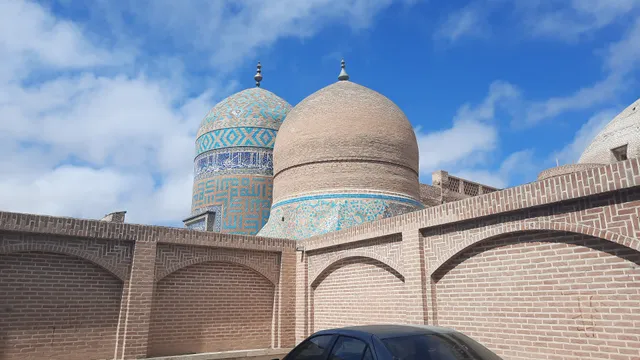
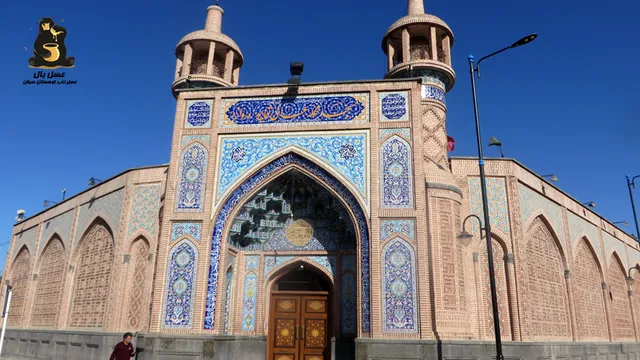
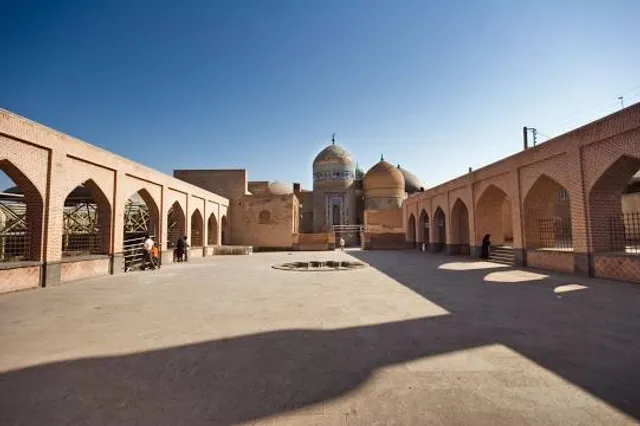
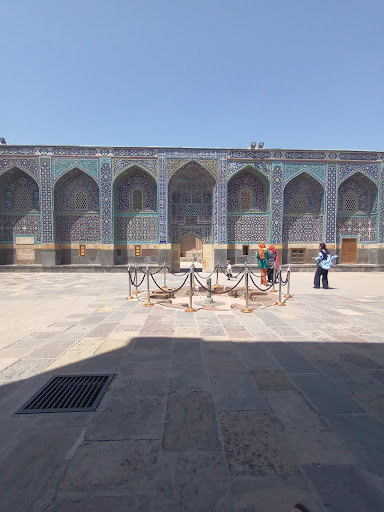
The entrance to the mausoleum of Sheikh Safiuddin Ardabili is located on the eastern front of Aali Qapu Square, which opens to a large courtyard through its two wooden gates, and on the west side of the same square, the main head of the mausoleum named Aali Qapu was located, which was built by Yusuf during the reign of Shah Abbas II. It was built by Shah Bin Malik Safia, and the building of the main gate of the mausoleum and the area of ​​the three domes, which are decorated with mosaic tiles and inscriptions in Raqa and Kufi script, have given this place a special grandeur and effect.

The mausoleum of Sheikh Safiuddin is a cylindrical tower with a short dome on top of which there is an inlaid box under the dome, and it is considered one of the exquisite works of this mausoleum, which has an inscription engraved in Raqa script on its edge, and has a tomb that is famous for its masterpieces. Art and architecture and the presentation of the basic principles of mysticism in the world have also been assigned a high value, and for this reason, it has maintained its sanctity and value until today.

Sheikh Safi's house and monastery is located in this place, and according to the Sheikh's will, his body was buried in a room next to the hermitage, the garden, and the pond, and a building was built over his grave, so that in addition to the tomb of Sheikh Safi and the mausoleum of Shah Ismail I, there are other tombs of the princes. Safavi and his children should be placed in this tomb and place of martyrdom. The beautiful collection of Sheikh Safiuddin Ardabili tomb is one of the 10 important ancient monuments of the country, whose original building dates back to before Islam, which was respected by the Safavid kings during the Safavid rule.

The unique carpet of the tomb of Sheikh Safiuddin Ardabili, which has adorned this tomb for many years and is now included in the list of 50 selected artistic masterpieces of the world, is in the treasure of "Victoria Albert Hall" in London and is one of the rare works of Iranian history that art It shows Iranian...

   Read more
avatar
3.0
2y

I recently visited Sheikh Safi al-Din Ardabili Shrine, a UNESCO World Heritage Site located in the city of Ardabil, Iran. The shrine is the tomb of Sheikh Safi al-Din Ardabili, a Sufi saint who founded the Safavid order of Islam. The shrine complex is a vast and impressive complex, with a number of different buildings, including a mosque, a mausoleum, a library, and a museum.

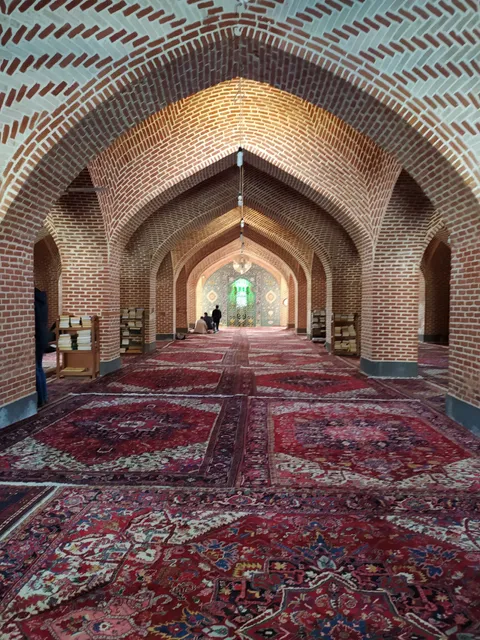
The shrine is beautifully decorated with intricate tilework, calligraphy, and woodwork. The mausoleum is particularly impressive, with a soaring dome and a beautifully carved mihrab. The mosque is also worth visiting, with its delicate stained glass windows and its intricate prayer rugs.

The shrine complex is a peaceful and serene place, and it is a great place to learn about the history of Sufism and the Safavid dynasty. I highly recommend visiting Sheikh Safi al-Din Ardabili Shrine if you are ever in Ardabil, Iran.

Here are some additional details about my visit:

I visited the shrine in the morning, and it was not crowded at all. I was able to wander around the complex at my own pace and take in all the sights and sounds. The staff at the shrine were very friendly and helpful. They were happy to answer my questions about the shrine and the Safavid dynasty. I spent about two hours at the shrine, and I felt like I had enough time to see everything. However, if you are interested in learning more about the history of the shrine and the Safavid dynasty, you could easily spend more time there. Overall, I had a great experience visiting Sheikh Safi al-Din Ardabili Shrine. It is a beautiful and historic place, and I would definitely recommend it to anyone who is interested in learning more about Sufism or the...

   Read more
Page 1 of 7
Previous
Next

Posts

Sama shSama sh
Built between the beginning of the 16th century and the end of the 18th century, this place of spiritual retreat in the Sufi tradition uses Iranian traditional architectural forms to maximize use of available space to accommodate a variety of functions (including a library, a mosque, a school, mausolea, a cistern, a hospital, kitchens, a bakery, and some offices). It incorporates a route to reach the shrine of the Sheikh divided into seven segments, which mirror the seven stages of Sufi mysticism, separated by eight gates, which represent the eight attitudes of Sufism. The ensemble includes well-preserved and richly ornamented facades and interiors, with a remarkable collection of antique artefacts. It constitutes a rare ensemble of elements of medieval Islamic architecture. Description is available under license CC-BY-SA IGO 3.0 English French Arabic Chinese Russian Spanish Japanese Dutch [Sheikh Safi al-din Khānegāh and Shrine Ensemble in Ardabil] Sheikh Safi al-din Khānegāh and Shrine Ensemble in Ardabil (Iran (Islamic Republic of)) © UNESCO [Sheikh Safi al-din Khānegāh and Shrine Ensemble in Ardabil] [Sheikh Safi al-din Khānegāh and Shrine Ensemble in Ardabil] [Sheikh Safi al-din Khānegāh and Shrine Ensemble in Ardabil] [Sheikh Safi al-din Khānegāh and Shrine Ensemble in Ardabil] [Sheikh Safi al-din Khānegāh and Shrine Ensemble in Ardabil] [Sheikh Safi al-din Khānegāh and Shrine Ensemble in Ardabil] [Sheikh Safi al-din Khānegāh and Shrine Ensemble in Ardabil] [Sheikh Safi al-din Khānegāh and Shrine Ensemble in Ardabil] [Sheikh Safi al-din Khānegāh and Shrine Ensemble in Ardabil] [Sheikh Safi al-din Khānegāh and Shrine Ensemble in Ardabil] [Sheikh Safi al-din Khānegāh and Shrine Ensemble in Ardabil] [Sheikh Safi al-din Khānegāh and Shrine Ensemble in Ardabil] Outstanding Universal Value Brief synthesis Sheikh Safi al-Din Khānegāh and Shrine Ensemble was built as a small microcosmic city with bazaars, public baths, squares, religious buildings, houses, and offices. It was the largest and most complete khānegāh and the most prominent Sufi shrine since it also hosts the tomb of the founder of the Safavid Dynasty. For these reasons, it has evolved into a display of sacred works of art and architecture from the 14th to the 18th century and a centre of Sufi religious pilgrimage. The Sheikh Safi al-Din Khānegāh and Shrine Ensemble in Ardabil is of Outstanding Universal Value as an artistic and architectural masterpiece and an outstanding representation of the fundamental principles of Sufism. Ilkhanid and Timurid architectural languages, influenced by Sufi philosophy, have created new spatial forms and decorative patterns. The layout of the ensemble became a prototype for innovative architectural expressions and a reference for other khānegāhs. As the shrine of a prominent Sufi master, who also was the founder of the Safavid Dynasty, the property has remained sacred in Iran up to the present day.
Ok OkOk Ok
The mausoleum of Sheikh Safiuddin Ardabili is one of the most important historical monuments of Ardabil city and one of the unique historical monuments of Iran, which in terms of architecture and tile work is one of the masterpieces of the 8th century AH and the years after that, and after the death of the Sheikh in 735 AH, his son It was founded and Shah Abbas added important buildings to this complex and made reforms in it This collection is one of the most memorable historical works of the Safavid dynasty and was registered as a valuable and historical place in the UNESCO World Heritage List in 2010, as well as the tomb of Sheikh Safiuddin Ardabili as the largest, most complete and most prominent house, which is the importance of this work. History is generally manifested in its relationship with the Safavid dynasty. The entrance to the mausoleum of Sheikh Safiuddin Ardabili is located on the eastern front of Aali Qapu Square, which opens to a large courtyard through its two wooden gates, and on the west side of the same square, the main head of the mausoleum named Aali Qapu was located, which was built by Yusuf during the reign of Shah Abbas II. It was built by Shah Bin Malik Safia, and the building of the main gate of the mausoleum and the area of ​​the three domes, which are decorated with mosaic tiles and inscriptions in Raqa and Kufi script, have given this place a special grandeur and effect. The mausoleum of Sheikh Safiuddin is a cylindrical tower with a short dome on top of which there is an inlaid box under the dome, and it is considered one of the exquisite works of this mausoleum, which has an inscription engraved in Raqa script on its edge, and has a tomb that is famous for its masterpieces. Art and architecture and the presentation of the basic principles of mysticism in the world have also been assigned a high value, and for this reason, it has maintained its sanctity and value until today. Sheikh Safi's house and monastery is located in this place, and according to the Sheikh's will, his body was buried in a room next to the hermitage, the garden, and the pond, and a building was built over his grave, so that in addition to the tomb of Sheikh Safi and the mausoleum of Shah Ismail I, there are other tombs of the princes. Safavi and his children should be placed in this tomb and place of martyrdom. The beautiful collection of Sheikh Safiuddin Ardabili tomb is one of the 10 important ancient monuments of the country, whose original building dates back to before Islam, which was respected by the Safavid kings during the Safavid rule. The unique carpet of the tomb of Sheikh Safiuddin Ardabili, which has adorned this tomb for many years and is now included in the list of 50 selected artistic masterpieces of the world, is in the treasure of "Victoria Albert Hall" in London and is one of the rare works of Iranian history that art It shows Iranian carpet weavers
Meh rabMeh rab
I recently visited Sheikh Safi al-Din Ardabili Shrine, a UNESCO World Heritage Site located in the city of Ardabil, Iran. The shrine is the tomb of Sheikh Safi al-Din Ardabili, a Sufi saint who founded the Safavid order of Islam. The shrine complex is a vast and impressive complex, with a number of different buildings, including a mosque, a mausoleum, a library, and a museum. The shrine is beautifully decorated with intricate tilework, calligraphy, and woodwork. The mausoleum is particularly impressive, with a soaring dome and a beautifully carved mihrab. The mosque is also worth visiting, with its delicate stained glass windows and its intricate prayer rugs. The shrine complex is a peaceful and serene place, and it is a great place to learn about the history of Sufism and the Safavid dynasty. I highly recommend visiting Sheikh Safi al-Din Ardabili Shrine if you are ever in Ardabil, Iran. Here are some additional details about my visit: I visited the shrine in the morning, and it was not crowded at all. I was able to wander around the complex at my own pace and take in all the sights and sounds. The staff at the shrine were very friendly and helpful. They were happy to answer my questions about the shrine and the Safavid dynasty. I spent about two hours at the shrine, and I felt like I had enough time to see everything. However, if you are interested in learning more about the history of the shrine and the Safavid dynasty, you could easily spend more time there. Overall, I had a great experience visiting Sheikh Safi al-Din Ardabili Shrine. It is a beautiful and historic place, and I would definitely recommend it to anyone who is interested in learning more about Sufism or the Safavid dynasty.
See more posts
See more posts
hotel
Find your stay

Pet-friendly Hotels in Ardabil

Find a cozy hotel nearby and make it a full experience.

Built between the beginning of the 16th century and the end of the 18th century, this place of spiritual retreat in the Sufi tradition uses Iranian traditional architectural forms to maximize use of available space to accommodate a variety of functions (including a library, a mosque, a school, mausolea, a cistern, a hospital, kitchens, a bakery, and some offices). It incorporates a route to reach the shrine of the Sheikh divided into seven segments, which mirror the seven stages of Sufi mysticism, separated by eight gates, which represent the eight attitudes of Sufism. The ensemble includes well-preserved and richly ornamented facades and interiors, with a remarkable collection of antique artefacts. It constitutes a rare ensemble of elements of medieval Islamic architecture. Description is available under license CC-BY-SA IGO 3.0 English French Arabic Chinese Russian Spanish Japanese Dutch [Sheikh Safi al-din Khānegāh and Shrine Ensemble in Ardabil] Sheikh Safi al-din Khānegāh and Shrine Ensemble in Ardabil (Iran (Islamic Republic of)) © UNESCO [Sheikh Safi al-din Khānegāh and Shrine Ensemble in Ardabil] [Sheikh Safi al-din Khānegāh and Shrine Ensemble in Ardabil] [Sheikh Safi al-din Khānegāh and Shrine Ensemble in Ardabil] [Sheikh Safi al-din Khānegāh and Shrine Ensemble in Ardabil] [Sheikh Safi al-din Khānegāh and Shrine Ensemble in Ardabil] [Sheikh Safi al-din Khānegāh and Shrine Ensemble in Ardabil] [Sheikh Safi al-din Khānegāh and Shrine Ensemble in Ardabil] [Sheikh Safi al-din Khānegāh and Shrine Ensemble in Ardabil] [Sheikh Safi al-din Khānegāh and Shrine Ensemble in Ardabil] [Sheikh Safi al-din Khānegāh and Shrine Ensemble in Ardabil] [Sheikh Safi al-din Khānegāh and Shrine Ensemble in Ardabil] [Sheikh Safi al-din Khānegāh and Shrine Ensemble in Ardabil] Outstanding Universal Value Brief synthesis Sheikh Safi al-Din Khānegāh and Shrine Ensemble was built as a small microcosmic city with bazaars, public baths, squares, religious buildings, houses, and offices. It was the largest and most complete khānegāh and the most prominent Sufi shrine since it also hosts the tomb of the founder of the Safavid Dynasty. For these reasons, it has evolved into a display of sacred works of art and architecture from the 14th to the 18th century and a centre of Sufi religious pilgrimage. The Sheikh Safi al-Din Khānegāh and Shrine Ensemble in Ardabil is of Outstanding Universal Value as an artistic and architectural masterpiece and an outstanding representation of the fundamental principles of Sufism. Ilkhanid and Timurid architectural languages, influenced by Sufi philosophy, have created new spatial forms and decorative patterns. The layout of the ensemble became a prototype for innovative architectural expressions and a reference for other khānegāhs. As the shrine of a prominent Sufi master, who also was the founder of the Safavid Dynasty, the property has remained sacred in Iran up to the present day.
Sama sh

Sama sh

hotel
Find your stay

Affordable Hotels in Ardabil

Find a cozy hotel nearby and make it a full experience.

Get the Appoverlay
Get the AppOne tap to find yournext favorite spots!
The mausoleum of Sheikh Safiuddin Ardabili is one of the most important historical monuments of Ardabil city and one of the unique historical monuments of Iran, which in terms of architecture and tile work is one of the masterpieces of the 8th century AH and the years after that, and after the death of the Sheikh in 735 AH, his son It was founded and Shah Abbas added important buildings to this complex and made reforms in it This collection is one of the most memorable historical works of the Safavid dynasty and was registered as a valuable and historical place in the UNESCO World Heritage List in 2010, as well as the tomb of Sheikh Safiuddin Ardabili as the largest, most complete and most prominent house, which is the importance of this work. History is generally manifested in its relationship with the Safavid dynasty. The entrance to the mausoleum of Sheikh Safiuddin Ardabili is located on the eastern front of Aali Qapu Square, which opens to a large courtyard through its two wooden gates, and on the west side of the same square, the main head of the mausoleum named Aali Qapu was located, which was built by Yusuf during the reign of Shah Abbas II. It was built by Shah Bin Malik Safia, and the building of the main gate of the mausoleum and the area of ​​the three domes, which are decorated with mosaic tiles and inscriptions in Raqa and Kufi script, have given this place a special grandeur and effect. The mausoleum of Sheikh Safiuddin is a cylindrical tower with a short dome on top of which there is an inlaid box under the dome, and it is considered one of the exquisite works of this mausoleum, which has an inscription engraved in Raqa script on its edge, and has a tomb that is famous for its masterpieces. Art and architecture and the presentation of the basic principles of mysticism in the world have also been assigned a high value, and for this reason, it has maintained its sanctity and value until today. Sheikh Safi's house and monastery is located in this place, and according to the Sheikh's will, his body was buried in a room next to the hermitage, the garden, and the pond, and a building was built over his grave, so that in addition to the tomb of Sheikh Safi and the mausoleum of Shah Ismail I, there are other tombs of the princes. Safavi and his children should be placed in this tomb and place of martyrdom. The beautiful collection of Sheikh Safiuddin Ardabili tomb is one of the 10 important ancient monuments of the country, whose original building dates back to before Islam, which was respected by the Safavid kings during the Safavid rule. The unique carpet of the tomb of Sheikh Safiuddin Ardabili, which has adorned this tomb for many years and is now included in the list of 50 selected artistic masterpieces of the world, is in the treasure of "Victoria Albert Hall" in London and is one of the rare works of Iranian history that art It shows Iranian carpet weavers
Ok Ok

Ok Ok

hotel
Find your stay

The Coolest Hotels You Haven't Heard Of (Yet)

Find a cozy hotel nearby and make it a full experience.

hotel
Find your stay

Trending Stays Worth the Hype in Ardabil

Find a cozy hotel nearby and make it a full experience.

I recently visited Sheikh Safi al-Din Ardabili Shrine, a UNESCO World Heritage Site located in the city of Ardabil, Iran. The shrine is the tomb of Sheikh Safi al-Din Ardabili, a Sufi saint who founded the Safavid order of Islam. The shrine complex is a vast and impressive complex, with a number of different buildings, including a mosque, a mausoleum, a library, and a museum. The shrine is beautifully decorated with intricate tilework, calligraphy, and woodwork. The mausoleum is particularly impressive, with a soaring dome and a beautifully carved mihrab. The mosque is also worth visiting, with its delicate stained glass windows and its intricate prayer rugs. The shrine complex is a peaceful and serene place, and it is a great place to learn about the history of Sufism and the Safavid dynasty. I highly recommend visiting Sheikh Safi al-Din Ardabili Shrine if you are ever in Ardabil, Iran. Here are some additional details about my visit: I visited the shrine in the morning, and it was not crowded at all. I was able to wander around the complex at my own pace and take in all the sights and sounds. The staff at the shrine were very friendly and helpful. They were happy to answer my questions about the shrine and the Safavid dynasty. I spent about two hours at the shrine, and I felt like I had enough time to see everything. However, if you are interested in learning more about the history of the shrine and the Safavid dynasty, you could easily spend more time there. Overall, I had a great experience visiting Sheikh Safi al-Din Ardabili Shrine. It is a beautiful and historic place, and I would definitely recommend it to anyone who is interested in learning more about Sufism or the Safavid dynasty.
Meh rab

Meh rab

See more posts
See more posts