HTML SitemapExplore
logo
Find Things to DoFind The Best Restaurants

Masjid e Azam, Kufa — Attraction in Al-Kufah Central Subdistrict

Name
Masjid e Azam, Kufa
Description
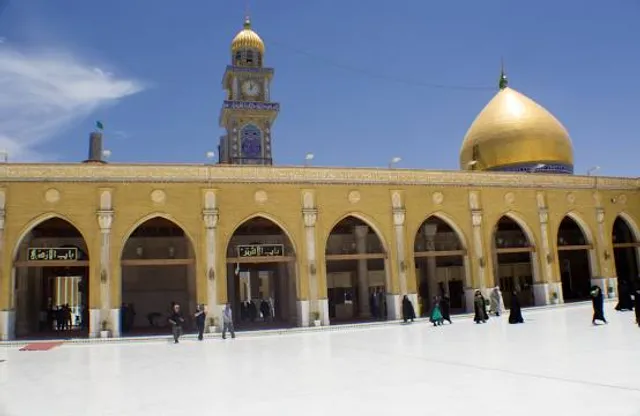
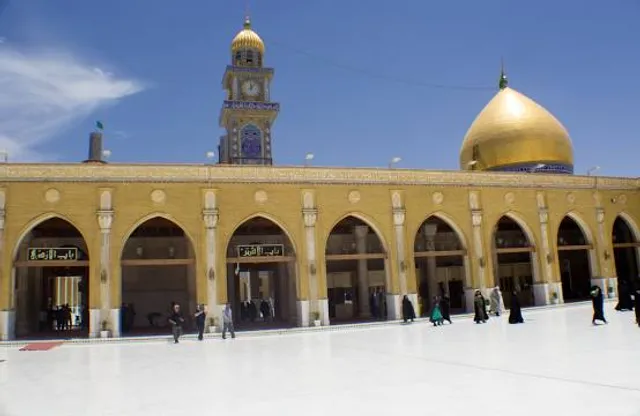
The Great Mosque of Kufa, or Masjid al-Kufa, is located in Kufa, Iraq and is one of the earliest surviving mosques in the world.
Nearby attractions
Darul 'Imara
2CH2+58P, Kufa, Najaf Governorate, Iraq
Nearby restaurants
Nearby hotels
Related posts
Keywords
Masjid e Azam, Kufa tourism.Masjid e Azam, Kufa hotels.Masjid e Azam, Kufa bed and breakfast. flights to Masjid e Azam, Kufa.Masjid e Azam, Kufa attractions.Masjid e Azam, Kufa restaurants.Masjid e Azam, Kufa travel.Masjid e Azam, Kufa travel guide.Masjid e Azam, Kufa travel blog.Masjid e Azam, Kufa pictures.Masjid e Azam, Kufa photos.Masjid e Azam, Kufa travel tips.Masjid e Azam, Kufa maps.Masjid e Azam, Kufa things to do.
Masjid e Azam, Kufa things to do, attractions, restaurants, events info and trip planning
Masjid e Azam, Kufa
IraqAl-Najaf GovernorateAl-Kufah Central SubdistrictMasjid e Azam, Kufa

Basic Info

Masjid e Azam, Kufa

Kufa, Najaf Governorate, Iraq
4.8(4.1K)
Open 24 hours
Save
spot

Ratings & Description

Info

The Great Mosque of Kufa, or Masjid al-Kufa, is located in Kufa, Iraq and is one of the earliest surviving mosques in the world.

Cultural
Family friendly
attractions: Darul 'Imara, restaurants:
logoLearn more insights from Wanderboat AI.
Website
masjed-alkufa.com

Plan your stay

hotel
Pet-friendly Hotels in Al-Kufah Central Subdistrict
Find a cozy hotel nearby and make it a full experience.
hotel
Affordable Hotels in Al-Kufah Central Subdistrict
Find a cozy hotel nearby and make it a full experience.
hotel
The Coolest Hotels You Haven't Heard Of (Yet)
Find a cozy hotel nearby and make it a full experience.
hotel
Trending Stays Worth the Hype in Al-Kufah Central Subdistrict
Find a cozy hotel nearby and make it a full experience.

Reviews

Nearby attractions of Masjid e Azam, Kufa

Darul 'Imara

Darul 'Imara

Darul 'Imara

4.5

(722)

Open until 11:00 PM
Click for details
Get the Appoverlay
Get the AppOne tap to find yournext favorite spots!
Wanderboat LogoWanderboat

Your everyday Al companion for getaway ideas

CompanyAbout Us
InformationAI Trip PlannerSitemap
SocialXInstagramTiktokLinkedin
LegalTerms of ServicePrivacy Policy

Get the app

© 2025 Wanderboat. All rights reserved.
logo

Reviews of Masjid e Azam, Kufa

4.8
(4,086)
avatar
5.0
1y

A very Historical and Spiritual Place. The Great Mosque of Kufa (Arabic: مَسْجِد ٱلْكُوفَة ٱلْمُعَظَّم/ٱلْأَعْظَم, romanized: Masjid al-Muʿaẓẓam/al-ʾAʿaẓam), or Masjid al-Kufa, is located in Kufa, Iraq and is one of the earliest surviving mosques in the world. The mosque, built in the 7th century, was home to Ali ibn Abi Talib, the 4th Rashidun caliph; and contains the shrine of Muslim ibn Aqeel, his companion Hani ibn Urwa, and the revolutionary, Al-Mukhtar. The mosque has been significantly rebuilt and restored multiple times in its history. The first main mosque of Kufa was built with the city's foundation in 638. The original mosque had a square layout and many entrances, and was built alongside a governor's palace (Dar al-Imāra). It featured a roofed colonnade and re-used columns from the nearby former Lakhmid capital of al-Hira and from former churches. The governor's palace likely served as both a residential building and an administrative center.

Ali ibn Abi Talib a.s was assassinated in the mosque in 661. The family members of the first Shi'ite imams and their early supporters were buried within the mosque, including Muslim ibn Aqil and Hani ibn Urwa.

In 670, the governor of the city, Ziyad ibn Abihi, arranged for the mosque to be rebuilt in brick and expanded into a much more monumental form. Craftsmen from other regions were brought in and materials were imported from Ahwaz for the mosque's columns. The governor's palace, or Dar al-Imara, adjacent to the south side of mosque, was also rebuilt. Architectural excavations revealed that the mosque was built on top of much older foundations.

It was in the Great Mosque of Kufa that the first Abbasid caliph was formally proclaimed in 749. By the 14th century, when Ibn Battuta visited the site, only the foundations of the old governor's palace still remained. The mosque underwent various other restorations throughout its history. The golden dome standing today over the tombs, as well as the surrounding tilework decoration, was added during the Safavid period in the 17th and 18th centuries.

Kufa mosque in 2016 In 1998, head of Dawoodi Bohra community, Mohammed Burhanuddin started reconstructing and renovating the mosque.: 97, 106  Work was completed in early 2010. The renovation included decorations with gold and silver, the mihrab being made with a gold zari, and the whole interior being surrounded with verse of the Quran. In addition, the courtyard is covered in white marble from Makrana, India.

The Great Mosque of Kufa was the place where Ali ibn Abi Talib was fatally wounded by a poison-coated sword while prostrating in the Fajr prayer. Also, the mosque contains the tombs of Muslim ibn Aqil, Hani ibn Urwa, and Al-Mukhtar. There are markers within the mosque indicating the locations for where the court of Ali used to preside, where he performed miracles, and where Zayn al-Abidin and Ja'far al-Sadiq a.s used to perform Salah. Additionally, Islamic traditions relate that it was the dwelling place of Nuh (Noah) and that this was the place where he built the Ark. According to Shia belief, it was from this mosque that the diluvium of Noah started submerging earth, as well as being the place from where the water was re-absorbed- also marked within the Mosque. Ja'far al-Sadiq a.s said that up to twelve miles of land in all directions from the mosque are blessed by its holiness Ja'far al-Sadiq a.s was also recorded as remarking that the "mosque in Kufa is superior to that of Jerusalem"[19] and that "performing two prostrations of prayer here would be better for me than ten others at any mosque." There are also Shia traditions which state that performing one prayer in this mosque is the same as having performed one thousand prayers elsewhere, and performing one obligatory prayer here is equal to having performed an accepted Hajj

Today, the outer wall of the mosque, with semi-circular buttresses, probably still dates from the early period of the building's history.The building's floor level has also been raised from its...

   Read more
avatar
5.0
4y

Merits of Masjid al-Kufah

The least to mention in this respect is that this honorable mosque is one of the four mosques that are worthy of being visited so that the merits of such visit may be attained. It is also one of the four places where a traveler is free to perform the obligatory prayers either in the complete form (itmam) or in the shortened form (qasr). The reward of performing one obligatory prayer at Masjid al-Kufah is equal to the reward of going on one acceptable hajj and equal to the reward of performing one thousand prayers at other places.

In Masjid al-Kufah, according to narrations, all Prophets offered prayers, and the Awaited Imam - peace be upon him - will also offer prayer therein. In this connection, a hadith reads that one thousand Prophets and one thousand successors of Prophets offered prayers in Masjid al-Kufah. Moreover, some narrations may hint that this mosque is preferred in merits to the Holy Mosque in Jerusalem (al-masjid al-aqsa).

Ibn Qawlawayh has reported Imam Muhammad al-Baqir (‘a) as saying, “If people were to realize the favors that they may attain when they visit Masjid al-Kufah, they should certainly travel to it from remote countries One obligatory prayer in this mosque is equal in reward to (the reward of) one time of admitted hajj, and to offer a supererogatory (mustahab / nafilah) (mustahab / nafilah) prayer in this mosque is equal in reward to (the reward of) one admitted ‘umrah.”

However, according to another narration, the reward of one obligatory prayer and one supererogatory (mustahab / nafilah) (mustahab / nafilah) prayer that are performed in Masjid al-Kufah is equal to the reward of one hajj and one ‘umrah practiced with the Holy Prophet (s).

Shaykh al-Kulayni, as well as other scholars, has reported on the authority of our master reporters that Imam Ja’far al-Sadiq (‘a) asked Harun ibn Kharijah, “What is the distance between your house and Masjid al-Kufah? Is it one mile?”

“No,” answered Harun, “It is less than that.”

The Imam (‘a) asked, “Do you then perform all your prayers there?”

“No, in fact” answered Harun.

The Imam (‘a) commented, “Had I been present in the precinct of that mosque, I would have never missed any prayer that I can perform there. Do you know the merits of that place? All Prophets and virtuous saints offered prayers in Masjid al-Kufah, including the Holy Prophet Muhammad (s). When he was taken to the heavens, Archangel Gabriel said to him, ‘Muhammad, do you know where you are now? You are now opposite to the mosque of kufan.’ The Holy Prophet (s) thus asked permission from his Lord to visit the mosque and offer a two-unit prayer. He was thus permitted.

Verily, the right side of this mosque is a garden of Paradise, the middle of it is a garden of Paradise, and the back of it is also a garden of Paradise. To perform an obligatory prayer there is equal in reward to performing one thousand prayers (at other places). To offer a supererogatory (mustahab / nafilah) (mustahab / nafilah) prayer therein is equal in reward to offering five hundred prayers. To sit there without reciting or saying any devotional statement is considered worship. If people were to realize the merits of visiting this place, they would certainly come to it, even crawling.”

According to another narration, the reward of one obligatory prayer that is performed in Masjid al-Kufah is equal to the reward of going on hajj, and the reward of one supererogatory (mustahab / nafilah) (mustahab / nafilah) prayer that is offered there is equal to the reward of one ‘umrah.

At the end of the previously mentioned seventh untimed form of ziyarah of Imam ‘Ali (‘a), I have also referred to some merits of Masjid al-Kufah.

Finally, in the word of some narrations, the right side of this mosque is more favorable than its left side.

Courtesy...

   Read more

avatar
5.0
1y

Great Mosque of Kufa, مسجد الكوفة المعظم‎, Masjid Al-Azam Kufa, Iraq 32°01′43″N 44°24′03″E Islam Mosque 17 A.H. (7th century) Saad Ibn Abi Waqqas

Islamic Largest mosque in the city 11,162 sq m

The Great Mosque of Kufa, or Masjid Al-Kufa (Arabic: مسجد الكوفة المعظم‎),or Masjid Al-Azam located in Kufa, Iraq, is one of the earliest mosques in Islam. The mosque, built in the 7th century, contains the remains of Muslim Ibn Aqil - first cousin of Husayn Ibn Ali (ALLAH Bless With Both), his companion Hani Ibn Urwa, and the revolutionary Mukhtar Al-Thaqafi.

History Of Mosque

The mosque built in 17 A.H. (7th century) by Saad Ibn Abi Waqqas (Arabic: سعد بن أبي وقاص‎) after the Caliph Omar established the city, in area of 12.660 m2 with three doors, each one gave the name of a large tribe of the time: Bab Sudda, an ally of Imam Ali, Bab Kenda and Bab Al-Anmat. The mosque has been redeveloped in various phases over the years and today it features an elegant gold dome and Saffavid tile work from the 17th and 18th centuries.

Architecture and Design

Grave cage of Muslim Ibn Aqil (ALLAH Bless With Him)

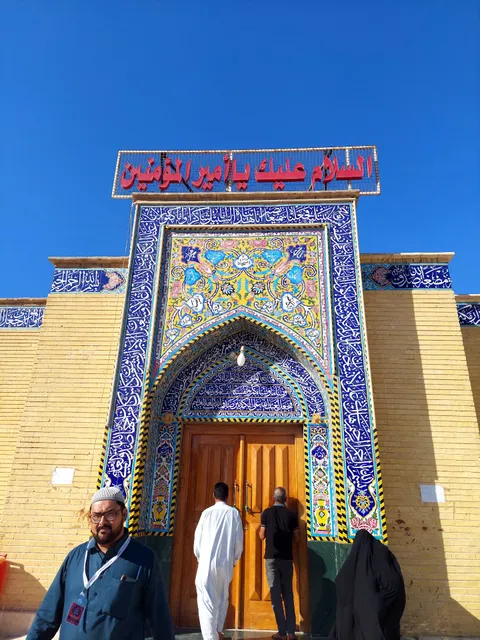
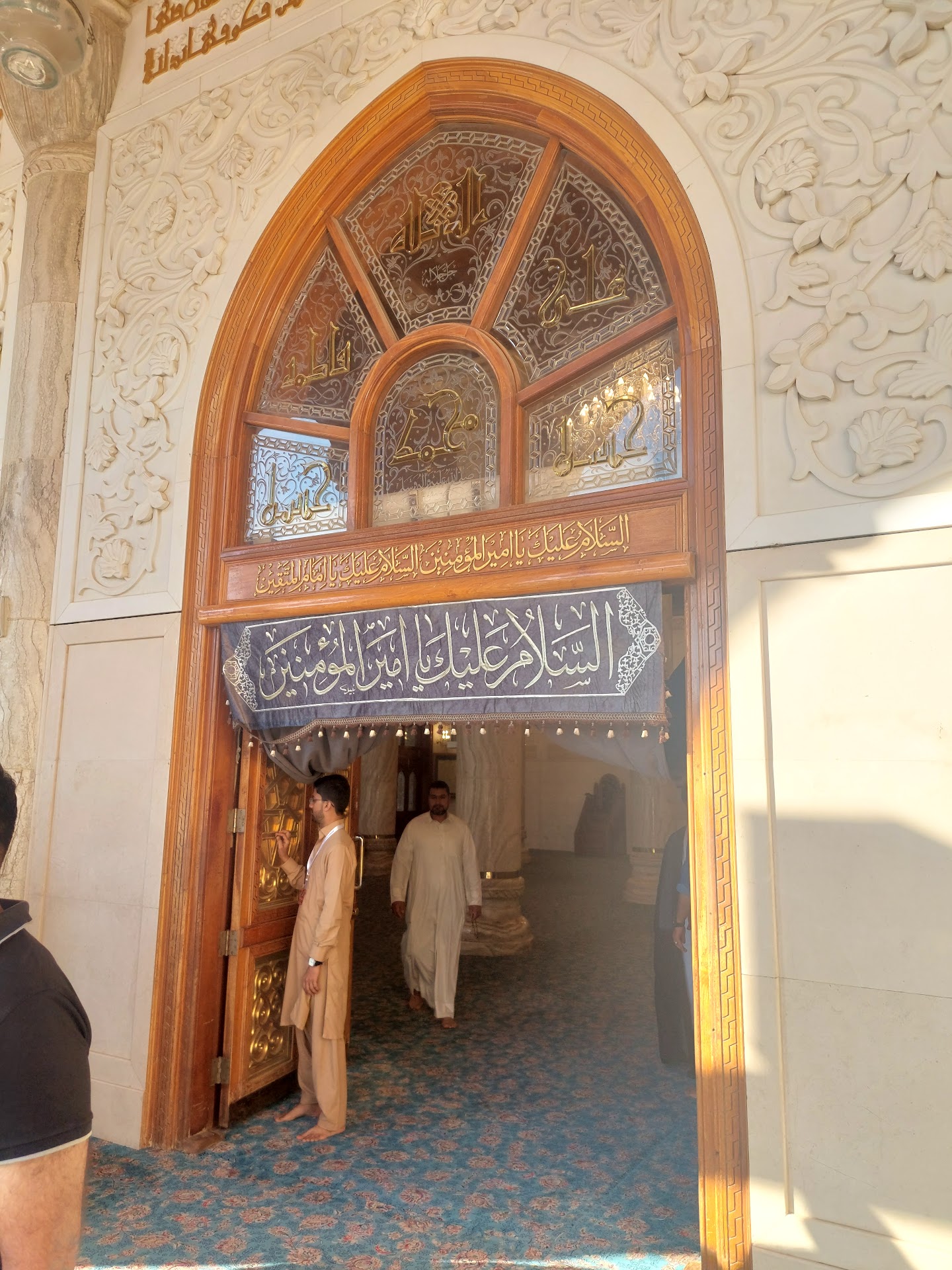
Today, Mosque have following doors: Bab Athoaban (The Snake Gate); Bab Arrahma (The Mercy Gate) and Bab Al-Feel (The Elephant Gate). The mosque consists of 60 halls designed according to the Islamic architectural model, with arcades and arabesques,  and numerous places of interest for visitors to the Kufa mosque. People believe that the majority of the prophets visited the mosque before its erection. Some of these places  attributed to Prophet Ibrahim, Al-Khalil, Al-Khidr, Prophet Mohammad, Adam, Gabriel, Prophet Noah (Peace On All) the place of the religious lessons of Imam Jafar Al-Sadiq (ALLAH Bless With Him) and the place where Imam Ali (ALLAH Bless With Him) prayed called Nafilate Al-Imam, beside the Minbar and Mihrab where he  assassinated. At the corner of the mosque called "Dakkat Al-Qada", where Imam Ali (ALLAH Bless With Him) sat as a judge, as well as the place called "Bayte Attast", where Imam Ali (ALLAH Bless With Him) saved a young Yemeni virgin who wrongly accused of adultery. The second part of the site, separated from the mosque and  includes some mausoleums. The mausoleum of Muslim Ibn Aqil (ALLAH Bless With Him) has a rectangular form, of 3m X 5m and a height of 2.5 m. Like all the mausoleums of Iraq, it is surrounded by a large silver grid includes small ten square windows on its four sides. The floor and the walls of the mausoleums covered by marble, while the top decorated with Quranic verses engraved in beautiful calligraphy on Qashan tiles. Today the area of the building measures approximately...

   Read more
Page 1 of 7
Previous
Next

Posts

Latif Hyder WadhoLatif Hyder Wadho
A very Historical and Spiritual Place. The Great Mosque of Kufa (Arabic: مَسْجِد ٱلْكُوفَة ٱلْمُعَظَّم/ٱلْأَعْظَم, romanized: Masjid al-Muʿaẓẓam/al-ʾAʿaẓam), or Masjid al-Kufa, is located in Kufa, Iraq and is one of the earliest surviving mosques in the world. The mosque, built in the 7th century, was home to Ali ibn Abi Talib, the 4th Rashidun caliph; and contains the shrine of Muslim ibn Aqeel, his companion Hani ibn Urwa, and the revolutionary, Al-Mukhtar. The mosque has been significantly rebuilt and restored multiple times in its history. The first main mosque of Kufa was built with the city's foundation in 638. The original mosque had a square layout and many entrances, and was built alongside a governor's palace (Dar al-Imāra). It featured a roofed colonnade and re-used columns from the nearby former Lakhmid capital of al-Hira and from former churches. The governor's palace likely served as both a residential building and an administrative center. Ali ibn Abi Talib a.s was assassinated in the mosque in 661. The family members of the first Shi'ite imams and their early supporters were buried within the mosque, including Muslim ibn Aqil and Hani ibn Urwa. In 670, the governor of the city, Ziyad ibn Abihi, arranged for the mosque to be rebuilt in brick and expanded into a much more monumental form. Craftsmen from other regions were brought in and materials were imported from Ahwaz for the mosque's columns. The governor's palace, or Dar al-Imara, adjacent to the south side of mosque, was also rebuilt. Architectural excavations revealed that the mosque was built on top of much older foundations. It was in the Great Mosque of Kufa that the first Abbasid caliph was formally proclaimed in 749. By the 14th century, when Ibn Battuta visited the site, only the foundations of the old governor's palace still remained. The mosque underwent various other restorations throughout its history. The golden dome standing today over the tombs, as well as the surrounding tilework decoration, was added during the Safavid period in the 17th and 18th centuries. Kufa mosque in 2016 In 1998, head of Dawoodi Bohra community, Mohammed Burhanuddin started reconstructing and renovating the mosque.: 97, 106  Work was completed in early 2010. The renovation included decorations with gold and silver, the mihrab being made with a gold zari, and the whole interior being surrounded with verse of the Quran. In addition, the courtyard is covered in white marble from Makrana, India. The Great Mosque of Kufa was the place where Ali ibn Abi Talib was fatally wounded by a poison-coated sword while prostrating in the Fajr prayer. Also, the mosque contains the tombs of Muslim ibn Aqil, Hani ibn Urwa, and Al-Mukhtar. There are markers within the mosque indicating the locations for where the court of Ali used to preside, where he performed miracles, and where Zayn al-Abidin and Ja'far al-Sadiq a.s used to perform Salah. Additionally, Islamic traditions relate that it was the dwelling place of Nuh (Noah) and that this was the place where he built the Ark. According to Shia belief, it was from this mosque that the diluvium of Noah started submerging earth, as well as being the place from where the water was re-absorbed- also marked within the Mosque. Ja'far al-Sadiq a.s said that up to twelve miles of land in all directions from the mosque are blessed by its holiness Ja'far al-Sadiq a.s was also recorded as remarking that the "mosque in Kufa is superior to that of Jerusalem"[19] and that "performing two prostrations of prayer here would be better for me than ten others at any mosque." There are also Shia traditions which state that performing one prayer in this mosque is the same as having performed one thousand prayers elsewhere, and performing one obligatory prayer here is equal to having performed an accepted Hajj Today, the outer wall of the mosque, with semi-circular buttresses, probably still dates from the early period of the building's history.The building's floor level has also been raised from its earlier level.
Naeem IqbalNaeem Iqbal
Great Mosque of Kufa, مسجد الكوفة المعظم‎, Masjid Al-Azam Kufa, Iraq 32°01′43″N 44°24′03″E Islam Mosque 17 A.H. (7th century) Saad Ibn Abi Waqqas Islamic Largest mosque in the city 11,162 sq m The Great Mosque of Kufa, or Masjid Al-Kufa (Arabic: مسجد الكوفة المعظم‎),or Masjid Al-Azam located in Kufa, Iraq, is one of the earliest mosques in Islam. The mosque, built in the 7th century, contains the remains of Muslim Ibn Aqil - first cousin of Husayn Ibn Ali (ALLAH Bless With Both), his companion Hani Ibn Urwa, and the revolutionary Mukhtar Al-Thaqafi. History Of Mosque The mosque built in 17 A.H. (7th century) by Saad Ibn Abi Waqqas (Arabic: سعد بن أبي وقاص‎) after the Caliph Omar established the city, in area of 12.660 m2 with three doors, each one gave the name of a large tribe of the time: Bab Sudda, an ally of Imam Ali, Bab Kenda and Bab Al-Anmat. The mosque has been redeveloped in various phases over the years and today it features an elegant gold dome and Saffavid tile work from the 17th and 18th centuries. Architecture and Design Grave cage of Muslim Ibn Aqil (ALLAH Bless With Him) Today, Mosque have following doors: Bab Athoaban (The Snake Gate); Bab Arrahma (The Mercy Gate) and Bab Al-Feel (The Elephant Gate). The mosque consists of 60 halls designed according to the Islamic architectural model, with arcades and arabesques,  and numerous places of interest for visitors to the Kufa mosque. People believe that the majority of the prophets visited the mosque before its erection. Some of these places  attributed to Prophet Ibrahim, Al-Khalil, Al-Khidr, Prophet Mohammad, Adam, Gabriel, Prophet Noah (Peace On All) the place of the religious lessons of Imam Jafar Al-Sadiq (ALLAH Bless With Him) and the place where Imam Ali (ALLAH Bless With Him) prayed called Nafilate Al-Imam, beside the Minbar and Mihrab where he  assassinated. At the corner of the mosque called "Dakkat Al-Qada", where Imam Ali (ALLAH Bless With Him) sat as a judge, as well as the place called "Bayte Attast", where Imam Ali (ALLAH Bless With Him) saved a young Yemeni virgin who wrongly accused of adultery. The second part of the site, separated from the mosque and  includes some mausoleums. The mausoleum of Muslim Ibn Aqil (ALLAH Bless With Him) has a rectangular form, of 3m X 5m and a height of 2.5 m. Like all the mausoleums of Iraq, it is surrounded by a large silver grid includes small ten square windows on its four sides. The floor and the walls of the mausoleums covered by marble, while the top decorated with Quranic verses engraved in beautiful calligraphy on Qashan tiles. Today the area of the building measures approximately 11,162 sq m.
Gada HussainGada Hussain
Mosque of Kūfa (Arabic: مسجد الکوفة) is a great mosque in the Islamic world. For Shi'as, it is the fourth important mosque after al-Masjid al-Haram, al-Masjid al-Nabi, and Masjid al-Aqsa. It is also the oldest and the most important visiting place in Kufa. According to some hadiths, the first person who founded the Mosque of Kufa was Prophet Adam (a). It was reconstructed by Prophet Noah (a) after the storm. In 17/638, when Muslims first entered Kufa in the period of Sa'd b. Abi Waqqas, the mosque was rebuilt together with the governmental building (Dar al-'Imara) at the suggestion of Salman al-Farsi. The mosque has witnessed many prophets (a), Prophet Muhammad (s), Amir al-Mu'minin (a), Imam al-Hasan (a), and Imam al-Husayn (a), and some other Imams (a). In 36/656-57 when Amir al-Mu'minin (a) attended the mosque, it became much more important. He frequently led congregational prayers in this mosque, delivered sermons on its minbar, fulfilled some governmental and judiciary tasks there, and was finally martyred in its mihrab. The mausoleum of Muslim b. 'Aqil, the mausoleum of Maytham al-Tammar, the house of Amir al-Mu'minin (a), the governmental building of Kufa, the mausoleum of Hani b. 'Urwa and al-Mukhtar al-Thaqafi's grave are located near the Mosque of Kufa. The mosque has in it a number of positions, in many of which some spiritual practices of the mosque are performed. Just as travelers have the option to say their prayers fully or in a shortened form in al-Masjid al-Haram, the Holy Shrine of Imam al-Husayn (a), and al-Masjid al-Nabi, they have the same option in the Mosque of Kufa as well. There are many hadiths regarding the merits of this mosque. According to some hadiths, the Mosque of Kufa is a garden of the Heaven. If one enters the Mosque of Kufa, one will be forgiven. Kufa will be the center of Imam al-Mahdi's (a) government, and the Mosque of Kufa will be the headquarter of his command.
See more posts
See more posts
hotel
Find your stay

Pet-friendly Hotels in Al-Kufah Central Subdistrict

Find a cozy hotel nearby and make it a full experience.

A very Historical and Spiritual Place. The Great Mosque of Kufa (Arabic: مَسْجِد ٱلْكُوفَة ٱلْمُعَظَّم/ٱلْأَعْظَم, romanized: Masjid al-Muʿaẓẓam/al-ʾAʿaẓam), or Masjid al-Kufa, is located in Kufa, Iraq and is one of the earliest surviving mosques in the world. The mosque, built in the 7th century, was home to Ali ibn Abi Talib, the 4th Rashidun caliph; and contains the shrine of Muslim ibn Aqeel, his companion Hani ibn Urwa, and the revolutionary, Al-Mukhtar. The mosque has been significantly rebuilt and restored multiple times in its history. The first main mosque of Kufa was built with the city's foundation in 638. The original mosque had a square layout and many entrances, and was built alongside a governor's palace (Dar al-Imāra). It featured a roofed colonnade and re-used columns from the nearby former Lakhmid capital of al-Hira and from former churches. The governor's palace likely served as both a residential building and an administrative center. Ali ibn Abi Talib a.s was assassinated in the mosque in 661. The family members of the first Shi'ite imams and their early supporters were buried within the mosque, including Muslim ibn Aqil and Hani ibn Urwa. In 670, the governor of the city, Ziyad ibn Abihi, arranged for the mosque to be rebuilt in brick and expanded into a much more monumental form. Craftsmen from other regions were brought in and materials were imported from Ahwaz for the mosque's columns. The governor's palace, or Dar al-Imara, adjacent to the south side of mosque, was also rebuilt. Architectural excavations revealed that the mosque was built on top of much older foundations. It was in the Great Mosque of Kufa that the first Abbasid caliph was formally proclaimed in 749. By the 14th century, when Ibn Battuta visited the site, only the foundations of the old governor's palace still remained. The mosque underwent various other restorations throughout its history. The golden dome standing today over the tombs, as well as the surrounding tilework decoration, was added during the Safavid period in the 17th and 18th centuries. Kufa mosque in 2016 In 1998, head of Dawoodi Bohra community, Mohammed Burhanuddin started reconstructing and renovating the mosque.: 97, 106  Work was completed in early 2010. The renovation included decorations with gold and silver, the mihrab being made with a gold zari, and the whole interior being surrounded with verse of the Quran. In addition, the courtyard is covered in white marble from Makrana, India. The Great Mosque of Kufa was the place where Ali ibn Abi Talib was fatally wounded by a poison-coated sword while prostrating in the Fajr prayer. Also, the mosque contains the tombs of Muslim ibn Aqil, Hani ibn Urwa, and Al-Mukhtar. There are markers within the mosque indicating the locations for where the court of Ali used to preside, where he performed miracles, and where Zayn al-Abidin and Ja'far al-Sadiq a.s used to perform Salah. Additionally, Islamic traditions relate that it was the dwelling place of Nuh (Noah) and that this was the place where he built the Ark. According to Shia belief, it was from this mosque that the diluvium of Noah started submerging earth, as well as being the place from where the water was re-absorbed- also marked within the Mosque. Ja'far al-Sadiq a.s said that up to twelve miles of land in all directions from the mosque are blessed by its holiness Ja'far al-Sadiq a.s was also recorded as remarking that the "mosque in Kufa is superior to that of Jerusalem"[19] and that "performing two prostrations of prayer here would be better for me than ten others at any mosque." There are also Shia traditions which state that performing one prayer in this mosque is the same as having performed one thousand prayers elsewhere, and performing one obligatory prayer here is equal to having performed an accepted Hajj Today, the outer wall of the mosque, with semi-circular buttresses, probably still dates from the early period of the building's history.The building's floor level has also been raised from its earlier level.
Latif Hyder Wadho

Latif Hyder Wadho

hotel
Find your stay

Affordable Hotels in Al-Kufah Central Subdistrict

Find a cozy hotel nearby and make it a full experience.

Get the Appoverlay
Get the AppOne tap to find yournext favorite spots!
Great Mosque of Kufa, مسجد الكوفة المعظم‎, Masjid Al-Azam Kufa, Iraq 32°01′43″N 44°24′03″E Islam Mosque 17 A.H. (7th century) Saad Ibn Abi Waqqas Islamic Largest mosque in the city 11,162 sq m The Great Mosque of Kufa, or Masjid Al-Kufa (Arabic: مسجد الكوفة المعظم‎),or Masjid Al-Azam located in Kufa, Iraq, is one of the earliest mosques in Islam. The mosque, built in the 7th century, contains the remains of Muslim Ibn Aqil - first cousin of Husayn Ibn Ali (ALLAH Bless With Both), his companion Hani Ibn Urwa, and the revolutionary Mukhtar Al-Thaqafi. History Of Mosque The mosque built in 17 A.H. (7th century) by Saad Ibn Abi Waqqas (Arabic: سعد بن أبي وقاص‎) after the Caliph Omar established the city, in area of 12.660 m2 with three doors, each one gave the name of a large tribe of the time: Bab Sudda, an ally of Imam Ali, Bab Kenda and Bab Al-Anmat. The mosque has been redeveloped in various phases over the years and today it features an elegant gold dome and Saffavid tile work from the 17th and 18th centuries. Architecture and Design Grave cage of Muslim Ibn Aqil (ALLAH Bless With Him) Today, Mosque have following doors: Bab Athoaban (The Snake Gate); Bab Arrahma (The Mercy Gate) and Bab Al-Feel (The Elephant Gate). The mosque consists of 60 halls designed according to the Islamic architectural model, with arcades and arabesques,  and numerous places of interest for visitors to the Kufa mosque. People believe that the majority of the prophets visited the mosque before its erection. Some of these places  attributed to Prophet Ibrahim, Al-Khalil, Al-Khidr, Prophet Mohammad, Adam, Gabriel, Prophet Noah (Peace On All) the place of the religious lessons of Imam Jafar Al-Sadiq (ALLAH Bless With Him) and the place where Imam Ali (ALLAH Bless With Him) prayed called Nafilate Al-Imam, beside the Minbar and Mihrab where he  assassinated. At the corner of the mosque called "Dakkat Al-Qada", where Imam Ali (ALLAH Bless With Him) sat as a judge, as well as the place called "Bayte Attast", where Imam Ali (ALLAH Bless With Him) saved a young Yemeni virgin who wrongly accused of adultery. The second part of the site, separated from the mosque and  includes some mausoleums. The mausoleum of Muslim Ibn Aqil (ALLAH Bless With Him) has a rectangular form, of 3m X 5m and a height of 2.5 m. Like all the mausoleums of Iraq, it is surrounded by a large silver grid includes small ten square windows on its four sides. The floor and the walls of the mausoleums covered by marble, while the top decorated with Quranic verses engraved in beautiful calligraphy on Qashan tiles. Today the area of the building measures approximately 11,162 sq m.
Naeem Iqbal

Naeem Iqbal

hotel
Find your stay

The Coolest Hotels You Haven't Heard Of (Yet)

Find a cozy hotel nearby and make it a full experience.

hotel
Find your stay

Trending Stays Worth the Hype in Al-Kufah Central Subdistrict

Find a cozy hotel nearby and make it a full experience.

Mosque of Kūfa (Arabic: مسجد الکوفة) is a great mosque in the Islamic world. For Shi'as, it is the fourth important mosque after al-Masjid al-Haram, al-Masjid al-Nabi, and Masjid al-Aqsa. It is also the oldest and the most important visiting place in Kufa. According to some hadiths, the first person who founded the Mosque of Kufa was Prophet Adam (a). It was reconstructed by Prophet Noah (a) after the storm. In 17/638, when Muslims first entered Kufa in the period of Sa'd b. Abi Waqqas, the mosque was rebuilt together with the governmental building (Dar al-'Imara) at the suggestion of Salman al-Farsi. The mosque has witnessed many prophets (a), Prophet Muhammad (s), Amir al-Mu'minin (a), Imam al-Hasan (a), and Imam al-Husayn (a), and some other Imams (a). In 36/656-57 when Amir al-Mu'minin (a) attended the mosque, it became much more important. He frequently led congregational prayers in this mosque, delivered sermons on its minbar, fulfilled some governmental and judiciary tasks there, and was finally martyred in its mihrab. The mausoleum of Muslim b. 'Aqil, the mausoleum of Maytham al-Tammar, the house of Amir al-Mu'minin (a), the governmental building of Kufa, the mausoleum of Hani b. 'Urwa and al-Mukhtar al-Thaqafi's grave are located near the Mosque of Kufa. The mosque has in it a number of positions, in many of which some spiritual practices of the mosque are performed. Just as travelers have the option to say their prayers fully or in a shortened form in al-Masjid al-Haram, the Holy Shrine of Imam al-Husayn (a), and al-Masjid al-Nabi, they have the same option in the Mosque of Kufa as well. There are many hadiths regarding the merits of this mosque. According to some hadiths, the Mosque of Kufa is a garden of the Heaven. If one enters the Mosque of Kufa, one will be forgiven. Kufa will be the center of Imam al-Mahdi's (a) government, and the Mosque of Kufa will be the headquarter of his command.
Gada Hussain

Gada Hussain

See more posts
See more posts