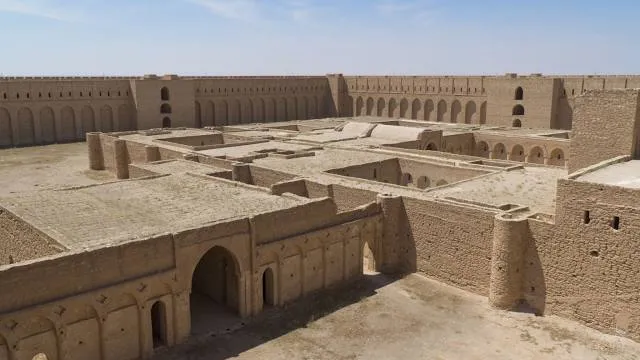
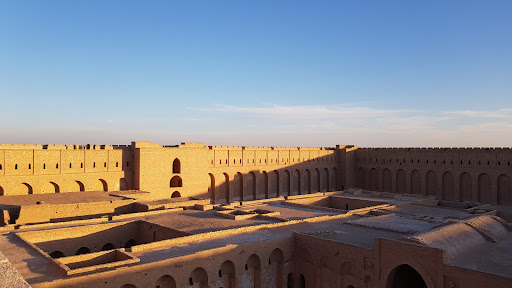
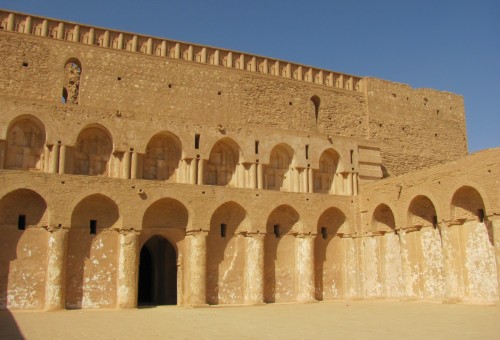
Lying in the desert about 100 miles south-west of Baghdad is Ukhaidir palace, one of the best-preserved palaces of the Muslim world. The palace is unique in its architectural wealth that incorporated some of the key innovations that greatly impacted the development of Muslim as well as non-Muslim architecture. Because of this, the palace has attracted much academic interest, particularly from German, French and British archaeologists and architects. However, these numerous studies failed to provide a proper explanation for the circumstances surrounding the foundation of the palace due to the absence of any text or in situ inscription to help establish a definite date and a conclusive story. Based on architectural evidence, researchers put the date of the construction of the palace at between 720 and 800 CE [1]. This 80 year period provokes a serious historical problem, since within this period the Umayyad dynasty gave way to the Abbasids who gained power in year 750 CE. These events raise questions as to whether the Palace is Umayyad or Abbasid. First, there are indications, which suggest that the palace is Umayyad, built before 750 CE. Features such as the presence of few semi-circular arches, the limited use of squinches to half-domes, the use of corner slabs to support the scalloped dome are all indices pointing out to the Umayyads [2] whose architecture continued to use these elements before the architectural revolution of the Abbasids introduced the pointed arch, the expansion of the use of dome squinches and many other features. The Umayyads also had the habit of living in desert palaces. But who could have built Ukhaidir during these troubled times when the Umayyad were waging wars against the Kharijit and the Abbasids? Additionally, most princes and wealthy Umayyads had known residences.
Similarly, early Abbasid rulers can be ruled out as Al-Saffah, the founder of the dynasty, for example, lived in his palace beside the Persian city of Anbar (about 45 miles west of Baghdad) and died there in 754. His successor Al-Mansur at first lived in his palace between Kufa and the old Persian town of Hira, and later settled in this
This leaves us with two remaining theories. Creswell’s theory proposes that the construction was due to the nephew of Al-Mansur, Isa ibn Musa (d. 783/4), who received large sums of money from the Caliph to prevent him making a claim to the throne. Isa was somehow promised the Caliphate after Al-Mansur who later changed his mind in favour of his son Al-Mahdi. Isa was expelled from his governorship of Kufa in 778 and was made to renounce his claim to the Caliphate. It is reported that on his expulsion he returned to his estates and used to visit Kufa every Friday for the congregational prayer . However, some scholars raised doubts about this thesis arguing that the two way journey of 200 km from Ukhaidir to Kufa through the desert could not have been an easy undertaking for a man who is known to have been a...
Read moreAl-Akhdar Fort
What era back to Al-Akhdar Fort?
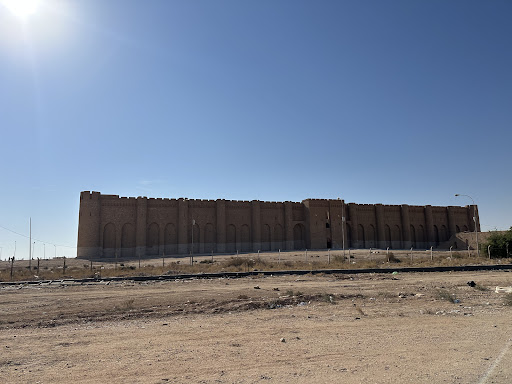
Fifty kilometers away from Karbala Governorate, Al-Akhdar Fort is one of the largest and greatest defensive fortresses in previous times. As for the question, what specific era does it belong to?
Al-Akhdar Fort, to which there is no accurate information or a specific date for its construction today, some archaeologists meet that it dates back to the Islamic era and specifically to the first and second Abbasid era in relation to the style of its construction and decoration, which is somewhat similar to the Sasanian and Byzantine style that did not exist before Islam Also, according to the presence of a mosque inside the fort.
However, in the Islamic era, especially the Umayyad and Abbasid writers, they wrote down everything that the caliphs did, including Omran, and there was no mention of the construction of Al-Akhdar Fort in that era. As for the mosque, the Iraqi historian mentioned that this mosque was originally a church.
This vast fort is an example of architectural grandeur as it is the best existing Arab building still in good condition to this day.
As for his name, too, opinions differed on it, as some suggest that he was named by this name in relation to one of the princes of the Kinda Akyder bin Abdul Aziz tribe, and some attributed it to the greening of his land and its surroundings or to the title of ruler of Yamamah over Kufa Ismail bin Yusuf al-Akhdar.
"Confusion, my green fortress," is a phrase that has become spontaneous in our daily lives, but it may also express the perplexing history of this fort.
To this day, the architectural condition of the fort is good, which makes it an opportunity to make it a tourist place for people to visit if the area in which it is located is...
Read moreاُخَيْضِر، بنايى تاريخى شامل دژ، كاخ و مسجد، واقع در صحراي «وادي عُبيد» عراق، 0 كيلومتري جنوب غرب كربلا و حدود 93 كيلومتري جنوب بغداد. مجموعهاي ساخته شده رو بهشمال كه بخش مسكونى آن در داخل حصار جاي دارد. حصار خارجى بنا مستطيل و به ابعاد 75ئ69 متر است كه در ميان هر ديوار آن يك دروازة ورودي و در هر يك از گوشة آن يك برج ديدهبانى مدور و در فاصلة آنها 0 نيم برج مدور هر كدام با دو طاقنماي كور احداث شده است. در دو طرف هر دروازه نيز برجهاي خارجى، متمايز از برج ديدهبانى قرار دارد. حصار خارجى دو طبقه بوده، و طبقة فوقانى، پوشش گهوارهاي داشته است. ارتفاع كنونى آن 7 متر است كه با احتساب كنگرههاي از ميان رفته، دست كم به 9 متر مىرسيده است. هر دو نماي خارجى و داخلى حصار با طاقنماهاي كور يا چراغدان تزيين شده است كه بر بالاي جرزهاي مستطيل شكل قرار دارد. ضخامت ديوار / متر است، ولى در محل پاية جرزها، اين ضخامت به / متر مىرسد. در جبهة خارجى حصار، فرورفتگيهايى به عرض متوسط 40 و عمق 0 سانتىمتر احداث شده كه از هر تاي آنها يكى به اتاقك مدور بالاي برج راه دارد و بقيه براي تيراندازي بهكار مىرفته است. در طول لبة خارجى آنها نيز شكافى بهعرض 7 سانتىمتر تعبيه شده است كه در تاج قوس فرو رفتگيها باز مىشود و از آنجا نيز بهسوي مهاجمان مستقر در پاي حصار، تير پرتاب مىكردند. چنين پيشبينى گستردهاي براي تيراندازي سراسري در تمام طول دهليز فوقانى از فنونى است جنگى يا تدافعى كه در اروپاي پيش از سدة 4م پيشينه نداشته است كرسول، «گزارش...»، 93 -92 º 1 ؛ EIجنابى، 39. ديوار شمالى بيشتر از ديگر نقاط محفوظ مانده، و نشان مىدهد كه قسمت فوقانى آن به طاقنماهاي كور نعل اسبى آراسته بوده است. دسترسى به دهليز فوقانى از طريق دو گروه پلكان ممكن مىشده است. از پلكانهاي دوار واقع در هر يك از گوشة حصار، اكنون پلكان جنوب شرقى تا حدي حفظ شده است و پلكانهاي دوگانة دو طرف دروازههاي شرقى، غربى و جنوبى نيز هماكنون تا حدي قابل استفاده است كرسول، همانجا. در ميان هر يك از ضلع شرقى، غربى و جنوبى، يك دروازة ورودي احداث شده است كه هر يك شكل هستند. ورودي هر دروازه يك طاق به دهانة متر واقع بر دو برج ربع دايره است، ولى در دروازة جنوبى دو پاية جرز مستطيل است. در سمت چپ و راست، شكافى به عرض 0 و گودي 0 سانتىمتر ملاحظه مىشود كه حاكى از آن است كه پيشتر دري معلق وجود داشتهاست. در پشت اين طاق ورودي، با فاصلة 5/ متر طاق ديگري با دهانة 5/ متر قرار دارد. در نتيجه يك هشتى با ابعاد 5/ئ متر ميان اين دو طاق بهوجود آمده كه در سقف گهوارهاي آن شكاف به عرض 7 سانتىمتر ايجاد شده است. اين شكافها از يك ديوار تا ديوار ديگر امتداد مىيابند، به گونهاي كه هرگاه دژ موردتهاجم قرار مىگرفت، نگهبانان درِ معلق را به كمك چرخ بالا نگه مىداشتند تا دشمن وارد هشتى شده، كوشش به گشودن درِ دوم كند. آنگاه با اشارة نگهبانان كه از شكافهاي سقف مراقب بودند، درهاي معلق را رها مىكردند و تير، سرب مذاب و روغن داغ بر سر گروه به دام افتاده مىريختند. هيچيك از اين دروازهها به بخش مسكونى راه ندارند كرسول، همان، 94 -93 º فيلُن، .251 دروازة اصلى اخيضر در حصار شمالى جاي دارد. شواهد معماري نشان مىدهد كه در طرح اولية بنا دروازة ديگر منظور شده بوده است، ولى پس از رسيدن ديوار پايه به ارتفاع متر، معمار تغيير عقيده داده، و با حذف چند نيم ستون، دروازة كنونى را به حصار شمالى افزوده است. اين دروازه پيشآمدگى برج مانندي به پهناي /5 متر مىسازد. ورودي آن در جبهة خارجى و تنظيم بخشهاي داخلى آن صليبى شكل است. نخست دالان بلند و باريكى به ابعاد /ئ متر با سقف گهوارهاي قرار دارد. در دو سمت دالان، دو اتاق بدون روشنايى است. در هر يك از اين اتاقها قسمتى از يك ديوار منحنى ملاحظه مىشود كه همان بازماندة برجهاي خارجى حذف شده براي احداث دروازة اصلى است. پوشش گهوارهاي اين دالان مركب از لنگه طاق عرضى به پهناي 5 سانتىمتر است كه روزنههايى بهسوي اتاق فوقانى دارد. اين روزنهها را نيز براي ريختن سرب مذاب و روغن داغ بر سر مهاجمان در نظر گرفته بودهاند. بخش مركزي اين لنگه طاقها فروريخته است و اتاق فوقانى از پايين ديده مىشود. سپس يك اتاق مستطيل شكل قرار دارد، به عرض و طول 5/ متر كه به وسيلة يك لنگه طاق به مربع...
Read more