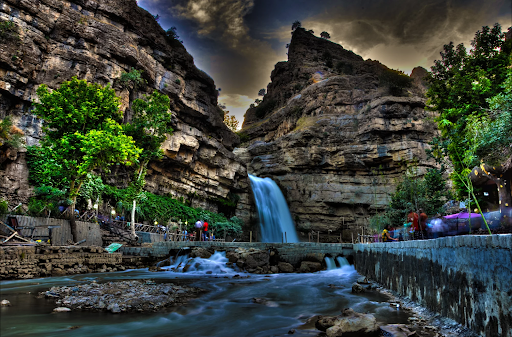
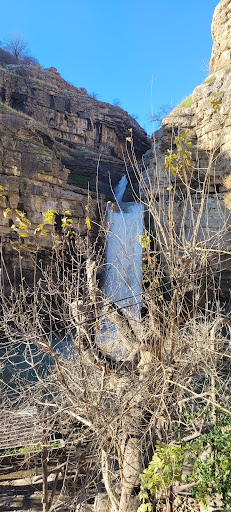
Geologically, the Gali Ali Bag waterfall in the Kurdistan Region’s Soran district is one of the most captivating and visited natural tourist sites in the Kurdistan Region and Iraq.
Gali Ali Bag is the highest waterfall in the Kurdistan Region and all of Iraq. It is about 12 meters high, located beside Korek Mount which itself is 2,076 meters above sea level. The waterfall is the crosspoint of three different rivers: the Rwandz, Sidakan, and Khalifan.
The waterfall is about 95 km north east of the Kurdistan Region’s capital city, Erbil, in one the most mountainous areas in the region and within the famous gorges of Soran, which has fast-flowing streams and mini waterfalls.
Gali Ali Bag has a rich history and is geologically one of the stand-outs in the region. The story of the famous waterfall goes back to a history entwined with interesting stories told by the locals.
Professor Sardar Balaky, a leading geologist from Soran University, told Kurdistan 24 that the probable geological age of the rock formation of Gali Ali Bag dates back 25 million years, putting its origin squarely in the Miocene era. Balaky also said that the waterfall was formed by a convergence of the Arabic and Iranian plates on the Zagros Mountain curve.
The rock formation of the waterfall and the gorge is diverse, containing dolomite, marlstone and limestone. Balaky said the Korek Mountain formation dates back to the Jurassic era, about 165 million years ago, and at least 140 million years before the formation of the Gali Ali Bag: What's in a Name?
The name Gali Ali Bag has two different interpretations: one is that it was named after one of the princes of the Great Soran Emirate that once ruled most of the current jurisdiction of Erbil governorate. Historically, the Emirate controlled one-third of the current KRG territory. The other story is a rather controversial one, referring to the killing of a Kurdish Yezidi Prince by the same name, Ali Bag.
Soran Emirate dates back to the 15th Century CE and was overthrown by the Ottoman Empire during the clash of the two titans of east: the Ottoman and Safavid Empires, which ultimately led to the very first partition of Kurdistan in 1514. However, the Emirate functioned as a smaller dominion or principality, changing capitals from Soran to Harir and finally to Rwandz, the most naturally protected location, until the Emirate was ousted by the Ottoman Empire in 1836.
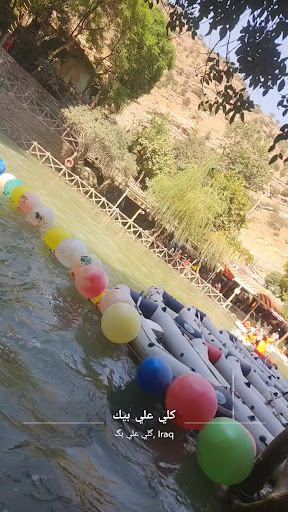
The waterfall attracts local, regional and international tourists by thousands each day. Annually, Soran District welcomes between 900,000 to 1 million tourists, most of whom never leave without taking a photo near the Gali Ali Bag waterfall.
Barzan Muhammad, the director of Soran’s Directorate of Tourism, told Kurdistan 24 that Gali Ali Bag waterfall alone attracts about half a million tourists every year. Mohammad also said that so far just over 450,000 tourists and picnickers have visited it and other tourist sites in the district as of early June, a good indication that there will be a higher turnout than last year. In 2019 more than one million tourists visited Soran’s resorts, but there was a rapid decline in 2020 due to the COVID-19 pandemic.
An Icon in Kurdistan
Gali Ali Bag waterfall is a quite familiar name for the Kurdish picnickers and Iraqi tourists, and most of them point at either the Iraqi banknotes as encouragement to visit the waterfall and spend quality time with family and friends.
The majestic waterfall has been imprinted on Iraqi banknotes, making it a well-known location for generations. From the late 1970s to 1990, it was featured on the 5 IQD banknote, making Gali Ali Bag a part of daily life during a time when it was both difficult and unsafe to travel. In the post-Baathist regime era, it has been seen on the 5,000 IQD note.
Kurdistan's iconic Gali Ali Bag waterfall is displayed on the 5,000 IQD banknote, making it a familiar site for people across Iraq. (Photo: levimeirclancy/Reddit)Kurdistan's iconic Gali Ali Bag waterfall is displayed on the 5,000 IQD...
Read more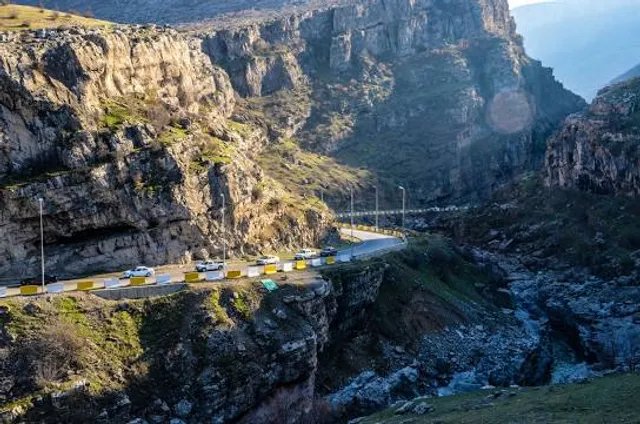
 Learn more insights from Wanderboat AI.