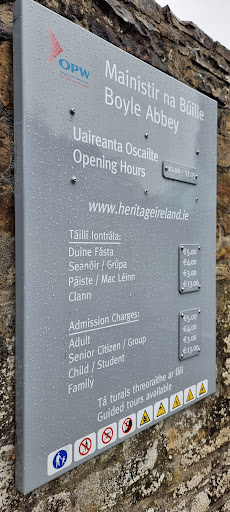
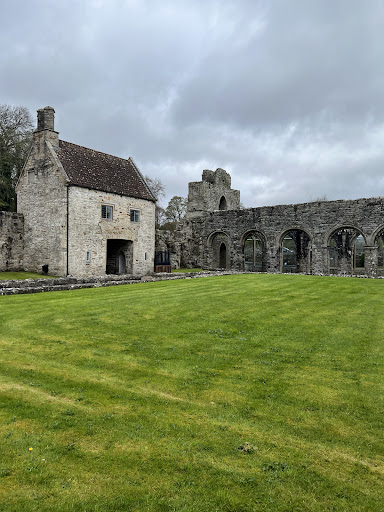
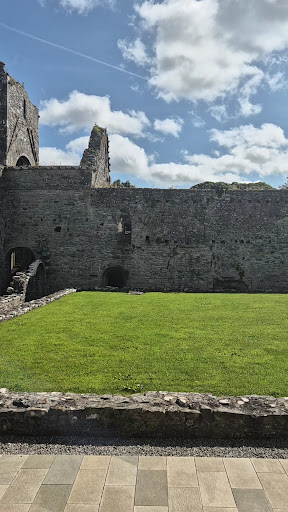
This was our second attempt to visit — the first time we arrived a little too late and missed the opening hours. My advice: leave yourself plenty of time. A quick walk-through might take under an hour, but if you’re curious, you can easily spend longer. We wandered around searching for all the stonemason marks on the walls with the “cheat sheet” provided by our guide, Tomás, and even got excited thinking we’d spotted an extra one not on the list!
Our guide was fantastic — knowledgeable, friendly, and passionate. He had a gift for weaving history and modern context together so the ruins came alive. We learned how construction stretched over such a long time that the styles and columns changed along the way, about rebellious monks, and about the Whispering Arch that once stood like a doorway before being destroyed.
The details were incredible: carvings on the columns showing monks entwined in vines, telling symbolic stories in stone. Above, we spotted a sparrowhawk sculpture standing proud on top of one of the columns — another layer of character to the abbey’s remains. Tomás also explained that the abbey once had a lavabo, just like the famous one at Mellifont Abbey, but it was destroyed in the 1800s when the site was converted into a house. A real loss, as it must have been stunning.
The stories gave the place such personality — like the monks who stubbornly refused to use Latin at Mass, preferring Irish instead, or how they ignored the Pope’s instruction to visit Rome once a year. Even when he relaxed the rule to every four years, they still didn’t turn up for 30 years! A very Irish sort of defiance, and it made us laugh.
Practical notes: Boyle Abbey is an OPW Heritage site, so if you have an OPW card you can visit for free. Parking is on-street and free as well — not many spaces, but when we visited it wasn’t busy, so we had no issues. As it started to rain, Tomás even handed us an extra umbrella to keep us dry — a small but very thoughtful touch that made the experience even more enjoyable.
Boyle Abbey is more than stone walls — it’s full of stories, hidden details, and atmosphere. With a guide like Tomás, it’s unforgettable. Absolutely worth a visit if you’re in Roscommon — a must-see site that brings Irish medieval history...
Read more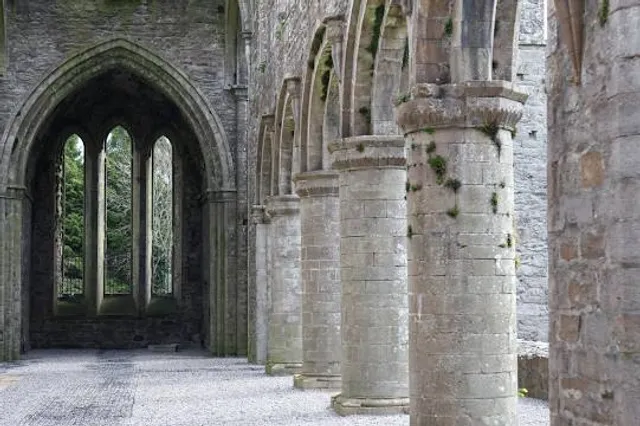

 Learn more insights from Wanderboat AI.