HTML SitemapExplore
logo
Find Things to DoFind The Best Restaurants

Bective Abbey — Attraction in The Municipal District of Navan

Name
Bective Abbey
Description
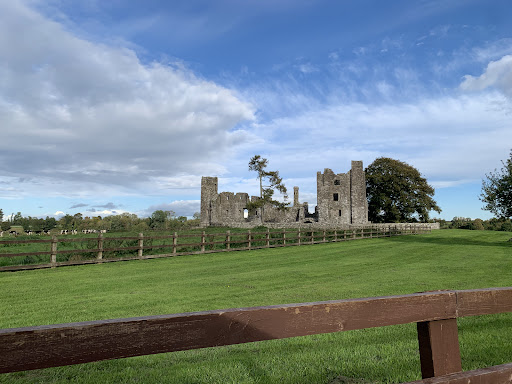
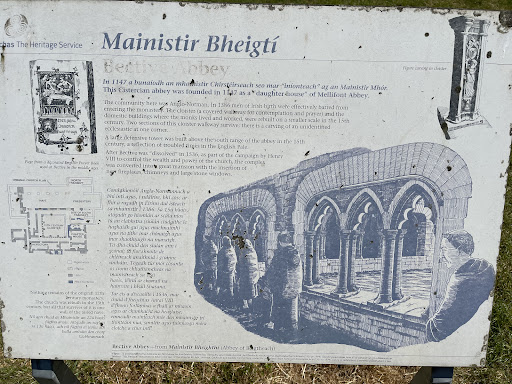
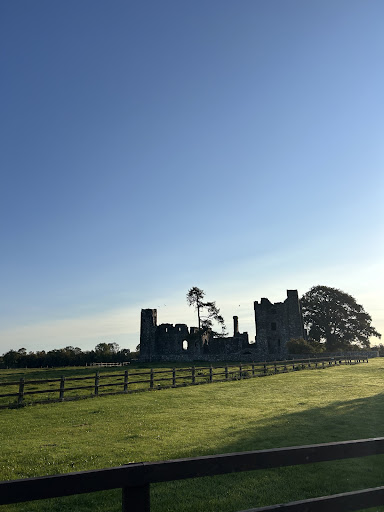
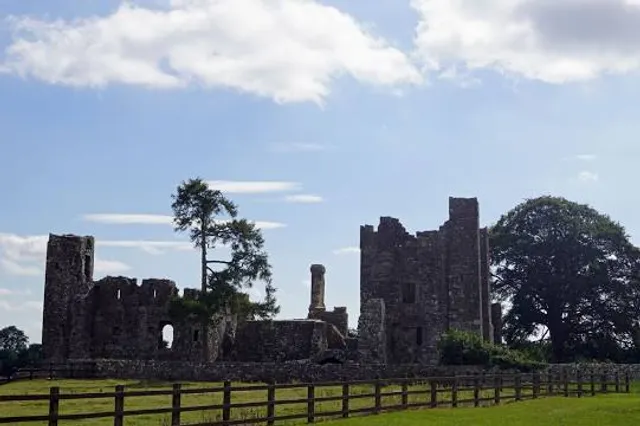
Bective Abbey is a Cistercian abbey on the River Boyne in Bective, County Meath, Ireland. The abbey was founded in 1147, and the remaining structure and ruins primarily date to the 15th century. The site, including a nearby car park, were purchased by the state in 2012, and are managed by the Office of Public Works.
Nearby attractions
Nearby restaurants
Nearby hotels
Related posts
Keywords
Bective Abbey tourism.Bective Abbey hotels.Bective Abbey bed and breakfast. flights to Bective Abbey.Bective Abbey attractions.Bective Abbey restaurants.Bective Abbey travel.Bective Abbey travel guide.Bective Abbey travel blog.Bective Abbey pictures.Bective Abbey photos.Bective Abbey travel tips.Bective Abbey maps.Bective Abbey things to do.
Bective Abbey things to do, attractions, restaurants, events info and trip planning
Bective Abbey
IrelandThe Municipal District of NavanBective Abbey

Basic Info

Bective Abbey

R161, Bective, Co. Meath, Ireland
4.7(642)
Open 24 hours
Save
spot

Ratings & Description

Info

Bective Abbey is a Cistercian abbey on the River Boyne in Bective, County Meath, Ireland. The abbey was founded in 1147, and the remaining structure and ruins primarily date to the 15th century. The site, including a nearby car park, were purchased by the state in 2012, and are managed by the Office of Public Works.

Cultural
Scenic
Family friendly
Off the beaten path
attractions: , restaurants:
logoLearn more insights from Wanderboat AI.
Website
discoverboynevalley.ie

Plan your stay

hotel
Pet-friendly Hotels in The Municipal District of Navan
Find a cozy hotel nearby and make it a full experience.

hotel
Affordable Hotels in The Municipal District of Navan
Find a cozy hotel nearby and make it a full experience.

hotel
The Coolest Hotels You Haven't Heard Of (Yet)
Find a cozy hotel nearby and make it a full experience.

hotel
Trending Stays Worth the Hype in The Municipal District of Navan
Find a cozy hotel nearby and make it a full experience.

Reviews

Get the Appoverlay
Get the AppOne tap to find yournext favorite spots!
Wanderboat LogoWanderboat

Your everyday Al companion for getaway ideas

CompanyAbout Us
InformationAI Trip PlannerSitemap
SocialXInstagramTiktokLinkedin
LegalTerms of ServicePrivacy Policy

Get the app

© 2025 Wanderboat. All rights reserved.
logo

Reviews of Bective Abbey

4.7
(642)
avatar
5.0
11w

Bective Abbey is one of the most atmospheric monastic sites in Ireland, a place where history, architecture, and landscape come together beautifully. Founded in 1147 as a daughter house of Mellifont, it was among the earliest Cistercian foundations in Ireland, established during a period of great reform when the Cistercians brought their austere yet powerful vision of monastic life to the island.

What survives today reflects both the simplicity and the strength of that order. The cloister garth, with its fine arcades, is remarkably well preserved and offers a vivid sense of the monks’ daily routines of prayer, study, and labour. The church, though partly ruined, still conveys the Cistercians’ architectural ethos—clean lines, minimal decoration, and an emphasis on proportion rather than ornament, in stark contrast to the more elaborate Romanesque and later Gothic churches elsewhere in Ireland.

The abbey was not just a spiritual centre but also a powerful landholding institution. In the 13th and 14th centuries, Bective controlled extensive estates, and its abbots were figures of political as well as religious significance. Following the Dissolution of the Monasteries under Henry VIII in the 1530s, the abbey was surrendered and granted to secular landlords, at which point parts of it were converted into a fortified manor house. This explains the later defensive features—such as battlements—that overlay the original monastic plan, giving the abbey its unique hybrid character.

Bective has also entered popular culture through film—most famously, it was used as a location in Braveheart. Yet even without the Hollywood connection, it is a site of haunting beauty. Set on the banks of the River Boyne, its quiet, ivy-clad walls invite reflection on the ebb and flow of Irish history: from medieval piety to Tudor conquest, from flourishing abbey to evocative ruin.

For anyone with an interest in medieval monasticism, Cistercian architecture, or simply the poetry of ruined stone in an Irish landscape, Bective Abbey...

   Read more
avatar
5.0
2y

I recently visited Bective Abbey, a 12th-century Cistercian monastery located in County Meath, Ireland. I was impressed by the history and architecture of this place, which has been preserved and restored over the centuries. The abbey was founded in 1147 by Murchad O'Maeil-Sheachlainn, the king of Meath, and was one of the first Cistercian houses in Ireland. It was also the burial place of some of the kings of Meath and Leinster. The abbey was dissolved in 1536 by Henry VIII and later became a fortified manor house. Some of the features that I enjoyed seeing were the cloister, the chapter house, the refectory, and the tower. The cloister is a quadrangular courtyard surrounded by arcades, where the monks used to walk and meditate. The chapter house is a vaulted room where the monks met daily to read a chapter of the Rule of St. Benedict and discuss matters of the community. The refectory is a large hall where the monks ate their meals in silence, listening to a reading from the scriptures or other religious texts. The tower is a four-storey structure that was added in the 15th century to provide defence and accommodation. The abbey is situated in a scenic location near the River Boyne and has a peaceful atmosphere. I would recommend visiting Bective Abbey to anyone who is interested in medieval history, culture, and...

   Read more
avatar
5.0
2y

Probably my favorite stop in all of ireland. What a beautiful old abbey…! The age, history, how well taken care of and clean the grounds were… wow! Also has a small little parking lot! Now, the road getting up to this was pretty narrow and thin, so just be careful on your way up here. But its such a large ruin, plenty of nooks and places to explore, lots of things to climb, and amazing views!!! Now i wouldn’t recommend climbing around on centurys old ruins, but the braver boys of our group did have a lot of fun checking out the abbey’s second story. Just breathtaking. I even found old graffiti carved into the stones!! :) please check it out…! Thank you to whoever cares for...

   Read more
Page 1 of 7
Previous
Next

Posts

Brian ReillyBrian Reilly
Bective Abbey is one of the most atmospheric monastic sites in Ireland, a place where history, architecture, and landscape come together beautifully. Founded in 1147 as a daughter house of Mellifont, it was among the earliest Cistercian foundations in Ireland, established during a period of great reform when the Cistercians brought their austere yet powerful vision of monastic life to the island. What survives today reflects both the simplicity and the strength of that order. The cloister garth, with its fine arcades, is remarkably well preserved and offers a vivid sense of the monks’ daily routines of prayer, study, and labour. The church, though partly ruined, still conveys the Cistercians’ architectural ethos—clean lines, minimal decoration, and an emphasis on proportion rather than ornament, in stark contrast to the more elaborate Romanesque and later Gothic churches elsewhere in Ireland. The abbey was not just a spiritual centre but also a powerful landholding institution. In the 13th and 14th centuries, Bective controlled extensive estates, and its abbots were figures of political as well as religious significance. Following the Dissolution of the Monasteries under Henry VIII in the 1530s, the abbey was surrendered and granted to secular landlords, at which point parts of it were converted into a fortified manor house. This explains the later defensive features—such as battlements—that overlay the original monastic plan, giving the abbey its unique hybrid character. Bective has also entered popular culture through film—most famously, it was used as a location in Braveheart. Yet even without the Hollywood connection, it is a site of haunting beauty. Set on the banks of the River Boyne, its quiet, ivy-clad walls invite reflection on the ebb and flow of Irish history: from medieval piety to Tudor conquest, from flourishing abbey to evocative ruin. For anyone with an interest in medieval monasticism, Cistercian architecture, or simply the poetry of ruined stone in an Irish landscape, Bective Abbey is unmissable.
Mohun KrisnaMohun Krisna
I recently visited Bective Abbey, a 12th-century Cistercian monastery located in County Meath, Ireland. I was impressed by the history and architecture of this place, which has been preserved and restored over the centuries. The abbey was founded in 1147 by Murchad O'Maeil-Sheachlainn, the king of Meath, and was one of the first Cistercian houses in Ireland. It was also the burial place of some of the kings of Meath and Leinster. The abbey was dissolved in 1536 by Henry VIII and later became a fortified manor house. Some of the features that I enjoyed seeing were the cloister, the chapter house, the refectory, and the tower. The cloister is a quadrangular courtyard surrounded by arcades, where the monks used to walk and meditate. The chapter house is a vaulted room where the monks met daily to read a chapter of the Rule of St. Benedict and discuss matters of the community. The refectory is a large hall where the monks ate their meals in silence, listening to a reading from the scriptures or other religious texts. The tower is a four-storey structure that was added in the 15th century to provide defence and accommodation. The abbey is situated in a scenic location near the River Boyne and has a peaceful atmosphere. I would recommend visiting Bective Abbey to anyone who is interested in medieval history, culture, and architecture.
Morgan PabstMorgan Pabst
Probably my favorite stop in all of ireland. What a beautiful old abbey…! The age, history, how well taken care of and clean the grounds were… wow! Also has a small little parking lot! Now, the road getting up to this was pretty narrow and thin, so just be careful on your way up here. But its such a large ruin, plenty of nooks and places to explore, lots of things to climb, and amazing views!!! Now i wouldn’t recommend climbing around on centurys old ruins, but the braver boys of our group did have a lot of fun checking out the abbey’s second story. Just breathtaking. I even found old graffiti carved into the stones!! :) please check it out…! Thank you to whoever cares for the grounds!
See more posts
See more posts
hotel
Find your stay

Pet-friendly Hotels in The Municipal District of Navan

Find a cozy hotel nearby and make it a full experience.

Bective Abbey is one of the most atmospheric monastic sites in Ireland, a place where history, architecture, and landscape come together beautifully. Founded in 1147 as a daughter house of Mellifont, it was among the earliest Cistercian foundations in Ireland, established during a period of great reform when the Cistercians brought their austere yet powerful vision of monastic life to the island. What survives today reflects both the simplicity and the strength of that order. The cloister garth, with its fine arcades, is remarkably well preserved and offers a vivid sense of the monks’ daily routines of prayer, study, and labour. The church, though partly ruined, still conveys the Cistercians’ architectural ethos—clean lines, minimal decoration, and an emphasis on proportion rather than ornament, in stark contrast to the more elaborate Romanesque and later Gothic churches elsewhere in Ireland. The abbey was not just a spiritual centre but also a powerful landholding institution. In the 13th and 14th centuries, Bective controlled extensive estates, and its abbots were figures of political as well as religious significance. Following the Dissolution of the Monasteries under Henry VIII in the 1530s, the abbey was surrendered and granted to secular landlords, at which point parts of it were converted into a fortified manor house. This explains the later defensive features—such as battlements—that overlay the original monastic plan, giving the abbey its unique hybrid character. Bective has also entered popular culture through film—most famously, it was used as a location in Braveheart. Yet even without the Hollywood connection, it is a site of haunting beauty. Set on the banks of the River Boyne, its quiet, ivy-clad walls invite reflection on the ebb and flow of Irish history: from medieval piety to Tudor conquest, from flourishing abbey to evocative ruin. For anyone with an interest in medieval monasticism, Cistercian architecture, or simply the poetry of ruined stone in an Irish landscape, Bective Abbey is unmissable.
Brian Reilly

Brian Reilly

hotel
Find your stay

Affordable Hotels in The Municipal District of Navan

Find a cozy hotel nearby and make it a full experience.

Get the Appoverlay
Get the AppOne tap to find yournext favorite spots!
I recently visited Bective Abbey, a 12th-century Cistercian monastery located in County Meath, Ireland. I was impressed by the history and architecture of this place, which has been preserved and restored over the centuries. The abbey was founded in 1147 by Murchad O'Maeil-Sheachlainn, the king of Meath, and was one of the first Cistercian houses in Ireland. It was also the burial place of some of the kings of Meath and Leinster. The abbey was dissolved in 1536 by Henry VIII and later became a fortified manor house. Some of the features that I enjoyed seeing were the cloister, the chapter house, the refectory, and the tower. The cloister is a quadrangular courtyard surrounded by arcades, where the monks used to walk and meditate. The chapter house is a vaulted room where the monks met daily to read a chapter of the Rule of St. Benedict and discuss matters of the community. The refectory is a large hall where the monks ate their meals in silence, listening to a reading from the scriptures or other religious texts. The tower is a four-storey structure that was added in the 15th century to provide defence and accommodation. The abbey is situated in a scenic location near the River Boyne and has a peaceful atmosphere. I would recommend visiting Bective Abbey to anyone who is interested in medieval history, culture, and architecture.
Mohun Krisna

Mohun Krisna

hotel
Find your stay

The Coolest Hotels You Haven't Heard Of (Yet)

Find a cozy hotel nearby and make it a full experience.

hotel
Find your stay

Trending Stays Worth the Hype in The Municipal District of Navan

Find a cozy hotel nearby and make it a full experience.

Probably my favorite stop in all of ireland. What a beautiful old abbey…! The age, history, how well taken care of and clean the grounds were… wow! Also has a small little parking lot! Now, the road getting up to this was pretty narrow and thin, so just be careful on your way up here. But its such a large ruin, plenty of nooks and places to explore, lots of things to climb, and amazing views!!! Now i wouldn’t recommend climbing around on centurys old ruins, but the braver boys of our group did have a lot of fun checking out the abbey’s second story. Just breathtaking. I even found old graffiti carved into the stones!! :) please check it out…! Thank you to whoever cares for the grounds!
Morgan Pabst

Morgan Pabst

See more posts
See more posts