History of lead mining
• Early mining: Mining in the Glendalough area began on a commercial scale in the 18th century, although metals including lead had been mined in Ireland since the Bronze Age (2400–1500 BC). The focus at Glendalough was on lead ores, which often contained traces of silver (known as argentiferous lead).
• Key period: Lead mining at Glendalough peaked in the late 18th and early 19th centuries. By 1809, mining had begun on the Luganoor vein, which lies on the slopes of Camaderry Mountain, close to the Upper Loch, approximately 1–1.5 km from the Lower Loch and the monastery complex.
• Scale: The Luganoor mine became one of the most significant lead mines in Ireland during the 19th century. During its working life (before its closure in 1890), it produced around 50,000 tonnes of lead and 25,000 ounces of silver, making it an important economic asset.
Mine and Mining Features
• Location:
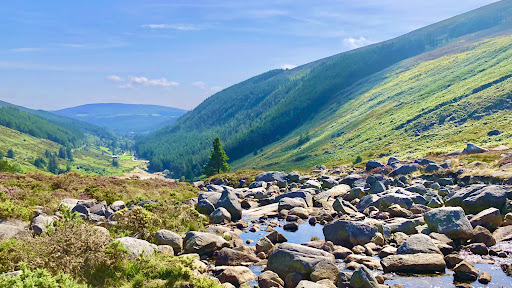
• The mines were on the crumbling slopes of Camaderry Mountain, close to the Upper Lake, but their influence extended throughout the Glendalough Valley. The remains of the mines and the mining camp can be seen at the far end of the Upper Lake, about 1.5-2 km from the Lower Lake, the Round Tower and St Kevin's Church.
• The Lower Lake you asked about earlier was not directly associated with the mines, but the valley as a whole, including both lakes, was part of the mining region.
• Mining Methods:
• Mining was carried out using traditional 19th century methods, including open pits, underground shafts and drifts. Ore was mined by hand by teams of miners known as "tributees", who worked in shifts and received bonuses for every ton of lead extracted.
• Due to the lack of mining expertise in Ireland, technical and management positions were often filled by English specialists (mainly from Cornwall).
• Ore was processed locally or transported to smelting centres such as Ballycorus (in County Dublin), which had a lead smelting tower.
• Working conditions:
• In the 1950s, miners earned around £6 a week, a typical wage for the time. Conditions were harsh as the mining was highland and the technology was primitive.
• Irish miners often worked under foreign supervision and little training was given to Irish miners, reflecting the colonial conditions imposed by the British authorities.
Mine closures
• Decline: By 1820, the Lughanure Colliery was no longer profitable due to fluctuating world lead prices. It was purchased by the Mining Company of Ireland in 1824 and continued to operate until 1890.
• Final closure: Mining in the Glendalough area ceased in the late 19th century, although mining continued in other parts of Ireland (such as Silvermines, County Tipperary) until the mid-20th century. By 1957, most lead mines in Ireland had closed.
• Reasons: Declining demand for lead, the depletion of easily accessible veins and a lack of investment in modernisation led to the closure of the mines.
• Current status
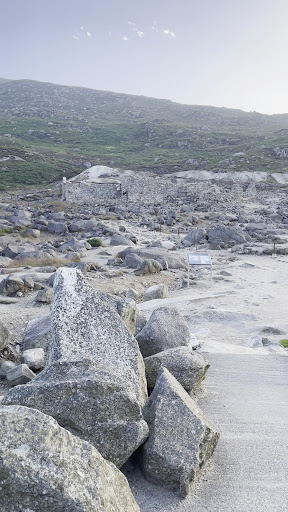
• Mine remains: Today, traces of the old mines can be seen in the Glendalough Valley, particularly in the Upper Lake area, including abandoned adits, waste heaps and the remains of a mining camp. These sites are located on crumbling slopes that are described as being the colour of ‘autumn mud’.
• Tourism: The mines are not the main attraction of Glendalough, as tourists are more likely to visit the monastery, the round tower, St Kevin’s Church and the lochs. However, history or geology buffs can explore the area by following trails such as the Miners’ Road Walk, which leads from the Lower Loch to the Upper Loch and the remains of the mines. This route is approximately 5 km and takes 1.5–2 hours.
• Environmental impact: The mining has left a legacy of waste heaps and abandoned structures that have partly changed the landscape. However, Wicklow National Park is strictly protected and today conservation...
Read more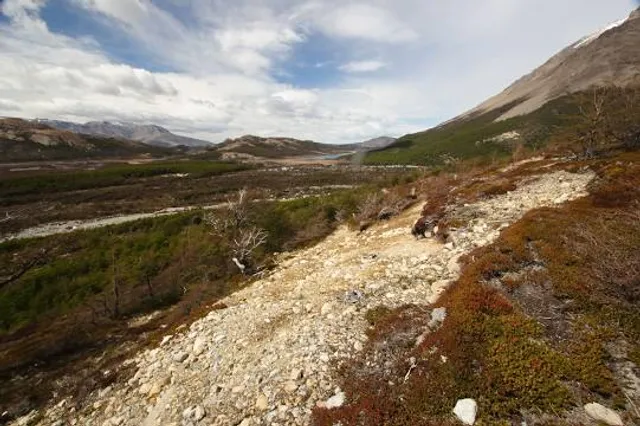
 Learn more insights from Wanderboat AI.